 Instalab

Vital Nutrients
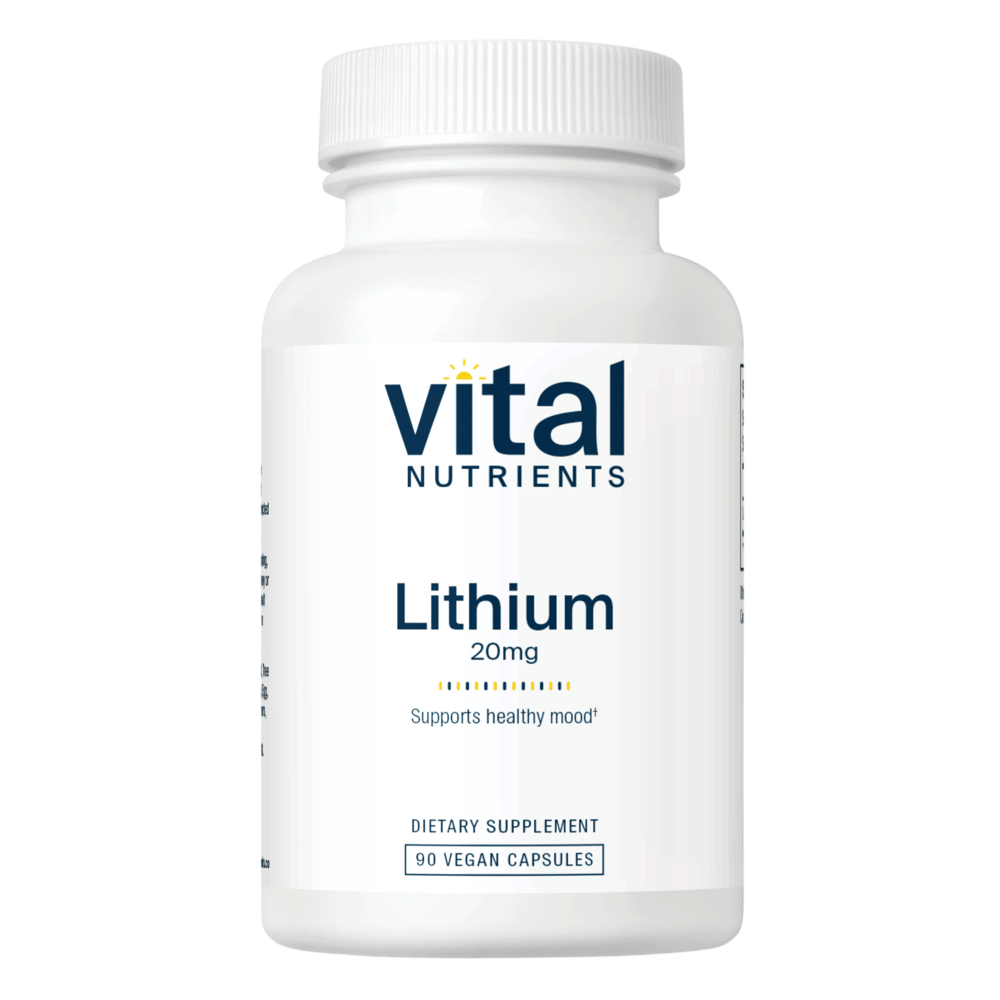
Lithium (orotate) 20mg by Vital Nutrients
90 capsules · 90-day supply
Lithium Orotate for Mood Support Under Clinician Guidance$52.99
Purchase options
Practitioner-grade brand3rd-party testedFree shipping $50+
Vegan·Gluten Free·Soy Free·Dairy Free·Tree Nut Free·Fish Free·
Vital Nutrients Lithium (orotate) 20mg overview
Lithium orotate is a mineral supplement that some adults take for general mood and nervous system support. This one is best used with a clinician who knows your kidney and thyroid history and your medicines. It is not prescription lithium and cannot replace it. If you have been diagnosed with a mood disorder or take any psychiatric medicine, do not start it, stop your medicine or swap one for the other on your own.
Lithium is a naturally occurring element found in small amounts in drinking water and food. Here it is bound to orotic acid, and each capsule supplies 20 mg of lithium. That is more than many lithium supplements provide and still well below prescription lithium, which is dosed many times higher and managed with regular blood tests. How small amounts of lithium act in the body is not settled, and the idea that the orotate form is absorbed better or reaches the brain more easily has not been shown in people.
The label directs 1 capsule daily with a meal and says not to exceed that dose; the bottle holds 90, and it is labeled for adults only. Drink plenty of fluid with it. Lithium leaves the body through the kidneys and follows sodium, so dehydration, heavy sweating, vomiting, diarrhea or a sudden low-salt diet can raise the level in your blood. For use beyond a few weeks, ask your clinician about checking TSH, Creatinine and a Lithium level.
Do not use it if you are pregnant, trying to conceive or nursing, or if you have kidney disease or a thyroid condition, unless your clinician has agreed. Several common medicines slow the kidneys' clearance of lithium and can push levels up: diuretics (water pills), NSAIDs such as ibuprofen and naproxen, and ACE inhibitors and related blood pressure medicines. Never combine it with prescription lithium, and ask your prescriber before taking it with antidepressants, antipsychotics or other psychiatric medicines. Stop and seek care for tremor, nausea, diarrhea, unusual thirst, frequent urination, drowsiness or confusion.
Keep expectations modest. Evidence for lithium supplements in healthy adults is limited, drawn mostly from population studies of lithium in drinking water and a few small trials, so there is no reliable timeline for an effect. If you and your clinician see no benefit after 2 to 3 months, stop. Lower-strength lithium orotate products are a more cautious starting point for most people; this strength makes the most sense when a clinician has chosen it.
Frequently asked questions
Is lithium orotate the same as prescription lithium?
No. Prescription lithium is a medicine given at much higher doses with regular blood tests. Lithium orotate is a mineral supplement. It is not a substitute for prescription lithium, and the two should never be taken together or swapped without your prescriber.
How much lithium is in each capsule?
The label lists 20 mg of lithium, from lithium orotate, per capsule. That is on the high side for a lithium supplement. The label says to take 1 capsule daily with a meal and not to exceed that dose. Tell your clinician you are taking it.
Who should not take lithium orotate?
People who are pregnant, trying to conceive or nursing, and anyone with kidney disease or a thyroid condition, unless a clinician has agreed. The same goes for anyone on prescription lithium, other psychiatric medicines, diuretics, NSAIDs or ACE inhibitors. The label says it is for adults only.
Does lithium orotate interact with medications?
Yes. Diuretics, NSAIDs such as ibuprofen and naproxen, and ACE inhibitors and related blood pressure medicines reduce how fast the kidneys clear lithium, which can raise blood levels. Check with your clinician or pharmacist before combining them.
Can I take lithium orotate with antidepressants?
Only if your prescriber agrees. Lithium can interact with antidepressants, antipsychotics and other psychiatric medicines. Do not add it to your treatment plan, or use it in place of a prescribed medicine, without talking to the clinician who manages it.
Do I need blood tests while taking lithium orotate?
At this strength it is sensible. Ask your clinician about a baseline and periodic TSH and Creatinine, since lithium can affect the thyroid and is cleared by the kidneys. A Lithium level can also be measured if there is any concern about how much is building up.
What are the signs of too much lithium?
Hand tremor, nausea, diarrhea, unusual thirst, frequent urination, drowsiness, unsteadiness or confusion. Stop taking it and get medical care if these appear, especially during dehydration, a stomach illness or after starting a new medicine.
How long does lithium orotate take to work?
There is no reliable timeline. Research on lithium supplements in healthy adults is limited, and many people notice nothing. If you and your clinician see no benefit after 2 to 3 months, it is reasonable to stop.
How to take it & ingredients
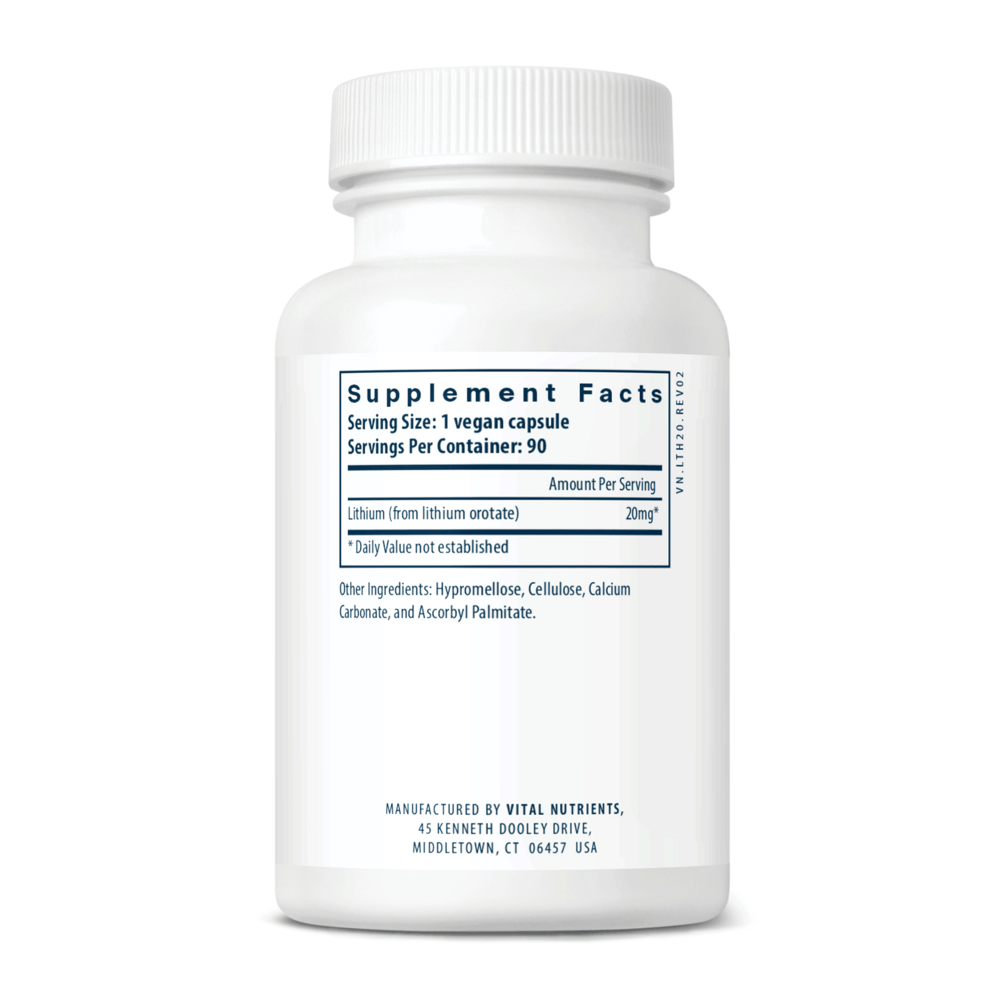
Suggested use: Take 1 capsule daily with a meal. Do not exceed suggested dose or as directed by your healthcare professional.
Active ingredients
1 vegan capsule per serving · 90 servings
Lithium
From Lithium Orotate
From Lithium Orotate
20 mg
Other ingredients: Hypromellose, Cellulose, Calcium Carbonate, Ascorbyl Palmitate
Certifications
Benefits
Warnings