 Instalab


Allergy Research Group
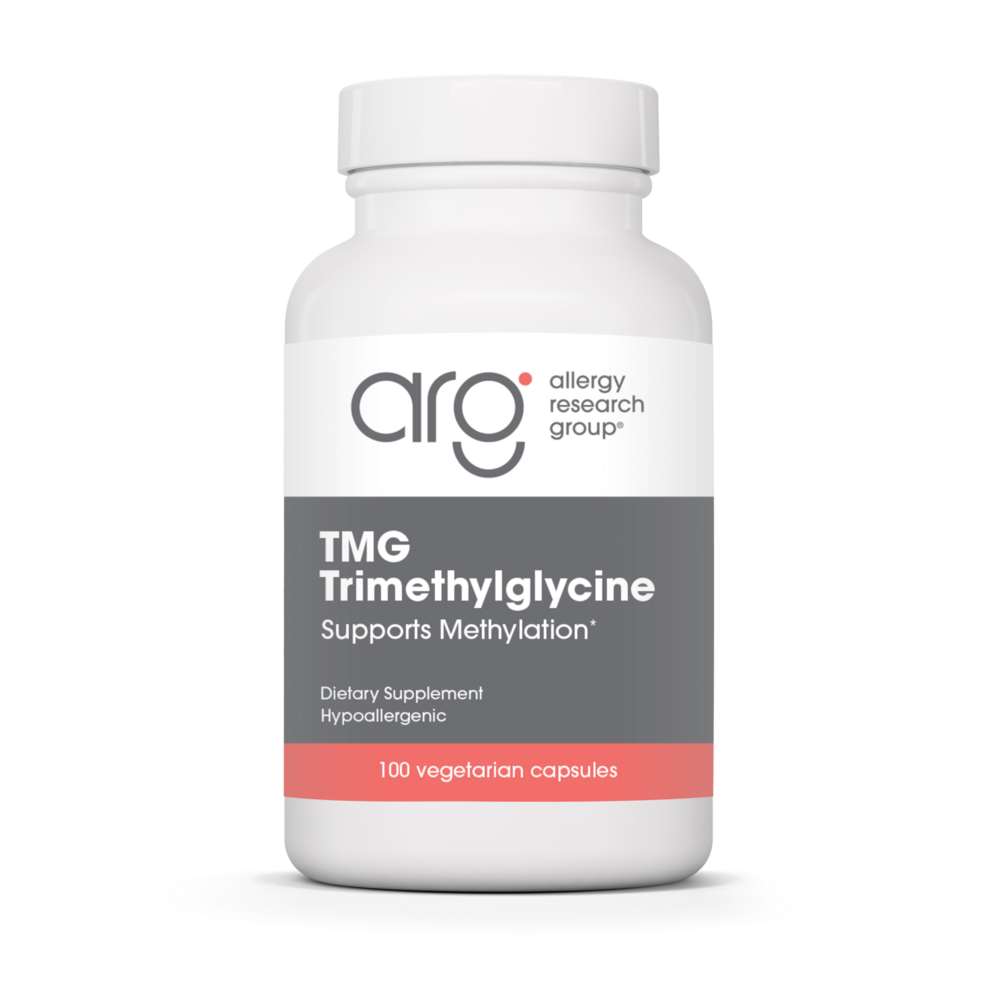
TMG 750mg by Allergy Research Group
100 capsules · 100-day supply
TMG (Trimethylglycine) for Methylation and Healthy Homocysteine$26.99
Purchase options
Practitioner-grade brand3rd-party testedFree shipping $50+
Vegetarian
Allergy Research Group TMG 750mg overview
TMG fits adults whose Homocysteine runs high and who want a methyl donor that works alongside B vitamins. Low Vitamin B12, low RBC Folate and low vitamin B6 are the commonest nutritional reasons for a high result, so check and correct those first; TMG is a usual next step when homocysteine stays up despite adequate B vitamins. It is also used in clinician-guided methylation plans. If your Homocysteine is already in range, there is little reason to add it.
Trimethylglycine, also called betaine, is the amino acid glycine carrying three methyl groups. It occurs naturally in beets, spinach and whole grains, and the body makes it from choline. In the liver and kidneys, TMG hands one methyl group to homocysteine and converts it back to methionine, a route that runs separately from the folate and B12 pathway. That is why it can help when B vitamins alone have not been enough.
Each capsule provides 750 mg of trimethylglycine, and the label directs 1 capsule twice daily before meals. Two capsules a day sits at the low end of the amounts used in homocysteine trials, so expect a modest effect and let a retest, not guesswork, decide with your clinician whether to adjust. If it bothers your stomach before eating, ask whether to take it with food.
At intakes of several grams a day, betaine has modestly raised LDL cholesterol in trials. That is above the label's two capsules a day, but if your clinician has you on more, follow LDL Cholesterol or ApoB along with Homocysteine. Do not confuse TMG with betaine HCl, a different product used to add stomach acid. As the label says, consult your practitioner before use if you are pregnant or lactating, have any health condition such as kidney disease, or take any medication.
Homocysteine usually responds within 4 to 6 weeks, so retest after about 6 to 8 weeks of steady use. Do not expect to feel anything; the lab value is the readout. Side effects are uncommon at this amount, mostly mild nausea or loose stools. Methylfolate and methyl-B12 work through a different enzyme, so the two approaches complement each other and neither replaces the other.
Frequently asked questions
What is TMG (trimethylglycine)?
TMG, also called betaine, is glycine with three methyl groups attached. It is found in beets, spinach and whole grains and is made in the body from choline. It donates a methyl group to homocysteine. This product provides 750 mg per capsule.
Is TMG the same as betaine HCl?
No. Betaine HCl is betaine bound to hydrochloric acid and is taken with meals to add stomach acid. TMG is plain trimethylglycine, used as a methyl donor for homocysteine and methylation. The two are different supplements and are not interchangeable.
How much TMG should I take for homocysteine?
The label directs 1 capsule twice daily before meals, and each capsule provides 750 mg. That is at the low end of the amounts used in homocysteine trials, so do not go beyond the label on your own. Retest Homocysteine and let your clinician decide whether the amount needs to change.
When is the best time to take TMG?
The label says twice daily before meals, so before breakfast and before dinner is a simple routine. If it upsets your stomach taken that way, ask your clinician whether to take it with food. Consistency matters more than the exact hour.
How long does TMG take to lower homocysteine?
Homocysteine usually responds within 4 to 6 weeks of steady daily use. Retest after about 6 to 8 weeks. If the result has not moved, check Vitamin B12 and RBC Folate, and review the plan with your clinician.
Does TMG raise cholesterol?
At intakes of several grams a day, betaine has modestly raised LDL cholesterol in trials. The label's two 750 mg capsules a day are below that range. If you take more under a clinician's direction, follow LDL Cholesterol or ApoB along with Homocysteine.
Can I take TMG with methylfolate and B12?
Yes. They are often used together. Folate and B12 recycle homocysteine through one enzyme and TMG through another, so the approaches complement each other. Correct low Vitamin B12 or RBC Folate first, then add TMG if Homocysteine stays high.
Does TMG help with exercise performance?
The evidence is mixed. Some trials report small gains in strength or power and others find none, and they generally used more than the label's two capsules a day. If performance is your main goal, creatine has much stronger support.
How to take it & ingredients
Suggested use: As a dietary supplement, take 1 capsule twice daily before meals, or as directed by a healthcare practitioner.
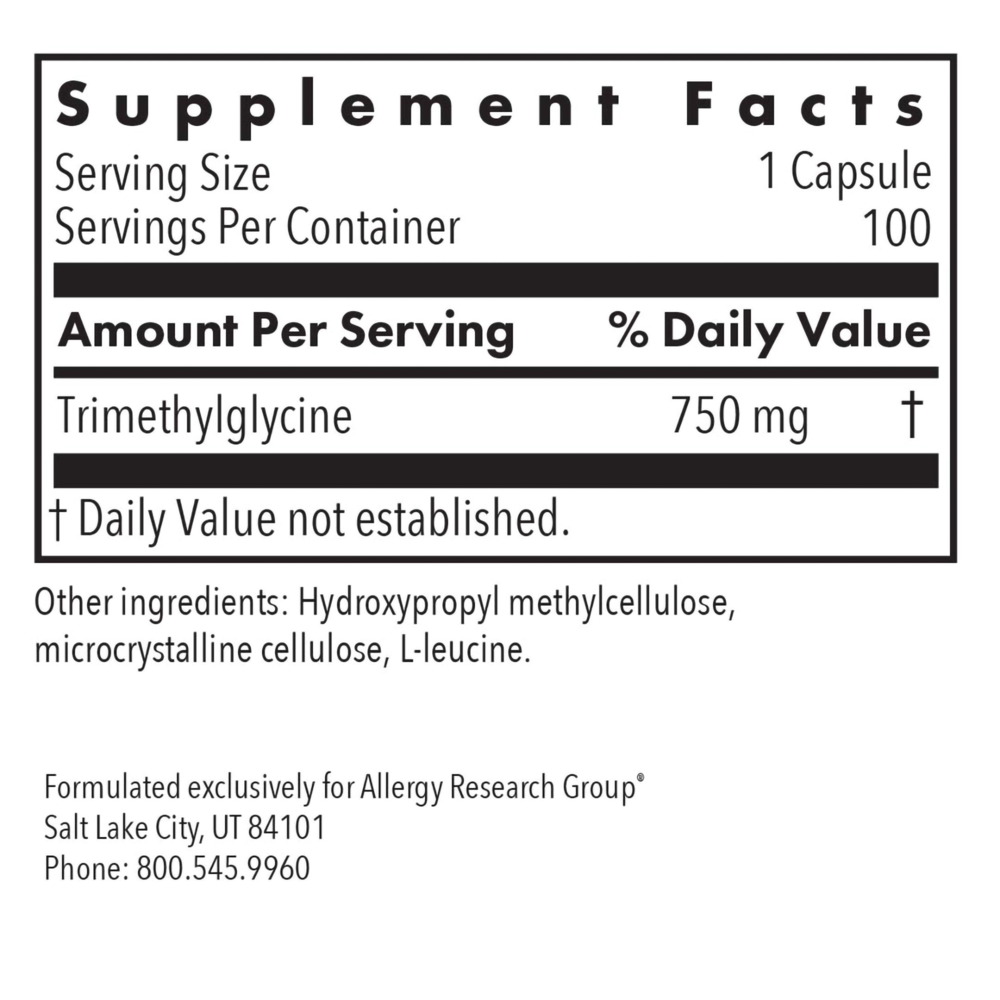
Active ingredients
1 capsule per serving · 100 servings
Betaine Anhydrous
Trimethylglycine
Trimethylglycine
750 mg
Other ingredients: Hydroxypropyl methylcellulose, Microcrystalline cellulose, L-leucine
Certifications
Benefits
Warnings