
 Instalab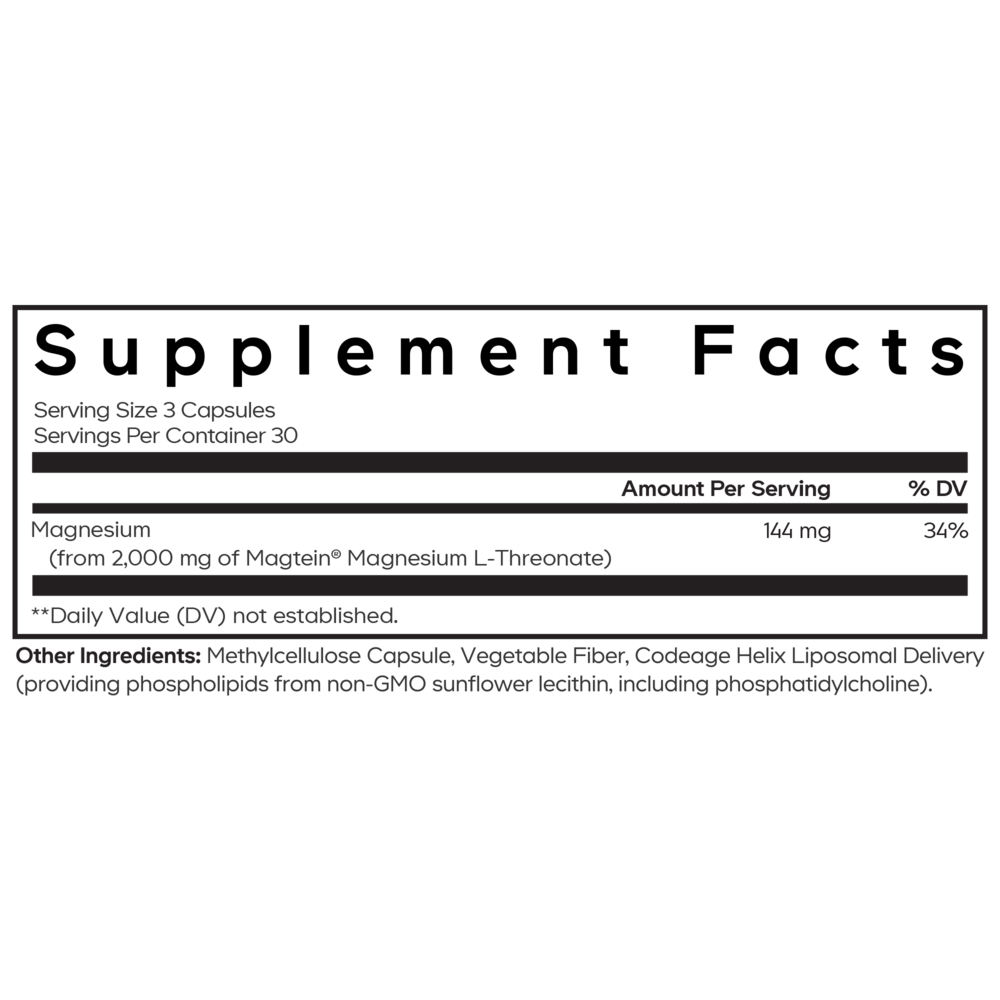

Codeage
Liposomal Magnesium L-Threonate by Codeage
90 capsules · 30-day supply
Enhanced Magnesium Support for Cognitive Function and Relaxation$XX.XX$44.99retail
This item is currently out of stockGet notified when this item is back in stock
20% below MSRP3rd-party tested for purity & potencyFree shipping $50+
Vegan·Vegetarian·Gluten Free·Soy Free
Codeage Liposomal Magnesium L-Threonate overview
If you’re searching for magnesium L-threonate for sleep, stress, or mental clarity, this fits adults who want a brain-focused form of magnesium without laxative effects. It’s useful if your days feel overstimulated and nights under-rested, or if your Magnesium, RBC is normal yet you still want a cognitive edge. If your Magnesium, RBC is low and you need broad repletion, the elemental dose here is modest, so magnesium glycinate or citrate is usually more practical.
Magnesium L-threonate is a chelated form designed to cross into the brain more efficiently than common salts. In human studies using Magtein (the same core ingredient here), older adults with memory and attention complaints showed small but measurable gains in executive function over 6–12 weeks. By raising brain magnesium, it helps stabilize NMDA receptors (the brain’s excitatory switches) and calms overactive signaling, which is why some people notice smoother focus and better sleep quality.
Take three capsules daily as directed. If sleep is your goal, take them in the evening; for daytime focus, split morning and late afternoon. This delivers 144 mg elemental magnesium, typical for magnesium L-threonate, and lower than general repletion doses. Expect subtle effects within 2–4 weeks, with fuller cognitive changes by 6–12 weeks. Food is optional, but a small snack can further reduce any stomach upset.
Magnesium binds certain drugs in the gut. Take levothyroxine, tetracycline or quinolone antibiotics, and bisphosphonates at least 2–4 hours apart. Use care with high-dose calcium channel blockers if you’re prone to low blood pressure. Significant kidney disease raises the risk of magnesium buildup, so involve your clinician and consider checking Magnesium, RBC or serum magnesium during use.
For brain-first goals, magnesium L-threonate is the form with the most evidence for raising brain magnesium. For whole-body repletion or muscle cramps, magnesium glycinate is a gentler, higher-dose option. For constipation, citrate often works better. This formula adds a sunflower-derived liposomal phospholipid blend, which can improve capsule tolerance even at evening doses.
Frequently asked questions
Does magnesium L-threonate help you sleep?
It can improve sleep quality for some by calming overactive brain signaling. It’s not a sedative, so think “easier to wind down,” not knockout. If sleep is your goal, take it in the evening and give it 2–4 weeks. If insomnia is severe, discuss other causes and options with your clinician.
How long does magnesium L-threonate take to work?
Most people notice calmer evenings or steadier focus within 2–4 weeks, with cognitive testing benefits in studies appearing by 6–12 weeks. If you feel nothing by three months, reassess dose, timing, sleep hygiene, and whether another magnesium form better matches your goal.
Is 144 mg of magnesium enough?
It’s typical for magnesium L-threonate and aimed at the brain, not broad repletion. If your Magnesium, RBC is low or you need muscle or bowel benefits, higher elemental magnesium from glycinate or citrate is usually more effective. You can also pair forms under clinician guidance.
What’s the best time to take magnesium L-threonate?
Evening works well if you’re targeting sleep quality. For focus or stress during the day, split the dose morning and late afternoon. Take it consistently at the same times for 2–4 weeks before judging the effect.
Will magnesium L-threonate cause diarrhea?
It’s less likely than oxide or citrate to loosen stools because the threonate salt draws less water into the gut. Occasional stomach upset can occur, so taking it with a small snack or splitting doses usually solves it.
Can I take magnesium L-threonate with thyroid meds or antibiotics?
Yes, but separate the timing. Magnesium binds levothyroxine, tetracyclines, quinolones, and bisphosphonates in the gut. Take those medicines at least 2–4 hours apart from magnesium to avoid reduced drug absorption.
Is magnesium L-threonate safe in pregnancy or breastfeeding?
Magnesium is an essential mineral, but magnesium L-threonate hasn’t been as well studied in pregnancy. Use the prenatal your clinician recommends, and if adding magnesium, forms like glycinate or citrate are more commonly used under guidance.
Who should avoid magnesium L-threonate?
People with significant kidney disease should avoid unsupervised magnesium because it can accumulate. If you have heart rhythm problems, very low blood pressure, or take many medications, check with your clinician and consider monitoring Magnesium, RBC.
How to take it & ingredients
Suggested use: Take 3 capsules daily with 8 ounces of water or your favorite beverage, with or without food, or as recommended by your healthcare practitioner.
Active ingredients
3 capsules per serving · 30 servings
Magnesium
From Magtein® Magnesium L-Threonate
From Magtein® Magnesium L-Threonate
144 mg
Phospholipid Complex
From Non-GMO Sunflower Oil & Lecithin
From Non-GMO Sunflower Oil & Lecithin
100 mg
Other ingredients: Methylcellulose Capsule, Vegetable Fiber, Codeage Helix Liposomal Delivery (providing phospholipids from non-GMO sunflower lecithin, including phosphatidylcholine)
Certifications
Benefits
Warnings
Customers also considered

Ortho Molecular Products
CereMag
99 grams
$77.76
Add to cart for lower price

Garden of Life
Dr. Formulated Magnesium Raspberry
197.4 grams
$24.99
Add to cart for lower price

Natura Health Products
Dual-Mag Complex
90 capsules
$22.99
Add to cart for lower price

Ortho Molecular Products
Mag Threonate
60 capsules
$78.64
Add to cart for lower price