
 Instalab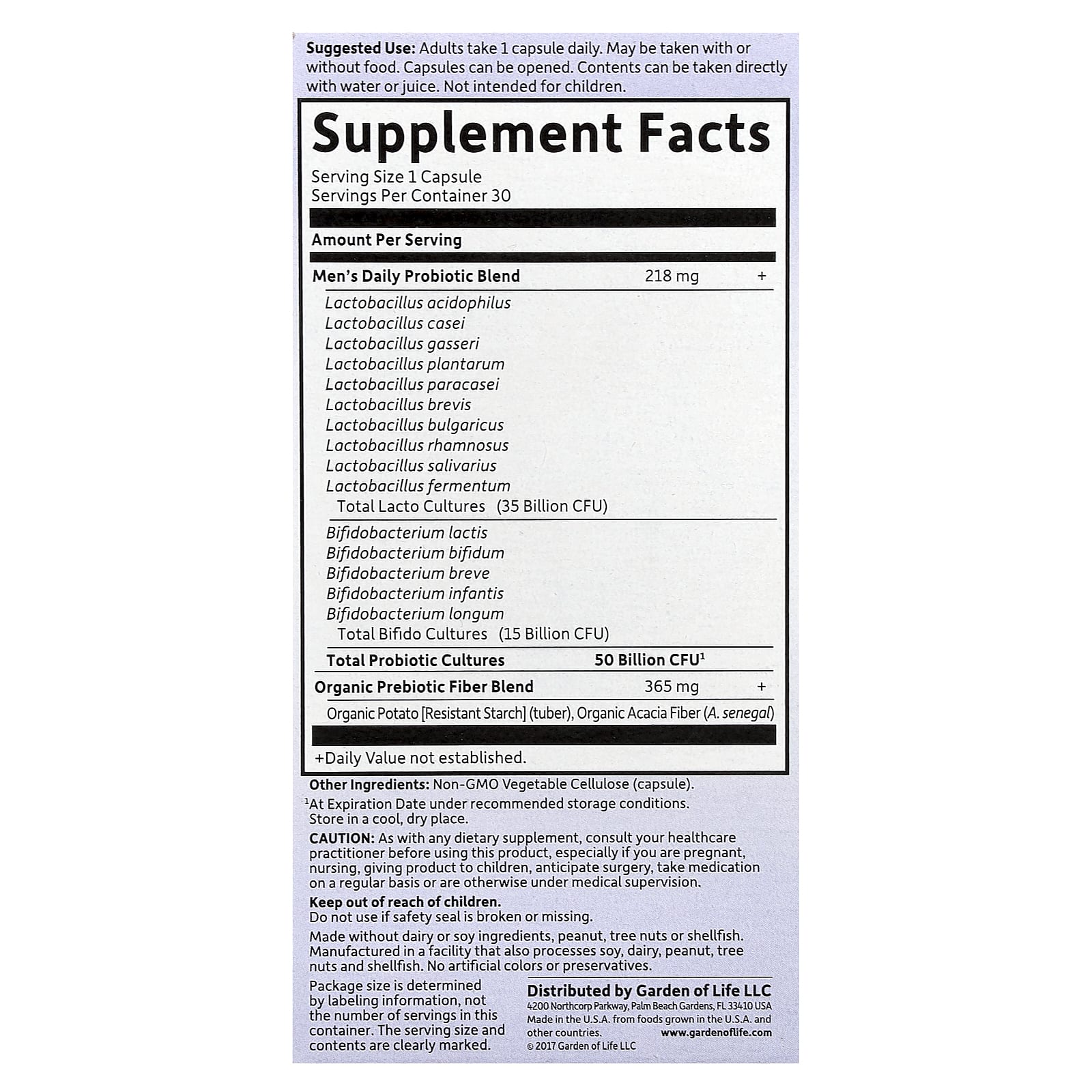

Garden of Life
Dr. Formulated Probiotics Mens Daily Care by Garden of Life
30 capsules · 30-day supply
Daily Probiotic Support for Men's Digestive and Immune Health$45.99
Purchase options
Practitioner-grade brand3rd-party testedFree shipping $50+
Vegan·Vegetarian·Kosher·Gluten Free·Soy Free·Dairy Free·
Garden of Life Dr. Formulated Probiotics Mens Daily Care overview
If you’re a man dealing with irregular bowel habits, gas after meals, or you’ve recently finished antibiotics, a probiotic for men is a practical first step. This once-daily mix fits frequent travelers, high-stress professionals, and men on acid-suppressing meds who notice more bloating. It’s maintenance-level support: useful for steady regularity and fewer antibiotic-related loose stools, not a cure for chronic inflammatory bowel disease. If your symptoms are severe or persistent, pair changes with stool testing through your clinician.
Lactobacillus and Bifidobacterium strains make short-chain fatty acids like acetate and butyrate (fuel for colon cells that also lower gut pH), which discourages overgrowth of gas-producing microbes. These bacteria crowd out pathogens, reinforce the gut barrier, and train immune cells to produce more IgA (the antibody that patrols your gut lining). The included prebiotic fiber feeds these strains so they stick around. In responders, modest drops in hs-CRP (an inflammation marker in blood) have been seen over several weeks.
Take one capsule daily, with or without food; consistency matters more than timing. If you’re sensitive, start every other day for a week to limit transient gas while your microbiome adjusts. On antibiotics, separate by 2–3 hours. For travel or after an antibiotic course, run it daily for 4 to 8 weeks, then reassess. If you need faster diarrhea control, consider adding Saccharomyces boulardii (a probiotic yeast) short term alongside this probiotic.
Skip probiotics if you’re severely immunocompromised, have a central line, or are critically ill—rare bloodstream infections have been reported. If you have significant small intestinal bacterial overgrowth, more bloating or brain fog can occur; stop and reassess. Very sensitive to prebiotics? The 407 mg fiber here can aggravate gas—choose a probiotic without added fiber. Probiotics are not a treatment for high fever, bloody stools, or severe pain—seek medical care.
Most men notice steadier bowel habits within 1 to 3 weeks; immune and bloating changes take 4 to 8 weeks. Refrigeration isn’t required for this shelf-stable capsule, but store it cool and dry. This isn’t a testosterone or weight supplement; its job is gut regularity and resilience. Garden of Life Dr. Formulated Probiotics Men’s Daily Care provides 50 billion CFU total plus prebiotic fiber in one capsule.
Frequently asked questions
How long does a probiotic for men take to work?
Bowel regularity often improves within 1–3 weeks of daily use. Bloating and immune-related benefits can take 4–8 weeks. If nothing changes by week 4, reassess strain choice, dose, or look for non-microbiome causes.
Should I take probiotics with antibiotics?
Yes, but separate doses by 2–3 hours so the antibiotic doesn’t kill the probiotic on contact. Continue the probiotic for at least 1–2 weeks after finishing the antibiotic to reduce antibiotic-associated diarrhea risk.
Do men need 50 billion CFU?
Fifty billion CFU is a common daily dose in clinical trials for diarrhea prevention and general regularity. It’s a solid maintenance dose. For stubborn diarrhea, higher CFU or adding Saccharomyces boulardii can be helpful.
Does a men’s probiotic help constipation or diarrhea?
It can help both by improving stool form toward the middle. Expect softer stools if you’re constipated and fewer loose stools if you’re prone to diarrhea. If constipation is severe, add fiber, fluids, and movement.
Do probiotics need refrigeration?
Shelf-stable probiotics like this one do not require refrigeration, but heat shortens their lifespan. Keep it cool and dry, avoid car glove boxes, and cap tightly to maintain potency through the labeled date.
Are probiotics safe if I’m immunocompromised?
Use caution. People with severe immunosuppression, central lines, or critical illness should avoid live probiotics due to rare bloodstream infections. Discuss with your clinician; non-live postbiotics may be safer.
Can women take a men’s probiotic?
Yes. The strains and fiber target gut function, not hormones. “Men’s” mainly reflects marketing. For vaginal or urinary concerns, a women-focused probiotic with Lactobacillus crispatus or rhamnosus may be preferable.
What side effects should I expect from probiotics?
Temporary gas, fullness, or mild cramping can occur in the first week as the microbiome shifts. This usually settles with continued use or slower titration. Stop and seek care for high fever, severe pain, or bloody stools.
How to take it & ingredients
Suggested use: Adults take 1 capsule daily. May be taken with or without food. Capsules can be opened and contents taken directly with water or raw juices. Not intended for children.
Active ingredients
1 capsule per serving · 30 servings
▼
Total Lacto Probiotic Cultures
35 billion CFU
Lactobacillus acidophilus
-
Lactobacillus casei
-
Lactobacillus gasseri
-
Lactobacillus plantarum
-
Lactobacillus paracasei
-
Lactobacillus brevis
-
Lactobacillus bulgaricus
-
Lactobacillus rhamnosus
-
Lactobacillus salivarius
-
Lactobacillus fermentum
-
▼
Total Bifido Probiotic Cultures
15 billion CFU
Bifidobacterium lactis
-
Bifidobacterium bifidum
-
Bifidobacterium breve
-
Bifidobacterium infantis
-
Bifidobacterium longum
-
▼
Organic Prebiotic Fiber Blend
407 mg
Organic Potato [Resistant Starch] (tuber)
-
Organic Acacia Fiber (Acacia senegal)
-
Other ingredients: Non-GMO Vegetable Cellulose (capsule)
Certifications
Benefits
Warnings
Customers also considered

Bacillus Coagulans
Thorne
60 capsules
$33.00Save 10% with Subscribe & Save

Complete Biotic
Thorne
30 packets
$46.00Save 10% with Subscribe & Save

Complete Probiotics 70 Billion CFU
Dr. Mercola
30 capsules
$46.99Save 19% with Subscribe & Save

Digestive Probiotic & Prebiotic Grape
SmartyPants
60 gummies
$36.99Save 19% with Subscribe & Save