 Instalab


Jarrow Formulas
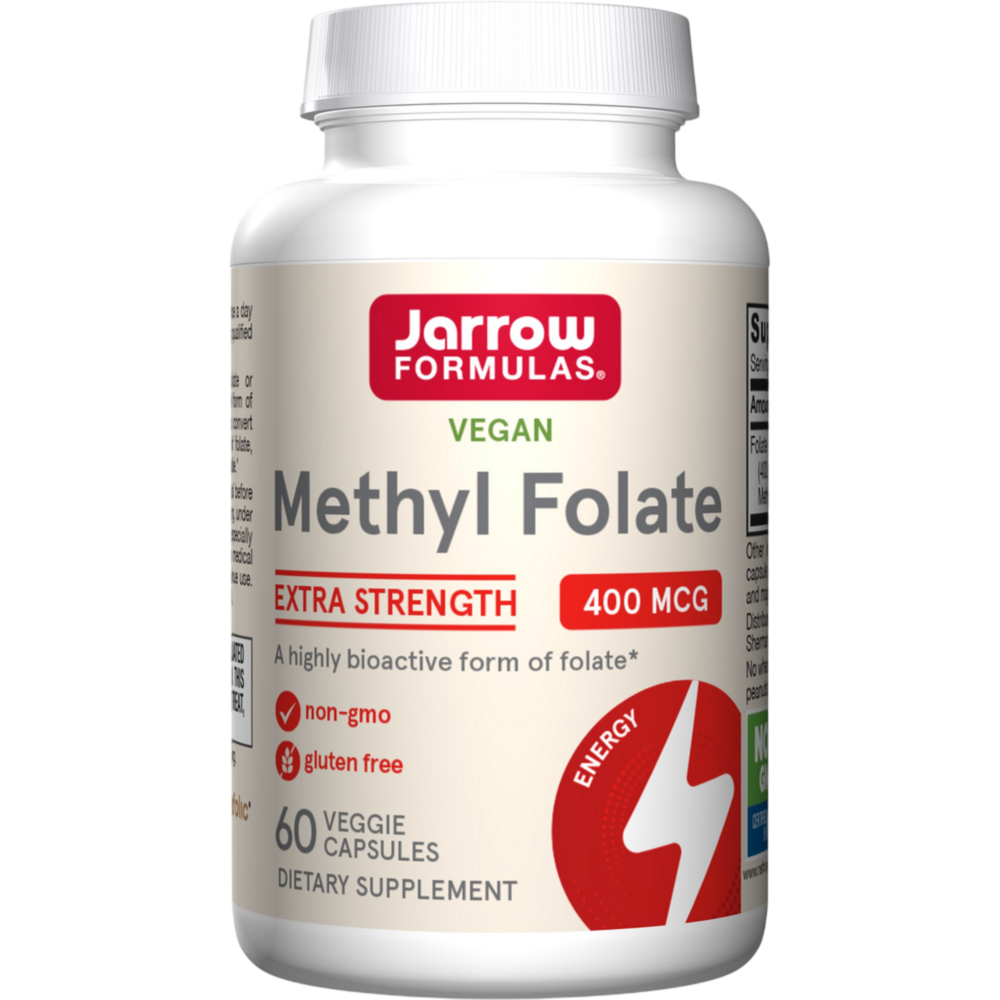
Methyl Folate 400mcg by Jarrow Formulas
60 capsules · 60-day supply
Active Methylfolate for Daily Folate and Homocysteine Support$13.99
Purchase options
Practitioner-grade brand3rd-party testedFree shipping $50+
Vegan·Vegetarian·Gluten Free
Jarrow Formulas Methyl Folate 400mcg overview
This is an everyday-strength folate for adults who want the active form: people whose RBC Folate runs low or low-normal, whose Homocysteine is higher than they would like, or whose MTHFR Genotype shows a variant that slows the conversion of folic acid. It also suits people who eat few leafy greens and legumes or who drink alcohol regularly. If your folate and Homocysteine are already in range on a good diet, you may not need it.
Folate from food and folic acid from fortified grains both have to be converted, in several steps, to 5-methyltetrahydrofolate (5-MTHF) before the body can use them. This capsule supplies 5-MTHF directly, as the (6S) glucosamine salt, so the last conversion step is skipped. In that form, folate donates the methyl group that recycles homocysteine back to methionine, a reaction that also needs vitamin B12, and it supplies building blocks for DNA and for new red blood cells.
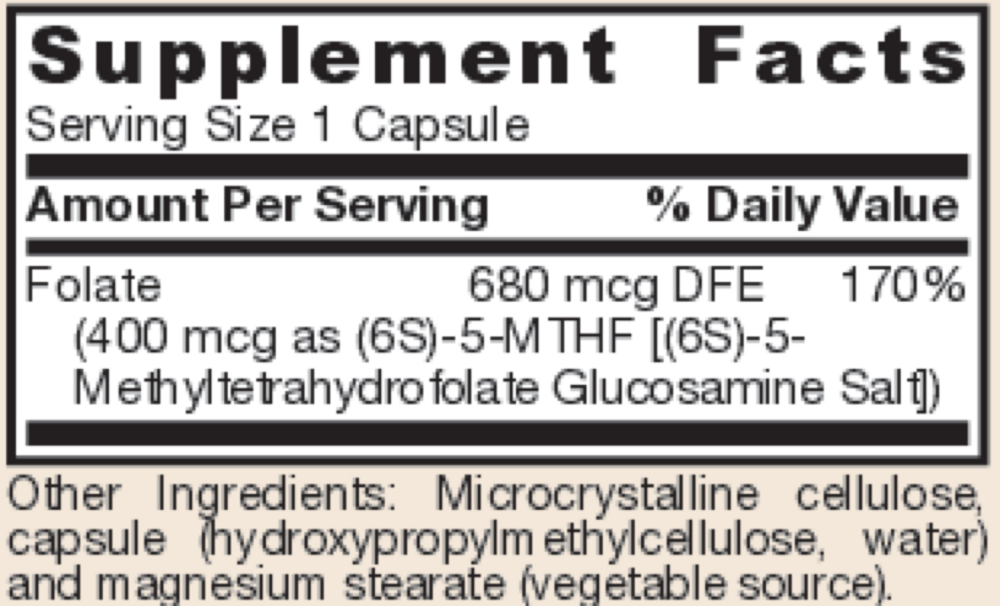
Each capsule provides 680 mcg DFE of folate, which is 400 mcg of (6S)-5-MTHF. The label directs adults to take 1 capsule once a day, with or without food, or as a qualified healthcare professional directs. It pairs naturally with vitamin B12. If Homocysteine is the reason you are taking it, your B12 and B6 status matter as much as folate does.
Know your Vitamin B12 level before taking folate long term. Folate can correct the anemia of B12 deficiency while nerve damage continues unnoticed, so a low or borderline Vitamin B12, or a raised Methylmalonic Acid, should be dealt with first. The label says to consult a healthcare professional if you take medication, especially antiepileptic medicines and chemotherapy: folate can interfere with phenytoin and with methotrexate. It says the same if you are pregnant, nursing, under 18 or have a medical condition. In pregnancy, public health guidance is written around folic acid, so ask which folate to take.
RBC Folate reflects the past few months, so recheck it, along with Homocysteine, after 8–12 weeks. Homocysteine often moves sooner, within 4–6 weeks. Most people feel nothing either way, which is expected. Compared with folic acid, methylfolate costs more and has a shorter research record, but it does not depend on the conversion step and leaves no unmetabolized folic acid in the blood. At this strength, side effects are uncommon.
Frequently asked questions
What is the difference between methylfolate and folic acid?
Folic acid is a synthetic form that the body must convert in several steps. Methylfolate (5-MTHF) is the finished, active form found in blood. Both raise folate levels; methylfolate does so without relying on the MTHFR conversion step.
What does 680 mcg DFE mean on a folate label?
DFE stands for dietary folate equivalents, the unit labels use so that different folate forms can be compared. This label counts its 400 mcg of (6S)-5-MTHF as 680 mcg DFE. The capsule holds 400 mcg of methylfolate; the DFE figure is a conversion, not extra folate.
Should I take methylfolate if I have an MTHFR variant?
Many clinicians prefer methylfolate for people with MTHFR variants because it skips the step the variant slows. What matters more than the gene is your Homocysteine and RBC Folate: if both are in range, the variant alone is not a reason to supplement.
Do I need vitamin B12 with methylfolate?
Often, yes. Folate and B12 work in the same reaction, and folate can hide the blood signs of a B12 deficiency while nerve problems progress. Check Vitamin B12 before long-term use, and correct a low level alongside folate, not after.
When is the best time to take methyl folate?
Once a day, at any time, with or without food, as the label directs. Folate is water-soluble and absorbs well either way. Some people find B vitamins mildly energizing and prefer the morning. Taking it at the same time each day makes it easier to remember.
Can I take methylfolate while pregnant?
Ask your obstetric clinician first. Pregnancy recommendations are based on folic acid, the form studied for that purpose, and most prenatal vitamins already contain folate. Do not add or swap folate products in pregnancy without their advice.
Does methylfolate have side effects?
At 400 mcg they are uncommon. A few people report feeling jittery or irritable or sleeping poorly, more often at much higher doses. The label says to discontinue use if adverse reactions occur; tell your clinician if that happens.
Is Jarrow Methyl Folate vegan and gluten free?
The front of the bottle is labeled vegan, non-GMO and gluten free, and the label states no major allergens. The capsule is hydroxypropylmethylcellulose, a plant-derived material, and the magnesium stearate is listed as vegetable source.
How to take it & ingredients
Suggested use: Adults take 1 capsule once a day with or without food or as directed by your qualified healthcare professional.
Active ingredients
1 capsule per serving · 60 servings
Folate
(6S)-5-MTHF [(6S)-5-Methyltetrahydrofolate Glucosamine Salt]
(6S)-5-MTHF [(6S)-5-Methyltetrahydrofolate Glucosamine Salt]
680 mcg DFE, 400 mcg
Other ingredients: Microcrystalline cellulose, Capsule (hydroxypropylmethylcellulose, water), Magnesium stearate (vegetable source)
Certifications
Benefits
Warnings