Instalab



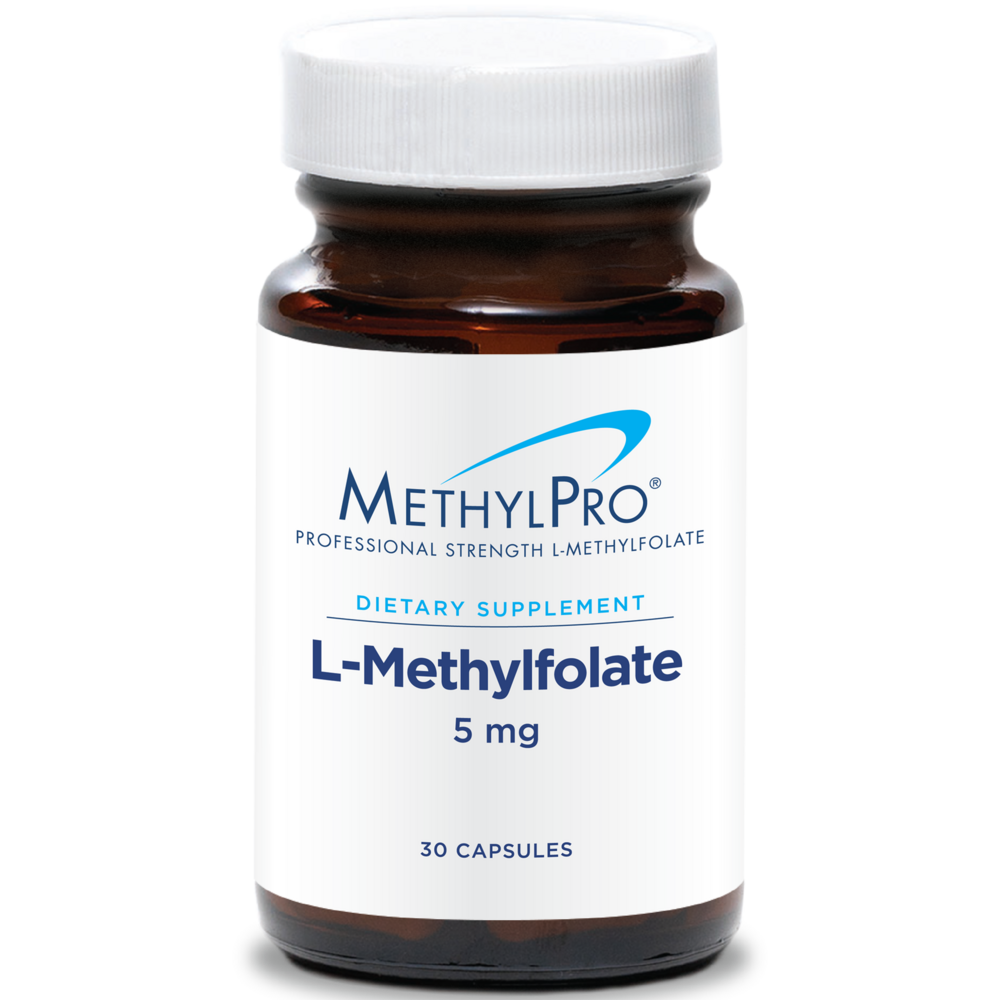
MethylPro
L-Methylfolate 1mg by MethylPro
90 capsules · 90-day supply
Active L-Methylfolate for Folate and Homocysteine Support$25.99
Purchase options
Practitioner-grade brand3rd-party testedFree shipping $50+
Vegetarian
MethylPro L-Methylfolate 1mg overview
A 1 mg capsule sits between an everyday folate and the high-dose products a clinician directs. It fits adults whose RBC Folate has tested low, whose Homocysteine stays raised on a lower dose, or whose MTHFR Genotype shows a variant and whose clinician wants more than a multivitamin supplies. It is more than most people with a good diet and normal labs need. If that describes you, a lower-strength folate, or none, is the better choice.
L-methylfolate (L-5-methyltetrahydrofolate, or 5-MTHF) is the form of folate that circulates in blood. Folic acid and food folate must be converted to it in several steps, the last of which depends on the MTHFR enzyme; supplying it ready-made skips that step. In cells it hands a methyl group to homocysteine to regenerate methionine, a reaction that needs vitamin B12, and it supports the making of DNA and red blood cells. The label lists the calcium salt, plus 270 mg of glycine, an amino acid for which it makes no claim.
Each capsule provides 1.7 mg DFE of folate, which is 1 mg of L-5-methylfolate. The label's suggested use is 1 capsule daily, or as directed by a healthcare practitioner. It can be taken with or without food. Morning is a sensible default, since some people find methylfolate mildly activating. There is no benefit in doubling up on days you feel tired; folate works over weeks, not hours.
Check Vitamin B12 before you start. Folate at this dose can normalize the blood count in B12 deficiency while nerve damage goes on, so a low or borderline Vitamin B12, or a raised Methylmalonic Acid, needs attention first; many clinicians give the two vitamins together. Tell your prescriber if you take methotrexate, or an anti-seizure medicine such as phenytoin, phenobarbital or primidone, because folate can interfere with them. If you are pregnant or nursing, or have a seizure disorder, ask your clinician before taking it.
Recheck Homocysteine after 4–6 weeks and RBC Folate after 8–12 weeks, then settle on the lowest dose that keeps both in range. Most people feel no different. A minority notice irritability, restlessness or poor sleep, which is a sign to step down to a lower strength. Compared with folic acid, methylfolate costs more but does not rely on the conversion step. L-methylfolate is sold in several strengths, so the dose can be matched to your labs.
Frequently asked questions
What is L-methylfolate?
It is the active form of folate, also written L-5-MTHF, and the form that circulates in blood. Folic acid has to be converted to it in several steps. This product provides 1 mg per capsule as the calcium salt, shown on the label as 1.7 mg DFE.
Is 1 mg of methylfolate a lot?
It is more than a multivitamin supplies, and it equals the adult upper limit that was set for folic acid, 1,000 mcg a day. It is a common dose when labs show a need. Without a low RBC Folate or a raised Homocysteine, a lower strength usually makes more sense.
Why does the label say 1.7 mg DFE?
DFE means dietary folate equivalents, a unit that lets different folate forms be compared with folate from food. The label counts its 1 mg of L-5-methylfolate as 1.7 mg DFE. The capsule contains 1 mg of methylfolate, not 1.7 mg.
Should I check B12 before taking methylfolate?
Yes. Folate can correct the anemia caused by low B12 while nerve damage continues, which delays the diagnosis. Test Vitamin B12, and Methylmalonic Acid if B12 is borderline, before long-term use, and correct any shortfall at the same time.
Does L-methylfolate help with MTHFR variants?
It bypasses the MTHFR step, so it raises active folate whatever your genotype. Whether you need it depends on your labs more than your genes: a raised Homocysteine or a low RBC Folate is the reason to supplement, not the variant by itself.
What is the glycine in this product for?
The label lists 270 mg of glycine, an amino acid, in each capsule and makes no claim for it. That is a small amount next to what a normal diet supplies, and we would not expect it to have a noticeable effect.
What are the side effects of L-methylfolate?
Most people notice none at 1 mg. Some report irritability, restlessness, headache or trouble sleeping, usually soon after starting. Taking it in the morning or stepping down to a lower strength generally settles it. Stop and ask your clinician if it does not.
Is MethylPro L-Methylfolate vegetarian?
The bottle says vegetarian capsules and is marked hypoallergenic. The capsule is hydroxypropyl methylcellulose. Other ingredients are a rice extract blend (rice bran extract, rice hulls, gum arabic, sunflower oil), microcrystalline cellulose and silicon dioxide.
How to take it & ingredients
Suggested use: As a dietary supplement, take 1 capsule daily, or as directed by a healthcare practitioner.
Active ingredients
1 capsule per serving · 90 servings
Folate
L-5-Methylfolate, calcium salt
L-5-Methylfolate, calcium salt
1.7 mg DFE, 1 mg
Glycine
270 mg
Other ingredients: Hydroxypropyl methylcellulose, Rice Extract Blend (Rice Bran Extract, Rice Hulls, Gum Arabic, Sunflower Oil), Microcrystalline cellulose, Silicon dioxide
Certifications
Benefits
Warnings