 Instalab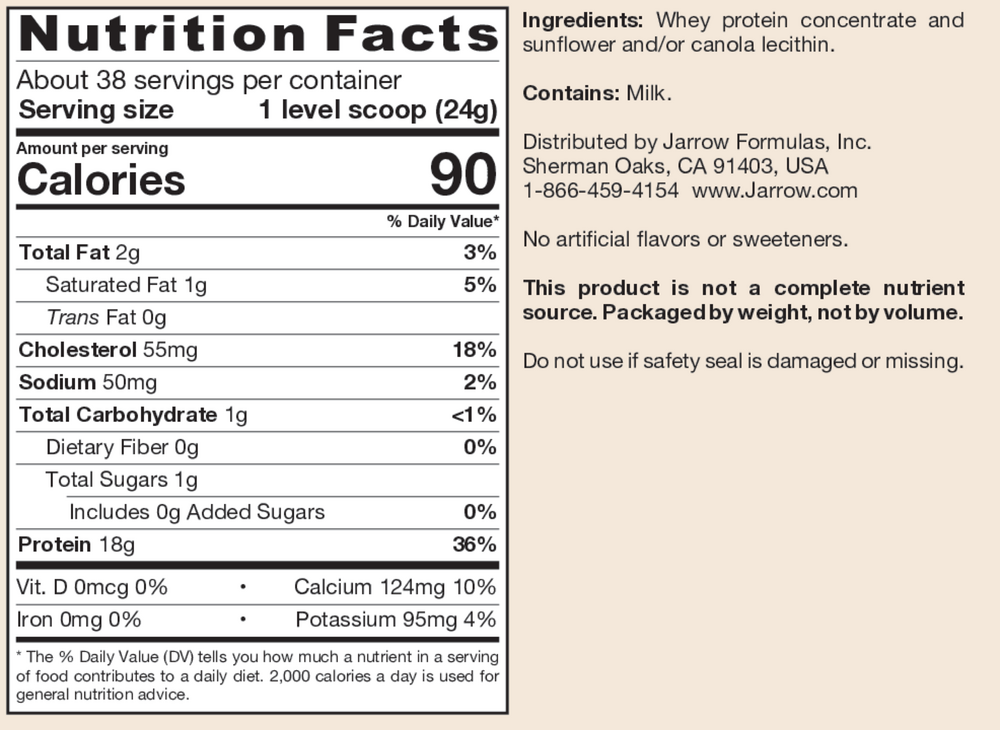

Jarrow Formulas
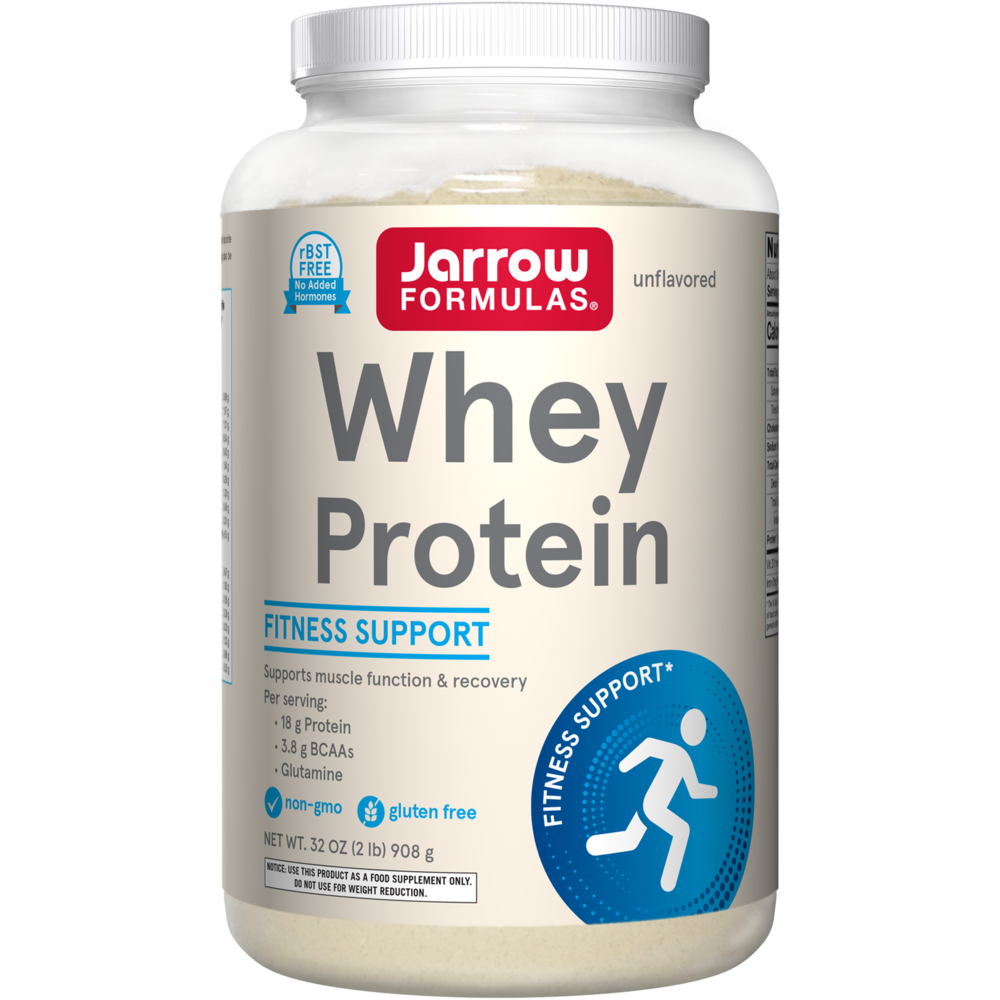
Whey Protein - Unflavored by Jarrow Formulas
908 grams · 37-day supply
Pure Whey Protein for Muscle Support and Recovery$51.99retail
Add to cart for 19% off
Purchase option
19% below MSRP3rd-party tested for purity & potencyFree shipping $50+
Gluten Free·Soy Free·Egg Free·Tree Nut Free·Fish Free·Peanut Free·
Jarrow Formulas Whey Protein - Unflavored overview
If you’re searching for unflavored whey protein to reliably hit your daily protein target, this fits adults doing resistance training, runners who want faster post‑session recovery, and anyone who struggles to get enough protein from food at breakfast or after work. It’s also practical for older adults concerned about muscle loss. One scoop gives 18 g; most active adults aim for about 25–35 g per meal, so plan on one to two scoops depending on what’s on your plate.
Whey protein is fast‑digesting and rich in leucine, the amino acid that flips on your muscle‑building switch (mTOR, the pathway that initiates muscle protein synthesis). Because it empties from the stomach quickly, blood amino acids rise within an hour, which is why it’s favored right after training. In practice, pairing whey protein with progressive lifting adds lean mass and improves strength over 8–12 weeks compared with diet alone. Being unflavored lets you add carbs from fruit or milk when you want quicker glycogen refilling for next‑day sessions.
Mix one rounded scoop with 4–6 oz of water, milk, or a smoothie. For most, 1–2 scoops covers a typical post‑workout target. The 1–2 hour window after training is convenient, but total daily protein matters more than exact timing. Combine with fruit or milk if you want carbohydrates for recovery; use water or unsweetened milk if you’re watching calories. If you need a slower, overnight option, casein is steadier than whey.
Whey protein concentrate contains some lactose. If lactose bothers you, switch to whey isolate or a dairy‑free protein. Avoid entirely if you have a true milk protein allergy. If you have chronic kidney disease or a history of recurrent kidney stones, discuss total daily protein with your clinician and monitor eGFR (kidney filtration) and urine testing as advised.
Minerals in whey can bind certain drugs and reduce absorption. Separate whey protein by at least 2–4 hours from levothyroxine and from antibiotics in the tetracycline or fluoroquinolone families. If you use these medicines regularly, set a consistent dosing schedule. Jarrow Formulas lists one scoop per use; adjust only if your overall daily protein intake remains appropriate.
Frequently asked questions
How much whey protein should I take per day?
Use whey protein to help you reach about 1.2–2.0 g of protein per kg body weight daily if you train, spread over 3–4 meals. Practically, 1–2 scoops once or twice a day covers most gaps when food alone falls short.
When is the best time to take whey protein?
After a workout is convenient because whey is fast‑digesting and rich in leucine. That said, total daily protein matters more than timing, so use it whenever it helps you hit your per‑meal target.
Is whey protein bad for your kidneys?
In healthy adults, whey protein within normal daily protein targets is considered safe. If you have chronic kidney disease, diabetes with kidney involvement, or recurrent kidney stones, get clinician guidance and monitor labs like eGFR and urine albumin.
Does whey protein have lactose?
Whey protein concentrate contains a small amount of lactose. If you’re lactose intolerant, choose whey protein isolate or a plant‑based powder to reduce bloating or gas.
Whey concentrate vs isolate: which should I buy?
Whey isolate has more protein per scoop and much less lactose, which helps if you’re sensitive to dairy. Whey concentrate is cost‑effective and works well if you tolerate lactose and want an unflavored base.
Can I take whey protein with antibiotics or thyroid medicine?
Yes, but separate dosing. Take whey protein at least 2–4 hours apart from levothyroxine and from tetracycline or fluoroquinolone antibiotics to avoid reduced drug absorption.
Can whey protein help with weight loss?
It can help during a calorie deficit by improving fullness and preserving lean mass when combined with resistance training. Replace lower‑protein snacks or add to breakfast to reach your daily protein goal without excess calories.
Can whey protein cause acne or bloating?
Some people notice acne or digestive discomfort with dairy proteins. If this happens, try whey isolate, reduce serving size, or switch to a non‑dairy protein. Persistent symptoms warrant stopping and reassessing.
How to take it & ingredients
Suggested use: Mix 1 rounded scoop with 4–6 oz. of cold water, milk, juice, or your favorite beverage. For a protein smoothie, blend with ice, juice, and fruit. May also be added to foods like cereal, yogurt, or pancakes.
Active ingredients
1 scoop = 24g per serving · 38 servings
Protein
Whey protein concentrate
Whey protein concentrate
18 g
Calcium
124 mg
Potassium
95 mg
Sodium
50 mg
Other ingredients: Sunflower lecithin, Canola lecithin
Certifications
Benefits
Warnings
Customers also considered
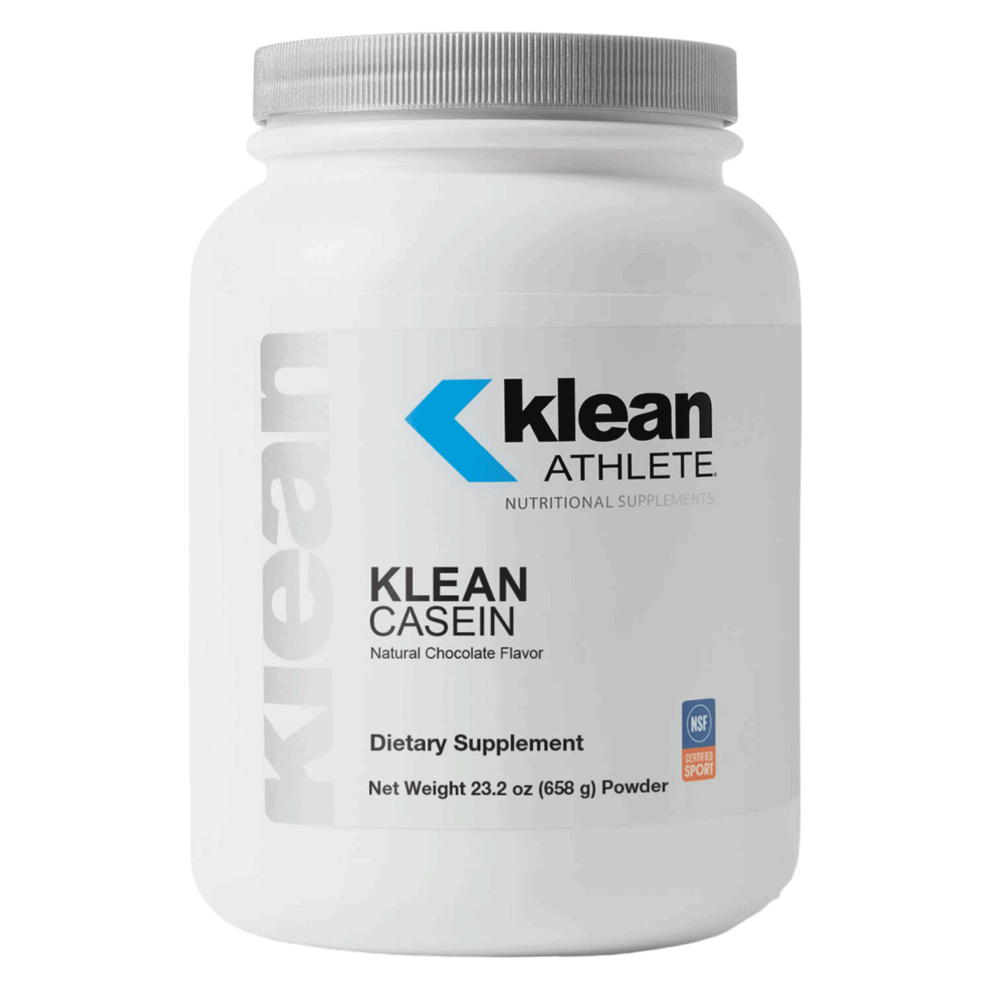
Klean Athlete
Casein Natural Chocolate
658 grams
$68.50
Add to cart for lower price
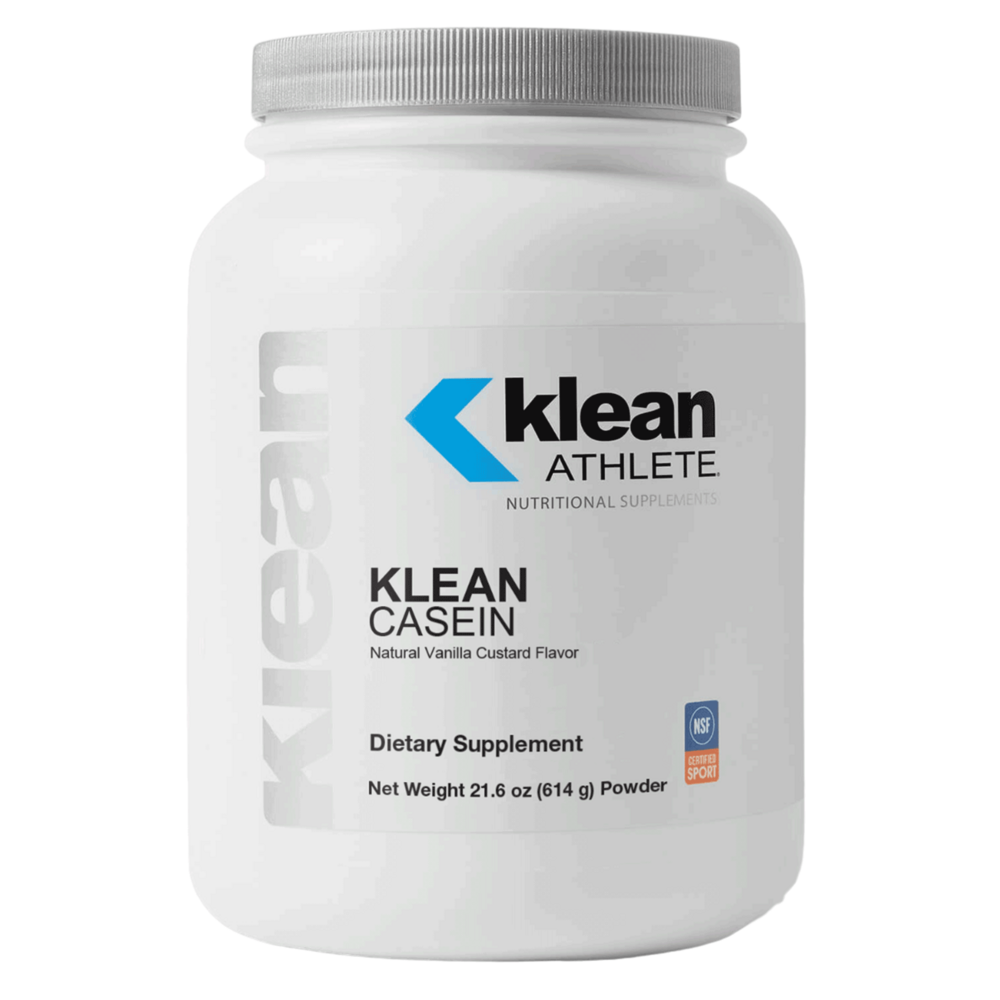
Klean Athlete
Casein Natural Vanilla Custard Flavor
614 grams
$68.50
Add to cart for lower price
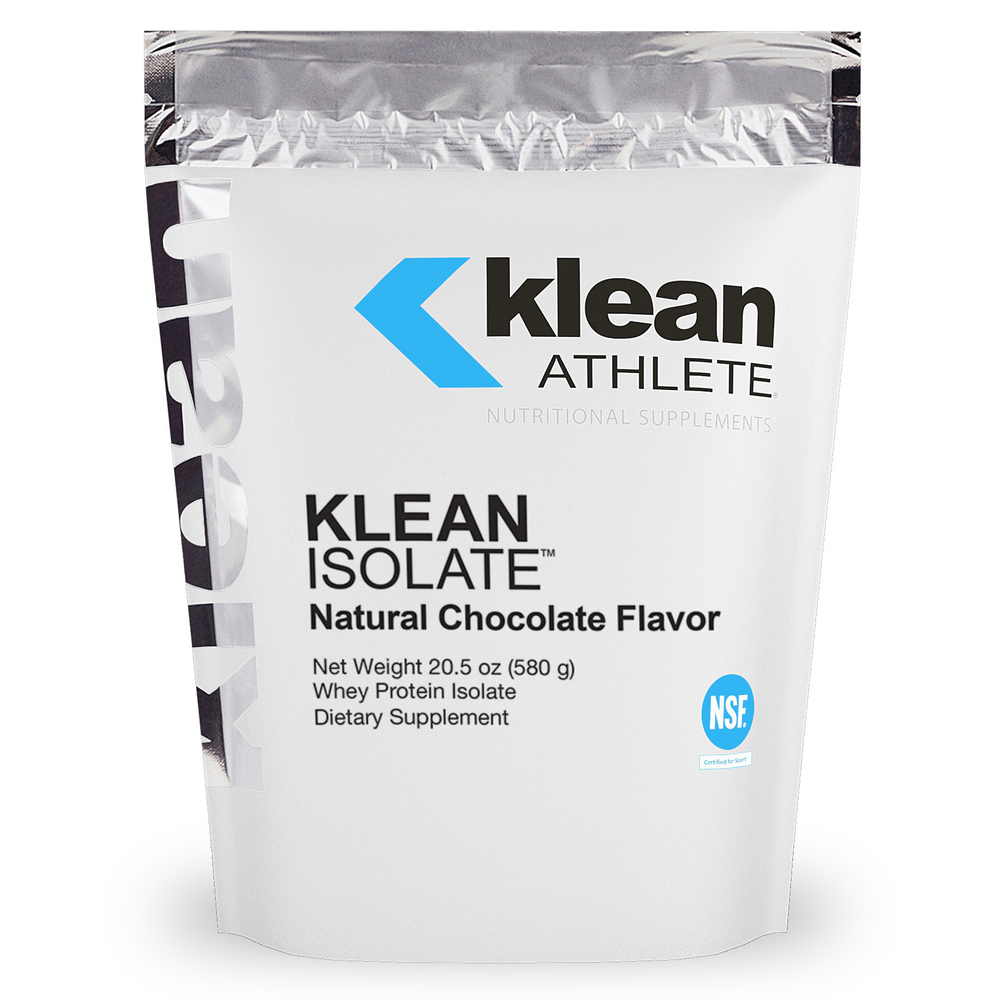
Klean Athlete
Klean Isolate Natural Chocolate
580 grams
$64.50
Add to cart for lower price
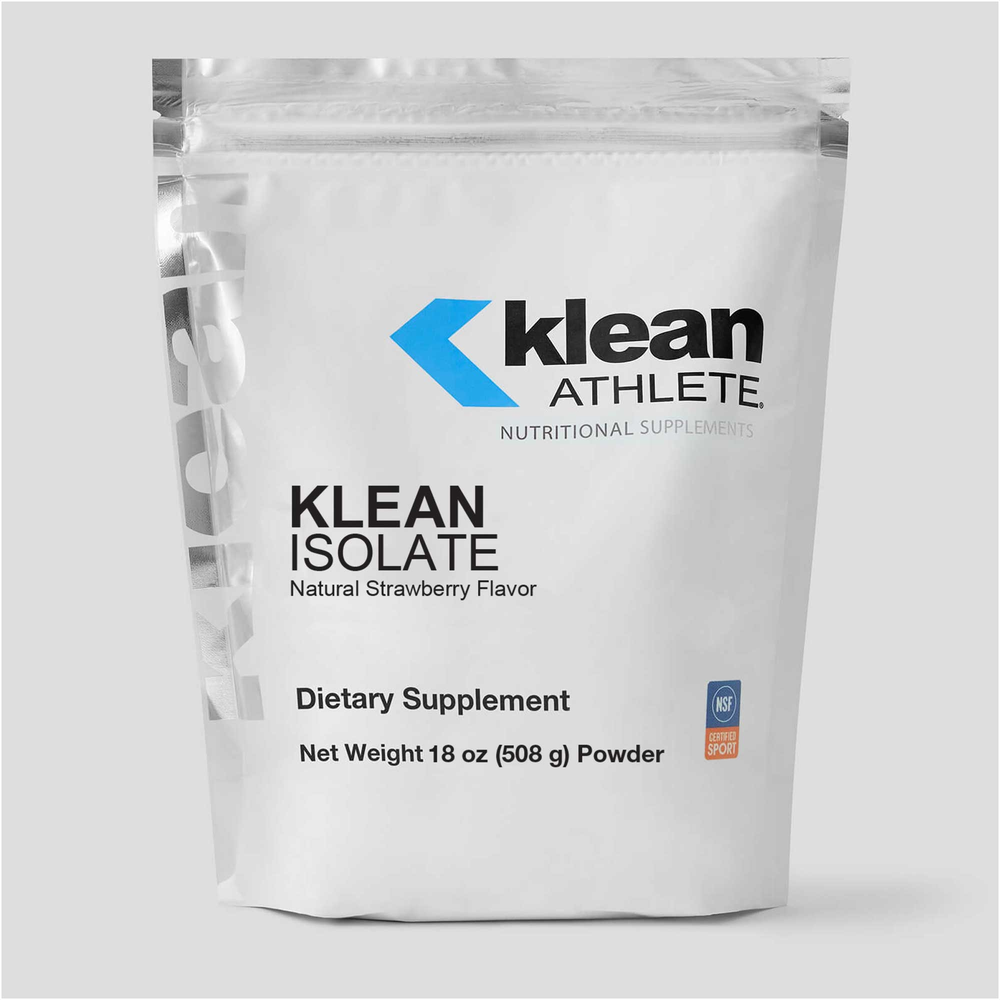
Klean Athlete
Klean Isolate Natural Strawberry
508 grams
$64.50
Add to cart for lower price