 Instalab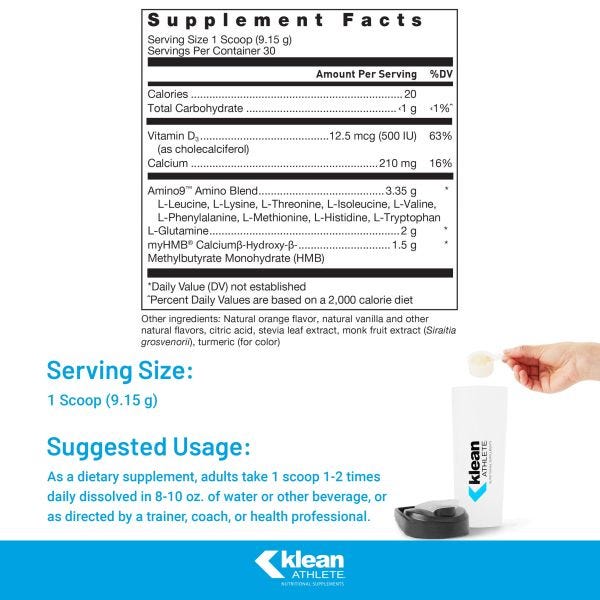


Klean Athlete
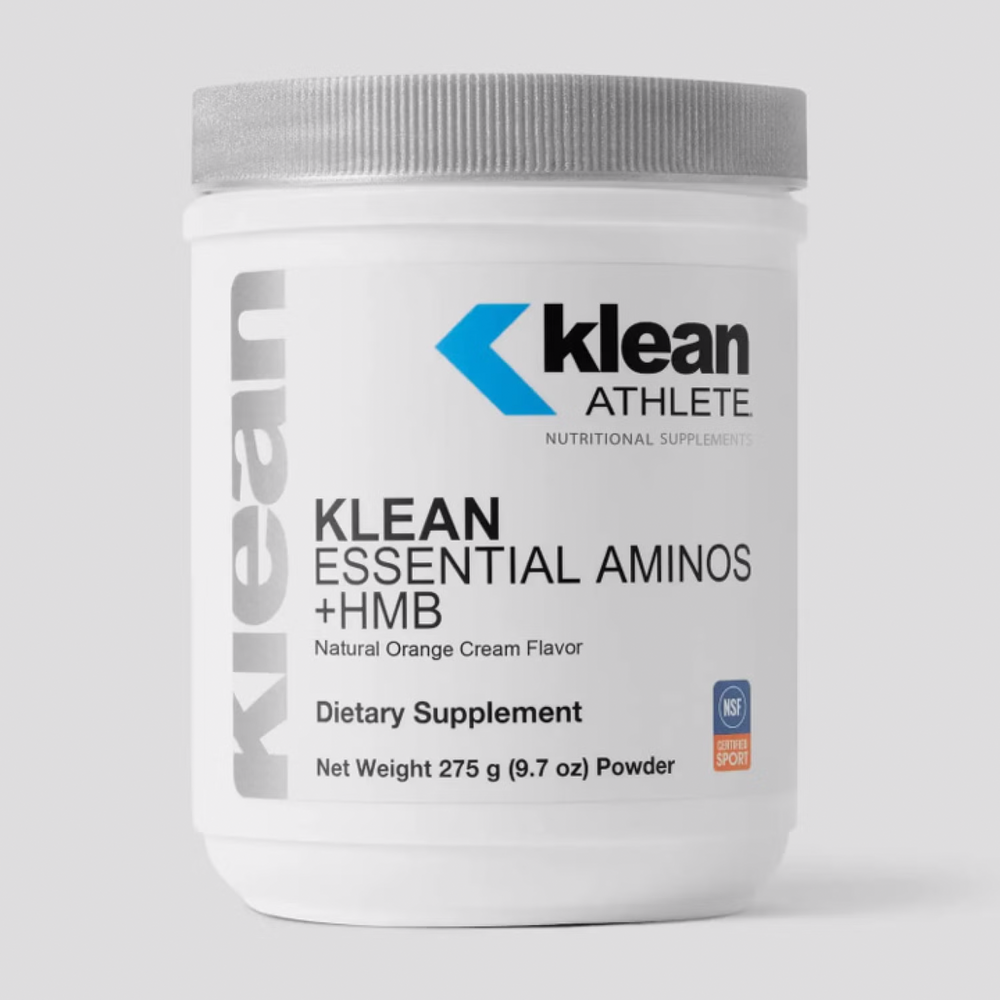
Klean Essential Aminos + HMB by Klean Athlete
275 grams
Essential Amino Acids and HMB for Muscle Recovery and Performance$XX.XX$78.00retail
Purchase option
21% below MSRP3rd-party tested for purity & potencyFree shipping $50+
Gluten Free
Klean Athlete Klean Essential Aminos + HMB overview
Cutting calories for a race weight or rebuild after a layoff is when an HMB supplement with essential amino acids earns its keep. It helps athletes in heavy training blocks, adults over 40 noticing slower recovery, and anyone who struggles to hit daily protein targets. If your Vitamin D, 25-Hydroxy is in the lower range, the 500 IU here is light maintenance, not a repletion dose. For strict plant-based eaters, this is a practical way to get the full essential amino acid spectrum without whey.
HMB (a leucine metabolite) slows muscle protein breakdown and helps muscle cells stay intact during hard training or immobilization. Essential amino acids are the actual building blocks for new muscle protein, and the leucine-rich blend here helps flip the muscle-building switch after exercise. Vitamin D3 and calcium support muscle contraction and function, while glutamine is a fuel for immune and gut cells that can dip with high-volume training. The net effect is better retention of lean mass and steadier recovery.
Mix one scoop in water once or twice daily. Twice daily delivers 3 g of HMB, the evidence-based total used to preserve lean mass and reduce soreness within 2 to 4 weeks. Take around training or between meals, especially when a workout lands far from a protein-rich meal. If you already use whey or a high-protein meal post‑workout, take this at a different time of day to keep amino acid availability high.
HMB pairs well with creatine monohydrate if strength or power is the goal. Space this at least 2 hours from levothyroxine, tetracycline or quinolone antibiotics, or bisphosphonates, since calcium can reduce their absorption. If you have a history of high calcium, recurrent kidney stones, sarcoidosis, or advanced kidney disease, talk to your clinician first. People using levodopa for Parkinson’s should avoid taking amino acids at the same time, as they compete for absorption.
Frequently asked questions
Does HMB actually build muscle or just prevent breakdown?
HMB mainly reduces muscle protein breakdown and preserves lean mass under stress (hard training, calorie deficit, immobilization). With enough dietary protein and training, that preservation translates into better strength and size gains over time.
How long does HMB take to work?
Most people notice less soreness and better training quality within 2 to 4 weeks at 3 g per day. Muscle preservation during a cut or layoff is measurable over 4 to 8 weeks when training and protein are consistent.
Should I take essential amino acids before or after workouts?
Either works. Take them within a couple of hours around training if you aren’t eating a protein-rich meal then. If you already use whey post-workout, take the essential amino acids at a different time to keep muscle protein synthesis elevated longer.
Can I combine HMB with creatine?
Yes. They act through different mechanisms—HMB reduces breakdown, creatine increases high-intensity energy—so the combo is common for strength and power. Keep hydration up and titrate one change at a time.
Is the 500 IU of vitamin D enough?
It’s a small maintenance dose. If your Vitamin D, 25-Hydroxy is low, you’ll likely need a higher dose short term under clinician guidance, then step down. Recheck your level after 8 to 12 weeks to calibrate.
Any side effects with HMB and amino acids?
They’re generally well tolerated. A minority report mild GI upset. Because this includes calcium, separate it from thyroid medication and certain antibiotics. If you have kidney disease or a history of high calcium, get medical advice first.
Is HMB safe for women and older adults?
Yes. Studies in women and older adults show HMB helps preserve lean mass and function, especially when paired with resistance training and adequate protein intake.
How to take it & ingredients
Suggested use: Adults take one scoop one to two times daily dissolved in 8 to 10 ounces of water or other beverage, or as directed by a trainer, coach, or health professional.
Active ingredients
1 scoop per serving
Vitamin D3
Cholecalciferol
Cholecalciferol
500 IU, 12.5 mcg
Calcium
210 mg
HMB
Calcium β Hydroxy β Methylbutyrate Monohydrate (myHMB)
Calcium β Hydroxy β Methylbutyrate Monohydrate (myHMB)
1500 mg
▼
Amino9 Essential Amino Blend
3350 mg
L-Histidine
-
L-Isoleucine
-
L-Leucine
-
L-Lysine
-
L-Methionine
-
L-Phenylalanine
-
L-Threonine
-
L-Valine
-
L-Tryptophan
-
L-Glutamine
2000 mg
Other ingredients: Natural orange flavor, Natural vanilla and other natural flavors, Citric acid, Stevia leaf extract, Monk fruit extract, Turmeric
Certifications
Benefits
Warnings