 Instalab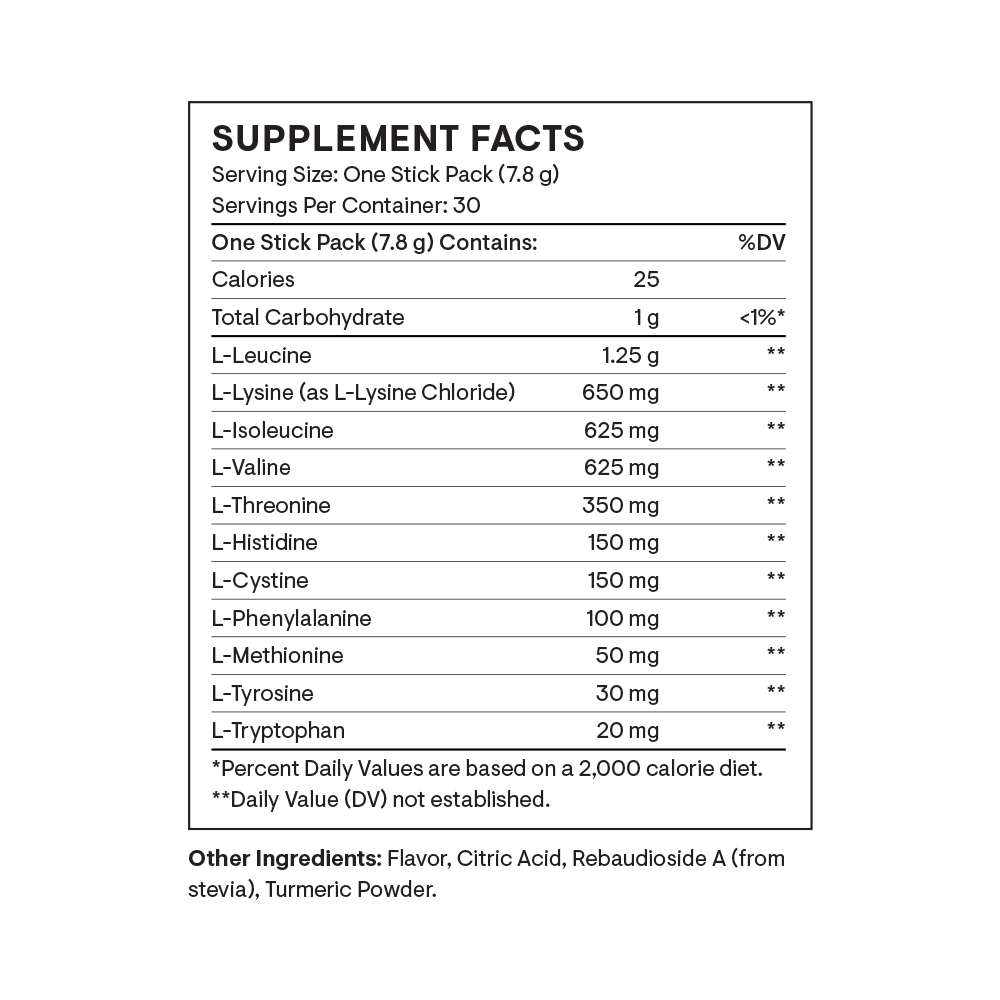


Thorne
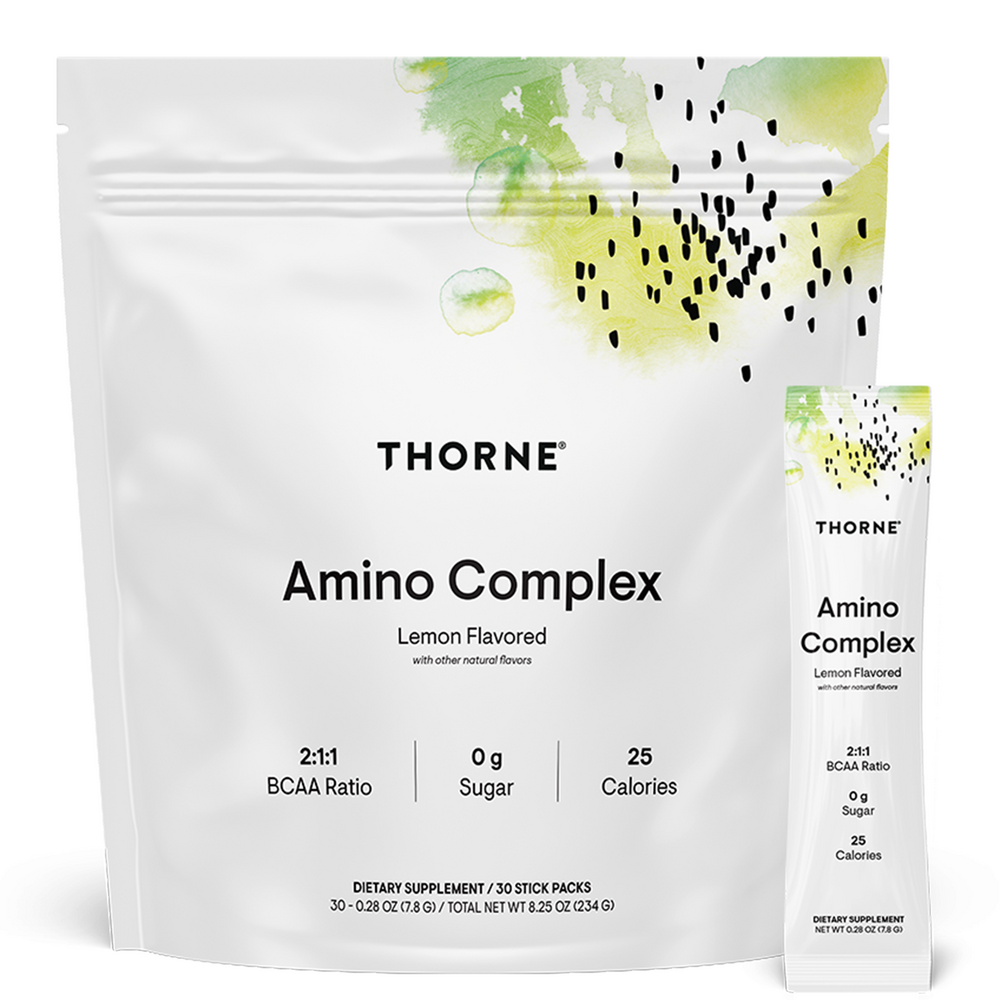
Amino Complex Lemon Stick Pack by Thorne
30 packets
Essential Amino Acids for Muscle Support and Recovery$56.00
Purchase options
Practitioner-grade brand3rd-party testedFree shipping $50+
Gluten Free·Soy Free·Dairy Free
Thorne Amino Complex Lemon Stick Pack overview
If you train hard but don’t always hit protein targets, an essential amino acids powder can cover the gap. It’s useful between meals, during a calorie cut to protect lean mass, or post‑workout when you can’t stomach a shake. Older adults and vegans on restrictive diets often get more from essential amino acids because they’re lower-volume, rapidly absorbed, and not limited like branched‑chain amino acids alone. If you already take 20–30 g whey after training, this is a lighter alternative, not a replacement.
Muscle growth turns on when leucine hits a threshold that activates mTOR (the growth switch in muscle cells). This blend supplies leucine with the other eight essential amino acids that your body can’t make, which are required to build new muscle proteins. Compared with branched‑chain amino acids (leucine, isoleucine, valine) alone, full essential amino acids create a stronger rise in muscle protein synthesis within 1–2 hours, and they help maintain that signal between meals, especially during calorie deficits or in older lifters.
Mix one stick with water once daily. For training days, use it 30–60 minutes before, immediately after, or between meals to space protein pulses 3–4 hours apart. If you’re over 50 or dieting aggressively, two sticks split across the day more reliably clear the leucine threshold. If you already eat a high‑protein meal or 20–30 g whey post‑workout, save this for a different window rather than stacking it on top.
Skip or clear with your clinician if you have phenylketonuria (can’t process phenylalanine), advanced kidney or liver disease, or are on an MAOI antidepressant (monoamine oxidase inhibitor, which can raise blood pressure with tyrosine/phenylalanine). For kidney concerns, monitor BUN (blood urea nitrogen) and eGFR (estimated kidney filtration) if you add amino acids to a high‑protein diet. The tryptophan here is low, but if you take an SSRI (a common antidepressant), use caution and stick to the suggested dose.
Essential amino acids outperform BCAAs for muscle protein synthesis because they provide all the building blocks, not just the trigger. In practice, you feel the difference as better recovery and less soreness within a week, while body‑composition changes show up over 4–12 weeks if training and calories are dialed. If you track labs, creatine kinase (a muscle damage enzyme) often calms faster after hard sessions when recovery is improving.
Frequently asked questions
EAA vs BCAA: which is better for muscle?
EAAs are better. Leucine triggers the signal, but you still need the other essential amino acids to build new muscle. BCAAs alone underperform compared with full EAA blends in both fasted and post‑exercise settings.
When should I take essential amino acids for best results?
Take them around training or between meals. A dose 30–60 minutes pre‑ or immediately post‑workout boosts the muscle‑building signal. On rest days, use between meals to space protein hits every 3–4 hours.
How long do essential amino acids take to work?
They stimulate muscle protein synthesis within 1–2 hours. Noticeable recovery benefits show within 1–2 weeks, and measurable changes in lean mass typically require consistent training and intake over 4–12 weeks.
Do essential amino acids break a fast?
Yes for an autophagy/insulin fast, because amino acids raise insulin and activate muscle growth pathways. For a performance fast focused on training output, they’re fine and often helpful before or after workouts.
Are essential amino acids safe for kidneys?
In healthy people, typical doses are well tolerated. If you have reduced kidney function, talk to your clinician and monitor eGFR and BUN, especially if your total daily protein is already high.
Can I take essential amino acids with creatine?
Yes. They work through different mechanisms and pair well: EAAs drive muscle protein synthesis, creatine improves high‑intensity performance and muscle phosphocreatine stores. Take creatine daily, timing isn’t critical.
Any side effects from essential amino acids?
They’re usually easy on the stomach. A small number of people report nausea if taken on an empty stomach—mix with more water or sip more slowly. Rarely, headaches can occur from tyrosine; reduce the dose if so.
How to take it & ingredients
Suggested use: Mix 1 packet with at least 8 ounces of water, juice, or preferred beverage daily or as recommended by your health-care practitioner.
Active ingredients
1 packet = 7.8g per serving
L-Cystine
150 mg
L-Histidine
150 mg
L-Isoleucine
625 mg
L-Leucine
1.25 g
L-Lysine
Chloride
Chloride
650 mg
L-Methionine
50 mg
L-Phenylalanine
100 mg
L-Threonine
350 mg
L-Tryptophan
20 mg
L-Tyrosine
30 mg
L-Valine
625 mg
Other ingredients: Flavor, Citric Acid, Rebaudioside A (from stevia), Turmeric Powder
Certifications
Benefits
Warnings