
 Instalab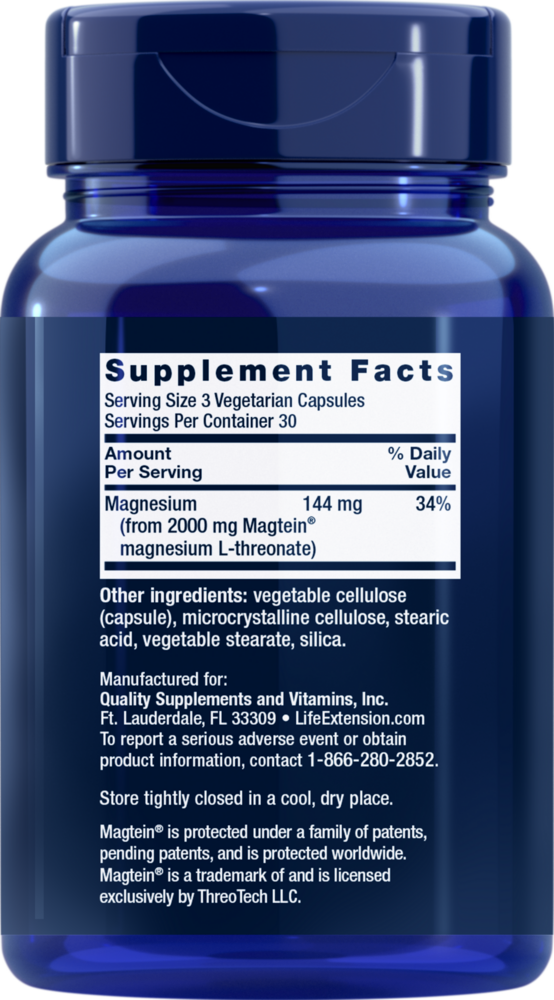

Life Extension
Neuro-Mag 144 mg by Life Extension
90 capsules · 30-day supply
Advanced Magnesium for Cognitive Support and Brain Health$42.99
Purchase options
Practitioner-grade brand3rd-party testedFree shipping $50+
Gluten Free
Life Extension Neuro-Mag overview
If your goal is clearer thinking, steadier focus, or better sleep quality, magnesium L-threonate is the form most often chosen for brain effects. It’s a fit if your Serum Magnesium or RBC Magnesium (a red blood cell test that better reflects tissue levels) is low or low-normal, if you live on a processed, low-magnesium diet, use proton pump inhibitors for heartburn, or are a high-caffeine, high-stress knowledge worker. Life Extension Neuro-Mag delivers a moderate daily amount, suited to cognitive maintenance rather than full-body repletion.
Magnesium L-threonate is bonded to threonic acid, which helps more magnesium cross the blood–brain barrier (the filter that protects the brain) compared with common salts. Higher brain magnesium supports synaptic plasticity, the brain’s ability to strengthen connections involved in memory and attention. Small human trials report improvements in working memory and executive function within 6 to 12 weeks. If you’re after bowel regularity or muscle cramp relief, other forms like magnesium citrate or glycinate tend to work better for those targets.
The suggested use is three capsules daily, with or without food. For steadier brain levels, split the dose morning and evening; if sleep is your priority, place the larger portion 1 to 2 hours before bed. The 144 mg elemental magnesium here is a maintenance-level dose; if your Vitamin D, 25-Hydroxy and Serum Magnesium are both low, you’ll often need more total magnesium from diet or a companion form like glycinate under clinician guidance.
Space magnesium at least 2 hours from antibiotics like tetracyclines and fluoroquinolones, 2 to 4 hours from levothyroxine, and away from bisphosphonates, since it can bind these drugs and reduce absorption. Significant kidney disease raises the risk of high magnesium; skip or use only with medical supervision. GI side effects are uncommon with magnesium L-threonate, but mild nausea can occur if taken on an empty stomach—food solves it in most people.
Frequently asked questions
Is magnesium L-threonate good for sleep?
It can help with sleep quality in some people by promoting relaxation in the nervous system, but it isn’t a sedative. Expect subtle effects within 1–2 weeks if you’re magnesium-depleted; stronger sleep benefits often come from magnesium glycinate or improving sleep hygiene.
How long does magnesium L-threonate take to work for memory?
Cognitive changes are gradual. Trials using magnesium L-threonate report improvements in 6–12 weeks, with some early changes by week 4. Keep the dose consistent and reassess after three months alongside tasks that matter to you.
What’s the best time of day to take magnesium L-threonate?
Split dosing works well: morning for daytime focus and evening for wind-down. If you feel drowsy, shift the larger portion to night. Take it with a small snack if you notice stomach sensitivity.
Does magnesium L-threonate cause diarrhea?
It’s less likely than citrate or oxide to loosen stools. Most people tolerate it well. If you do get GI upset, take it with food and divide the dose. Persistent diarrhea means the form or dose may not suit you.
Is magnesium L-threonate better than magnesium glycinate?
They serve different aims. Magnesium L-threonate is picked for brain effects and focus, while magnesium glycinate is often favored for sleep, anxiety, and muscle tension. Many people pair them to reach total daily magnesium needs.
Can I take magnesium L-threonate with ADHD medication or antidepressants?
Generally yes, but separate it from morning stimulants if it blunts their effect for you. The main issues are binding interactions with certain antibiotics, thyroid meds, and bone drugs. If you’re on multiple psych meds, check with your prescriber.
Should I test my magnesium level first?
If you can, yes. Serum Magnesium and RBC Magnesium give context on status and help choose dose and form. Even normal serum can mask low tissue levels, which is why RBC Magnesium is useful when available.
How to take it & ingredients
Suggested use: Take three (3) capsules daily, or as recommended by a healthcare practitioner.
Active ingredients
3 capsules per serving · 30 servings
Magnesium
Magtein® magnesium L-threonate
Magtein® magnesium L-threonate
144 mg
Other ingredients: Vegetable cellulose (capsule), Microcrystalline cellulose, Stearic acid, Silica, Vegetable stearate
Certifications
Benefits
Warnings
Customers also considered

CereMag
Ortho Molecular Products
99 grams
$77.76$70.05 with Subscribe & Save

Dr. Formulated Magnesium Raspberry
Garden of Life
197.4 grams
$24.99$19.99 with Subscribe & Save

Dual-Mag Complex
Natura Health Products
90 capsules
$22.99$17.99 with Subscribe & Save

Mag Threonate
Ortho Molecular Products
60 capsules
$78.64$70.85 with Subscribe & Save