 Instalab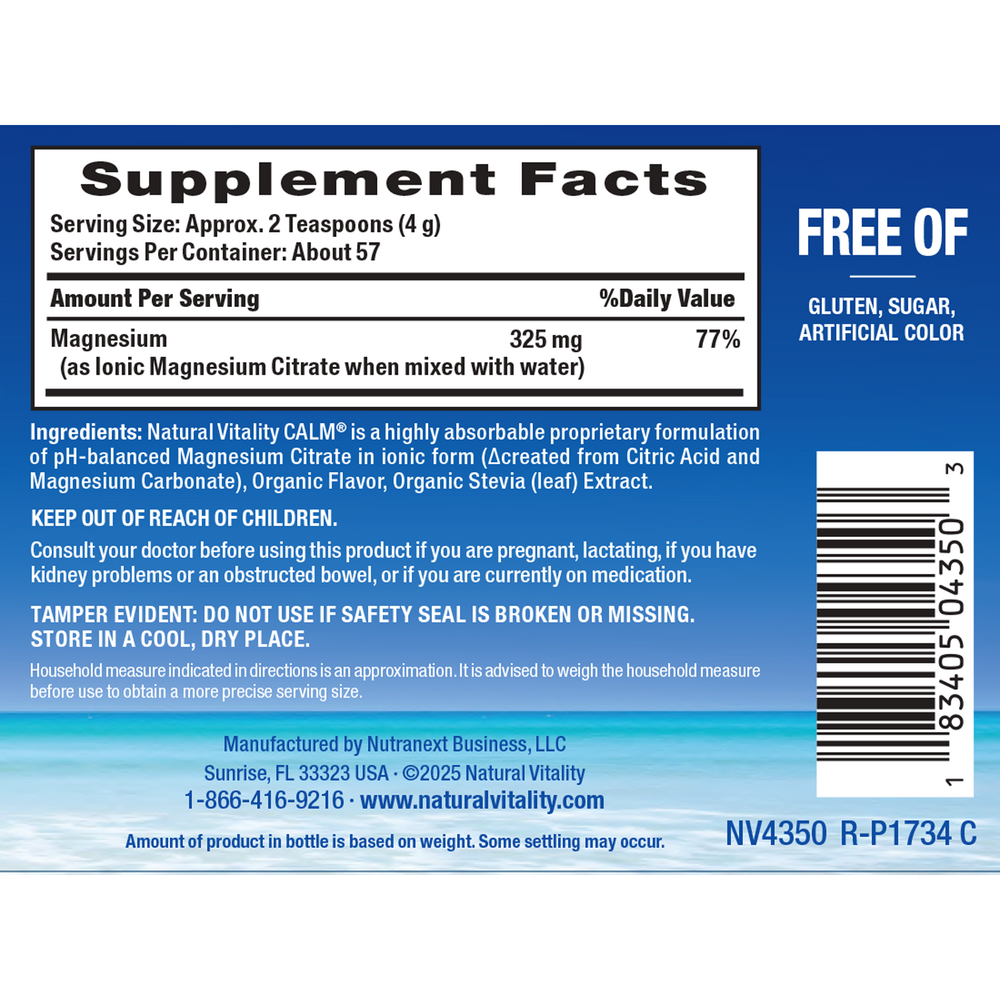

Natural Vitality Calm
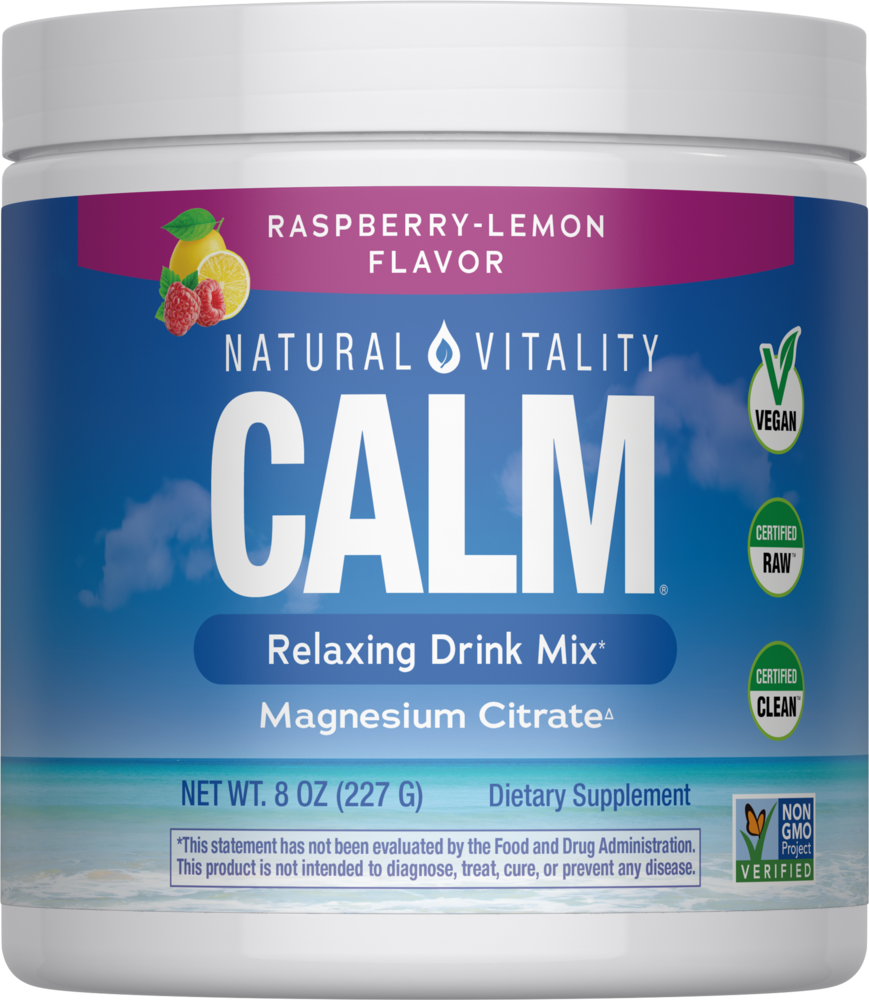
Natural Calm Raspberry-Lemon 325 mg by Natural Vitality Calm
226 grams · 56-day supply
Natural Magnesium for Calmness and Relaxation$XX.XX$26.99retail
This item is currently out of stockGet notified when this item is back in stock
19% below MSRP3rd-party testedFree shipping $50+
Vegan·Gluten Free·Sugar Free·Artificial Color Free·Artificial Flavor Free
Natural Vitality Calm Natural Calm Raspberry-Lemon overview
If you’re looking for magnesium citrate for sleep, evening calm, or fewer muscle cramps, this fits. It’s useful if your Magnesium, RBC (the red-cell test that reflects tissue stores) runs low or low-normal, your diet lacks greens/legumes, you train hard and sweat a lot, or you’re on medicines that waste magnesium like loop diuretics. People with occasional constipation often prefer citrate because it gently loosens stools while repleting magnesium.
Magnesium helps nerve cells fire in a more controlled way and makes muscles relax after they contract. It also nudges GABA signaling (the brain’s main calming neurotransmitter), which is why many notice easier sleep. The citrate form dissolves well and is absorbed better than magnesium oxide, though it’s more likely to soften stools. You can track status with Serum Magnesium and, more sensitively, Magnesium, RBC.
Start with half a teaspoon daily and increase over several days toward 2 teaspoons as tolerated, splitting into 2–3 doses. Take with or without food, and consider an evening dose if sleep is the goal. If stools get loose, back down to your “bowel tolerance” dose. Most people notice calmer sleep within 3–7 days, with steadier benefits over 2–3 weeks.
Magnesium binds some medicines in the gut. Separate it by at least 2–4 hours from levothyroxine, tetracycline or fluoroquinolone antibiotics, and bisphosphonates. If you use proton pump inhibitors regularly, your magnesium needs may be higher; that’s a reason to check Magnesium, RBC. Pairing with Vitamin D, 25-Hydroxy in a healthy range helps long-term magnesium balance.
Avoid magnesium supplements if you have significant kidney disease unless your clinician directs you. If you already use magnesium-containing laxatives, adjust the dose carefully to avoid diarrhea. Low blood pressure, bradycardia (a slow heart rate), or use of high-dose loop diuretics warrants a personalized plan. Pregnant or breastfeeding users should discuss dosing with their obstetric clinician.
Frequently asked questions
Does magnesium citrate help you sleep?
Often, yes. Magnesium steadies nerve signaling and supports GABA, the brain’s calming neurotransmitter. Many people fall asleep easier and wake less within 3–7 days, with steadier benefits by 2–3 weeks. If sleep issues persist, review caffeine timing, alcohol, and Magnesium, RBC with your clinician.
How much magnesium citrate should I take for sleep?
Use the lowest dose that calms you without loosening stools. Start low, increase over a few days toward the labeled serving, and favor an evening dose. If your Magnesium, RBC is low, a higher daily amount may be needed initially, then step down once levels and sleep improve.
Is magnesium citrate better than magnesium glycinate?
They’re different fits. Magnesium citrate dissolves well, absorbs reliably, and can ease constipation, but it’s more likely to loosen stools. Magnesium glycinate is gentler on the gut and a good pick if diarrhea is an issue. Both can help with sleep when dosed to tolerance.
Will magnesium citrate cause diarrhea?
It can, especially if you increase the dose quickly. Citrate draws water into the intestines, which softens stools. Start low, split doses, and back down to your bowel-tolerance dose. If you’re prone to diarrhea, magnesium glycinate is usually easier to tolerate.
Can I take magnesium with antidepressants or anti-anxiety meds?
Generally yes, but separate magnesium from oral medications by 2–4 hours to avoid binding in the gut. If you’re on lithium or sedating agents, check with your prescriber, as additive sedation or electrolyte shifts may require dose adjustments or lab monitoring.
How long does magnesium citrate take to work?
For relaxation and sleep, many feel a difference within 3–7 days. Muscle cramp frequency often improves over 1–2 weeks. Constipation relief can occur within 24–48 hours. Repleting low Magnesium, RBC stores is slower and may take several weeks of steady intake.
Does magnesium lower blood pressure?
It can produce small reductions in some people, especially if intake has been low. Effects are modest and build over weeks. If you’re on blood pressure medication, monitor at home when starting magnesium and share readings with your clinician to avoid overtreatment.
Which lab test checks magnesium status best?
Serum Magnesium is easy to order but can look normal even when tissues are low. Magnesium, RBC is more reflective of body stores. If symptoms suggest low magnesium, track Magnesium, RBC before and after steady supplementation to gauge response.
How to take it & ingredients
Suggested use: For Adults: Individual needs may vary. Start with approximately a half-teaspoon (1 g) daily and gradually increase to 2 teaspoons (4 g). For best results, divide the daily amount into 2 or 3 portions per day, taken with or without food.
Active ingredients
2 teaspoons (4 g) per serving · 57 servings
Magnesium
Ionic Magnesium Citrate
Ionic Magnesium Citrate
325 mg
Other ingredients: Citric acid, Organic lemon flavor, Organic raspberry flavor with other natural flavors, Organic stevia (leaf) extract
Certifications
Benefits
Warnings
Customers also considered

Ortho Molecular Products
CereMag
99 grams
$XX.XX$77.76retail
Add to cart to see your price

Garden of Life
Dr. Formulated Magnesium Raspberry
197.4 grams
$XX.XX$24.99retail
Add to cart to see your price

Natura Health Products
Dual-Mag Complex
90 capsules
$XX.XX$22.99retail
Add to cart to see your price

Ortho Molecular Products
Mag Threonate
60 capsules
$XX.XX$78.64retail
Add to cart to see your price