 Instalab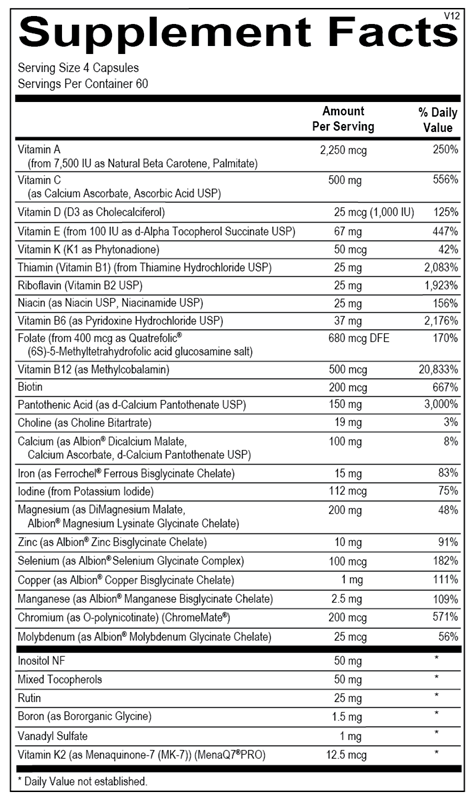
Ortho Molecular Products
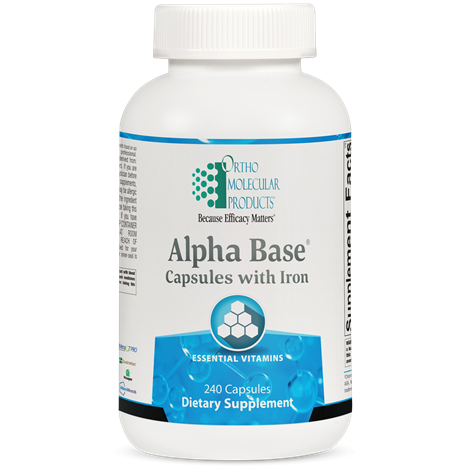
Alpha Base® Capsules with Iron by Ortho Molecular Products
240 capsules · 60-day supply
Comprehensive Multivitamin Support with Essential Nutrients for Optimal Health$74.31
Purchase options
Practitioner-grade brand3rd-party testedFree shipping $50+
Gluten Free·Yeast Free·Artificial Color Free·Artificial Flavor Free
Ortho Molecular Products Alpha Base® Capsules with Iron overview
This is built for adults who want a comprehensive multivitamin with iron and whose Ferritin (the iron storage marker) trends low or whose CBC (complete blood count) shows low-normal hemoglobin. It fits menstruating women, plant‑forward eaters with light red‑meat intake, and endurance athletes with foot‑strike losses. If your Vitamin D, 25-Hydroxy is in the lower range, the included D3 helps with maintenance. If your Ferritin is high, choose the iron‑free version instead.
The iron is ferrous bisglycinate, a chelated form that’s gentler on the gut and better absorbed than basic ferrous sulfate. Folate is Quatrefolic methylfolate, which bypasses common MTHFR enzyme slow variants and helps normalize Homocysteine (a methylation byproduct tied to B‑vitamin status). B12 is methylcobalamin for active use. Vitamin K2 MK‑7 pairs with D3 to direct calcium into bone. Magnesium glycinate and malate are well‑tolerated forms that aid muscle function and regularity. Chromium polynicotinate supports insulin signaling, relevant if fasting insulin runs high.
Take 4 capsules daily with food; many people do 2 with breakfast and 2 with dinner to improve tolerance. Pair with a meal that contains some fat to absorb vitamins A, D, E, and K. Coffee and tea reduce iron absorption, so separate by 60–90 minutes. If your gut is sensitive, start with 2 capsules for a week, then move to the full dose within 1 to 2 weeks.
If your Ferritin is elevated, or you have hemochromatosis (a condition of iron overload), avoid added iron. Separate iron and calcium/magnesium from levothyroxine by 4 hours, and from certain antibiotics (tetracyclines, fluoroquinolones) by at least 2 hours. Warfarin users should not add vitamin K without clinician guidance. If you need a prenatal, use a dedicated prenatal formula; this is a general multi, not tailored to pregnancy.
Frequently asked questions
Do I need a multivitamin with iron or without?
Check Ferritin and a CBC. If Ferritin or hemoglobin runs low, an iron-containing multi makes sense. If Ferritin is normal-high or you have iron overload, choose an iron-free multi.
Will the iron in this cause constipation?
Less likely. Ferrous bisglycinate is gentler than ferrous sulfate, but any iron can cause GI upset. Take with meals, split the dose, and hydrate. If symptoms persist, switch to iron-free.
How long until my labs improve?
For low iron stores, Ferritin typically rises over 4 to 12 weeks. B‑vitamin markers like Homocysteine and Methylmalonic Acid can shift within 2 to 8 weeks. Recheck labs after 8 to 12 weeks.
Can I take this with thyroid medication?
Yes, but separate by time. Iron, calcium, and magnesium bind levothyroxine. Take thyroid first on an empty stomach and this multi at least 4 hours later.
Is the vitamin K safe with blood thinners?
If you take warfarin, do not add vitamin K without your prescriber. For direct oral anticoagulants, vitamin K is less of an issue, but coordinate any supplement changes with your clinician.
What time of day should I take it?
With meals. Morning and evening with food improves absorption and tolerance. Avoid taking right with coffee or tea, which can reduce iron uptake.
Is this good for vegans or low-meat eaters?
Yes. It covers iron, B12 (methylcobalamin), methylfolate, zinc, iodine, and selenium, which can run low on plant-heavy diets. Verify needs with Ferritin, B12, and Homocysteine labs.
How to take it & ingredients
Suggested use: 4 capsules per day with food or as recommended by your health care professional.
Active ingredients
4 capsules per serving · 60 servings
Vitamin A
From 7,500 IU as Natural Beta Carotene, Palmitate
From 7,500 IU as Natural Beta Carotene, Palmitate
2250 mcg
Vitamin C
As Calcium Ascorbate, Ascorbic Acid USP
As Calcium Ascorbate, Ascorbic Acid USP
500 mg
Vitamin D
D3 as Cholecalciferol
D3 as Cholecalciferol
25 mcg
Vitamin E
From 100 IU as d-Alpha Tocopherol Succinate USP
From 100 IU as d-Alpha Tocopherol Succinate USP
67 mg
Vitamin K
K1 as Phytoradione
K1 as Phytoradione
50 mcg
Thiamin (Vitamin B1)
From Thiamine Hydrochloride USP
From Thiamine Hydrochloride USP
25 mg
Riboflavin (Vitamin B2)
USP
USP
25 mg
Niacin
As Niacin USP, Niacinamide USP
As Niacin USP, Niacinamide USP
25 mg
Vitamin B6
As Pyridoxine Hydrochloride USP
As Pyridoxine Hydrochloride USP
37 mg
Folate
From 400 mcg as Quatrefolic® (6S)-5-Methyltetrahydrofolic acid glucosamine salt
From 400 mcg as Quatrefolic® (6S)-5-Methyltetrahydrofolic acid glucosamine salt
680 mcg DFE
Vitamin B12
As Methylcobalamin
As Methylcobalamin
500 mcg
Biotin
200 mcg
Pantothenic Acid
As d-Calcium Pantothenate USP
As d-Calcium Pantothenate USP
150 mg
Choline
As Choline Bitartrate
As Choline Bitartrate
19 mg
Calcium
As Albion® Dicalcium Malate, Calcium Ascorbate, d-Calcium Pantothenate USP
As Albion® Dicalcium Malate, Calcium Ascorbate, d-Calcium Pantothenate USP
100 mg
Iron
As Ferroche® Ferrous Bioglycinate Chelate
As Ferroche® Ferrous Bioglycinate Chelate
15 mg
Iodine
From Potassium Iodide
From Potassium Iodide
112 mcg
Magnesium
As DiMagnesium Malate, Albion® Magnesium Lysinate Glycinate Chelate
As DiMagnesium Malate, Albion® Magnesium Lysinate Glycinate Chelate
200 mg
Zinc
As Albion® Zinc Bioglycinate Chelate
As Albion® Zinc Bioglycinate Chelate
10 mg
Selenium
As Albion® Selenium Glycinate Complex
As Albion® Selenium Glycinate Complex
100 mcg
Copper
As Albion® Copper Bioglycinate Chelate
As Albion® Copper Bioglycinate Chelate
1 mg
Manganese
As Albion® Manganese Bioglycinate Chelate
As Albion® Manganese Bioglycinate Chelate
2.5 mg
Chromium
As O-polynicotinate (Chromellitate®)
As O-polynicotinate (Chromellitate®)
200 mcg
Molybdenum
As Albion® Molybdenum Glycinate Chelate
As Albion® Molybdenum Glycinate Chelate
25 mcg
Inositol
NF
NF
50 mg
Mixed Tocopherols
50 mg
Rutin
25 mg
Boron
As Bororganic Glycine
As Bororganic Glycine
1.5 mg
Vanadyl Sulfate
1 mg
Vitamin K2
As Menaquinone-7 (MK-7) (MenaQ7®PRO)
As Menaquinone-7 (MK-7) (MenaQ7®PRO)
12.5 mcg
Other ingredients: Hypromellose (Natural Vegetable Capsules), Stearic Acid, Magnesium Stearate
Certifications
Benefits
Warnings
Customers also considered
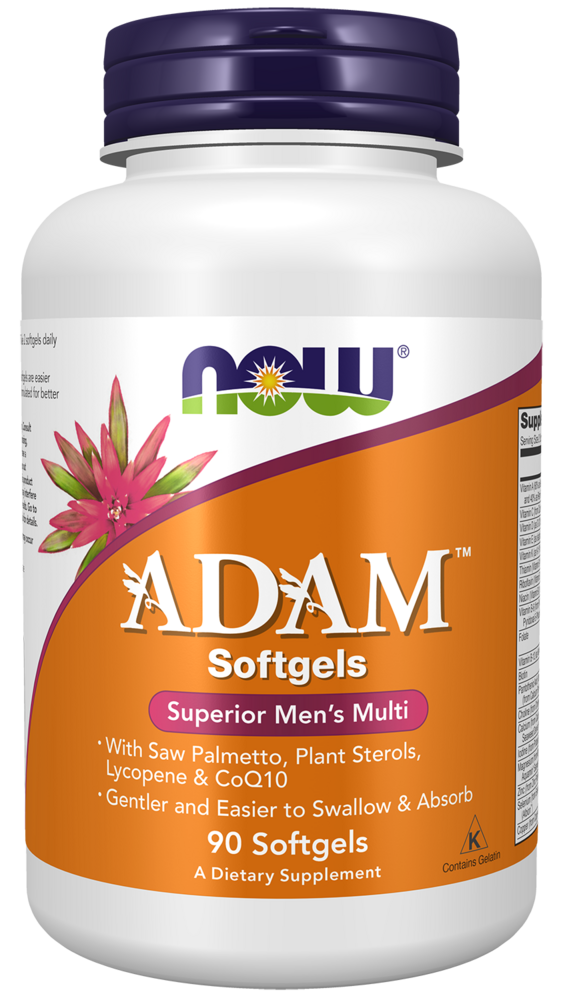
ADAM Superior Men's Multi
Now Foods
90 softgels
$39.99$31.99 with Subscribe & Save
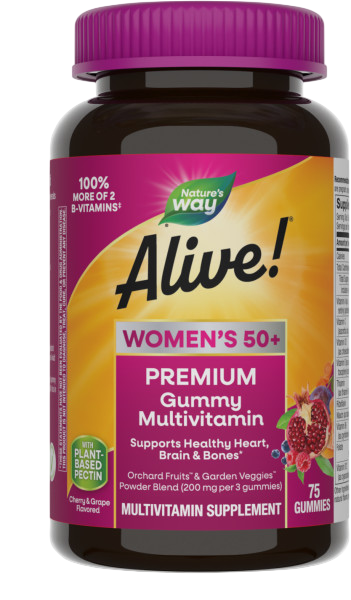
Alive Womens 50+ Premium Gummy Multi-Vitamin
Nature's Way
75 gummies
$22.99$17.99 with Subscribe & Save
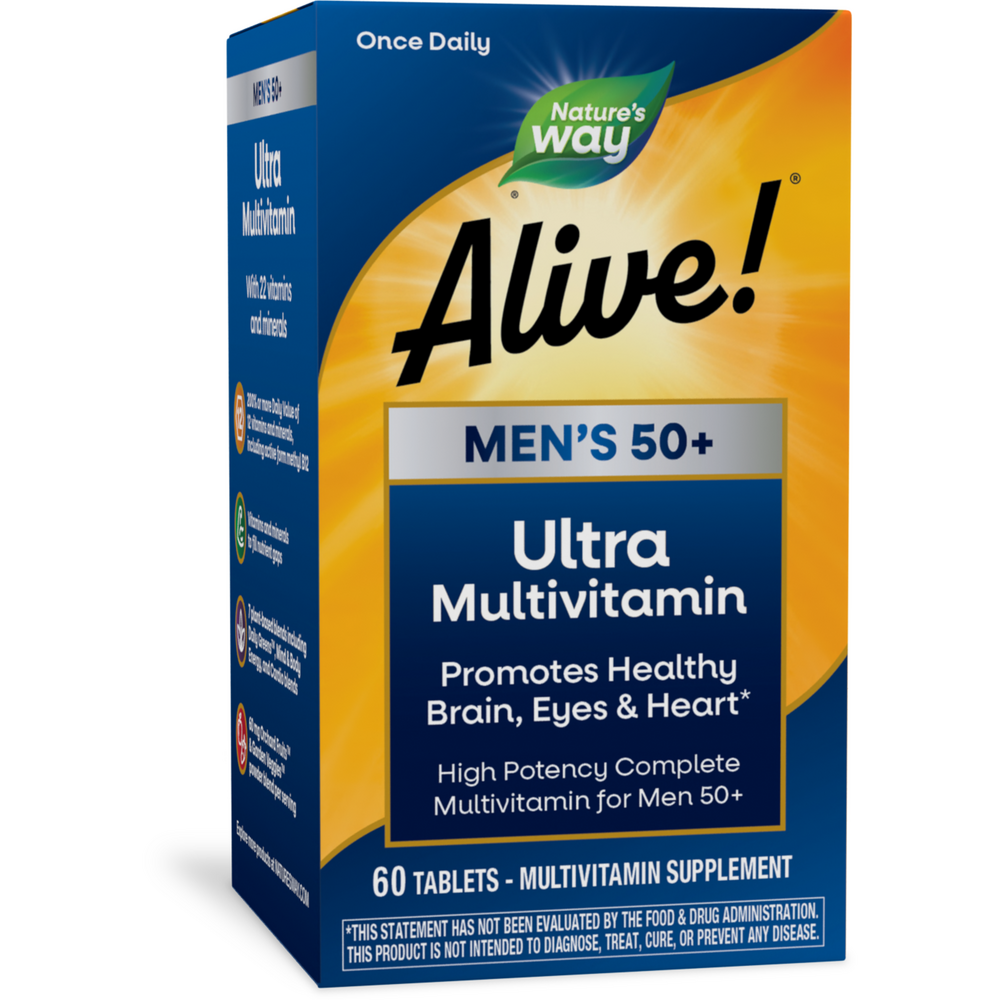
Alive! Men’s 50+ Ultra Potency
Nature’s Way
60 tablets
$29.99$23.99 with Subscribe & Save
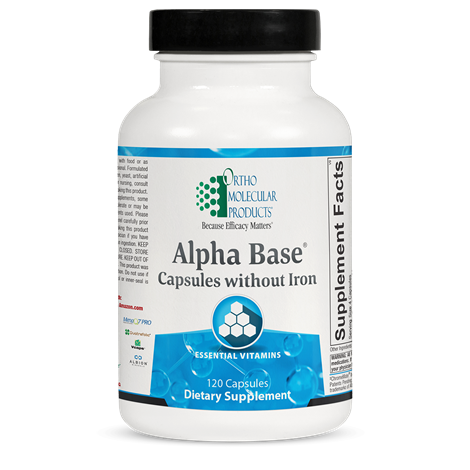
Alpha Base® Capsules without Iron
Ortho Molecular Products
120 capsules
$46.79$42.15 with Subscribe & Save