 Instalab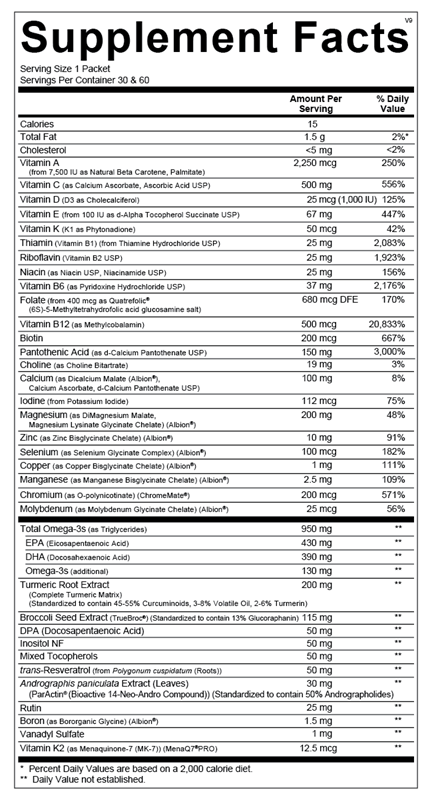
Ortho Molecular Products
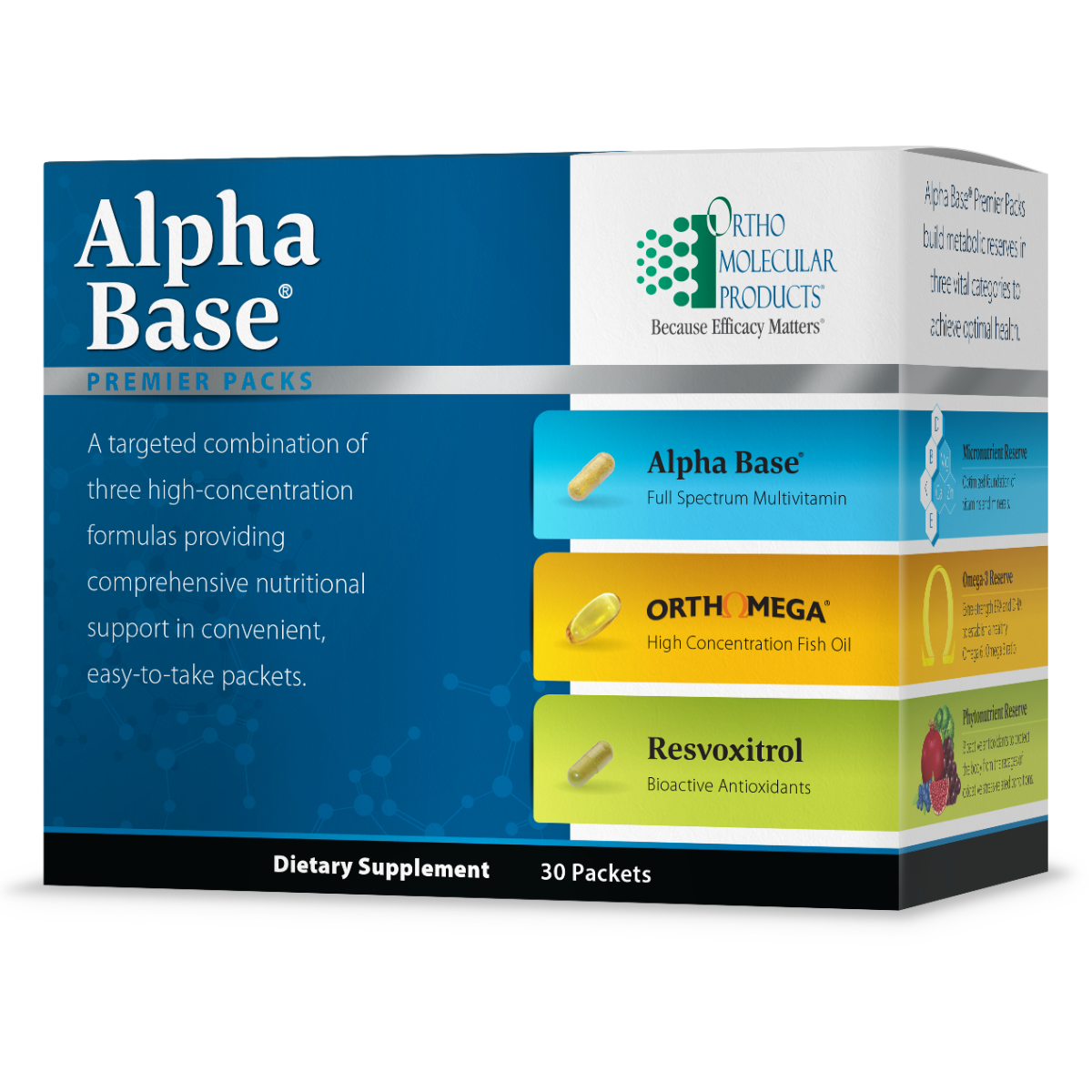
Alpha Base® Premier Packs by Ortho Molecular Products
30 packets · 30-day supply
Comprehensive Daily Support for Optimal Health and Vitality$109.50
Purchase options
Practitioner-grade brand3rd-party testedFree shipping $50+
Gluten Free·Yeast Free·Artificial Color Free·Artificial Flavor Free
Ortho Molecular Products Alpha Base® Premier Packs overview
This daily multivitamin pack fits adults who want one packet that covers a high-quality multi, omega-3 fish oil, and antioxidant botanicals. It’s a good match if your Vitamin D, 25-Hydroxy is in the lower end of normal, your Omega-3 Index is low from limited seafood, or vegetables are light on busy weeks. If triglycerides are elevated, the omega-3 dose here is maintenance-level; larger reductions usually need higher EPA+DHA under clinician guidance.
The multi uses bioavailable forms, including methylfolate (the folate form most people convert to) and methylcobalamin (an active B12), plus chelated magnesium glycinate/malate for gentler absorption. The fish oil provides about 950 mg total omega-3s to reduce how much fat your liver exports as VLDL particles (the triglyceride carriers), often yielding modest triglyceride drops within 4 to 12 weeks. The turmeric matrix, resveratrol, and broccoli seed extract (rich in glucoraphanin, which your body turns into sulforaphane) nudge cell defense pathways and can lower hs-CRP (a general inflammation marker) in some responders.
Take one packet daily with your largest meal, preferably one that contains some fat, to absorb vitamins A, D, E, K and omega-3. Sensitive stomach? Split the packet across two meals. Recheck Vitamin D, 25-Hydroxy and Omega-3 Index after 8 to 12 weeks to see if you need an adjustment. If you already supplement omega-3, count the total EPA+DHA so you don’t overshoot your target.
Contains vitamin K1/K2, which conflicts with warfarin; skip unless your prescriber plans a dose adjustment with INR monitoring (a blood clotting test). Fish oil and turmeric have mild antiplatelet effects; use caution with other blood thinners. Iodine is present; if you have autoimmune thyroid disease, review with your endocrinologist. Chromium and vanadyl sulfate can enhance insulin action, so those on diabetes medications should monitor glucose. Not ideal in pregnancy or nursing due to herbal extracts and preformed vitamin A.
Frequently asked questions
What’s in these daily vitamin packs?
Each packet combines a broad-spectrum multivitamin/mineral (with methylfolate and methylcobalamin), about 950 mg total omega-3s from fish oil, and an antioxidant blend with turmeric, resveratrol, broccoli seed extract, and andrographis.
Does fish oil thin your blood?
At typical doses, fish oil has a mild antiplatelet effect but doesn’t act like a prescription blood thinner. Bleeding risk rises mainly when combined with anticoagulants or antiplatelet drugs; discuss with your clinician if you use those.
How long until I notice benefits?
Lab changes come first. Triglycerides and the Omega-3 Index usually shift within 4–12 weeks, and Vitamin D, 25-Hydroxy within 8–12 weeks. Energy changes from B vitamins can be felt sooner, but rely on labs to guide dose.
Should I take the pack with food or on an empty stomach?
Take it with a meal that includes some fat. That improves absorption of vitamins A, D, E, K and omega-3, and reduces fishy burps or stomach upset.
Is this safe during pregnancy or breastfeeding?
Not the best choice. It includes herbal extracts (turmeric, resveratrol, andrographis) and preformed vitamin A. Use a prenatal formulated for pregnancy and confirm dosing with your clinician.
Will this lower high triglycerides on its own?
It can help, but the omega-3 amount is a maintenance dose. Larger triglyceride reductions typically require higher EPA+DHA intake, diet changes, and sometimes medication. Recheck a lipid panel after 8–12 weeks.
Any common side effects to expect?
Occasional fishy burps, mild GI upset, or yellow urine from riboflavin (vitamin B2) are the most common. Taking with food and splitting the packet across two meals reduces GI symptoms.
Can I take this with my statin?
Yes. Omega-3 pairs well with statins, especially when triglycerides are elevated. There’s no CoQ10 here, so if you get statin-related muscle symptoms, discuss adding CoQ10 separately with your clinician.
How to take it & ingredients
Suggested use: 1 packet per day or as recommended by your health care professional.
Active ingredients
1 packet per serving · 30 servings
Vitamin A
From 7,500 IU as Natural Beta Carotene, Palmitate
From 7,500 IU as Natural Beta Carotene, Palmitate
2250 mcg
Vitamin C
As Calcium Ascorbate, Ascorbic Acid USP
As Calcium Ascorbate, Ascorbic Acid USP
500 mg
Vitamin D
D3 as Cholecalciferol
D3 as Cholecalciferol
25 mcg
Vitamin E
From 100 IU as d-Alpha Tocopherol Succinate USP
From 100 IU as d-Alpha Tocopherol Succinate USP
67 mg
Vitamin K
K1 as Phytonadione
K1 as Phytonadione
50 mcg
Thiamin (Vitamin B1)
From Thiamine Hydrochloride USP
From Thiamine Hydrochloride USP
25 mg
Riboflavin (Vitamin B2)
USP
USP
25 mg
Niacin
As Niacin USP, Niacinamide USP
As Niacin USP, Niacinamide USP
25 mg
Vitamin B6
As Pyridoxine Hydrochloride USP
As Pyridoxine Hydrochloride USP
37 mg
Folate
From 400 mcg as Quatrefolic® (6S)-5-Methyltetrahydrofolic acid glucosamine salt
From 400 mcg as Quatrefolic® (6S)-5-Methyltetrahydrofolic acid glucosamine salt
680 mcg DFE
Vitamin B12
As Methylcobalamin
As Methylcobalamin
500 mcg
Biotin
200 mcg
Pantothenic Acid
As d-Calcium Pantothenate USP
As d-Calcium Pantothenate USP
150 mg
Choline
As Choline Bitartrate
As Choline Bitartrate
19 mg
Calcium
As Albion® Dicalcium Malate, Calcium Ascorbate, d-Calcium Pantothenate USP
As Albion® Dicalcium Malate, Calcium Ascorbate, d-Calcium Pantothenate USP
100 mg
Iodine
From Potassium Iodide
From Potassium Iodide
112 mcg
Magnesium
As Albion® DiMagnesium Malate, Magnesium Lysinate Glycinate Chelate
As Albion® DiMagnesium Malate, Magnesium Lysinate Glycinate Chelate
200 mg
Zinc
As Albion® Zinc Bisglycinate Chelate
As Albion® Zinc Bisglycinate Chelate
10 mg
Selenium
As Albion® Selenium Glycinate Complex
As Albion® Selenium Glycinate Complex
100 mcg
Copper
As Albion® Copper Bisglycinate Chelate
As Albion® Copper Bisglycinate Chelate
1 mg
Manganese
As Albion® Manganese Bisglycinate Chelate
As Albion® Manganese Bisglycinate Chelate
2.5 mg
Chromium
As O-polynicotinate (Chromemate®)
As O-polynicotinate (Chromemate®)
200 mcg
Molybdenum
As Albion® Molybdenum Glycinate Chelate
As Albion® Molybdenum Glycinate Chelate
25 mcg
▼
Total Omega-3s
As Triglycerides
As Triglycerides
950 mg
EPA (Eicosapentaenoic Acid)
430 mg
DHA (Docosahexaenoic Acid)
390 mg
DPA (Docosapentaenoic Acid)
50 mg
Omega-3s (additional)
130 mg
Turmeric Root Extract
Complete Turmeric Matrix (Standardized to contain 45-55% Curcuminoids, 3-8% Volatile Oil, 2-6% Turmerin)
Complete Turmeric Matrix (Standardized to contain 45-55% Curcuminoids, 3-8% Volatile Oil, 2-6% Turmerin)
200 mg
Broccoli Seed Extract
Truellino® (Standardized to contain 13% Glucoraphanin)
Truellino® (Standardized to contain 13% Glucoraphanin)
115 mg
trans-Resveratrol
From Polygonum cuspidatum (Roots)
From Polygonum cuspidatum (Roots)
50 mg
Andrographis paniculata Extract (Leaves)
PanIclin® (Bioactive 14-Neo-Andro Compound) (Standardized to contain 50% Andrographolides)
PanIclin® (Bioactive 14-Neo-Andro Compound) (Standardized to contain 50% Andrographolides)
30 mg
Inositol
NF
NF
50 mg
Mixed Tocopherols
50 mg
Rutin
25 mg
Boron
As Bororganic Glycine (Albion®)
As Bororganic Glycine (Albion®)
1.5 mg
Vanadyl Sulfate
1 mg
Vitamin K2
As Menaquinone-7 (MK-7) (MenaQ7®PRO)
As Menaquinone-7 (MK-7) (MenaQ7®PRO)
12.5 mcg
Other ingredients: Fish Oil (anchovy, jack mackerel, mackerel, sardine) (Highly Refined and Concentrated Omega-3), Gelatin, Glycerin, Water (Purified), Natural Flavors, Rosemary Extract (Leaf), Hypromellose (Natural Vegetable Capsules), Ascorbyl Palmitate, Microcrystalline Cellulose, Magnesium Stearate, Stearic Acid, Silicon Dioxide
Certifications
Benefits
Warnings
Customers also considered
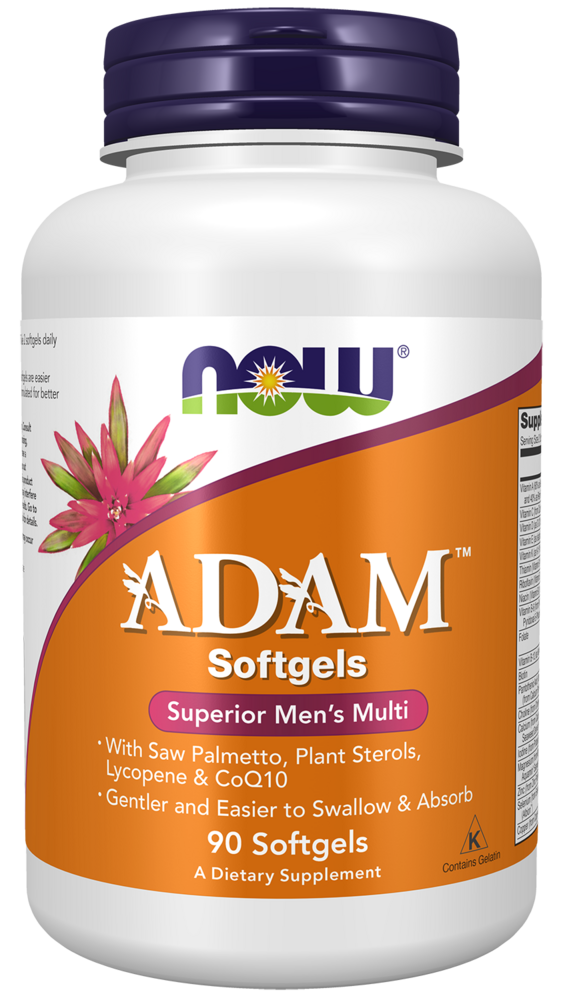
ADAM Superior Men's Multi
Now Foods
90 softgels
$39.99$31.99 with Subscribe & Save
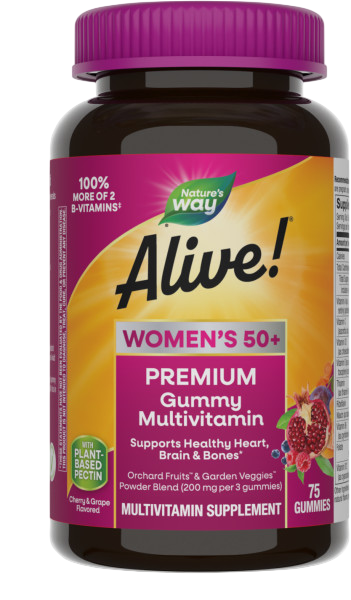
Alive Womens 50+ Premium Gummy Multi-Vitamin
Nature's Way
75 gummies
$22.99$17.99 with Subscribe & Save
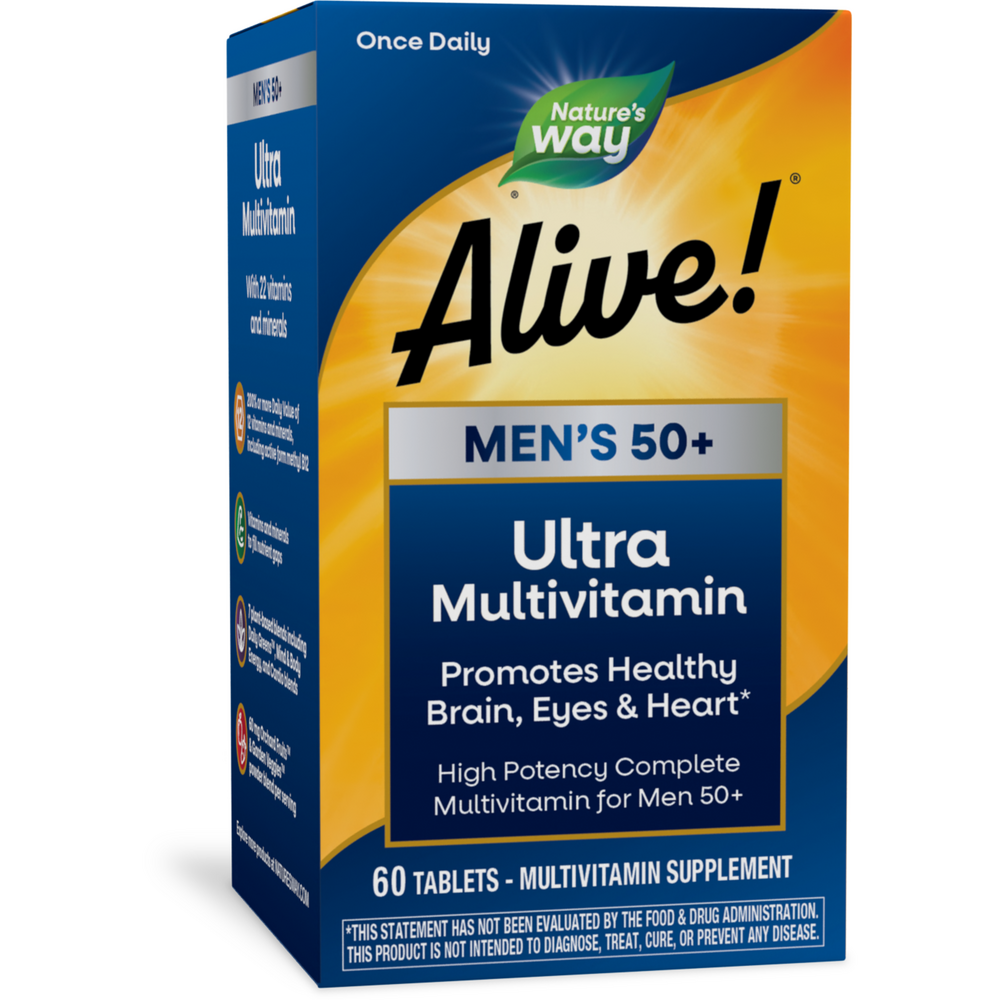
Alive! Men’s 50+ Ultra Potency
Nature’s Way
60 tablets
$29.99$23.99 with Subscribe & Save
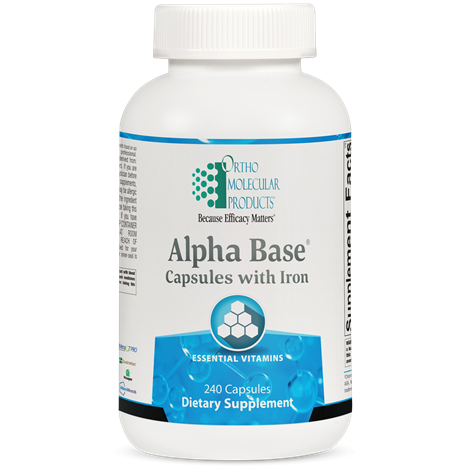
Alpha Base® Capsules with Iron
Ortho Molecular Products
240 capsules
$74.31$66.95 with Subscribe & Save