 Instalab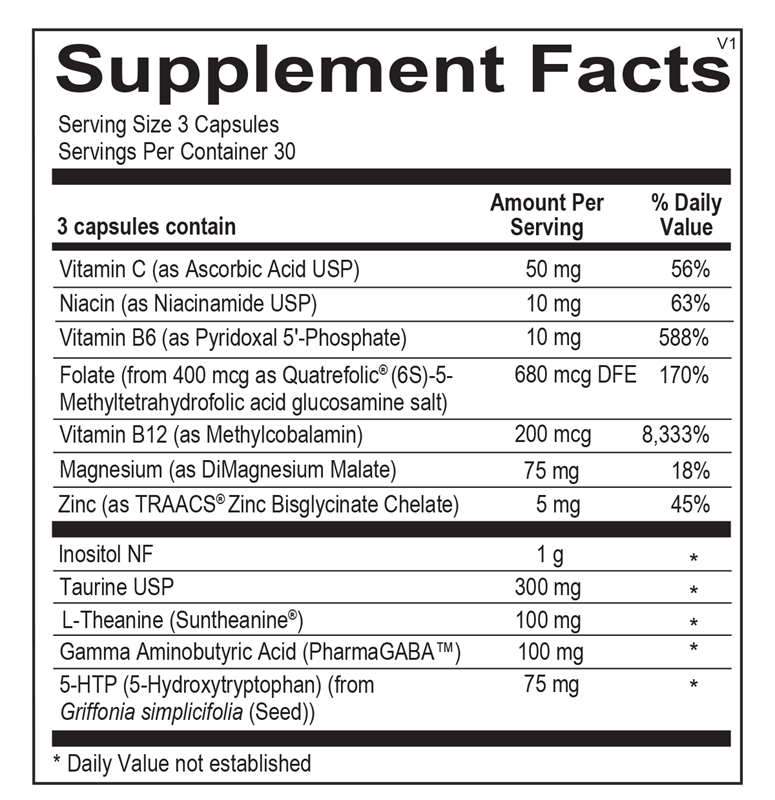

Ortho Molecular Products
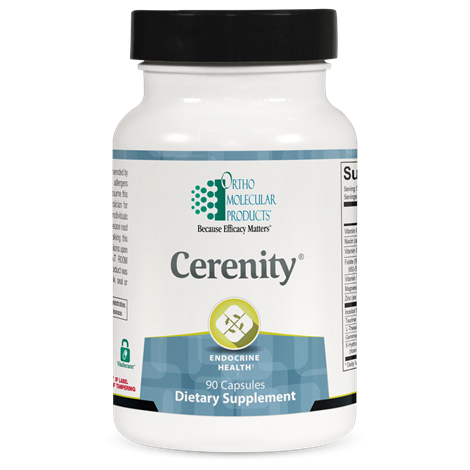
Cerenity by Ortho Molecular Products
90 capsules · 30-day supply
Support for Calmness, Mood Balance, and Stress Relief$74.09
Purchase options
Practitioner-grade brand3rd-party testedFree shipping $50+
Gluten Free·Soy Free·Artificial Color Free·Artificial Flavor Free·Artificial Sweetener Free·Preservative Free
Ortho Molecular Products Cerenity overview
If your stress shows up as a noisy mind at night or a low, tense mood by day, a 5-HTP blend makes sense. It’s a fit when your Folate, Vitamin B12, or Magnesium is low-normal on labs, or when your Homocysteine (a methylation workload marker) runs high. People who don’t tolerate melatonin often prefer 5-HTP for sleep onset. It’s also reasonable in PMS-related mood shifts and in high-caffeine users seeking calmer focus without sedation.
5-HTP is the direct precursor your brain uses to make serotonin, and vitamin B6 (as P5P) is the enzyme cofactor that helps that conversion. L-theanine nudges brainwaves toward relaxed alertness and tempers glutamate (the brain’s “go” signal). PharmaGABA provides the same inhibitory messenger your brain uses to settle signals, while inositol supports the cell-signaling cycle tied to mood. Methylfolate and methylcobalamin keep neurotransmitter production running, and magnesium steadies excitatory receptors to reduce jitter.
The label allows 3 capsules, 1–3 times daily. In practice, start low: 1 capsule in the late afternoon for daytime calm, or 1–2 capsules 30–60 minutes before bed for sleep. Increase every 3–4 days until you feel a steady effect, then hold. Take with food if 5-HTP upsets your stomach or causes vivid dreams. If your Magnesium or Folate is low, correct those in parallel and recheck labs within 8–12 weeks.
Skip 5-HTP if you take SSRIs, SNRIs, MAOIs, tramadol, triptans, or St. John’s wort due to serotonin syndrome risk. Bipolar spectrum: serotonergic agents can trigger swings. Pregnancy and breastfeeding: avoid unless your clinician is guiding you. Magnesium and zinc can bind some antibiotics; separate by at least 2–4 hours. Sedatives and alcohol add to drowsiness. If your B12 is low or borderline, correct it alongside methylfolate rather than using folate alone.
Frequently asked questions
How long does 5-HTP take to work?
For sleep onset and calming, many feel something within 30–60 minutes. Mood benefits are gradual and build over 2–6 weeks. If nothing changes after a careful titration over 2–3 weeks, it may not be the right tool or your dose is too low for you.
Can I take 5-HTP with an SSRI or SNRI?
Don’t combine them. 5-HTP adds serotonin, and together with prescription antidepressants can raise the risk of serotonin syndrome. If you’re considering a change, talk with your prescriber and taper only under medical supervision.
Will this make me sleepy during the day?
L-theanine and GABA are calming without heavy sedation for most, but 5-HTP can feel drowsy in some. Start with an evening dose. If you want daytime focus, use a small afternoon dose first and see how you perform before driving or important tasks.
Is 5-HTP better than melatonin for sleep?
They work differently. Melatonin sets sleep timing, while 5-HTP raises serotonin, which can ease sleep onset and improve continuity. People who feel groggy on melatonin sometimes prefer 5-HTP. If you struggle with sleep timing (jet lag), melatonin is more targeted.
What side effects should I watch for?
Nausea, loose stools, or vivid dreams are the most common with 5-HTP, especially if you start high. Taking it with food and titrating slowly helps. Headache or restlessness means your dose may be too high. Stop and seek care for agitation, sweating, or fast heart rate.
Can I take this with magnesium or zinc?
Yes, it already includes modest magnesium and zinc. If you add more, separate extra magnesium or zinc from antibiotics by 2–4 hours to avoid binding. Higher-dose magnesium at night can add to the calming effect and may loosen stools in sensitive people.
Who shouldn’t use 5-HTP blends?
Avoid in pregnancy or while breastfeeding, with serotonergic medications (SSRIs, SNRIs, MAOIs, tramadol, triptans), and in uncontrolled bipolar disorder. If you have a history of severe depression or are changing meds, work with your clinician rather than DIY.
How to take it & ingredients
Suggested use: 3 capsules taken 1-3 times per day or as recommended by your health care professional.
Active ingredients
3 capsules per serving · 30 servings
Vitamin C
As Ascorbic Acid USP
As Ascorbic Acid USP
50 mg
Niacin
As Niacinamide USP
As Niacinamide USP
10 mg
Vitamin B6
As Pyridoxal 5'-Phosphate
As Pyridoxal 5'-Phosphate
10 mg
Folate
From Quatrefolic® (6S)-5-Methyltetrahydrofolic acid glucosamine salt
From Quatrefolic® (6S)-5-Methyltetrahydrofolic acid glucosamine salt
680 mcg DFE
Vitamin B12
As Methylcobalamin
As Methylcobalamin
200 mcg
Magnesium
As DiMagnesium Malate
As DiMagnesium Malate
75 mg
Zinc
As TRAACS™ Zinc Bisglycinate Chelate
As TRAACS™ Zinc Bisglycinate Chelate
5 mg
Inositol
NF
NF
1000 mg
Taurine
USP
USP
300 mg
L-Theanine
Suttheanine®
Suttheanine®
100 mg
Gamma Aminobutyric Acid
PharmaGABA™
PharmaGABA™
100 mg
5-Hydroxytryptophan (5-HTP)
From Griffonia simplicifolia (Seed)
From Griffonia simplicifolia (Seed)
75 mg
Certifications
Benefits
Warnings
Customers also considered
CereVive
Ortho Molecular Products
60 capsules
$58.44$52.65 with Subscribe & Save
Cerenity PM
Ortho Molecular Products
60 capsules
$56.11$50.55 with Subscribe & Save
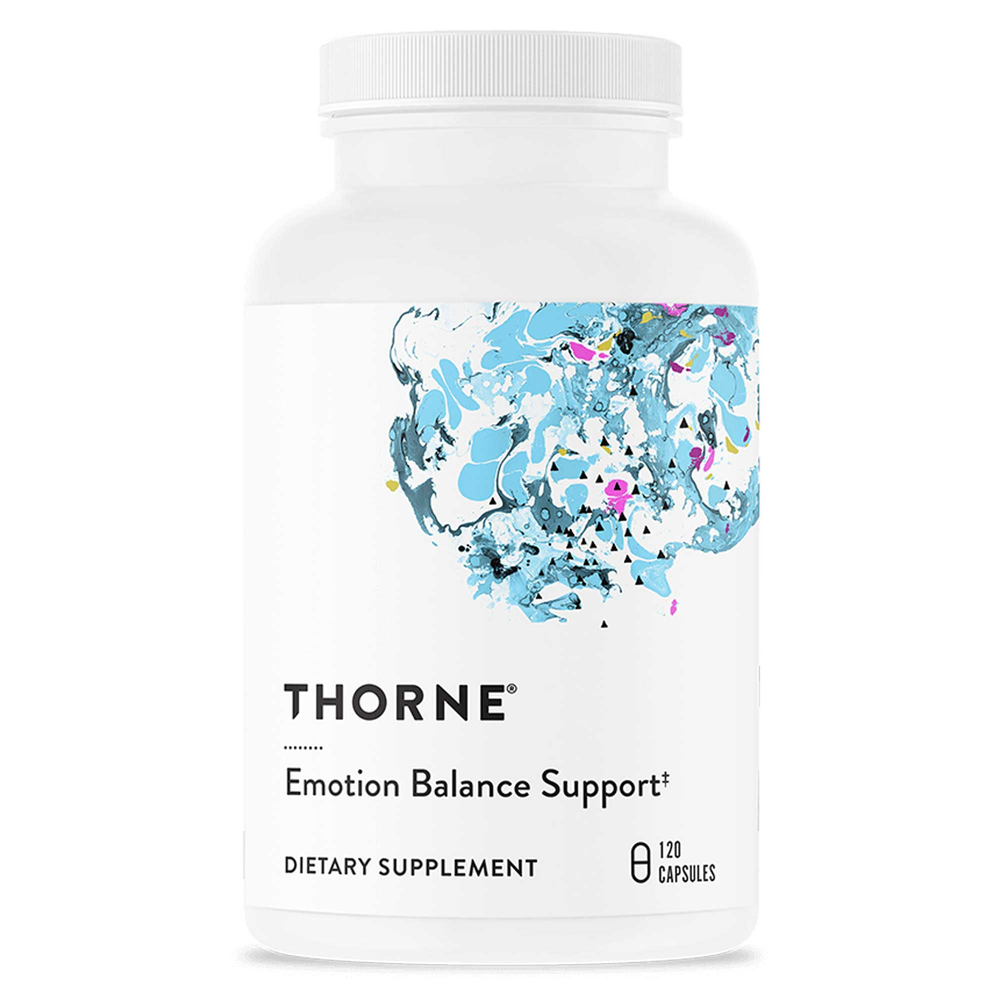
Emotion Balance Support
Thorne
120 capsules
$63.00$56.70 with Subscribe & Save
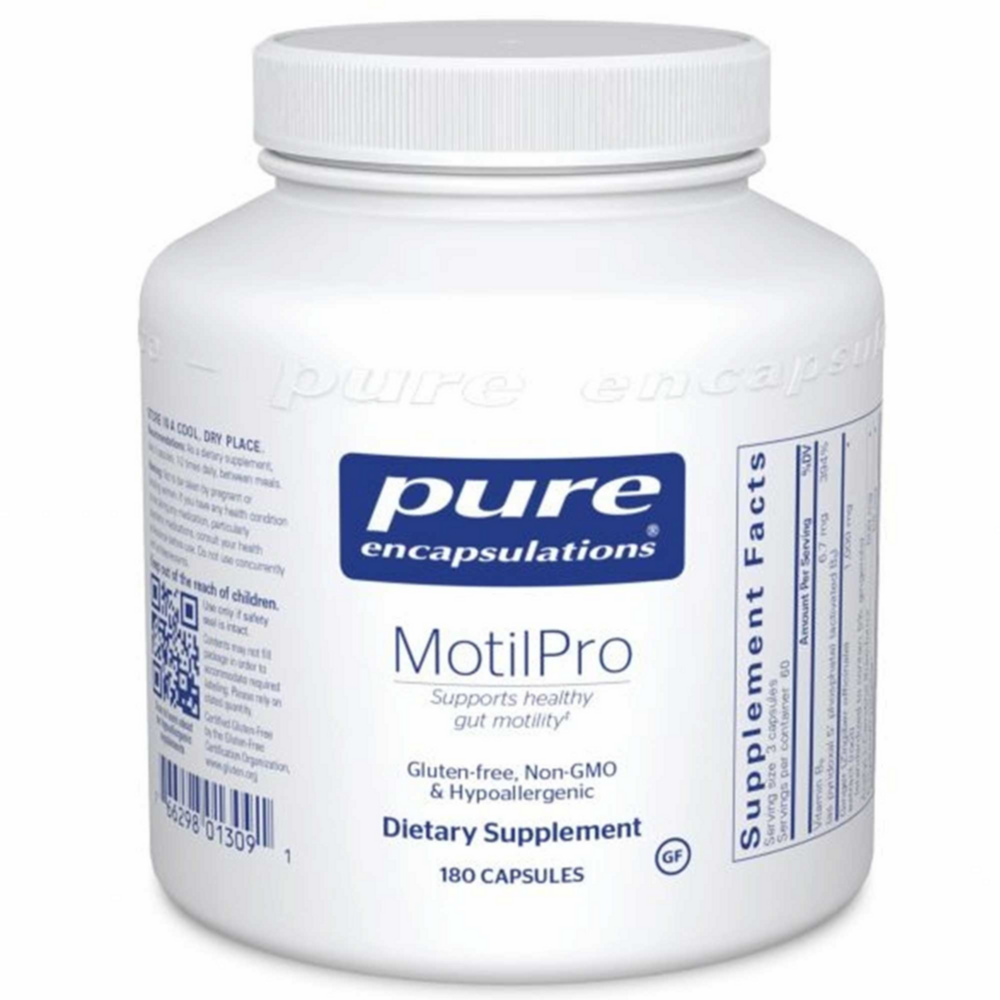
MotilPro
Pure Encapsulations
180 capsules
$66.00$52.99 with Subscribe & Save