 Instalab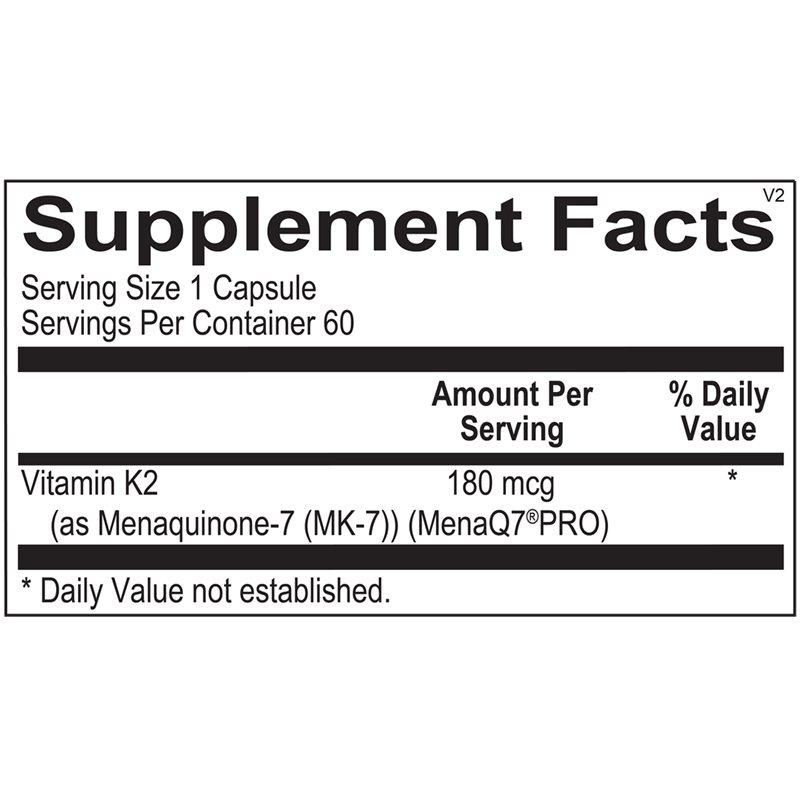

Ortho Molecular Products
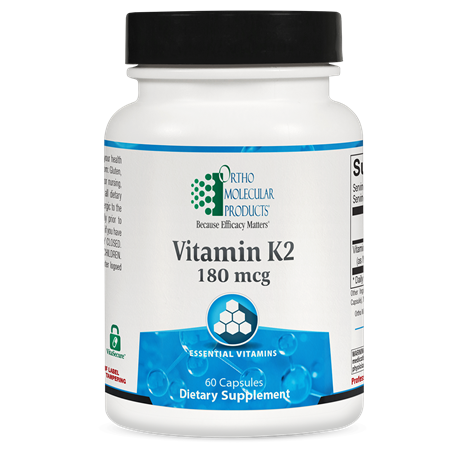
Vitamin K2 180 mcg by Ortho Molecular Products
60 capsules · 60-day supply
Supports Bone and Cardiovascular Health with Premium Vitamin K2$57.22
Purchase options
Practitioner-grade brand3rd-party testedFree shipping $50+
Gluten Free·Soy Free·Corn Free·Yeast Free·Artificial Color Free·Artificial Flavor Free
Ortho Molecular Products Vitamin K2 180 mcg overview
If you take vitamin D regularly and want bones that hold onto calcium without clogging arteries, vitamin K2 MK-7 is the companion to consider. It fits post‑menopausal women, adults with low vegetable intake, or anyone with a family history of osteoporosis. It’s also useful if your Vitamin D, 25-Hydroxy is adequate yet your bone markers lag, or if you’re focused on healthy aging and tracking calcium on imaging over time. The 180 mcg dose is a clinically used, once-daily level for maintenance and long-horizon bone support.
MK-7 (the long-acting form of vitamin K2) activates proteins that handle calcium correctly. It carboxylates osteocalcin (a bone-building protein) so calcium gets anchored in the bone matrix, and it switches on matrix Gla protein, which helps keep calcium from depositing in arteries. Compared to K1 and MK-4, MK-7 stays in the blood much longer, so once-daily microgram doses keep these proteins activated. In studies, undercarboxylated osteocalcin drops within 4 to 12 weeks, while bone density shifts are assessed over 6 to 24 months.
Take one capsule daily with a meal that contains fat; vitamin K2 is fat-soluble and absorbs better this way. Pairing with vitamin D3 is common because D raises calcium absorption while K2 directs where it goes. If you’re repleting vitamin D, keep K2 steady rather than cycling. MK-7 at 180 mcg is a higher-end maintenance dose; MK-4 is an alternative but requires milligram doses several times per day to match MK-7’s steady activation.
Skip K2 if you use warfarin or other vitamin K–antagonist blood thinners; it counteracts their effect. Direct oral anticoagulants (apixaban, rivaroxaban, dabigatran) are not vitamin K–dependent, but still clear any change with your clinician. Orlistat and bile acid binders can reduce absorption; take K2 at a different time. Broad-spectrum antibiotics can transiently lower gut-derived vitamin K—another reason to take K2 with food and monitor as needed.
Frequently asked questions
Is vitamin K2 MK-7 better than MK-4?
For once-daily use, MK-7 lasts longer in the bloodstream, so microgram doses keep bone and vascular proteins activated. MK-4 works too, but typical protocols use milligram doses multiple times per day. Choice often comes down to dosing convenience and clinician preference.
Should I take vitamin K2 with vitamin D3?
Yes. D3 increases calcium absorption, and K2 helps embed that calcium into bone and away from arteries. This pairing is common in bone plans. Keep both consistent and recheck Vitamin D, 25-Hydroxy within 8–12 weeks if you changed your D dose.
Does vitamin K2 thin your blood?
No. Vitamin K2 does the opposite of thinning; it supports normal clotting protein activation. If you’re on warfarin or other vitamin K–antagonists, avoid K2 unless your prescriber adjusts your dose and monitors INR closely.
How long does vitamin K2 take to work?
Protein activation changes, like reduced undercarboxylated osteocalcin, show up in 4–12 weeks. Bone density and imaging outcomes are slower and usually assessed at 6–24 months. Stay consistent; this is a long-game nutrient.
Is 180 mcg of vitamin K2 too much?
For most adults, 180 mcg of MK-7 is within studied ranges and used for maintenance. If you’re on warfarin, pregnant, or have a bleeding/clotting disorder, get clinician guidance. There isn’t a defined upper limit, but more isn’t always better.
Do I need to take vitamin K2 with food or fat?
Yes. Vitamin K2 is fat-soluble, so take it with a meal that contains fat for better absorption. If you use fat-blocking meds like orlistat, separate dosing and speak with your clinician.
Is vitamin K2 safe in pregnancy or breastfeeding?
Safety data for high-dose K2 in pregnancy are limited. Prioritize dietary vitamin K1 from greens and follow your obstetrician’s advice before adding standalone K2.
Can antibiotics affect my vitamin K status?
Broad-spectrum antibiotics can reduce gut bacteria that make vitamin K. Short courses rarely cause issues, but if you’re on prolonged antibiotics, taking K2 with meals is reasonable and worth discussing with your clinician.
How to take it & ingredients
Suggested use: Take 1 capsule per day or as recommended by your health care professional.
Active ingredients
1 capsule per serving · 60 servings
Vitamin K2
As Menaquinone-7 (MK-7) (MenaQ7® PRO)
As Menaquinone-7 (MK-7) (MenaQ7® PRO)
180 mcg
Other ingredients: Microcrystalline Cellulose, Hypromellose (Natural Vegetable Capsule), Magnesium Stearate, Silicon Dioxide, Stearic Acid, Calcium Silicate
Certifications
Benefits
Warnings