 Instalab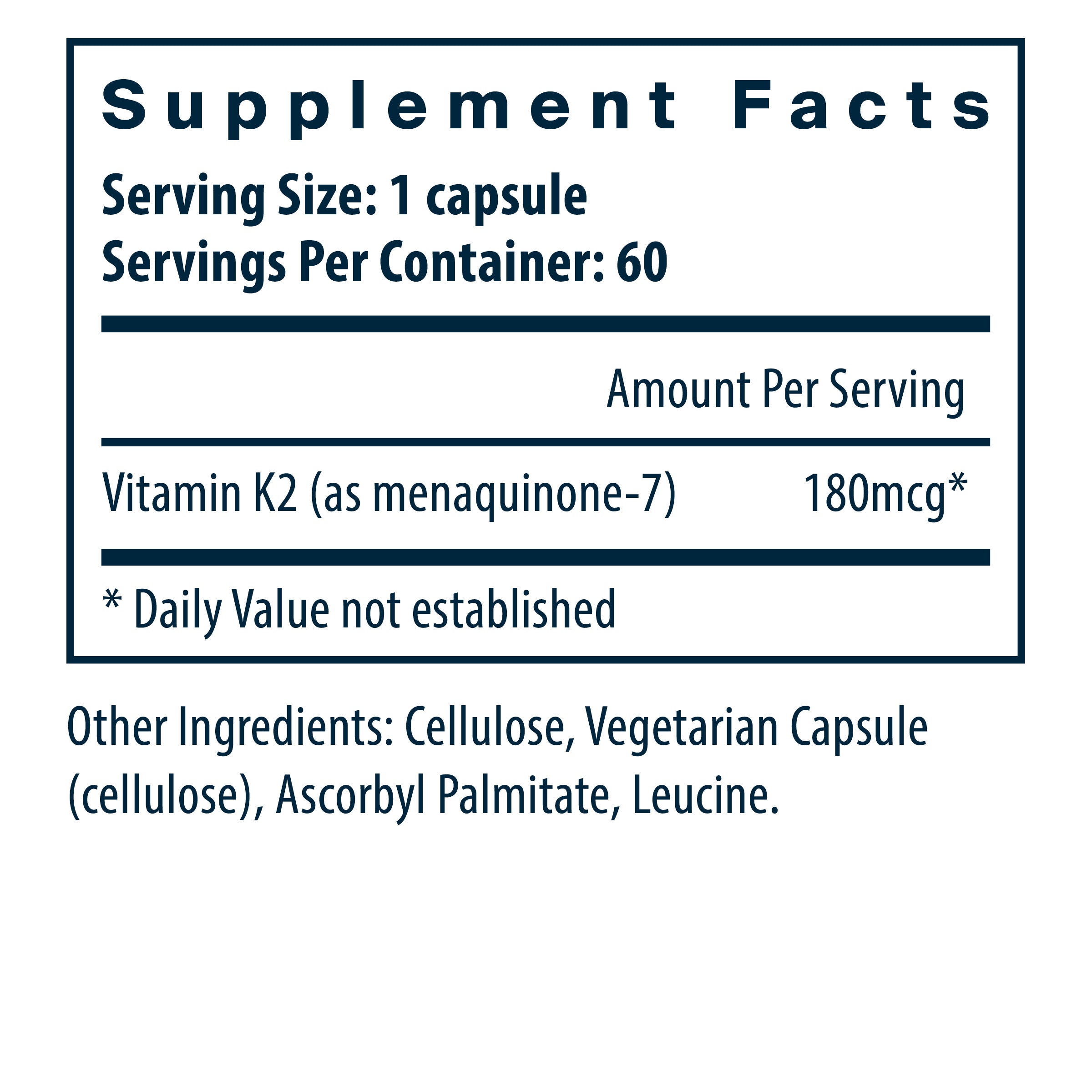

Vital Nutrients
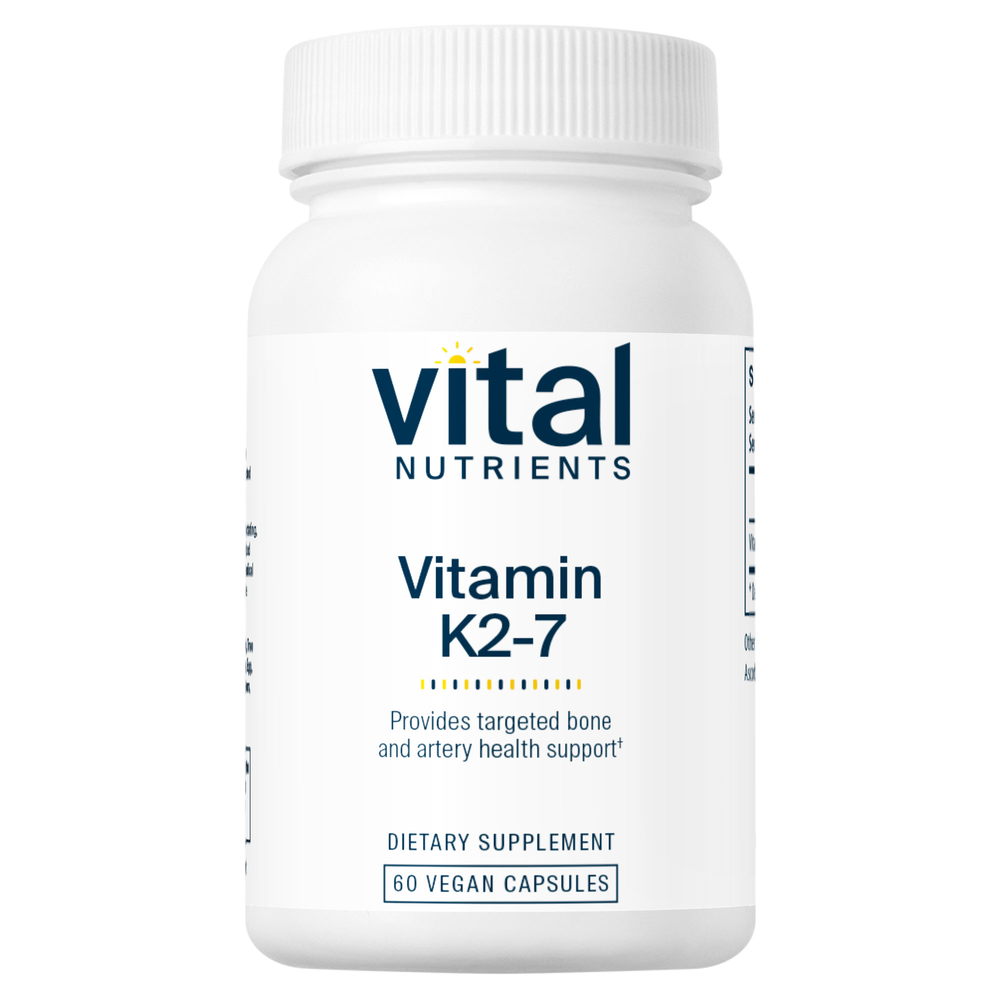
K2-7 180 mcg by Vital Nutrients
60 capsules · 60-day supply
Supports Bone and Cardiovascular Health with Vitamin K2-7$33.99
Purchase options
Practitioner-grade brand3rd-party testedFree shipping $50+
Vegan·Gluten Free·Soy Free·Dairy Free·Egg Free·Milk Free·
Vital Nutrients K2-7 overview
If you’re focused on bone strength and your Vitamin D, 25-Hydroxy is in range but you still want better calcium placement, vitamin K2 MK-7 is the add-on that often gets missed. It’s useful for post‑menopausal women, adults with low dairy or calcium intake, and long-term proton pump inhibitor users. People tracking bone turnover or arterial calcification also use it alongside D3 and calcium, while monitoring Calcium and, when appropriate, parathyroid hormone (the signal that pulls calcium from bone).
MK-7 activates two key vitamin K–dependent proteins: osteocalcin in bone and matrix Gla protein in blood vessel walls. Activated osteocalcin helps bind calcium into the bone matrix, while activated matrix Gla protein limits calcium deposition in arteries. Compared with MK-4, MK-7 stays in the blood longer, so once‑daily dosing keeps these proteins active. In trials, carboxylation (activation) improves within weeks, while bone density and arterial stiffness changes take months to years.
Take one capsule daily with a meal that contains fat for absorption. The 180 mcg MK-7 dose mirrors many clinical studies and is a practical maintenance dose when used with vitamin D3. If you’re correcting low Vitamin D, 25-Hydroxy, prioritize D3 repletion first, then keep K2 in place. Pairing with calcium makes sense only if your dietary calcium is low; avoid stacking multiple calcium sources without checking your total intake.
Skip K2 if you take warfarin (a vitamin K antagonist); it counteracts the drug and can destabilize your INR (the blood test used to set your warfarin dose). Direct oral anticoagulants like apixaban or rivaroxaban do not rely on vitamin K, but discuss supplements with your prescriber. If you have a history of high calcium, recurrent kidney stones, or fat‑malabsorption, involve a clinician and monitor Calcium and, when indicated, parathyroid hormone.
Frequently asked questions
Is vitamin K2 MK-7 better than MK-4?
For once-daily use, MK-7 is more practical because it stays in the blood longer, keeping vitamin K–dependent proteins active. MK-4 works too but usually needs higher, multiple daily doses. Most bone and vascular carboxylation studies in adults use MK-7.
How long does vitamin K2 MK-7 take to work?
Activation of osteocalcin and matrix Gla protein improves within 2–8 weeks. Structural outcomes take longer: bone density is a months-to-years outcome, and changes in arterial stiffness or calcification are typically tracked over 1–3 years.
Can I take vitamin K2 with vitamin D3 and calcium?
Yes. K2 is commonly paired with vitamin D3 and, when dietary intake is low, calcium. Monitor Vitamin D, 25-Hydroxy to guide your D3 dose, and total your daily calcium from food and supplements to avoid overshooting.
Does vitamin K2 thin your blood or increase clot risk?
Vitamin K2 does not thin the blood, and at supplement doses it doesn’t increase clot risk. The key issue is warfarin: K2 can blunt warfarin’s effect and destabilize INR. If you’re on warfarin, avoid K2 unless your prescriber adjusts your regimen.
Is 180 mcg of vitamin K2 MK-7 too much?
180 mcg daily is a common research dose for MK-7 and is well tolerated in healthy adults. People on warfarin should avoid it. If you have high calcium, kidney stones, or liver disease, discuss dosing and monitoring with your clinician.
Do I need to take vitamin K2 MK-7 with food?
Yes. Vitamin K2 is fat-soluble, so take it with a meal that contains fat to improve absorption. Taking it at the same mealtime each day helps maintain steady activation of vitamin K–dependent proteins.
What labs or tests can I track with vitamin K2?
There’s no routine consumer test for K2 status. In practice, people track Vitamin D, 25-Hydroxy, Calcium, and, when indicated, parathyroid hormone. Imaging like a Coronary Artery Calcium score tracks arterial calcification over years.
How to take it & ingredients
Suggested use: Take 1 capsule daily with food to increase absorption or as directed by a healthcare practitioner.
Active ingredients
1 capsule per serving · 60 servings
Vitamin K2-7
Menaquinone 7
Menaquinone 7
180 mcg
Other ingredients: Vegetable cellulose capsule, Hypromellose, Ascorbyl palmitate, Leucine
Certifications
Benefits
Warnings