 Instalab
Protocol for Life Balance
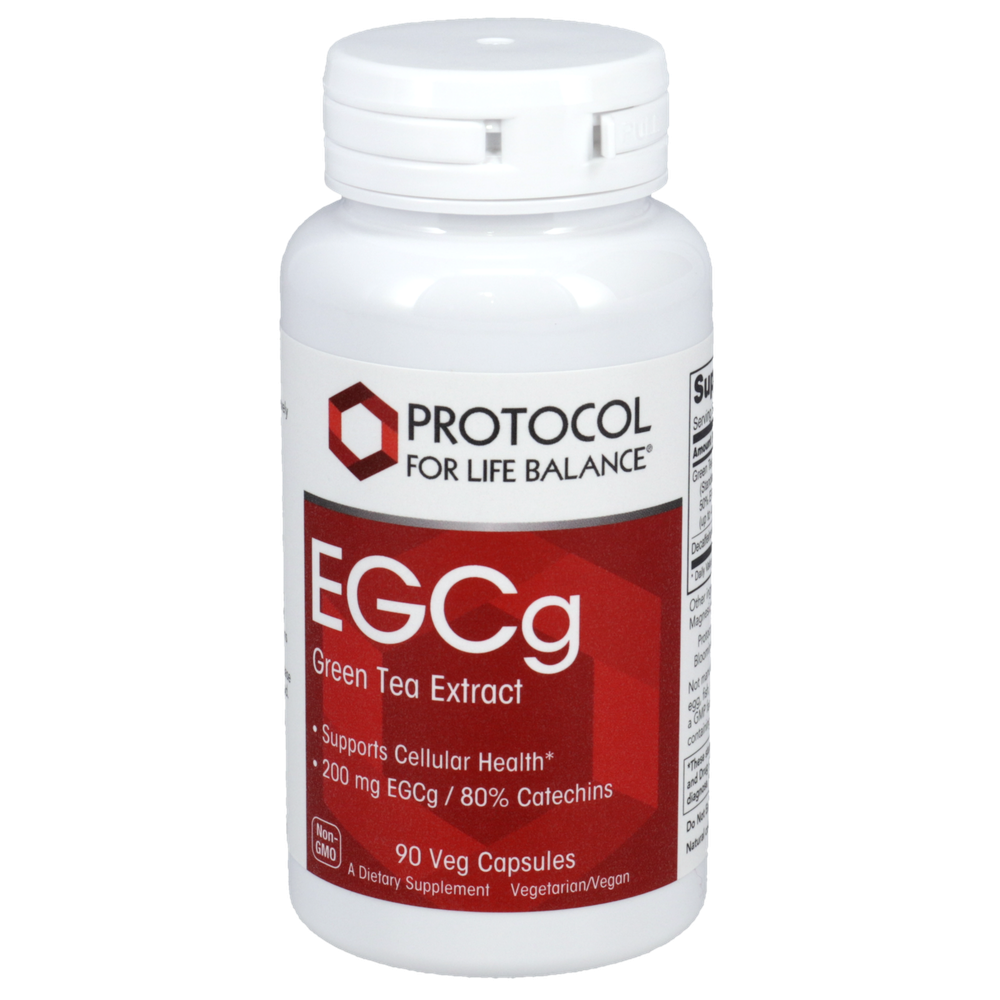
EGCg Green Tea Extract by Protocol for Life Balance
90 capsules · 90-day supply
Green Tea EGCg for Antioxidant and Cellular Health Support$20.99
Purchase options
Practitioner-grade brand3rd-party testedFree shipping $50+
Vegan·Vegetarian·Gluten Free·Soy Free·Milk Free·Tree Nut Free·
Protocol for Life Balance EGCg Green Tea Extract overview
This suits adults who want the catechins of green tea in a measured capsule with very little caffeine, often people who do not drink several cups a day. Interest usually centers on antioxidant support and on metabolic markers such as LDL Cholesterol, where the effects seen with green tea catechins are small. It is not a good fit if you have liver disease or low iron stores, or are pregnant or nursing, and it is not a shortcut to weight loss.
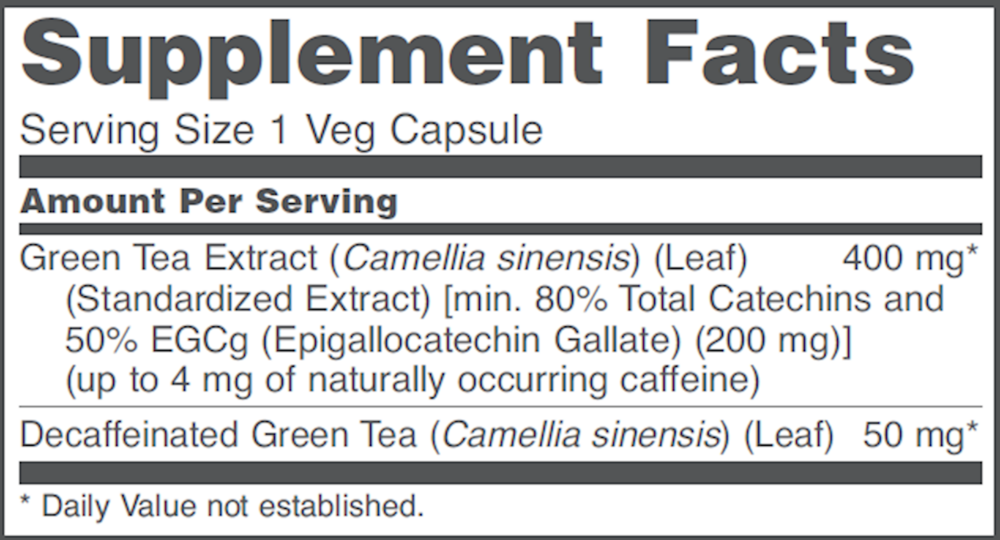
Each capsule contains 400 mg of green tea leaf extract (Camellia sinensis) standardized to at least 80% total catechins and 50% EGCg, which the label gives as 200 mg of EGCg, plus 50 mg of decaffeinated green tea leaf. EGCg (epigallocatechin gallate) is the most abundant and most studied catechin in green tea. Catechins are polyphenols that neutralize reactive oxygen species and influence how cells handle fat and glucose. The label states up to 4 mg of naturally occurring caffeine per capsule.
The label directs 1 capsule daily with a meal, and says not to take it on an empty stomach or exceed the recommended dose. This matters: concentrated green tea extract taken while fasting produces much higher blood levels of EGCg, and that is the setting in which liver problems have been reported. Count the EGCg in any other product you use, such as a weight-management formula, toward your daily total.
Rare cases of liver injury have been linked to green tea extracts. The label says to consult a physician if you have liver disease; stop and see your clinician if you notice dark urine, yellowing of the skin or eyes or abdominal pain, and if you use it for months, checking ALT and AST is reasonable. The label also warns that anticoagulant medications and beta-lactam antibiotics may interact with green tea extract, and that it may decrease absorption of iron and folic acid, so keep it apart from iron if your Ferritin is low. Consult your physician if you are pregnant or nursing or take any medication.
Do not expect to feel anything. Any change in LDL Cholesterol is small and takes 8–12 weeks to show on a retest, and the evidence for weight loss is weak. The label puts one capsule at about 2–3 cups of green tea. Brewed tea delivers its catechins in smaller amounts through the day and has a long record of safe use; the capsule's advantage is a known 200 mg of EGCg with very little caffeine.
Frequently asked questions
How much EGCg is in each capsule?
Each capsule contains 400 mg of green tea leaf extract standardized to at least 80% total catechins and 50% EGCg, which the label gives as 200 mg of EGCg. It also contains 50 mg of decaffeinated green tea leaf.
Does this green tea extract contain caffeine?
Very little. The label states up to 4 mg of naturally occurring caffeine per capsule, a small fraction of what a cup of brewed green tea contains. If you are very sensitive to caffeine, take it with an earlier meal.
Should I take green tea extract with food?
Yes. The label directs 1 capsule daily with a meal and says not to take it on an empty stomach. Fasting raises EGCg blood levels sharply, and that is the setting in which liver problems have been reported. Do not exceed the recommended dose.
Is green tea extract safe for the liver?
Most adults tolerate this amount when it is taken with food. Rare liver injury has been reported with green tea extracts, mostly at higher doses or when fasting. The label says to consult a physician if you have liver disease. Stop if you notice dark urine, jaundice or abdominal pain.
Does EGCg help with weight loss?
The evidence is weak. Studies show at most a small effect on body weight, and much of it is tied to caffeine, which this product has very little of. Do not exceed the label's 1 capsule a day in pursuit of weight loss; higher doses raise the risk of liver problems.
Can I take green tea extract with medications?
Check first. The label warns that anticoagulant medications and beta-lactam antibiotics may interact with green tea extract, and that it may decrease absorption of iron and folic acid. Green tea can also lower blood levels of the beta blocker nadolol. Ask your physician about your own medicines.
Is this green tea extract vegan?
The bottle is marked vegetarian/vegan and non-GMO. The other ingredients are a cellulose capsule, silica and magnesium stearate from a vegetable source. The label says it is not manufactured with yeast, wheat, gluten, soy, milk, egg, fish, shellfish or tree nut ingredients.
Is it better to drink green tea or take an extract?
The label puts one capsule at about 2–3 cups of green tea. Brewed tea delivers its catechins in smaller amounts through the day and has a long record of safe use. A capsule gives a known amount, here 200 mg of EGCg, with very little caffeine.
How to take it & ingredients
Suggested use: Take 1 capsule daily with a meal.
Active ingredients
1 capsule per serving · 90 servings
▼
Green Tea Leaf Extract
Camellia sinensis (Leaf) (Standardized Extract) [min. 80% Total Catechins and 50% EGCg] (up to 4 mg of naturally occurring caffeine)
Camellia sinensis (Leaf) (Standardized Extract) [min. 80% Total Catechins and 50% EGCg] (up to 4 mg of naturally occurring caffeine)
400 mg
EGCg (Epigallocatechin Gallate)
200 mg
Decaffeinated Green Tea
Camellia sinensis (Leaf)
Camellia sinensis (Leaf)
50 mg
Other ingredients: Cellulose (capsule), Silica, Magnesium Stearate (vegetable source)
Certifications
Benefits
Warnings