 Instalab

Pure Encapsulations
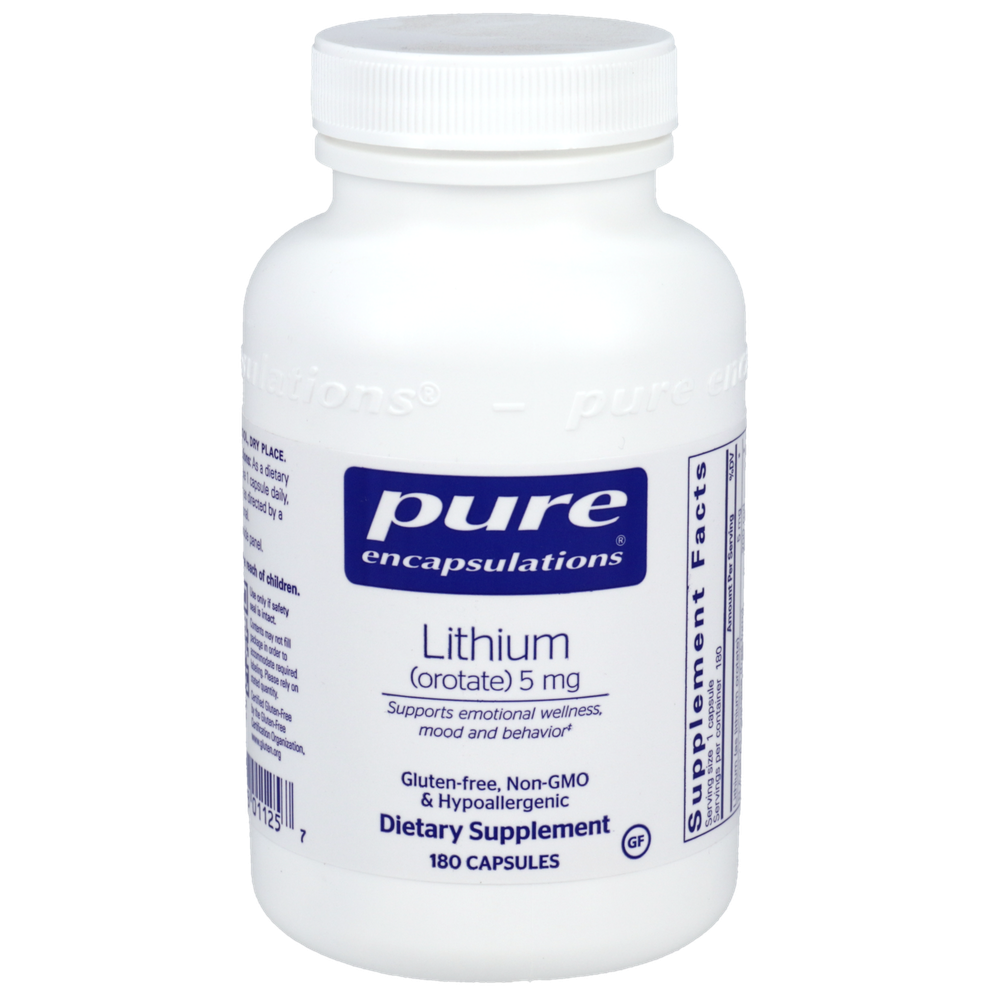
Lithium (Orotate) 5mg by Pure Encapsulations
180 capsules · 180-day supply
Low-Dose Lithium Orotate With NAC for Emotional Wellness$47.99
Purchase options
Practitioner-grade brand3rd-party testedFree shipping $50+
Gluten Free
Pure Encapsulations Lithium (Orotate) 5mg overview
This is a low-dose mineral supplement for adults who, with their clinician, have decided to add a small amount of lithium to support emotional wellness, the purpose stated on the label. It is not prescription lithium and it is not a replacement for it: prescription lithium is a medicine given at far higher doses, monitored with blood tests, for conditions a supplement is not meant for. If you take prescription lithium or any psychiatric medicine, or think you may need one, do not use this product without your prescriber's explicit agreement.
Lithium is a naturally occurring element found in trace amounts in drinking water and some foods. Here it is bound to orotic acid as lithium orotate. The capsule also provides N-acetyl-L-cysteine (NAC), an amino acid derivative the body uses to make glutathione, one of its main antioxidants. Research on low-dose lithium is early: most of it is observational, and controlled trials of supplements at this dose are few. Claims that orotate is absorbed better than other lithium salts are not well supported.
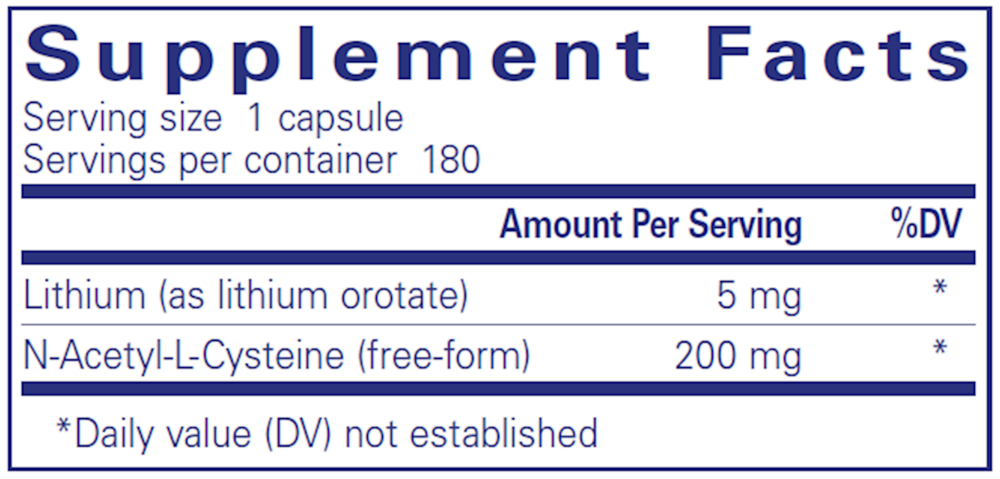
Each capsule provides 5 mg of lithium and 200 mg of NAC. The label directs 1 capsule daily, with a meal, or as directed by a health professional, and warns not to exceed the dose your health professional recommends. Do not take more in the hope of a stronger effect. Take it at a consistent time and keep your fluid and salt intake steady, because dehydration and sudden changes in salt intake alter how the kidneys handle lithium.
Lithium is cleared by the kidneys and can affect the thyroid, and the label recommends that anyone taking this supplement have kidney function monitored regularly. Do not use it if you have kidney disease or a thyroid condition unless your clinician approves and follows TSH, Creatinine and eGFR (Creatinine). Diuretics, NSAIDs such as ibuprofen and naproxen, and ACE inhibitors and related blood pressure medicines raise lithium levels in the body. The label says it is not to be taken with antidepressants unless a health professional advises it; the same caution applies to every other psychiatric medicine. It is not to be taken during pregnancy or while nursing. NAC can intensify the effects of nitroglycerin; tell your clinician if you use it.
Do not expect a noticeable shift; if this product does anything for you, it will be subtle and gradual over weeks. Tremor, unusual thirst, frequent urination, nausea or mental fogginess are reasons to stop and call your clinician, even at a low dose. If low mood, anxiety or changes in behavior are affecting your life, that calls for a clinician's assessment, not a supplement. Compared with magnesium or omega-3s, which people also consider for emotional wellness, lithium has a narrower margin for error.
Frequently asked questions
What is lithium orotate?
Lithium orotate is the mineral lithium bound to orotic acid, sold as a low-dose dietary supplement. Each capsule here provides 5 mg of lithium, along with 200 mg of N-acetyl-L-cysteine. It is not the same as prescription lithium.
Is lithium orotate the same as prescription lithium?
No. Prescription lithium is a medicine given at far higher doses, with regular blood tests, for conditions a clinician diagnoses and manages. This is a low-dose mineral supplement. It is not a replacement for prescription lithium and must not be used as one.
How much lithium is in each capsule?
Each capsule provides 5 mg of lithium as lithium orotate and 200 mg of N-acetyl-L-cysteine. The label directs 1 capsule daily, with a meal, or as directed by a health professional. Do not exceed the dose your health professional recommends.
Who should not take lithium orotate?
The label says it is not to be taken by pregnant and lactating women, and that individuals with bipolar disorder and depression must be monitored closely by a health professional. Kidney disease, a thyroid condition or any psychiatric medicine also calls for your clinician's agreement first.
Does lithium orotate interact with medications?
Yes. Diuretics, NSAIDs such as ibuprofen and naproxen, and ACE inhibitors and related blood pressure medicines can raise lithium levels in the body. The label says not to take it with antidepressants unless a health professional advises it. Check with your prescriber or pharmacist first.
Do I need lab tests while taking low-dose lithium?
The label recommends that individuals taking this supplement have kidney function monitored regularly, since lithium is cleared by the kidneys. It can also affect the thyroid. Ask your clinician about checking Creatinine, eGFR (Creatinine) and TSH before you start and periodically afterward.
Why does this product contain NAC?
N-acetyl-L-cysteine is included at 200 mg per capsule. The body uses it to make glutathione, one of its main antioxidants. If you already take a separate NAC supplement, count this amount toward your daily total, and tell your clinician if you use nitroglycerin.
What side effects should I watch for?
Stop and contact your clinician if you notice tremor, unusual thirst, frequent urination, nausea, diarrhea or mental fogginess. These are uncommon at a low dose but should not be ignored. Staying well hydrated and keeping salt intake steady helps keep lithium handling stable.
How to take it & ingredients
Suggested use: As a dietary supplement, take 1 capsule daily, with a meal, or as directed by a health professional.
Active ingredients
1 capsule per serving · 180 servings
Lithium
Lithium Orotate
Lithium Orotate
5 mg
N-Acetyl-L-Cysteine
Free-form
Free-form
200 mg
Other ingredients: Vegetarian capsule (cellulose, water), Ascorbyl palmitate, Hypoallergenic plant fiber (cellulose)
Certifications
Benefits
Warnings