
 Instalab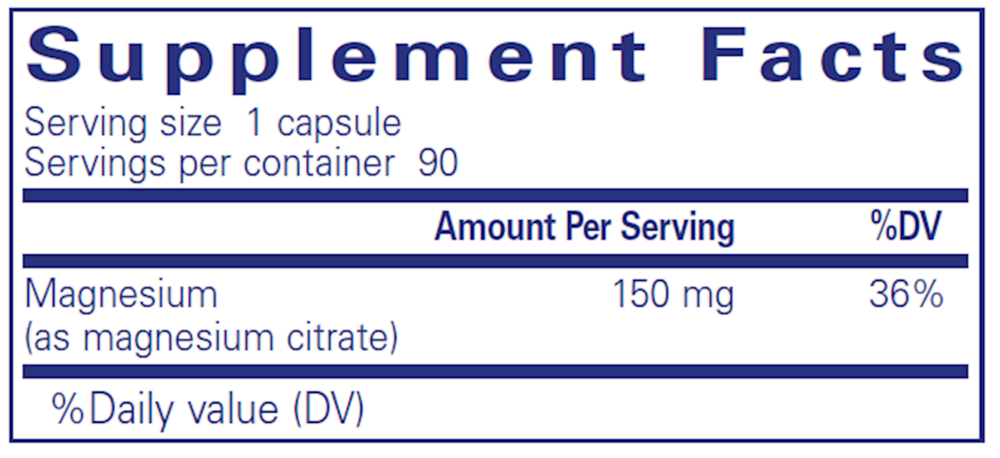

Pure Encapsulations
Magnesium Citrate 150 mg by Pure Encapsulations
90 capsules · 90-day supply
Essential Magnesium for Muscle Function and Relaxation Support$20.50
Purchase options
Practitioner-grade brand3rd-party testedFree shipping $50+
Vegan·Vegetarian·Gluten Free
Pure Encapsulations Magnesium Citrate overview
If your Magnesium, RBC (magnesium inside red blood cells, a better gauge than serum) runs low or low‑normal, magnesium citrate is a practical maintenance pick. It suits athletes with heavy sweat loss, people on diuretics or proton‑pump inhibitors, those with high alcohol intake, and anyone seeking gentler bowel regularity. Each capsule provides 150 mg, so 1–3 daily fits upkeep; for established deficiency, repletion usually needs higher total daily magnesium short‑term under clinician guidance.
Citrate is a highly soluble form of magnesium, which improves absorption compared with oxide. In the gut it also holds water, explaining the tendency toward softer stools. Systemically, magnesium sits at the center of ATP production (ATP is the cell’s energy currency) and helps relax muscles by balancing calcium signals and calming NMDA receptors (excitatory nerve channels). In practice, patients notice steadier energy and fewer tension cramps when levels are repleted.
Take 1–3 capsules daily with food, splitting doses if you use more than one. Evening dosing suits people using magnesium citrate for relaxation; morning works if you prefer daytime regularity. Titrate to bowel tolerance: if stools loosen, back down or switch to magnesium glycinate (gentler on the gut). Space magnesium 2–4 hours away from antibiotics, levothyroxine, and iron to avoid absorption interference.
Skip magnesium citrate in significant kidney disease unless your nephrologist approves, since clearance is reduced. Use caution if you’re already taking magnesium‑containing laxatives or antacids to avoid stacking. Loop or thiazide diuretics can lower magnesium—replacement can be helpful but should be guided by labs. If loose stools aggravate hemorrhoids or IBS, consider magnesium glycinate instead.
Frequently asked questions
What is magnesium citrate good for?
It’s a well‑absorbed form of magnesium for maintaining levels, easing muscle tension, and promoting gentle regularity. Because citrate holds water in the gut, it’s more likely to soften stools than glycinate, which some people want and others prefer to avoid.
Does magnesium citrate help constipation, and how fast?
At higher intakes, magnesium citrate draws water into the bowel and can work within 6–24 hours. At 150–450 mg elemental magnesium per day, expect a milder stool‑softening effect. If you need a rapid laxative dose, talk with your clinician about appropriate short‑term use.
Magnesium citrate vs. glycinate: which should I choose?
Choose citrate if you want good absorption plus a nudge toward regularity. Choose glycinate if you’re sensitive to diarrhea, prioritize sleep or anxiety relief, or already have loose stools. Oxide is cheaper but poorly absorbed and mostly acts as a laxative.
When should I take magnesium citrate, morning or night?
Either is fine. Take it at night if you’re aiming for relaxation or nighttime leg cramp relief, and in the morning if you prefer any bowel effect earlier in the day. Consistency matters more than clock time; take with food to reduce stomach upset.
Can I take magnesium citrate with antibiotics or thyroid medication?
Yes, but separate by 2–4 hours. Magnesium binds many antibiotics (like tetracyclines and fluoroquinolones) and levothyroxine in the gut, lowering absorption. The same spacing is wise with iron supplements.
How long does it take to raise magnesium levels?
With daily use, Magnesium, RBC typically improves within 4–8 weeks. If your level is very low, your clinician may recommend a higher total daily dose short‑term, then step down to a maintenance dose like this.
What side effects should I watch for with magnesium citrate?
The most common is loose stools or diarrhea, which is dose‑related. Reduce the dose, split it across the day, or switch to magnesium glycinate if that happens. Nausea is uncommon and usually improves when taken with food.
Who should avoid magnesium citrate?
People with significant kidney disease should avoid unsupervised magnesium due to risk of buildup. If you use magnesium‑containing laxatives or antacids, don’t stack products. Discuss with your clinician if you have bowel disorders that worsen with diarrhea.
How to take it & ingredients
Suggested use: Adults take 1 to 3 capsules daily or as directed by a healthcare practitioner.
Active ingredients
1 capsule per serving · 90 servings
Magnesium
Magnesium Citrate
Magnesium Citrate
150 mg
Other ingredients: Ascorbyl palmitate, Vegetarian capsule (hypromellose, water)
Certifications
Benefits
Warnings
Customers also considered

CereMag
Ortho Molecular Products
99 grams
$77.76$70.05 with Subscribe & Save

Dr. Formulated Magnesium Raspberry
Garden of Life
197.4 grams
$24.99$19.99 with Subscribe & Save

Dual-Mag Complex
Natura Health Products
90 capsules
$22.99$17.99 with Subscribe & Save

Mag Threonate
Ortho Molecular Products
60 capsules
$78.64$70.85 with Subscribe & Save