
 Instalab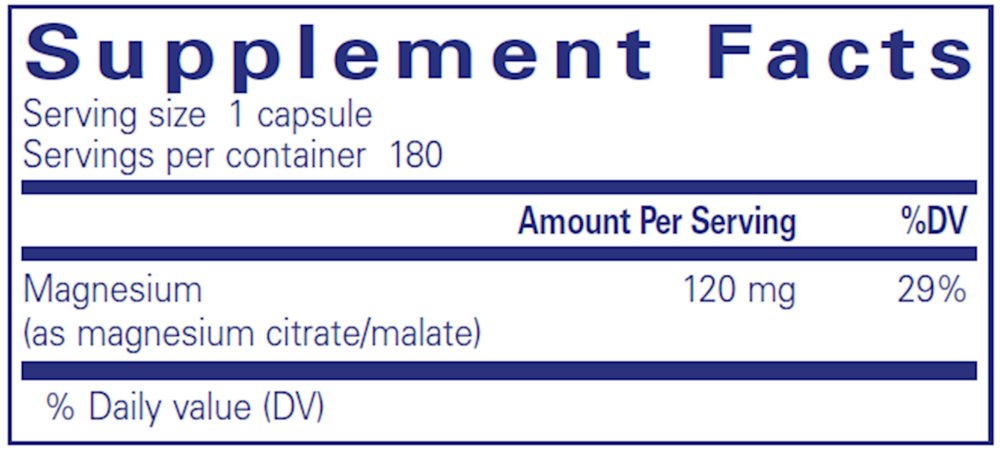

Pure Encapsulations
Magnesium Citrate/Malate 120 mg by Pure Encapsulations
180 capsules · 180-day supply
Supports Muscle Function, Energy Production, and Overall Well-Being$36.50
Purchase options
Practitioner-grade brand3rd-party testedFree shipping $50+
Vegan·Vegetarian·Gluten Free
Pure Encapsulations Magnesium Citrate/Malate overview
If your Magnesium or RBC Magnesium (magnesium inside red blood cells, a better gauge of body stores) runs low or low-normal, this form is a practical repletion and maintenance choice. It suits people with muscle cramps after workouts, frequent tension headaches or migraines, higher stress, and those who get constipation when they skimp on fiber. Compared with oxide, magnesium citrate malate is better absorbed and easier on the gut, though sensitive users who run loose may prefer magnesium glycinate instead.
Magnesium sits at the center of ATP (the cell’s energy currency), so low levels feel like low energy and tight muscles. Citrate and malate are organic acids that keep magnesium soluble and absorbable in the intestine. Malate also feeds the citric acid cycle (the cell’s energy pathway), though the main benefit here is correcting magnesium deficiency. As levels normalize, nerves fire more steadily, muscles relax, bowel motility improves, and some people see modest improvements in blood pressure and migraine frequency over several weeks.
Take 1 to 4 capsules daily with meals, split into two doses for smoother absorption. Each capsule provides 120 mg elemental magnesium, so typical use lands at 240–360 mg per day; higher intakes are sometimes used short term if your level is low under clinician guidance. Constipation generally eases within 24–48 hours, while muscle tension, sleep quality, and headache patterns usually shift within 1 to 3 weeks.
Magnesium binds certain drugs and blocks their absorption. Separate by at least 2–4 hours from levothyroxine, tetracycline or fluoroquinolone antibiotics, and bisphosphonates. Loop and thiazide diuretics can lower magnesium, increasing need. If you use proton pump inhibitors long term, check Magnesium or RBC Magnesium periodically. With significant kidney disease, avoid unsupervised magnesium—clearance is reduced and levels can rise.
Frequently asked questions
Is magnesium citrate malate good for sleep and muscle cramps?
Often, yes. By restoring magnesium, it calms nerve firing and relaxes muscle tissue. Many notice better sleep quality and fewer cramps within 1–3 weeks. If cramps persist, check Magnesium or RBC Magnesium and hydration, and review sodium/potassium intake.
Does magnesium citrate malate help with constipation?
It can. Citrate is osmotically active, drawing water into the bowel, which helps regularity without stimulant laxatives. Effects usually show in 24–48 hours. If stools get too loose, reduce the dose or switch to magnesium glycinate.
What time of day should I take magnesium?
Take it with meals, split doses morning and evening. If your goal is sleep or nighttime muscle relaxation, put the larger portion with dinner. Consistency matters more than exact timing.
How long before magnesium levels improve on labs?
Serum Magnesium can shift within 1–2 weeks, but RBC Magnesium (a better reflection of tissue stores) often takes 4–8 weeks. Retest after a month or two to judge response and adjust the dose.
What’s the difference between citrate/malate and glycinate or oxide?
Citrate/malate and glycinate are well absorbed; oxide is poorly absorbed and more likely to cause GI issues. Citrate leans more laxative, helpful for constipation. Glycinate is gentler if you’re prone to loose stools.
Can I take magnesium with antidepressants or blood pressure meds?
Generally yes, but separate from medications by 2 hours to avoid binding. Magnesium can modestly lower blood pressure; monitor if you’re on antihypertensives. When in doubt, confirm with your clinician.
Can magnesium trigger diarrhea or stomach upset?
At higher doses, citrate can loosen stools. Take with food and titrate gradually. If you get GI upset at modest doses, reduce the amount or switch to magnesium glycinate, which is typically better tolerated.
How to take it & ingredients
Suggested use: Take 1 to 4 capsules daily, in divided doses, with meals.
Active ingredients
1 capsule per serving · 180 servings
Magnesium
Magnesium citrate/malate
Magnesium citrate/malate
120 mg
Other ingredients: Ascorbyl palmitate, Vegetarian capsule (cellulose, water)
Certifications
Benefits
Warnings
Customers also considered
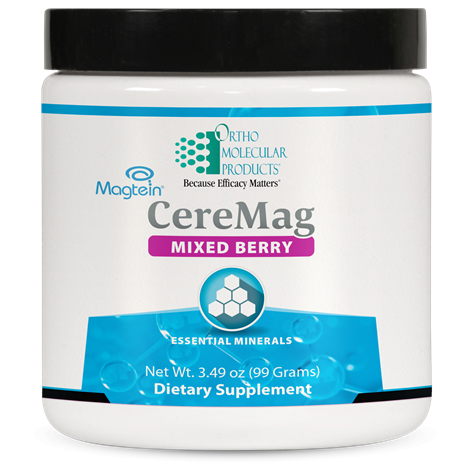
CereMag
Ortho Molecular Products
99 grams
$77.76$70.05 with Subscribe & Save

Dr. Formulated Magnesium Raspberry
Garden of Life
197.4 grams
$24.99$19.99 with Subscribe & Save

Dual-Mag Complex
Natura Health Products
90 capsules
$22.99$17.99 with Subscribe & Save

Mag Threonate
Ortho Molecular Products
60 capsules
$78.64$70.85 with Subscribe & Save