
 Instalab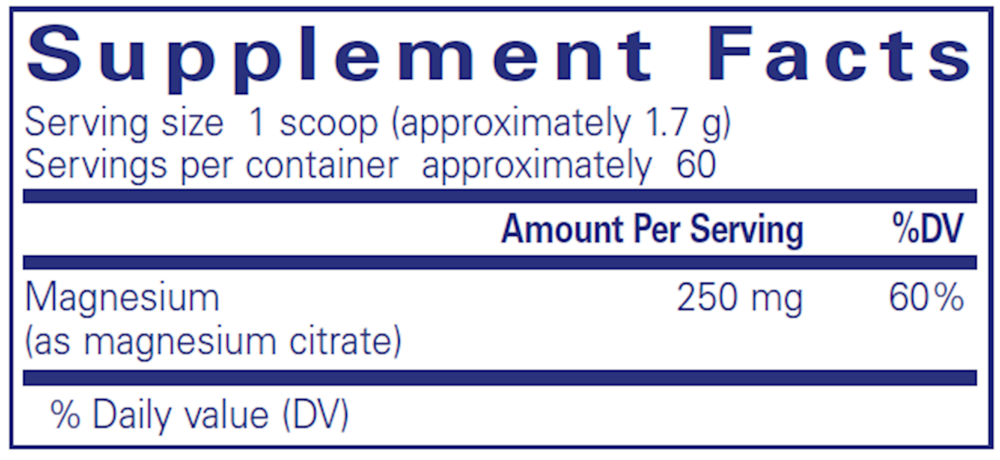

Pure Encapsulations
Magnesium Powder 250 mg by Pure Encapsulations
108 grams · 63-day supply
Supports Muscle Function, Relaxation, and Overall Well-Being$31.50
Purchase options
Practitioner-grade brand3rd-party testedFree shipping $50+
Vegan·Vegetarian·Gluten Free
Pure Encapsulations Magnesium Powder overview
If you get muscle tightness at night, struggle with regularity, or your Magnesium or Magnesium, RBC labs run low-normal, magnesium citrate powder is a practical pick. The citrate form absorbs better than oxide and is gentle enough for daily use. It suits athletes with heavy sweat loss, people on low-vegetable diets, and those using diuretics that increase mineral loss. If you want sleep support and also tend toward constipation, this form often hits both. For persistent deficiency, plan on steady use for 4 to 8 weeks.
Magnesium is a cofactor for hundreds of enzymes that make and use ATP (the body’s energy currency) and it tempers calcium entry into muscle, which helps muscles relax. The citrate salt is well absorbed and draws water into the bowel, which is why it can ease constipation. In the nervous system it nudges calming pathways, so sleep quality and perceived stress often improve when levels are low. Effects on cramps and sleep are most obvious in people who were under-replete to start.
Mix one scoop in 8 oz water with meals, once or twice daily, as the label suggests. Most adults land at 200–400 mg elemental magnesium per day from supplements, so this serving fits a maintenance dose. If stools loosen, cut back or split the dose. For bowel regularity, many take the larger portion in the evening. Recheck Magnesium or Magnesium, RBC after 6 to 8 weeks to right-size your ongoing dose.
Magnesium binds many drugs in the gut. Separate by at least 2–4 hours from levothyroxine, tetracycline or fluoroquinolone antibiotics, and oral bisphosphonates. Loop and thiazide diuretics can lower magnesium, so consistent intake and periodic labs help. If you have significant kidney disease, use only with clinician guidance because magnesium is cleared by the kidneys. Expect looser stools if combined with other laxatives or high-dose vitamin C.
Frequently asked questions
What is magnesium citrate powder good for?
It’s a well-absorbed form for daily magnesium repletion, helpful for muscle relaxation, sleep quality when levels are low, and gentle bowel regularity. It’s also useful if your Magnesium or Magnesium, RBC is low-normal or you lose minerals through heavy sweating or diuretics.
How long does magnesium citrate take to work?
Bowel regularity can change within 24–72 hours. Sleep and muscle benefits usually emerge within 1–2 weeks, with fuller effects over 4–8 weeks as tissue levels improve. If nothing changes after a month, revisit dose, timing, and labs with a clinician.
Does magnesium citrate help you sleep?
Often, yes—especially if your magnesium status is low. It has a mild calming effect on the nervous system and relaxes muscle. If loose stools are an issue at bedtime, move the dose earlier or consider magnesium glycinate, which is less laxative.
What’s the difference between magnesium citrate and glycinate?
Citrate absorbs well and tends to loosen stools, which can aid regularity. Glycinate is also well absorbed but gentler on the gut, making it a better pick if you’re sensitive to diarrhea and want sleep or anxiety benefits without laxative effects.
Can I take magnesium with other medications?
Yes, but separate it by 2–4 hours from levothyroxine, tetracycline or fluoroquinolone antibiotics, and oral bisphosphonates because magnesium can reduce their absorption. If you use diuretics or have kidney disease, coordinate dosing and labs with your clinician.
When should I take magnesium citrate powder?
Take with meals to improve tolerance. For constipation, many take the larger portion in the evening. For sleep, try late afternoon or after dinner. If stools get loose, reduce the dose or split it morning and evening.
Can magnesium citrate cause diarrhea?
Yes. Citrate draws water into the bowel, which is helpful for regularity but can lead to loose stools at higher doses. Start with one scoop daily and adjust. If diarrhea persists, switch to magnesium glycinate or reduce the dose.
Is magnesium citrate safe in pregnancy?
Generally, magnesium is considered safe at typical supplemental doses during pregnancy, but discuss form and dosing with your obstetric clinician. Citrate’s laxative effect can be unwanted; some prefer magnesium glycinate for better gut tolerance.
How to take it & ingredients
Suggested use: Take 1 scoop 1–2 times per day with meals, mixed with 8 oz of water.
Active ingredients
1 scoop = 1.7 grams per serving · 64 servings
Magnesium
Magnesium Citrate
Magnesium Citrate
250 mg
Certifications
Benefits
Warnings
Customers also considered

CereMag
Ortho Molecular Products
99 grams
$77.76$70.05 with Subscribe & Save

Dr. Formulated Magnesium Raspberry
Garden of Life
197.4 grams
$24.99$19.99 with Subscribe & Save

Dual-Mag Complex
Natura Health Products
90 capsules
$22.99$17.99 with Subscribe & Save

Mag Threonate
Ortho Molecular Products
60 capsules
$78.64$70.85 with Subscribe & Save