 Instalab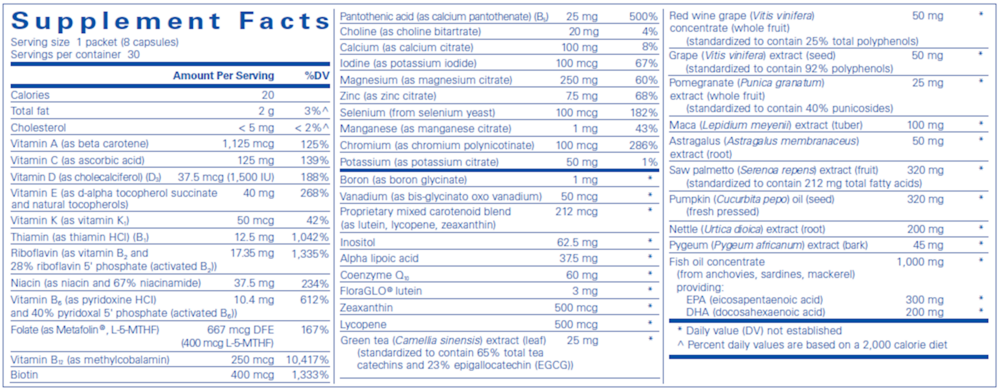
Pure Encapsulations
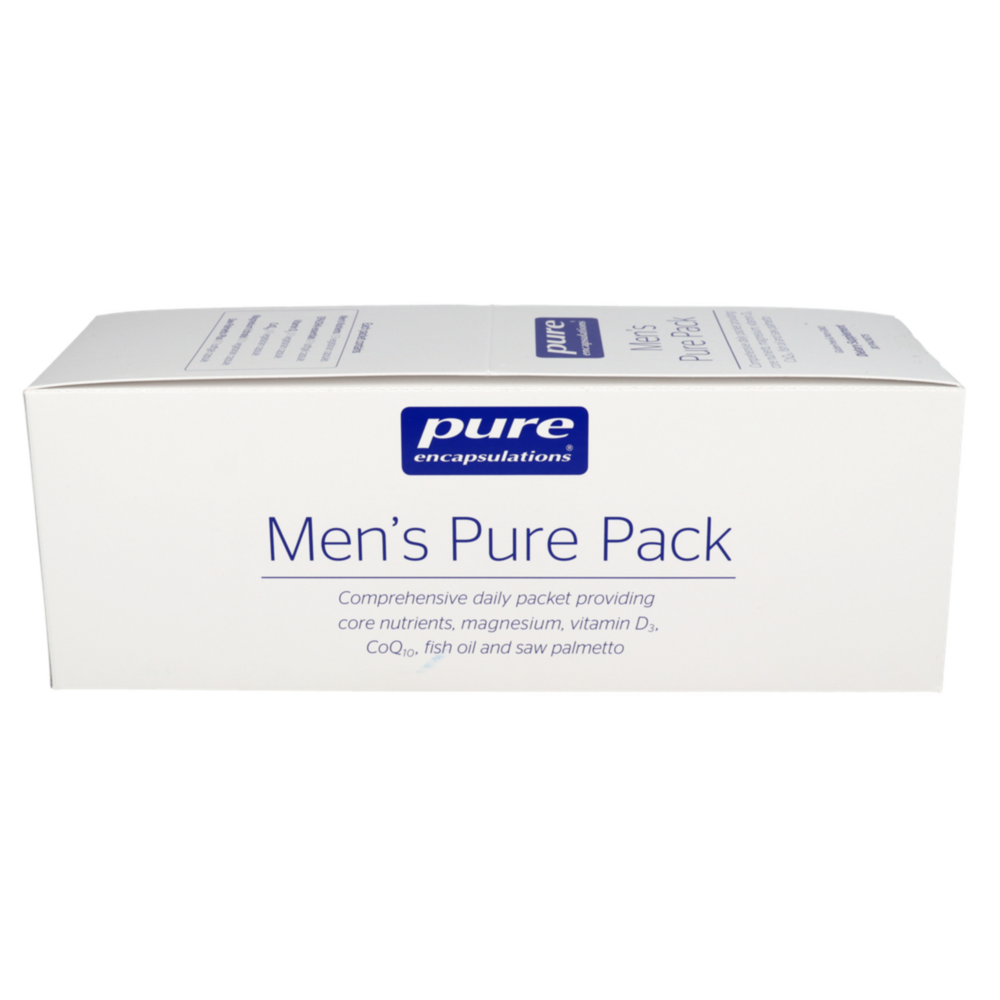
Mens Pure Pack by Pure Encapsulations
30 packets · 30-day supply
Comprehensive Multivitamin Support for Men's Health and Vitality$92.50
This item is currently out of stockGet notified when this item is back in stock
Practitioner-grade brand3rd-party testedFree shipping $50+
Pure Encapsulations Mens Pure Pack overview
This fits men who want one daily men’s multivitamin pack that covers a multivitamin, omega-3, and a prostate blend without juggling bottles. It’s a good maintenance choice if your Vitamin D, 25-Hydroxy or Omega-3 Index is in the lower normal range, if you eat little seafood, or if mild urinary symptoms are starting. If your triglycerides are elevated or your vitamin D is clearly low, you’ll likely need higher-dose omega-3 or D3 than what’s in this packet.
You get L-5-MTHF folate and methylcobalamin B12, the bioactive forms your cells use directly, plus magnesium citrate for better absorption than oxide. The fish oil provides EPA and DHA, the long-chain omega-3 fats that lower how much fat the liver exports as triglycerides and can trim hs-CRP (an inflammation marker) in some people, though the amount here is maintenance-level. The prostate blend pairs saw palmetto, nettle root, pygeum, and pumpkin seed oil, which together modestly inhibit 5-alpha-reductase (the enzyme that makes DHT from testosterone) and can ease urinary flow. Lutein and zeaxanthin concentrate in the macula (the retina’s focus point), while CoQ10 supports mitochondrial energy production and can replenish what statins deplete.
Take the full packet with a meal that contains fat to improve absorption of vitamins A, D, E, and K and to minimize fish oil aftertaste. Evening works well if fishy burps are an issue; chilling the fish oil capsule can also help. Recheck Vitamin D, 25-Hydroxy and Omega-3 Index in 8–12 weeks. Prostate symptom changes, if they happen, usually show within 4–8 weeks; triglyceride changes from omega-3s generally take 4–12 weeks.
This contains vitamin K1, fish oil, and saw palmetto. If you take warfarin or other blood thinners, or have a bleeding disorder, talk to your clinician, as vitamin K affects warfarin dosing and omega-3s and saw palmetto can increase bleeding tendency. If you’re on finasteride or dutasteride, review the prostate herbs with your prescriber. Fish allergy: avoid. Statin users can take this; the CoQ10 is compatible.
Skip it if you need therapeutic omega-3 dosing for high triglycerides; use a higher-dose fish oil instead and keep the multivitamin separate. If your vitamin D is markedly low, a higher-dose D3 repletion plan is better for 8–12 weeks, then this can serve as maintenance. If you have upcoming surgery, pause supplements with fish oil and saw palmetto unless your surgeon clears them.
Frequently asked questions
Is this men’s multivitamin pack enough vitamin D?
It delivers about 1,500 IU of vitamin D3, which suits maintenance if your Vitamin D, 25-Hydroxy is low-normal. For established deficiency, clinicians usually use higher short-term doses, then step down to maintenance.
Will the omega-3 in it lower my triglycerides?
At one fish oil capsule daily, this is maintenance-level. Clinically meaningful triglyceride reduction often requires higher EPA+DHA totals. Recheck triglycerides after 8–12 weeks if that’s your goal.
How long until prostate supplements start working?
For saw palmetto–based blends, men who respond typically notice easier urinary flow within 4–8 weeks. If there’s no change by 8–12 weeks, reconsider the approach with your clinician.
Can I take this with a statin?
Yes. The CoQ10 can help replenish what statins lower. Keep taking your statin as prescribed and monitor your lipid panel and symptoms with your clinician.
Does this men’s multivitamin thin your blood?
It includes fish oil and saw palmetto, which can increase bleeding tendency, and vitamin K1, which affects warfarin dosing. If you use blood thinners or have a bleeding disorder, get medical guidance first.
How do I avoid fishy burps from the fish oil?
Take the packet with your largest meal and consider taking it at dinner. Keeping the fish oil capsule chilled before swallowing also reduces aftertaste for many people.
What labs are worth checking while on this?
Vitamin D, 25-Hydroxy and Omega-3 Index are useful at baseline and again in 8–12 weeks. If you’re targeting triglycerides, recheck your lipid panel. For inflammation tracking, hs-CRP can be informative.
Is the green tea extract stimulating?
The extract is standardized for catechins, not caffeine, and the dose is modest. Most people do not notice stimulation. If you’re sensitive, take the packet earlier in the day.
How to take it & ingredients
Suggested use: Take 1 packet daily (8 capsules), with meals.
Active ingredients
1 packet per serving · 30 servings
Vitamin A
As beta carotene
As beta carotene
1125 mcg
Vitamin C
As ascorbic acid
As ascorbic acid
125 mg
Vitamin D
As cholecalciferol (D3)
As cholecalciferol (D3)
37.5 mcg
Vitamin E
As d-alpha tocopherol succinate, natural tocopherols, and 17% d-alpha tocopherol
As d-alpha tocopherol succinate, natural tocopherols, and 17% d-alpha tocopherol
40 mg
Vitamin K
As vitamin K1
As vitamin K1
50 mcg
Thiamin
As thiamin HCl (B1)
As thiamin HCl (B1)
12.5 mg
Riboflavin
Vitamin B2 and 28% riboflavin 5' phosphate (activated B2)
Vitamin B2 and 28% riboflavin 5' phosphate (activated B2)
17.4 mg
Niacin
As niacin and 67% niacinamide
As niacin and 67% niacinamide
37.5 mg
Vitamin B6
As pyridoxine HCl and 40% pyridoxal 5' phosphate (activated B6)
As pyridoxine HCl and 40% pyridoxal 5' phosphate (activated B6)
10.4 mg
Folate
As Metafolin®, L-5-MTHF
As Metafolin®, L-5-MTHF
667 mcg DFE
Vitamin B12
As methylcobalamin
As methylcobalamin
250 mcg
Biotin
400 mcg
Pantothenic Acid
As calcium pantothenate (B5)
As calcium pantothenate (B5)
25 mg
Choline
As choline bitartrate
As choline bitartrate
20 mg
Calcium
As calcium citrate
As calcium citrate
100 mg
Iodine
As potassium iodide
As potassium iodide
100 mcg
Magnesium
As magnesium citrate
As magnesium citrate
250 mg
Zinc
As zinc citrate
As zinc citrate
7.5 mg
Selenium
From selenium yeast
From selenium yeast
100 mcg
Manganese
As manganese citrate
As manganese citrate
1 mg
Chromium
As chromium polynicotinate
As chromium polynicotinate
100 mcg
Potassium
As potassium citrate
As potassium citrate
50 mg
Boron
As boron glycinate
As boron glycinate
1 mg
Vanadium
As bis-glycinato oxo vanadium
As bis-glycinato oxo vanadium
50 mcg
Proprietary Mixed Carotenoid Blend
As lutein, lycopene, zeaxanthin
As lutein, lycopene, zeaxanthin
212 mcg
Inositol
62.5 mg
Alpha Lipoic Acid
37.5 mg
CoEnzyme Q10
60 mg
FloraGLO Lutein
3 mg
Zeaxanthin
500 mcg
Lycopene
500 mcg
Green Tea Extract
(camellia sinensis)(leaf)(standardized to contain 65% total tea catechins and 23% epigallocatechin (EGCG))
(camellia sinensis)(leaf)(standardized to contain 65% total tea catechins and 23% epigallocatechin (EGCG))
25 mg
Red Wine Grape Concentrate
(vitis vinifera)(whole fruit)(standardized to contain 25% total polyphenols)
(vitis vinifera)(whole fruit)(standardized to contain 25% total polyphenols)
50 mg
Grape Extract
(vitis vinifera)(seed)(standardized to contain 92% polyphenols)
(vitis vinifera)(seed)(standardized to contain 92% polyphenols)
50 mg
Pomegranate Extract
(punica granatum)(whole fruit)(standardized to contain 40% punicosides)
(punica granatum)(whole fruit)(standardized to contain 40% punicosides)
25 mg
Maca Extract
(lepidium meyenii)(tuber)
(lepidium meyenii)(tuber)
100 mg
Astragalus Extract
(Astragalus membranaceus)(root)
(Astragalus membranaceus)(root)
50 mg
Saw Palmetto Extract
(Serenoa repens)(fruit)
(Serenoa repens)(fruit)
320 mg
Pumpkin Oil (seed)
(Cucurbita pepo)(fresh pressed)
(Cucurbita pepo)(fresh pressed)
320 mg
Nettle Extract
(Urtica dioica)(root)
(Urtica dioica)(root)
200 mg
Pygeum Extract
(bark)(Pygeum africanum)
(bark)(Pygeum africanum)
45 mg
▼
Fish Oil Concentrate
(anchovies, sardines, mackerel)
(anchovies, sardines, mackerel)
1000 mg
EPA (eicosapentaenoic acid)
300 mg
DHA (docosahexaenoic acid)
200 mg
Other ingredients: Vegetarian Capsule (Cellulose, Water), Gelatin Capsule (Gelatin, Glycerin, Water), Hypoallergenic Plant Fiber (Cellulose), Ascorbyl Palmitate, Sunflower Lecithin, Beeswax, Carob
Certifications
Benefits
Warnings
Customers also considered
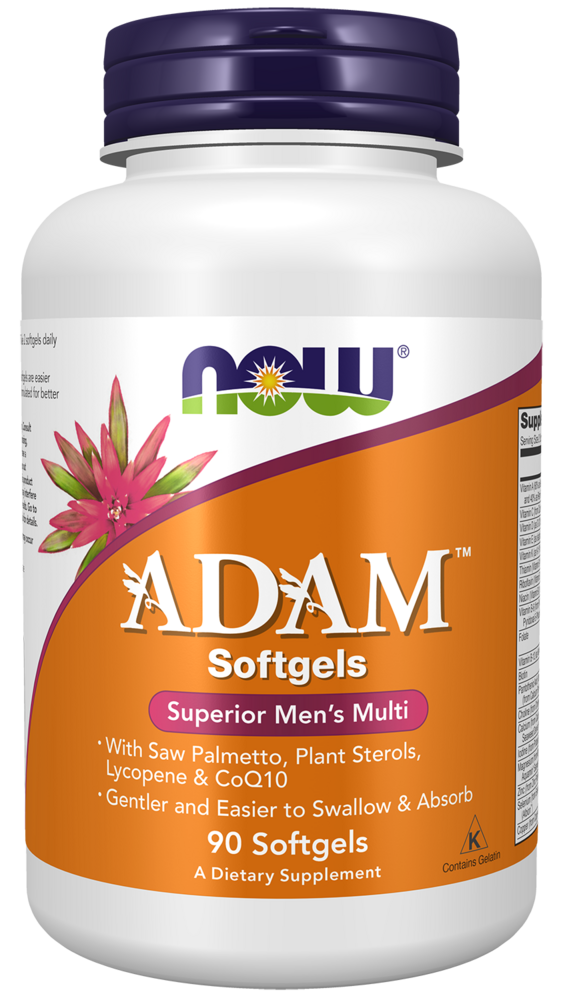
ADAM Superior Men's Multi
Now Foods
90 softgels
$39.99$31.99 with Subscribe & Save
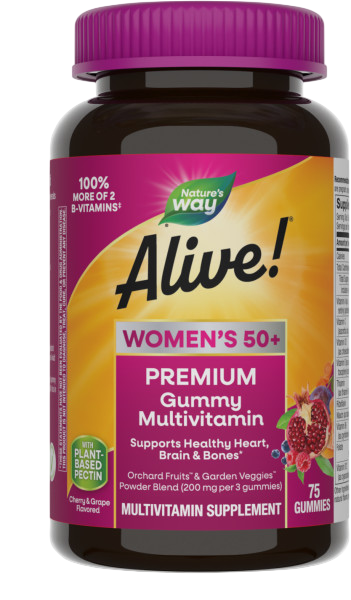
Alive Womens 50+ Premium Gummy Multi-Vitamin
Nature's Way
75 gummies
$22.99$17.99 with Subscribe & Save
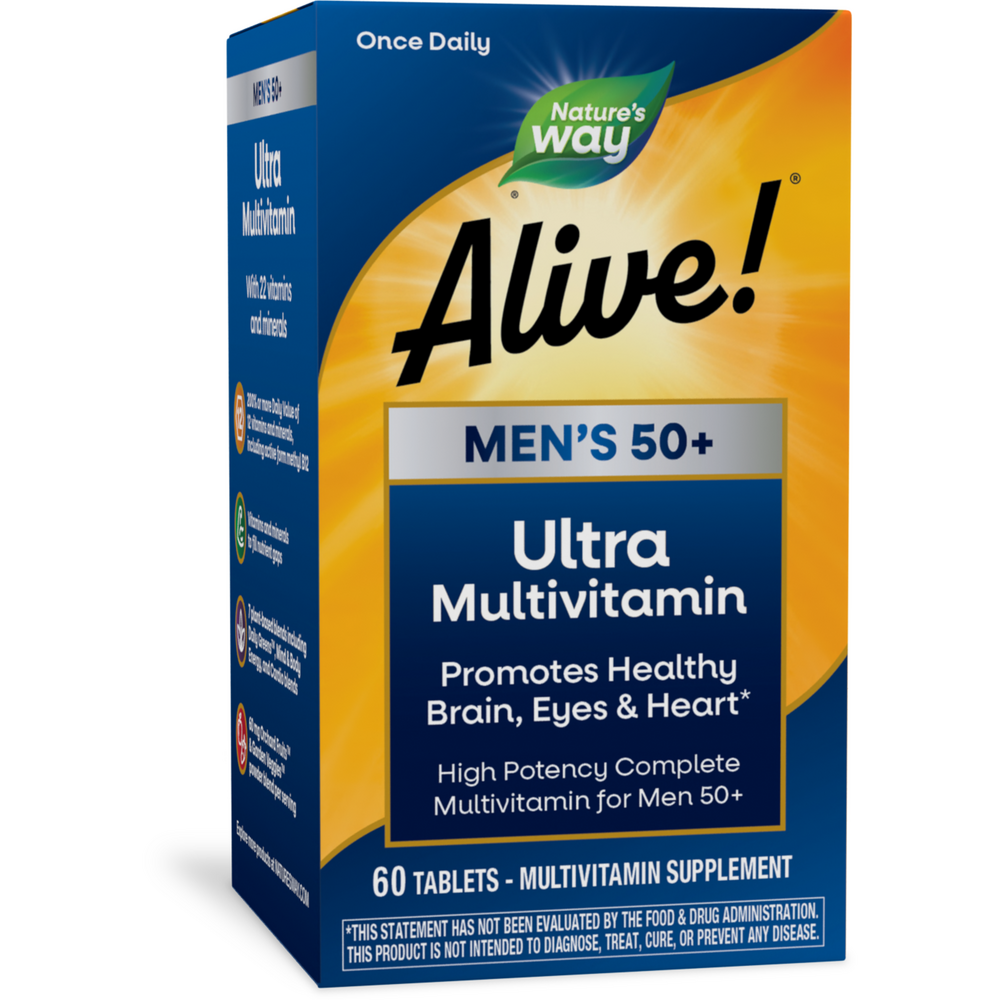
Alive! Men’s 50+ Ultra Potency
Nature’s Way
60 tablets
$29.99$23.99 with Subscribe & Save
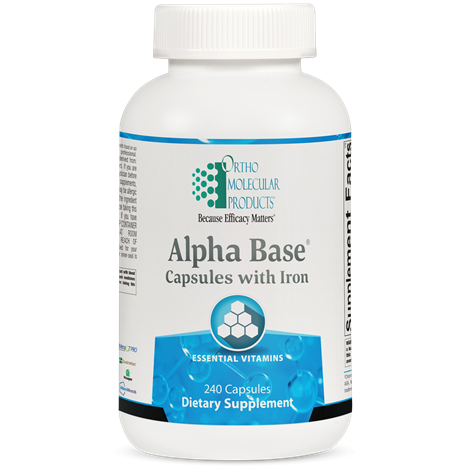
Alpha Base® Capsules with Iron
Ortho Molecular Products
240 capsules
$74.31$66.95 with Subscribe & Save