 Instalab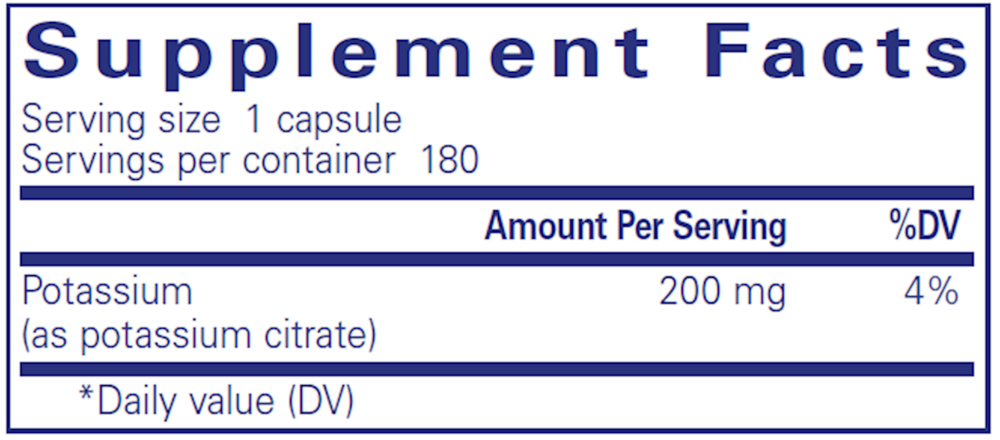

Pure Encapsulations
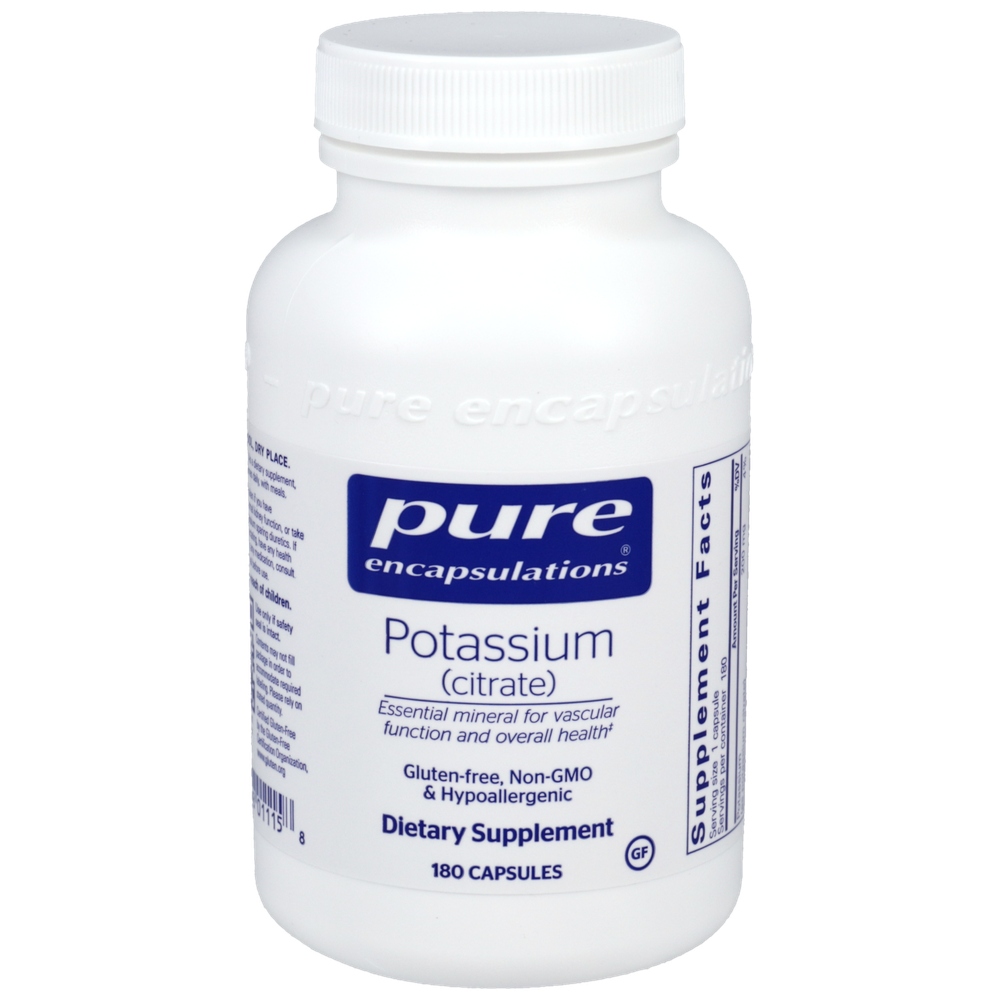
Potassium Citrate 200 mg by Pure Encapsulations
180 capsules · 180-day supply
Essential Mineral for Electrolyte Balance and Muscle Function$32.50
Purchase options
Practitioner-grade brand3rd-party testedFree shipping $50+
Vegan·Vegetarian·Gluten Free
Pure Encapsulations Potassium Citrate overview
If your Basic Metabolic Panel shows potassium in the lower end of normal, potassium citrate is a practical way to nudge intake up without extra sodium. It suits people with high-sodium diets, endurance exercisers losing salt in sweat, and those with a history of calcium kidney stones whose 24-hour urine shows low citrate. It is a maintenance-level dose; if you have established deficiency or true hypokalemia, correction requires higher, prescription-guided dosing.
Potassium helps nerve signaling and steady muscle contraction, including the heart’s rhythm, by balancing sodium and setting the electrical gradient across cells. The citrate part is metabolized to bicarbonate (the body’s main base), which gently raises alkali load. That can lower urinary calcium and raise urinary citrate, both protective for calcium stone formers. On labs, you’ll track potassium on a Basic Metabolic Panel and sometimes CO2/bicarbonate as an acid–base proxy.
Take two capsules daily, split with meals, to improve tolerance and absorption. This provides about 400 mg elemental potassium total, roughly 10 mEq. Expect muscle cramp ease or steadier energy within days if low intake was the driver; blood pressure effects are modest and accumulate over weeks when higher potassium displaces sodium. For stone prevention, your clinician may check 24-hour urine after 6 to 12 weeks to confirm a rise in urinary citrate.
Avoid if you have kidney disease, a history of high potassium, or are on drugs that raise potassium: ACE inhibitors (lisinopril), ARBs (losartan), potassium-sparing diuretics (spironolactone, eplerenone, amiloride, triamterene), or the antibiotic trimethoprim. NSAIDs can also push potassium up. If you’re on a prescribed low-potassium diet, pregnant with severe vomiting, or have significant dehydration, get clinician guidance first. Stop and seek care for weakness, palpitations, or tingling.
Frequently asked questions
What is potassium citrate used for?
It’s a bioavailable form of potassium to help maintain normal nerve and muscle function and balance sodium. The citrate adds a gentle alkali effect that can raise urinary citrate, which clinicians use in preventing calcium kidney stones when urine citrate is low.
Does potassium citrate help prevent kidney stones?
Yes, for calcium stone formers with low urinary citrate, raising citrate can reduce stone risk. Over-the-counter doses are modest; prescription doses are often used. Your urologist will confirm with a 24‑hour urine and adjust dosing.
How long does potassium citrate take to work?
For cramping from low intake, benefits can appear within days. Blood pressure changes, if any, develop over weeks alongside lower sodium intake. For stone prevention, clinicians typically recheck 24-hour urine chemistries after 6–12 weeks.
Can I take potassium citrate with blood pressure meds?
Not with drugs that raise potassium. Avoid with ACE inhibitors (like lisinopril), ARBs (like losartan), or potassium-sparing diuretics (spironolactone, eplerenone, amiloride, triamterene). Pairing can cause high potassium. Thiazide diuretics are different; ask your clinician.
What’s the difference between potassium citrate and potassium chloride?
Both provide potassium, but citrate also provides an alkali load that can raise urinary citrate, useful in calcium stone prevention. Chloride does not. Citrate is typically gentler on the stomach than high-dose chloride tablets.
Can I open the capsule?
Yes, you can open and mix with food or liquid. Take with a meal and water to reduce stomach upset, and avoid highly acidic beverages if you’re sensitive.
Is potassium citrate safe in pregnancy?
Potassium is an essential mineral, but supplementation during pregnancy should be guided by your obstetric clinician, especially if you have vomiting, dehydration, or are on any prescription medicines.
Which labs should I monitor while taking potassium citrate?
Check potassium on a Basic Metabolic Panel, kidney function (creatinine, eGFR), and CO2/bicarbonate. For kidney stone management, a 24-hour urine stone profile tracks urinary citrate, calcium, and pH.
How to take it & ingredients
Suggested use: Take 2 capsules daily in divided doses with meals or as directed by a healthcare professional.
Active ingredients
1 capsule per serving · 180 servings
Potassium
Potassium Citrate
Potassium Citrate
200 mg
Other ingredients: Ascorbyl palmitate, Vegetarian capsule (cellulose, water)
Certifications
Benefits
Warnings