 Instalab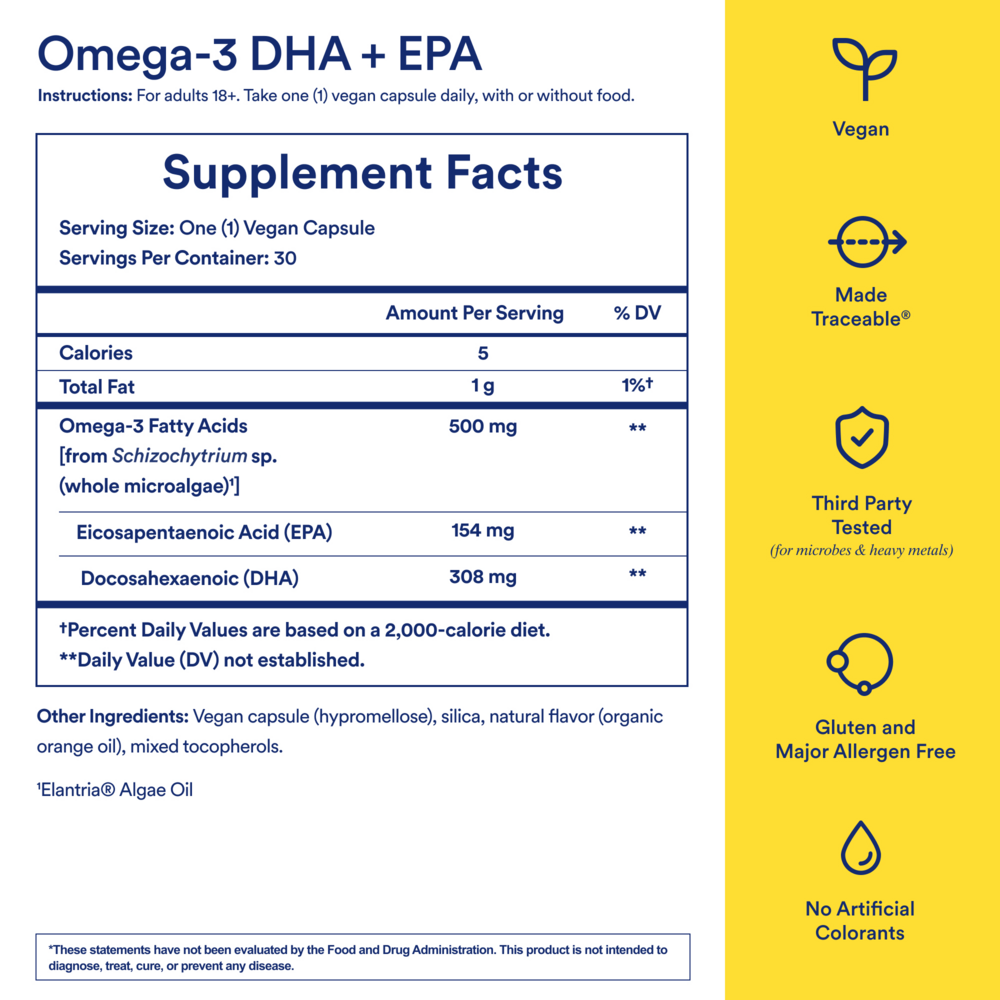

Ritual
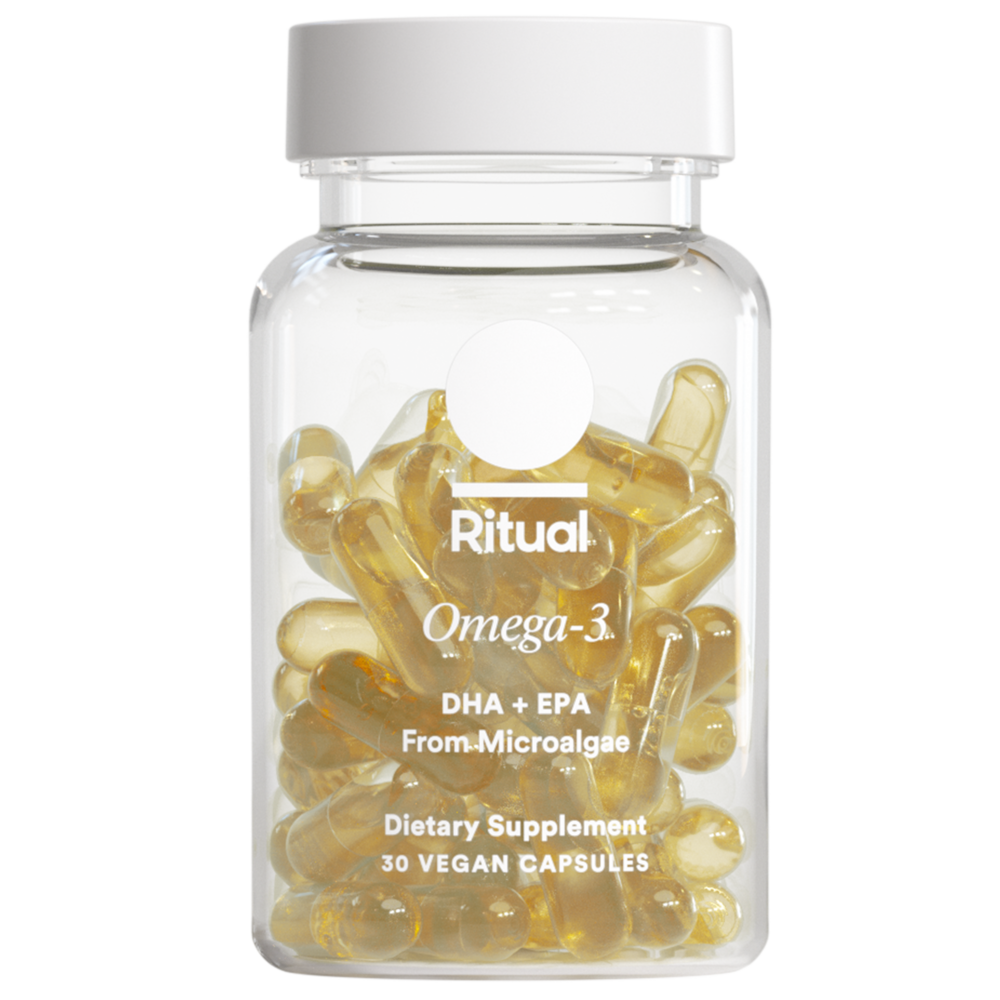
Omega-3 500 mg by Ritual
30 capsules · 30-day supply
Plant-Based Omega-3 for Heart, Brain, and Overall Wellness$37.99retail
Add to cart for 21% off
Purchase option
21% below MSRP3rd-party tested for purity & potencyFree shipping $50+
Vegan·Gluten Free·Soy Free·Dairy Free·Peanut Free·Crustacean Shellfish Free·
Ritual Omega-3 overview
If you don’t eat fish and your Omega-3 Index is low, a vegan omega-3 from microalgae is the cleanest way to get preformed DHA and EPA. This 500 mg total omega-3 is a maintenance-level dose for plant-based eaters, light seafood consumers, or pregnancy planning when fish intake is minimal. It helps keep levels steady, but if your triglycerides are elevated or you need a rapid rise on your Omega-3 Index, you’ll likely need a higher-dose omega-3 under clinician guidance.
EPA and DHA reduce how much fat your liver ships out as VLDL particles (the carriers that show up on a lipid panel as triglycerides), and they nudge cells to burn fatty acids faster for energy. Most people see triglycerides start to move within 4 to 12 weeks at clinically dosed omega-3 intakes. Algal oil from Schizochytrium is naturally rich in DHA with modest EPA, which also supports membrane structure in the brain and retina, and can modestly lower hs-CRP (a blood marker of inflammation) in some responders.
Take one softgel daily; a meal with fat improves omega-3 absorption even though it can be taken without food. Consistency matters—aim for the same time each day. Recheck your Omega-3 Index after 8 to 12 weeks to see if this dose is enough or if you need more. If you’re targeting triglyceride reduction, higher-total EPA+DHA formulas are typically more practical than adding multiple low-dose capsules.
If you’re on prescription omega-3 (like icosapent ethyl), don’t stack supplements without your clinician. For those with meaningfully high triglycerides, 500 mg total omega-3 is usually too low; look at higher-dose fish oil or higher-strength algal DHA/EPA options. Bleeding risk at this dose is minimal, but if you’re on blood thinners or have surgery planned, clear omega-3 use with your care team. Allergy to algae oil is rare but a reason to skip.
Is vegan omega-3 as effective as fish oil? Yes, for delivering DHA and EPA—the body uses them the same way. The catch is dose: this algal oil is mostly DHA, so if your goal is triglyceride reduction, look for total EPA+DHA in the multi-gram range. Is contamination a concern? Algal omega-3 avoids marine pollutants by being grown in controlled tanks, which is why many choose it over fish oil.
Frequently asked questions
Will 500 mg omega-3 lower triglycerides?
Unlikely on its own. Most triglyceride reductions in trials use much higher total EPA+DHA (often 2–4 grams daily). This 500 mg algal omega-3 is better viewed as a maintenance dose.
How long does omega-3 take to work?
For blood levels (Omega-3 Index), expect changes in 8–12 weeks of daily use. Triglyceride changes, when they occur at higher doses, are typically seen within 4–12 weeks.
Is vegan omega-3 as good as fish oil?
Yes for equivalence—EPA and DHA from algae are the same molecules as in fish oil. What differs is the EPA:DHA ratio and dose. Many algal oils are DHA-heavy and lower dose per capsule.
Should I take omega-3 with food?
Yes, a meal containing fat improves absorption. You can take it without food, but with food is more reliable for getting EPA and DHA into the bloodstream.
Does omega-3 thin your blood?
At typical supplement doses, the effect on bleeding is small. Even so, if you use anticoagulants or have surgery scheduled, discuss omega-3 use with your clinician first.
Is algal omega-3 safe in pregnancy?
DHA is routinely used in pregnancy for fetal brain and eye development. This dose is modest; confirm adequacy with your obstetric clinician, especially if you avoid fish.
Can omega-3 cause fishy burps or nausea?
Algal oil usually has fewer fishy burps than fish oil. If you get reflux, take it with a meal, try bedtime dosing, or split doses. Persistent GI upset is a reason to stop.
What labs should I check with omega-3?
Omega-3 Index is the best way to see if intake is landing in your tissues. If you’re targeting lipids, also watch Triglycerides and consider hs-CRP to track inflammation.
How to take it & ingredients
Suggested use: For adults 18+. Take one capsule daily, with or without food.
Active ingredients
1 capsule per serving · 30 servings
▼
Total Omega-3 Fatty Acids
From Schizochytrium sp. (whole microalgae)
From Schizochytrium sp. (whole microalgae)
500 mg
Docosahexaenoic Acid (DHA)
308 mg
Eicosapentaenoic Acid (EPA)
154 mg
Other ingredients: Vegan capsule (Hypromellose), Silica, Natural Flavor (Organic Orange Oil), Mixed Tocopherols
Certifications
Benefits
Warnings