 Instalab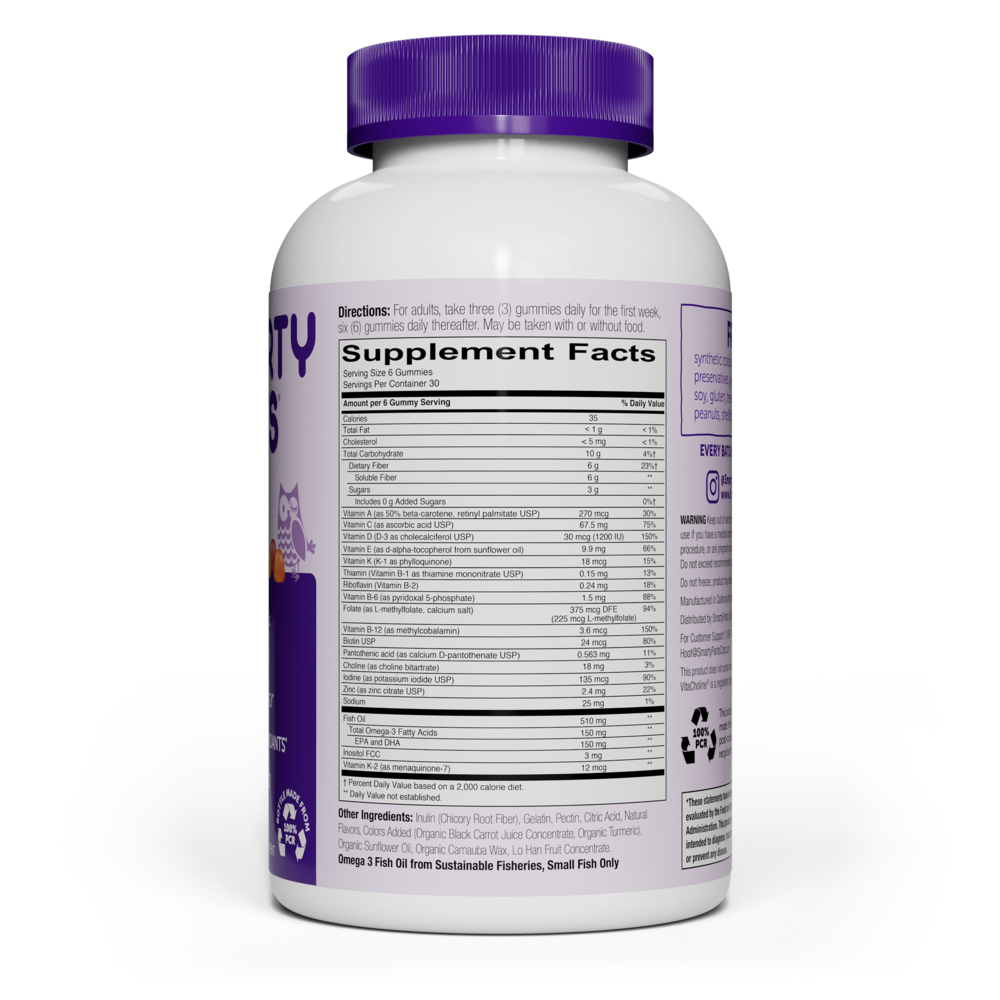

SmartyPants
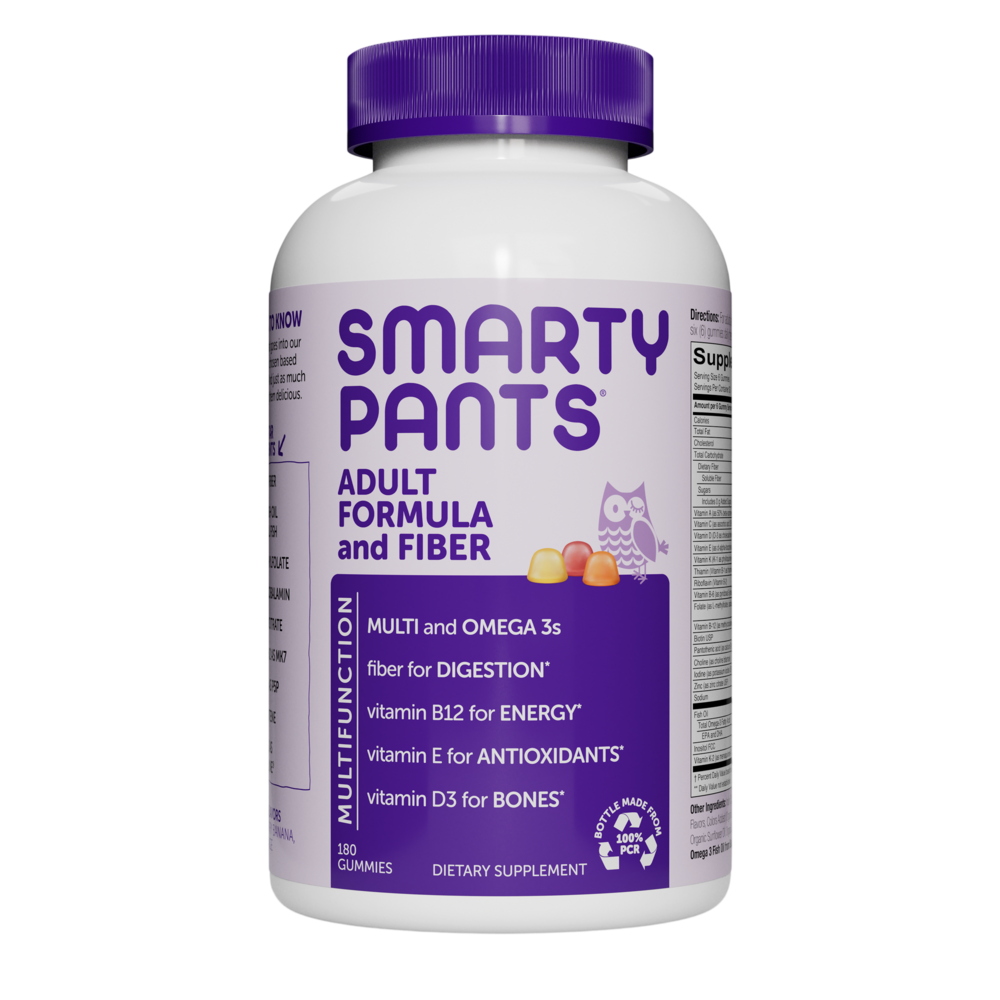
Adult Formula Multi and Omegas by SmartyPants
180 gummies · 30-day supply
Comprehensive Multivitamin with Omega-3s for Daily Wellness$44.99
This item is currently out of stockGet notified when this item is back in stock
Practitioner-grade brand3rd-party testedFree shipping $50+
Gluten Free·Soy Free·Egg Free·Artificial Preservative Free·Peanut Free·Wheat Free·
SmartyPants Adult Formula Multi and Omegas overview
If you want a gummy multivitamin with omega-3 and you don’t eat fish regularly, this is a practical maintenance pick. The Vitamin D3 dose suits adults whose Vitamin D, 25-Hydroxy is in the lower normal range and who want steady upkeep, not repletion. The methylfolate and methylcobalamin forms help if you’ve struggled with folic acid or low B12 on labs. If your Omega-3 Index is low or your triglycerides are elevated, the fish oil here is too light to correct that on its own.
EPA and DHA from fish oil help your liver send out fewer VLDL particles (the fat carriers that show up as triglycerides), but that effect requires higher intakes than you get here. At this dose, think membrane upkeep more than lipid lowering. Vitamin D3 (cholecalciferol) is the form your skin makes from sun and is longer-acting than D2. Folate as L-methylfolate and B12 as methylcobalamin are the bioactive forms your cells use directly, which can help normalize homocysteine (an amino acid tied to vascular risk) in some people. Natural d‑alpha tocopherol is the biologically active vitamin E form.
The manufacturer suggests three gummies daily for the first week, then six gummies daily. They can be taken with or without food; taking with a meal reduces nausea for some. Gummy multis add small calories and sugar, so keep them separate from other sweets. If your clinician is repleting vitamin D or omega-3, this is a base layer and they’ll usually add a higher-dose D3 softgel or fish oil.
Skip if you have a fish or fish-oil allergy. If you take a blood thinner (warfarin, apixaban, rivaroxaban), the omega-3 amount is modest, but discuss any fish oil with your prescriber. Thyroid disease managed with variable iodine intake deserves clinician guidance, since this contains iodine. Not a prenatal: people who are pregnant or trying to conceive should choose a dedicated prenatal with iron and adjusted vitamin A.
Frequently asked questions
Will this multivitamin with omega-3 lower my triglycerides?
Unlikely at this dose. The fish oil here is 510 mg total oil, which typically provides far less EPA+DHA than used for triglyceride reduction. If your triglycerides are elevated, ask about a higher-dose fish oil and recheck a lipid panel in 4–12 weeks.
Is the folate methylfolate and the B12 methylcobalamin?
Yes. It uses L-methylfolate and methylcobalamin, the bioactive forms your cells use directly. That’s useful if you’ve had low folate/B12 on labs or prefer to avoid folic acid and cyanocobalamin.
Can I take these gummies on an empty stomach?
Yes. They can be taken with or without food. If you notice queasiness or heartburn, take them with a meal and split the gummies into two doses across the day.
Is this safe with blood thinners?
The omega-3 amount is modest, but fish oil can have a mild blood-thinning effect. If you take warfarin or a direct oral anticoagulant, clear any fish oil–containing supplement with your clinician.
Is this multivitamin vegan or vegetarian?
No. It contains fish oil, so it’s not vegan or vegetarian. If you avoid fish, look for an algae-based omega-3 multivitamin or pair a vegan multi with an algae DHA/EPA product.
Does this replace a separate fish oil supplement?
Not if you need a therapeutic omega-3 dose. This is a maintenance-level add. For low Omega-3 Index or targeted triglyceride lowering, a dedicated fish oil with known EPA+DHA content is usually required.
How long until I notice effects?
Nutrient repletion is gradual. Energy-related benefits from B12/folate can show within 2–4 weeks if you were low. Vitamin D and omega-3 status typically shift over 8–12 weeks; confirm with Vitamin D, 25-Hydroxy and Omega-3 Index testing.
How to take it & ingredients
Suggested use: For adults, take three (3) gummies daily for the first week, six (6) gummies daily thereafter. May be taken with or without food.
Active ingredients
6 gummies per serving · 30 servings
Vitamin A
As retinyl palmitate USP
As retinyl palmitate USP
1500 IU
Vitamin C
As ascorbic acid USP
As ascorbic acid USP
60 mg
Vitamin D
As cholecalciferol USP
As cholecalciferol USP
900 IU
Vitamin E
As d-alpha-tocopherol from sunflower oil
As d-alpha-tocopherol from sunflower oil
30 IU
Thiamin
As thiamin mononitrate USP
As thiamin mononitrate USP
0.08 mg
Riboflavin USP
0.26 mg
Vitamin B-6
As pyridoxine hydrochloride USP
As pyridoxine hydrochloride USP
2 mg
Folate
As L-methylfolate, calcium salt
As L-methylfolate, calcium salt
400 mcg
Vitamin B-12
As methylcobalamin
As methylcobalamin
100 mcg
Biotin USP
45 mcg
Pantothenic Acid
As calcium D-pantothenate USP
As calcium D-pantothenate USP
1.5 mg
Iodine
As potassium iodide USP
As potassium iodide USP
150 mcg
Zinc
As zinc citrate USP
As zinc citrate USP
4.5 mg
Sodium
25 mg
▼
Fish Oil
510 mg
▼
Total Omega-3 Fatty Acids
185 mg
EPA (Eicosapentaenoic Acid)
84 mg
DHA (Docosahexaenoic Acid)
66 mg
Choline
As choline citrate
As choline citrate
18 mg
Inositol FCC
30 mcg
Other ingredients: Inulin (Chicory Root Fiber), Gelatin, Pectin, Citric Acid, Natural Flavors, Colors Added (Organic Black Carrot Juice Concentrate, Organic Turmeric), Organic Sunflower Oil, Organic Carnauba Wax, Lo Han Fruit Concentrate
Certifications
Benefits
Warnings
Customers also considered
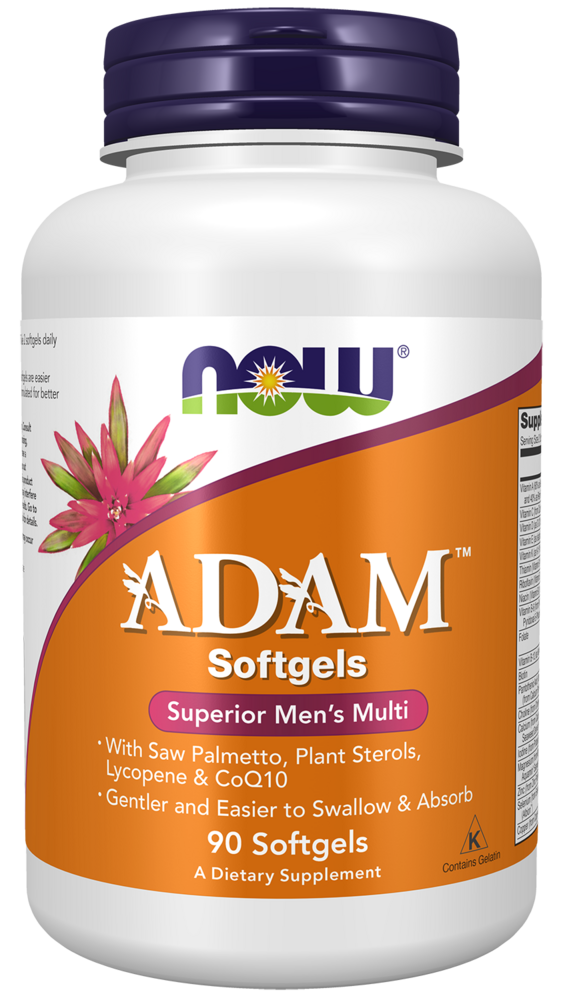
ADAM Superior Men's Multi
Now Foods
90 softgels
$39.99Save 20% with Subscribe & Save
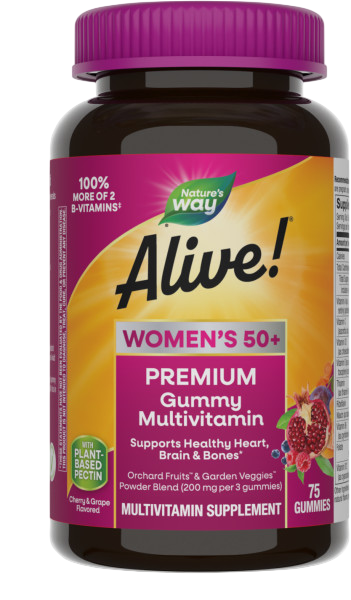
Alive Womens 50+ Premium Gummy Multi-Vitamin
Nature's Way
75 gummies
$22.99Save 22% with Subscribe & Save
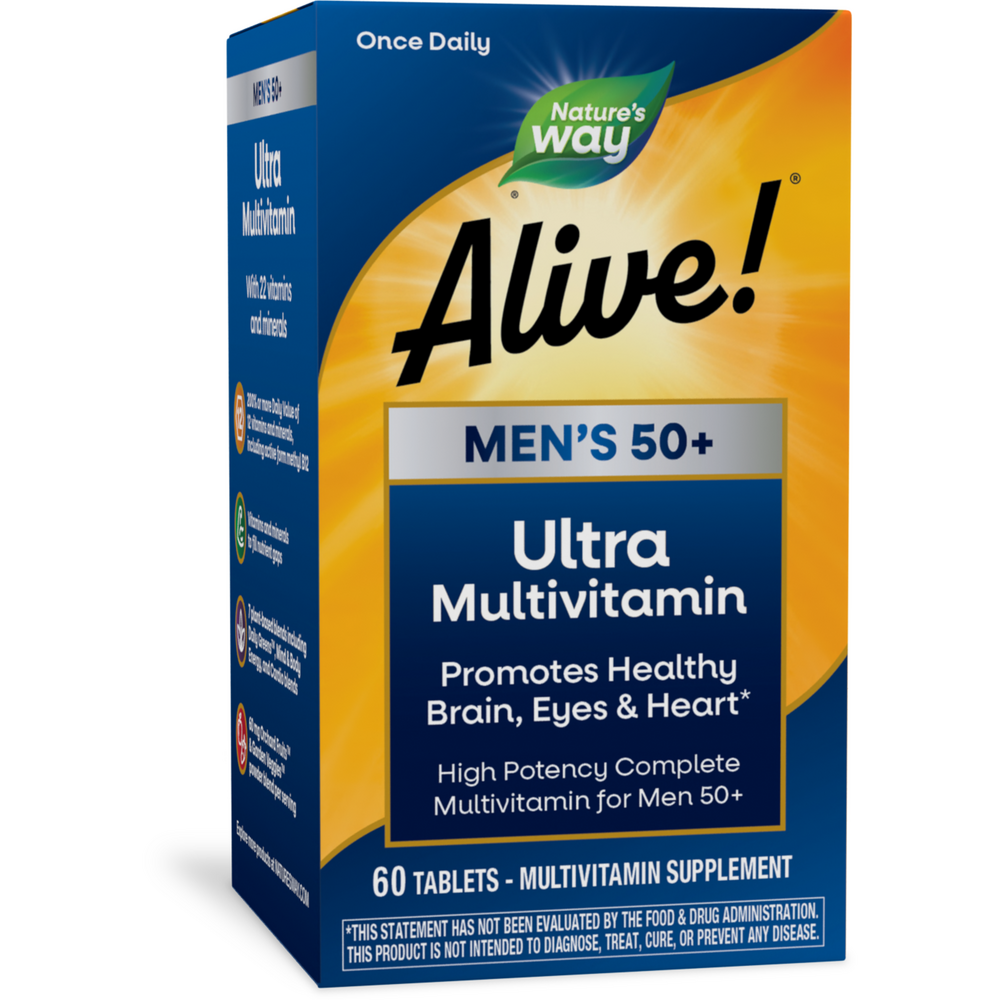
Alive! Men’s 50+ Ultra Potency
Nature’s Way
60 tablets
$29.99Save 20% with Subscribe & Save
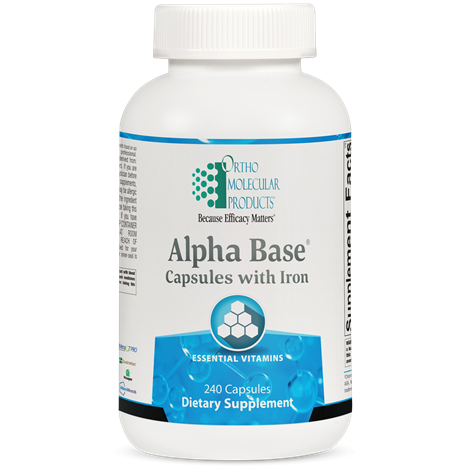
Alpha Base® Capsules with Iron
Ortho Molecular Products
240 capsules
$74.31Save 10% with Subscribe & Save