 Instalab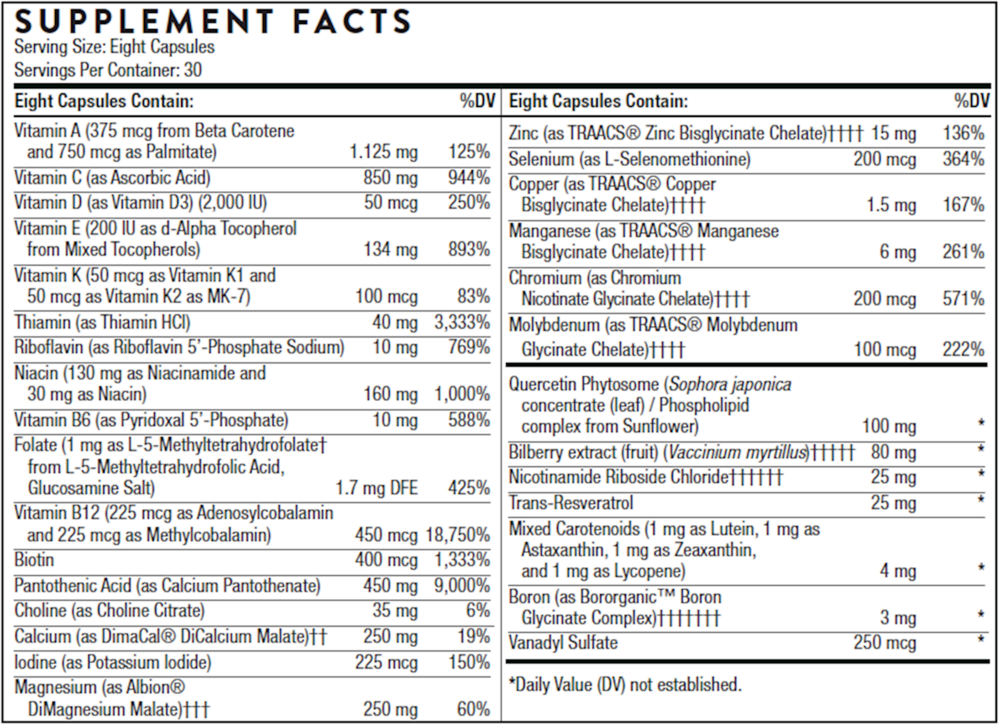
Thorne
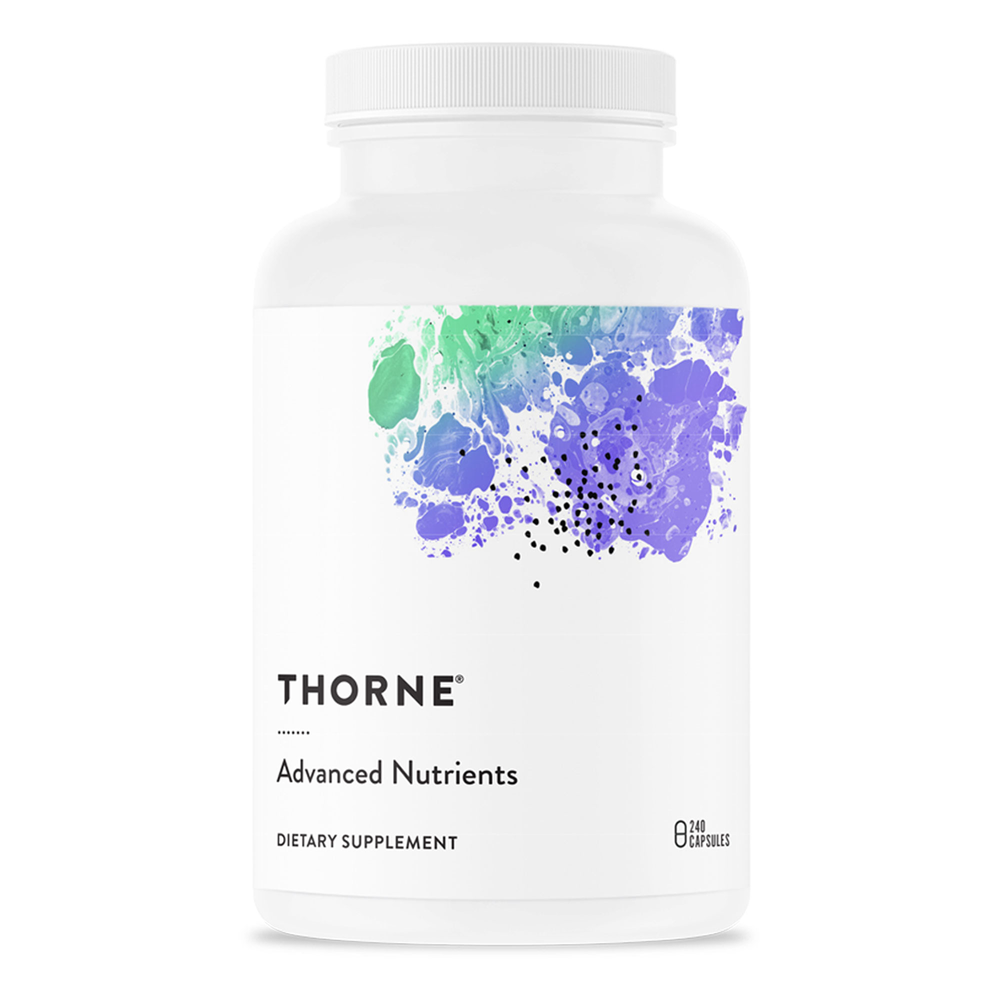
Advanced Nutrients by Thorne
240 capsules · 30-day supply
Comprehensive Multivitamin for Optimal Health and Vitality$72.00retail
Add to cart for 19% off
Purchase option
19% below MSRP3rd-party tested for purity & potencyFree shipping $50+
Gluten Free·Soy Free·Dairy Free·Milk Free
Thorne Advanced Nutrients overview
If you want a high-potency multivitamin that actually moves lab markers, this fits people with demanding training or travel schedules, low fruit-and-vegetable intake, or those whose Vitamin D, 25-Hydroxy or RBC Magnesium are in the lower normal range. It’s also a practical upgrade if your Homocysteine runs high and you’ve been using basic multis without methylated B vitamins. If you already eat impeccably and your panels are consistently solid, a simpler multivitamin is usually enough.
The formula leans on bioavailable forms: methylcobalamin (active B12), L‑5‑MTHF (active folate), and chelated minerals like magnesium and zinc bisglycinate that absorb better with fewer gut issues. Nicotinamide riboside raises NAD+ (the molecule your cells use to run energy reactions), and quercetin phytosome plus trans-resveratrol are polyphenols that modulate oxidative stress and inflammatory signaling, which can show up as small drops in hs-CRP (a general inflammation marker) in responders. Carotenoids—lutein, zeaxanthin, and astaxanthin—feed macular pigment density for visual function. Vitamin K2 MK-7 activates proteins that steer calcium into bone and away from arteries.
Take 4–8 capsules with meals, split across breakfast and dinner for steadier absorption. Fat-soluble vitamins (A, D3, E, K) absorb best with food that contains some fat. Because B vitamins can feel energizing, avoid taking the full amount at night. Recheck Vitamin D, 25-Hydroxy and Homocysteine in 8–12 weeks; A1c needs about 12 weeks, and RBC Magnesium about 8 weeks. If you run closer to repletion, the lower end of the dose is maintenance; full dose is for heavier demands.
Warfarin users should avoid changes in vitamin K without clinician guidance. Separate thyroid hormone from this multivitamin by 4 hours because calcium, iron, and magnesium reduce absorption. The minerals can also bind tetracyclines and quinolones, so separate by several hours. If you’re pregnant or trying, choose a prenatal instead due to preformed vitamin A. With a history of calcium oxalate kidney stones, 850 mg vitamin C warrants caution and extra hydration. Active thyroid disease or high iodine sensitivity calls for clinician input.
Frequently asked questions
How long until I feel a difference with this multivitamin?
Most people notice steadier energy in 1–2 weeks. Objective changes take longer: Vitamin D, 25-Hydroxy and Homocysteine typically shift within 4–12 weeks, while A1c needs about 12 weeks. Recheck labs to confirm.
Can I take this multivitamin on an empty stomach?
It’s better with food. Fat-soluble vitamins (A, D, E, K) and carotenoids absorb more with a meal that includes some fat, and food reduces the chance of nausea from minerals.
Is this multivitamin safe with blood thinners like warfarin?
Not without guidance. Vitamin K and K2 affect warfarin dosing. If you’re on warfarin, do not start or stop vitamin K–containing products without your prescriber adjusting your plan and monitoring INR.
Do I still need extra vitamin D or magnesium with this?
Often, yes. The D3 here (2,000 IU) and magnesium (250 mg) are solid for maintenance. If your Vitamin D, 25-Hydroxy or RBC Magnesium are low, you’ll likely need higher targeted doses short term, then step down.
Will nicotinamide riboside affect sleep or cause flushing?
It doesn’t cause the niacin flush and is generally neutral for sleep. A minority feel more alert; if so, take earlier in the day. The 45 mg dose is modest and typically well tolerated.
Can I open the capsules?
Yes, but mix the contents with food or a smoothie to blunt the taste. Keep in mind fat-soluble vitamins and carotenoids still absorb best with a meal containing some fat.
Is this multivitamin vegan or allergen-free?
It’s free of common allergens per the manufacturer, but D3 is typically sourced from lanolin. If you need a vegan D3 or have strict dietary needs, check the label details or contact us before buying.
Does this interact with my thyroid medication?
Yes, timing matters. Calcium, iron, and magnesium reduce absorption of levothyroxine. Take your thyroid medication on an empty stomach and this multivitamin at least 4 hours later.
How to take it & ingredients
Suggested use: Take 4 to 8 capsules daily or as recommended by your health professional.
Active ingredients
8 capsules per serving · 30 servings
Astaxanthin
1 mg
Bilberry Extract
80 mg
Biotin
400 mcg
Boron
Glycinate Complex
Glycinate Complex
3 mg
Calcium
Dicalcium Malate
Dicalcium Malate
250 mg
Choline
Citrate
Citrate
35 mg
Chromium
Nicotinate Glycinate
Nicotinate Glycinate
200 mcg
Copper
Bisglycinate
Bisglycinate
1.5 mg
Folate
L-5-MTHF
L-5-MTHF
1.7 mcg DFE
Iodine
Potassium Iodide
Potassium Iodide
225 mcg
Lutein
1 mg
Lycopene
1 mg
Magnesium
Dimagnesium Malate
Dimagnesium Malate
250 mg
Manganese
Bisglycinate Chelate
Bisglycinate Chelate
6 mg
Nicotinamide Riboside
45 mg
Quercetin Phytosome
100 mg
Selenium
Selenomethionine
Selenomethionine
200 mcg
Trans-Resveratrol
25 mg
Vitamin A
Beta carotene
Beta carotene
375 mcg
Vitamin A
Palmitate
Palmitate
750 mcg
Vitamin B1
Thiamin HCI
Thiamin HCI
40 mg
Vitamin B12
Methylcobalamin
Methylcobalamin
450 mcg
Vitamin B2
Riboflavin 5'-Phosphate Sodium
Riboflavin 5'-Phosphate Sodium
10 mg
Vitamin B5
Pantothenic Acid
Pantothenic Acid
450 mg
Vitamin B6
Pyridoxal 5'-Phosphate
Pyridoxal 5'-Phosphate
10 mg
Vitamin C
Ascorbic Acid
Ascorbic Acid
850 mg
Vitamin D3
50 mcg
Vitamin E
D-Alpha-Tocopherol
D-Alpha-Tocopherol
134 mg
Vitamin K
150 mcg
Vitamin K2
MK-7
MK-7
50 mcg
Zeaxanthin
1 mg
Zinc
Bisglycinate Chelate
Bisglycinate Chelate
15 mg
Other ingredients: Calcium Laurate, Hypromellose Capsule, Microcrystalline Cellulose, Silicon Dioxide
Certifications
Benefits
Warnings
Customers also considered
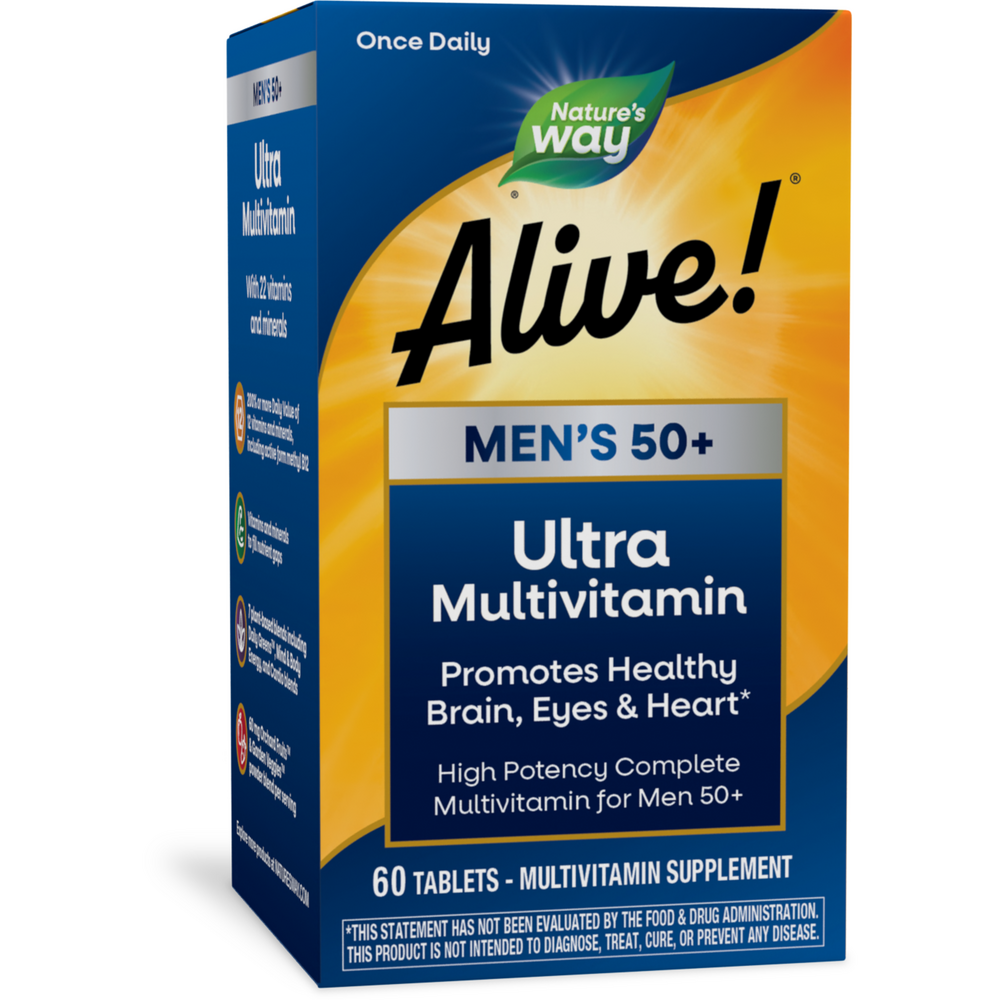
Nature’s Way
Alive! Men’s 50+ Ultra Potency
60 tablets
$29.99
Add to cart for lower price
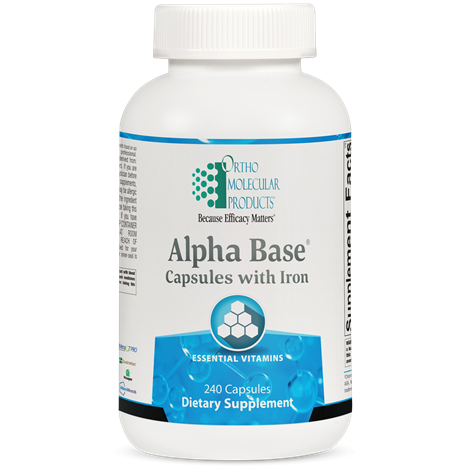
Ortho Molecular Products
Alpha Base® Capsules with Iron
240 capsules
$74.31
Add to cart for lower price
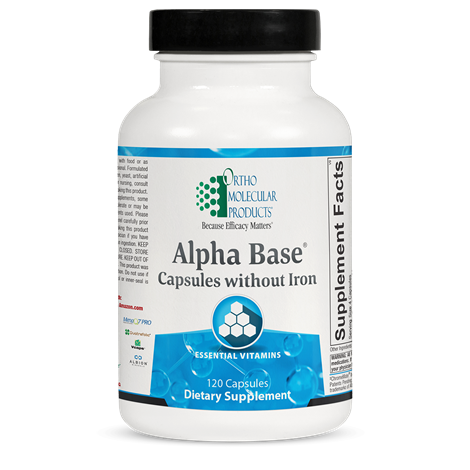
Ortho Molecular Products
Alpha Base® Capsules without Iron
120 capsules
$46.79
Add to cart for lower price
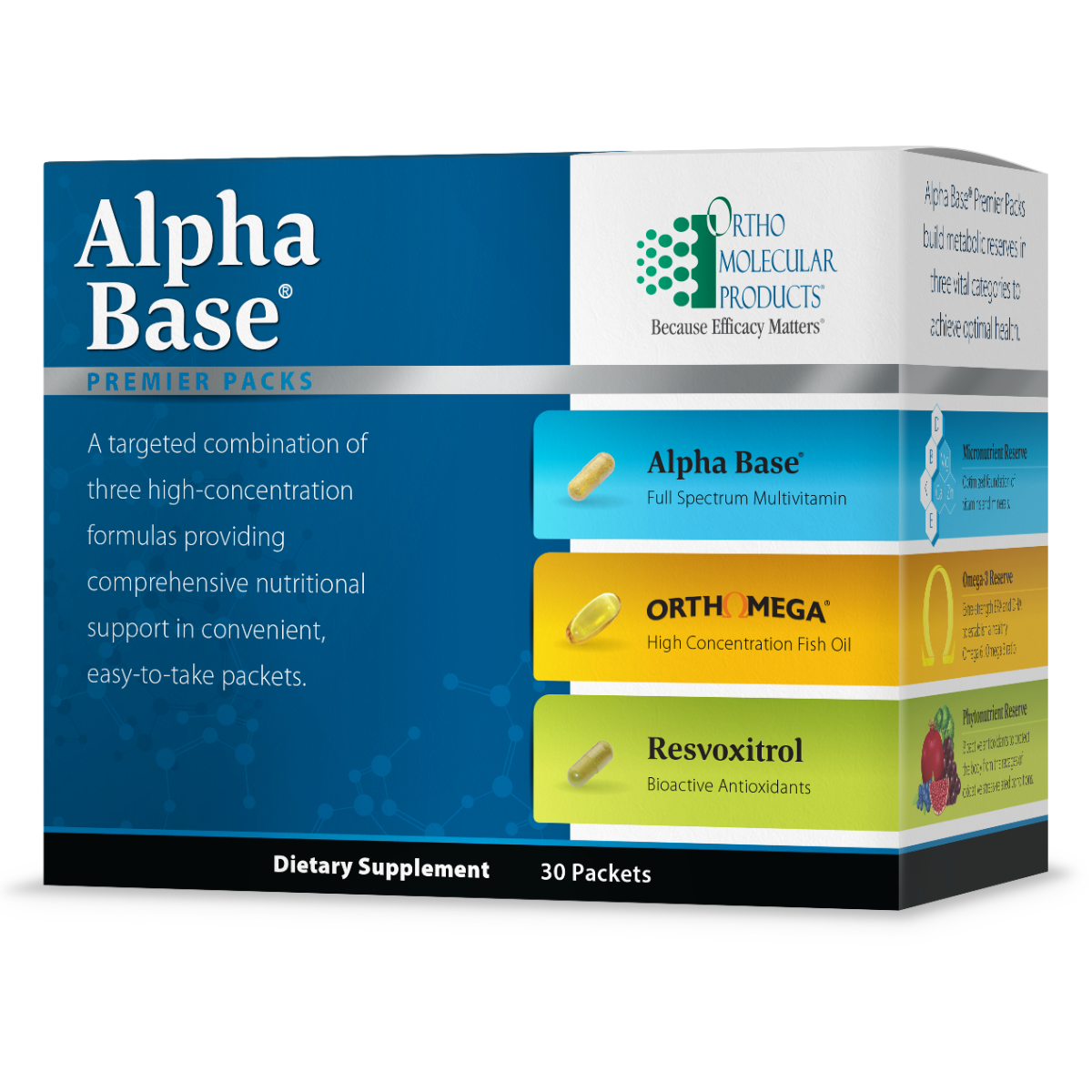
Ortho Molecular Products
Alpha Base® Premier Packs
30 packets
$109.50
Add to cart for lower price