 Instalab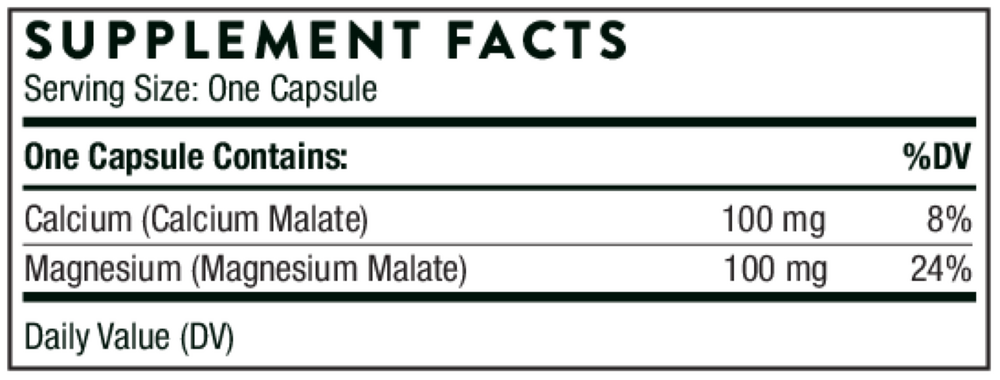


Thorne
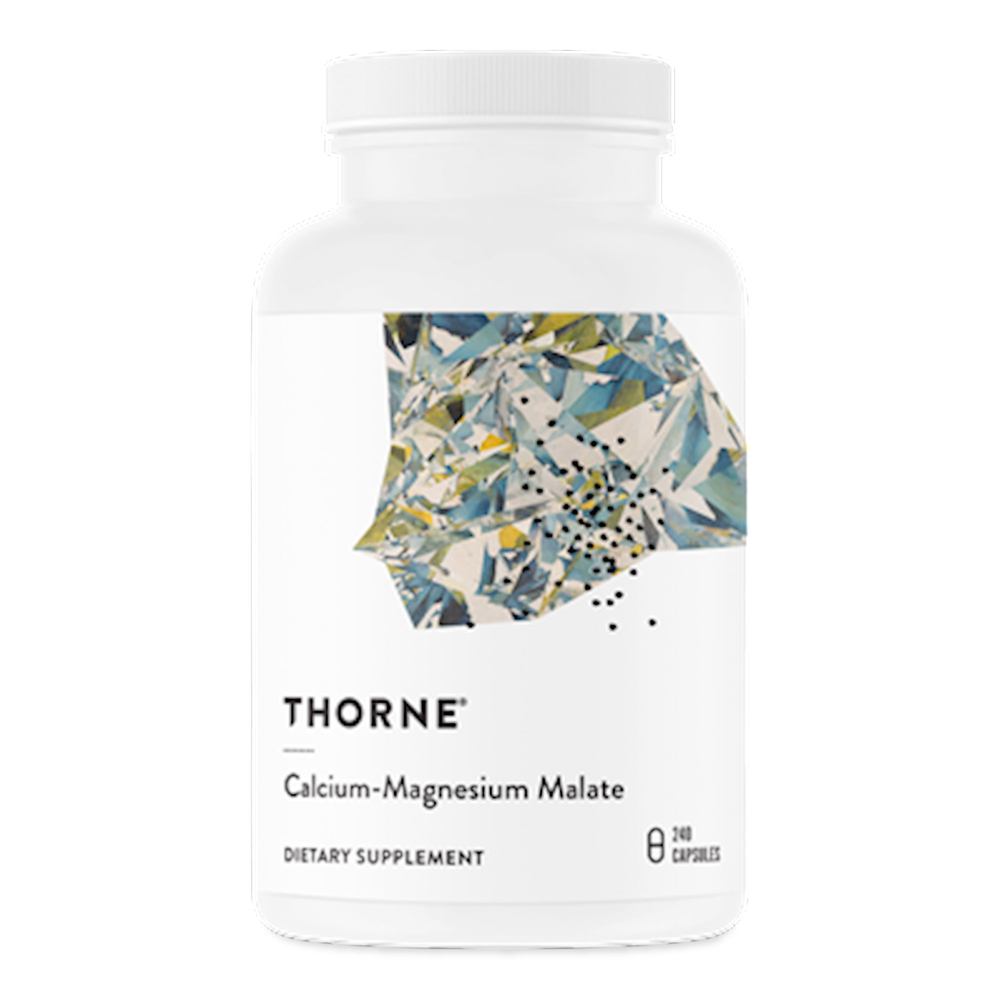
Calcium-Magnesium Malate by Thorne
240 capsules · 240-day supply
Balanced Calcium and Magnesium for Bone and Muscle Support$43.00
Purchase options
Practitioner-grade brand3rd-party testedFree shipping $50+
Gluten Free·Soy Free·Dairy Free·Milk Free
Thorne Calcium-Magnesium Malate overview
If you get little dairy or fortified foods, are plant-based, or are in the perimenopause to postmenopause window, calcium magnesium malate is a practical maintenance dose. It suits people with low dietary calcium and those with low or low-normal Magnesium, RBC (a red-blood-cell magnesium test). It’s also useful if you take acid-suppressing medicines, because malate forms absorb without stomach acid, and if you want steadier muscle function without the laxative effect common with magnesium oxide.
Calcium helps curb parathyroid hormone, the signal that pulls calcium from bone, so daily intake supports ongoing bone remodeling. Magnesium is a cofactor for vitamin D activation and for muscle and nerve conduction, so adequate levels reduce twitchiness and nighttime cramps. The malate salts (bound to malic acid, a citric-acid-cycle intermediate your cells use for energy) are well absorbed and gentler on the gut than carbonate or oxide, with absorption less dependent on stomach acid.
Take one capsule three times daily with meals for a total of 300 mg calcium and 300 mg magnesium. Splitting doses improves absorption and tolerance. If your Vitamin D, 25-Hydroxy is low, correct that in parallel, since vitamin D drives calcium uptake. This is a maintenance-level amount; if you have established deficiency or documented low bone density, your clinician may recommend higher calcium from diet plus targeted supplementation.
Calcium and magnesium bind many drugs in the gut. Separate by at least 4 hours from levothyroxine, tetracycline or fluoroquinolone antibiotics, and oral bisphosphonates. Thiazide diuretics raise blood calcium; loops waste magnesium. Chronic kidney disease raises the risk of high magnesium and calcium, so use only with medical guidance. If you form calcium-oxalate stones, take calcium with meals to bind dietary oxalate, and avoid over-supplementing beyond your diet’s needs.
Frequently asked questions
Is calcium magnesium malate better absorbed than carbonate or oxide?
Yes. Malate salts are absorbed well even with lower stomach acid, while calcium carbonate and magnesium oxide depend more on acid and are more likely to cause gas or loose stools. Citrate and glycinate also absorb well; malate is a good, gut-friendly option.
Do I need vitamin D with calcium magnesium malate?
Usually yes. Vitamin D, 25-Hydroxy guides calcium absorption and bone turnover. If your level is low or low-normal, pair calcium and magnesium with vitamin D3 and recheck labs within 8–12 weeks to ensure you’re absorbing and on target.
When should I take it around other medications?
Take it with meals, but keep a 4-hour buffer from levothyroxine, tetracyclines, fluoroquinolones, and oral bisphosphonates, which can bind to minerals and not absorb. Most other medicines can be taken at the opposite meal without issue.
Will magnesium malate cause diarrhea or constipation?
It’s generally gentler than magnesium citrate (which can be laxative) and less constipating than calcium carbonate. Some people still notice looser stools at higher doses. Splitting doses with food and staying at this maintenance amount improves tolerance.
How long until I feel a difference in muscles or sleep?
For magnesium-responsive muscle tension or nighttime cramps, people who are low often notice steadier muscles within 1–2 weeks. Bone effects are long-term; plan on months to years with periodic checks of Vitamin D, 25-Hydroxy and bone density when appropriate.
Can calcium magnesium malate cause kidney stones?
Taken with meals and within your daily calcium needs, calcium can lower oxalate absorption and is not linked to more stones. Large between-meal calcium doses may raise risk in stone formers. If you have a stone history, review total calcium intake with your clinician.
Is calcium magnesium malate safe during pregnancy?
In typical dietary-range doses, calcium and magnesium are commonly used in pregnancy. Because supplements can interact with prenatal iron and thyroid medication, time them several hours apart and review your total intake with your obstetric provider.
How to take it & ingredients
Suggested use: Take 1 capsule three times daily or as recommended by a health-care practitioner.
Active ingredients
1 capsule per serving · 240 servings
Calcium
Calcium Malate (as DimaCal™ Dicalcium Malate)
Calcium Malate (as DimaCal™ Dicalcium Malate)
100 mg
Magnesium
Magnesium Malate (as Albion® Dimagnesium Malate)
Magnesium Malate (as Albion® Dimagnesium Malate)
100 mg
Other ingredients: Hypromellose (derived from cellulose) capsule, Medium Chain Triglyceride Oil, Calcium Laurate
Certifications
Benefits
Warnings