 Instalab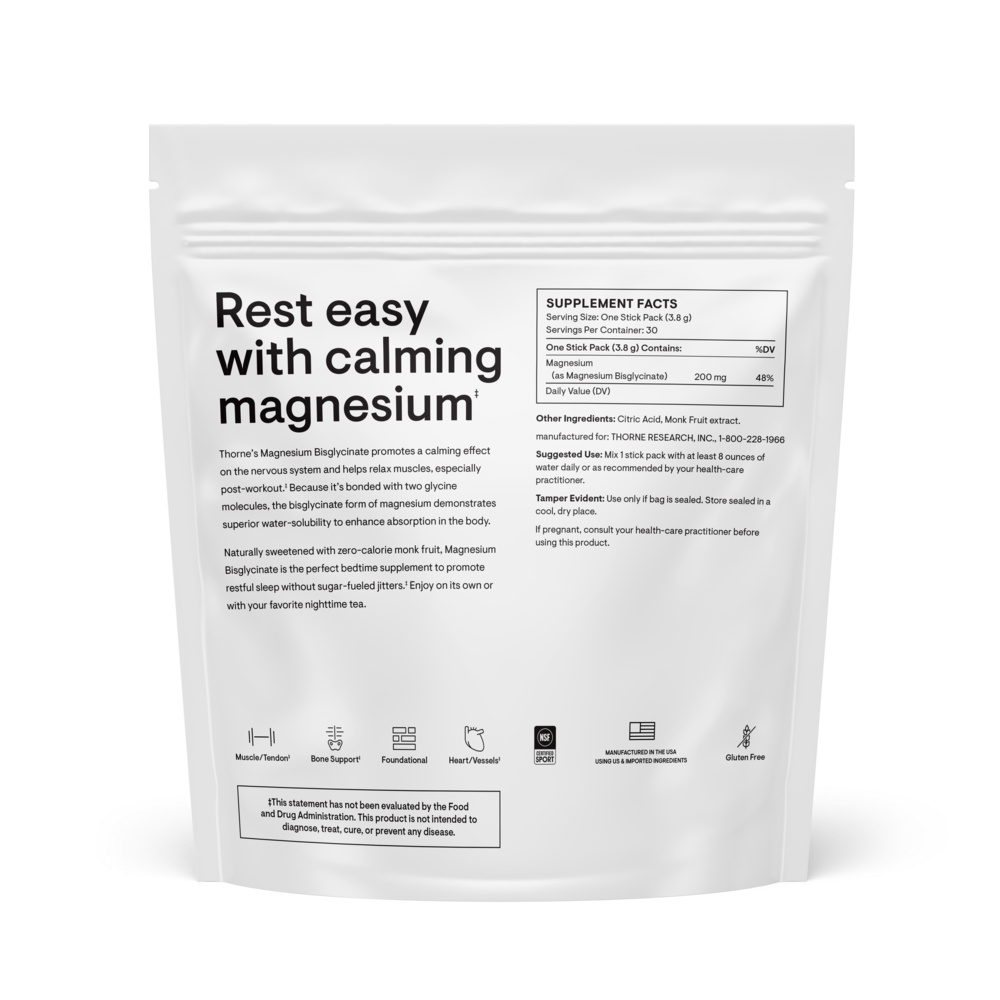


Thorne
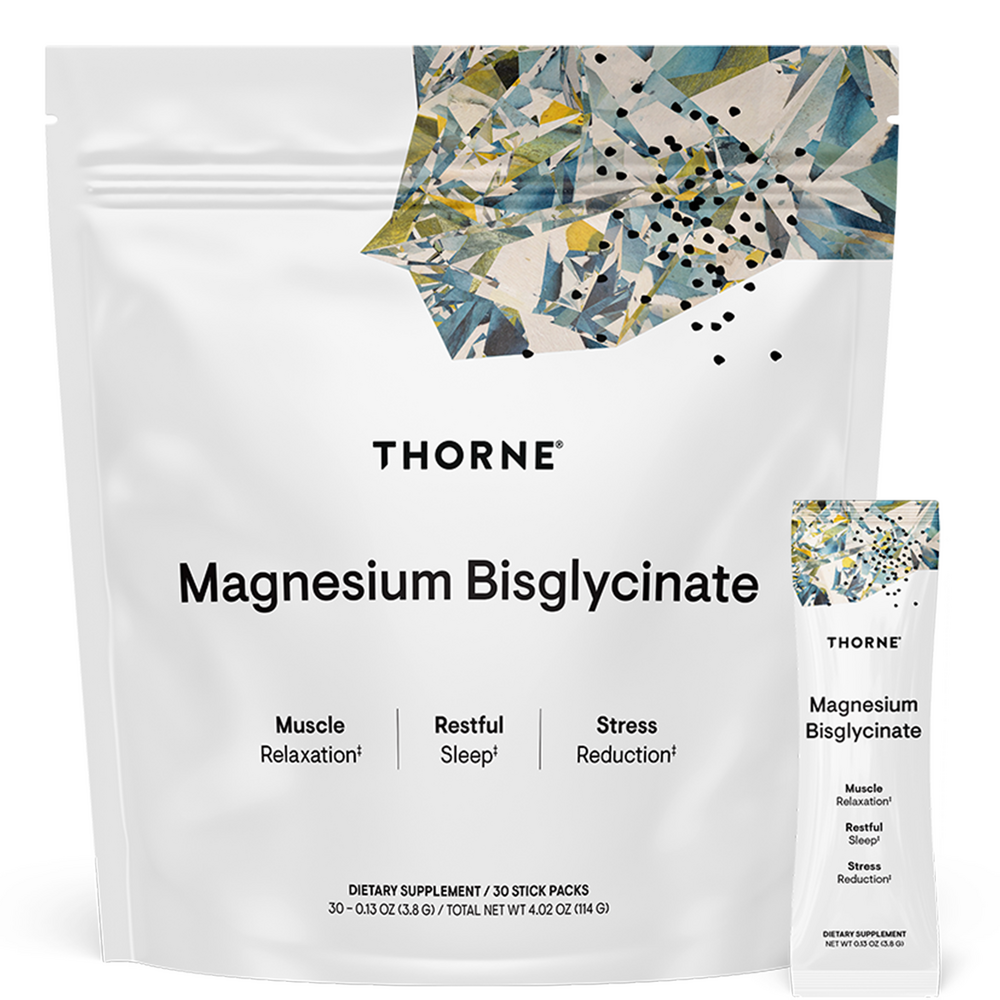
Magnesium Bisglycinate 200 mg by Thorne
30 packets · 30-day supply
Gentle Magnesium for Relaxation and Muscle Support$47.00
Purchase options
Practitioner-grade brand3rd-party testedFree shipping $50+
Gluten Free·Soy Free·Dairy Free
Thorne Magnesium Bisglycinate overview
If you’re searching for magnesium glycinate for sleep, this fits adults who want a gentle, absorbable form that doesn’t upset the stomach. It’s useful if your Magnesium, RBC (magnesium inside red blood cells, a better gauge of body stores than serum) is low or low-normal, if you train hard and cramp at night, or if stress tightens your neck and jaw by evening. People on acid-reducing meds or diuretics often run low and notice calmer sleep within 1–2 weeks.
Magnesium bisglycinate pairs magnesium with two glycine molecules, improving absorption and making it easier on the gut than oxide or citrate. Magnesium helps nerves and muscles reset after firing, which is why tight calves and restless legs often ease. It also tamps down NMDA receptors (excitatory switches in the brain) and supports GABA signaling (your brain’s “brake pedal”), which together explain better sleep quality and reduced nighttime awakenings in responders.
Mix one stick with at least 8 ounces of water daily. Take with or without food; evening is practical if sleep is your goal. Most adults use 200–400 mg elemental magnesium per day across diet and supplements, so this serves as a single daily dose or part of a split regimen. Glycinate is less likely to loosen stools, but if you’re sensitive, start with half a stick for 3–4 days, then increase. Recheck Magnesium, RBC after 8–12 weeks.
Take magnesium glycinate at least 2 hours apart from levothyroxine, fluoroquinolone or tetracycline antibiotics, and bisphosphonates because it can reduce their absorption. If you have significant kidney disease, skip self-supplementation and work with your clinician. Magnesium can modestly lower blood pressure; if you’re on antihypertensives, monitor at home. For migraine prevention or frequent muscle cramps, pair with checking Magnesium, RBC and address low intake from diet first.
Frequently asked questions
Does magnesium glycinate help you sleep?
Often, yes. Glycinate is well tolerated and supports calmer nerves and muscles, which can reduce nighttime awakenings. Expect any effect within 1–2 weeks. If sleep issues are driven by caffeine, alcohol, or untreated apnea, magnesium won’t fix those.
Is magnesium bisglycinate the same as magnesium glycinate?
In practice, yes. Bisglycinate is the chelated form with two glycine molecules. Most products labeled glycinate use bisglycinate chemistry and share the same gentler GI profile and good absorption.
When should I take magnesium glycinate for sleep?
Evening is convenient, 1–2 hours before bed. Consistency matters more than timing. If you also get daytime muscle tightness, splitting the dose—half late afternoon, half evening—can be helpful.
Will magnesium glycinate cause diarrhea?
It’s less likely than magnesium citrate or oxide to loosen stools, but high total magnesium can still do it. If you’re sensitive, start with a half serving and increase as tolerated, or take with food.
Can I take magnesium with antidepressants or anxiety meds?
Usually yes, and there’s no known direct interaction with SSRIs or SNRIs. Still, separate from meds by 2 hours to avoid absorption issues, and check with your prescriber if you’re adjusting doses for sleep.
What lab test checks magnesium status best?
Magnesium, RBC is more informative than Magnesium, Serum for body stores. If your level is low or low-normal, consistent supplementation and diet changes for 8–12 weeks can move it up.
How long does magnesium glycinate take to work for cramps?
For nighttime cramps, some people feel relief within a week, but give it 2–4 weeks, especially if your Magnesium, RBC started low. Persistent cramps warrant checking electrolytes and thyroid function.
Can I take magnesium glycinate with calcium or iron?
Separate from iron by 2 hours to avoid reduced absorption of iron. Calcium is fine to take the same day, but large single doses of multiple minerals can compete, so spacing them out is reasonable.
How to take it & ingredients
Suggested use: Mix 1 stick pack with at least 8 ounces of water daily or as recommended by your health-care practitioner.
Active ingredients
1 packet per serving · 30 servings
Magnesium
As Magnesium Bisglycinate
As Magnesium Bisglycinate
200 mg
Other ingredients: Citric Acid, Monk Fruit extract
Certifications
Benefits
Warnings
Customers also considered
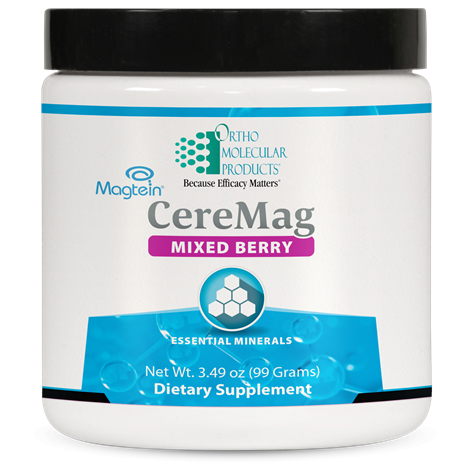
CereMag
Ortho Molecular Products
99 grams
$77.76$70.05 with Subscribe & Save
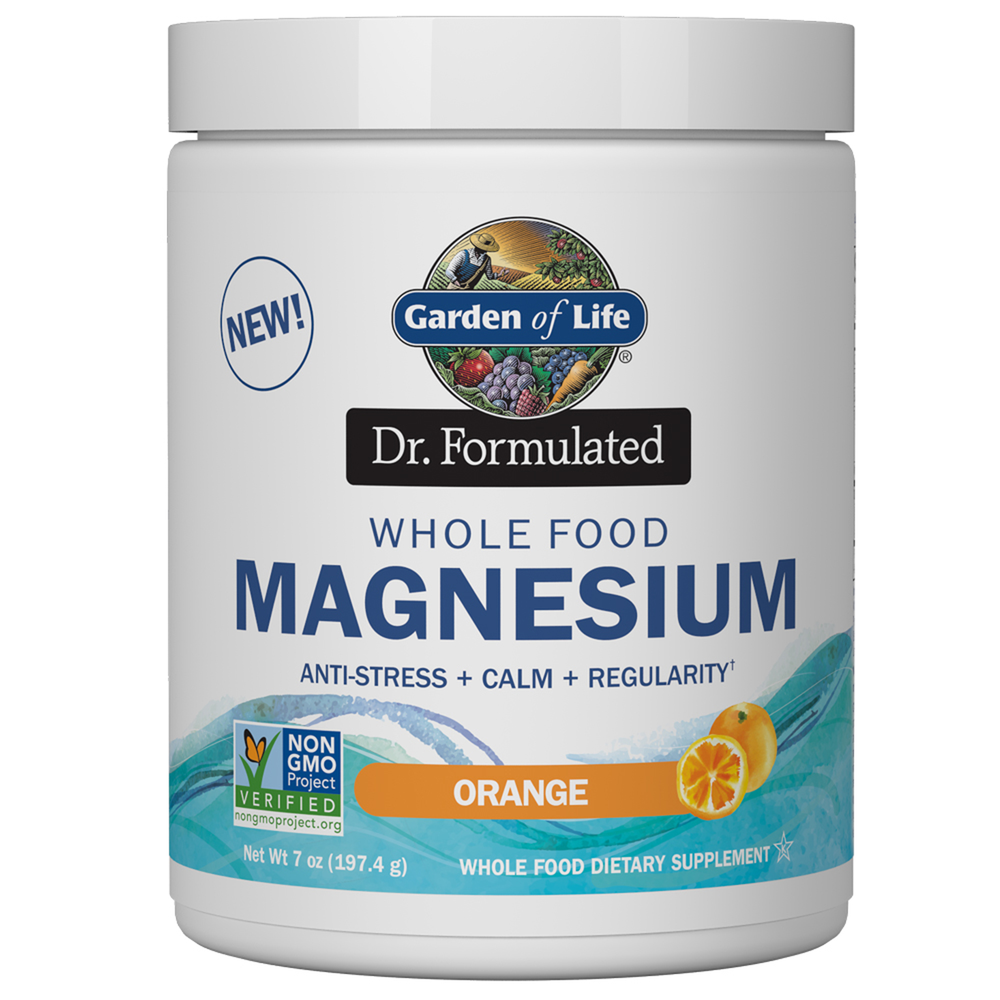
Dr. Formulated Magnesium Raspberry
Garden of Life
197.4 grams
$24.99$19.99 with Subscribe & Save

Dual-Mag Complex
Natura Health Products
90 capsules
$22.99$17.99 with Subscribe & Save
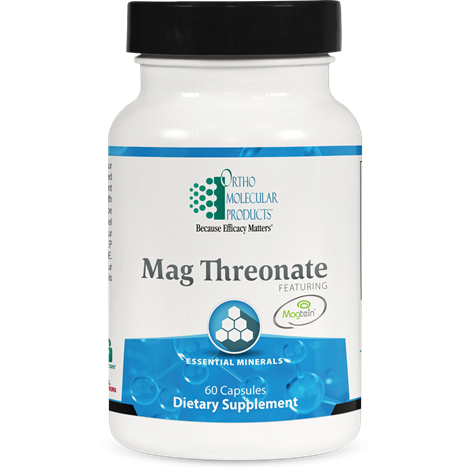
Mag Threonate
Ortho Molecular Products
60 capsules
$78.64$70.85 with Subscribe & Save