 Instalab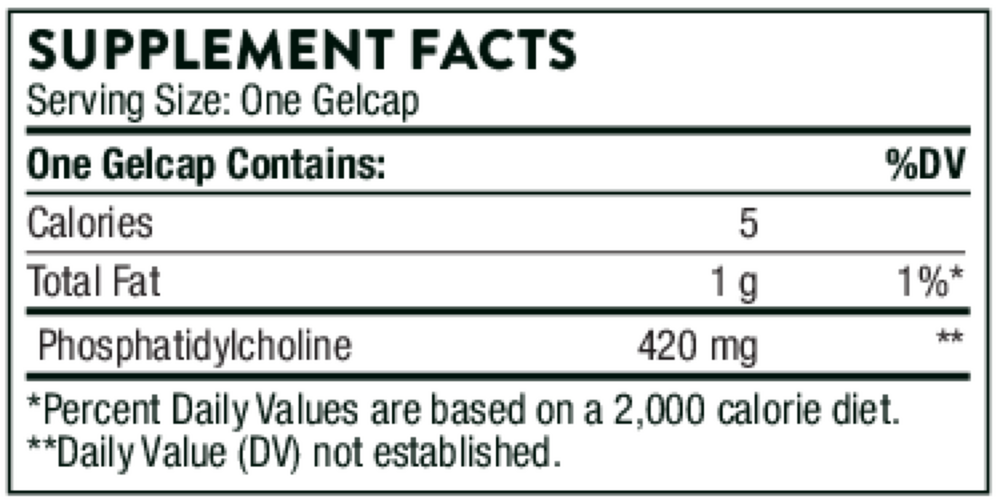
Thorne
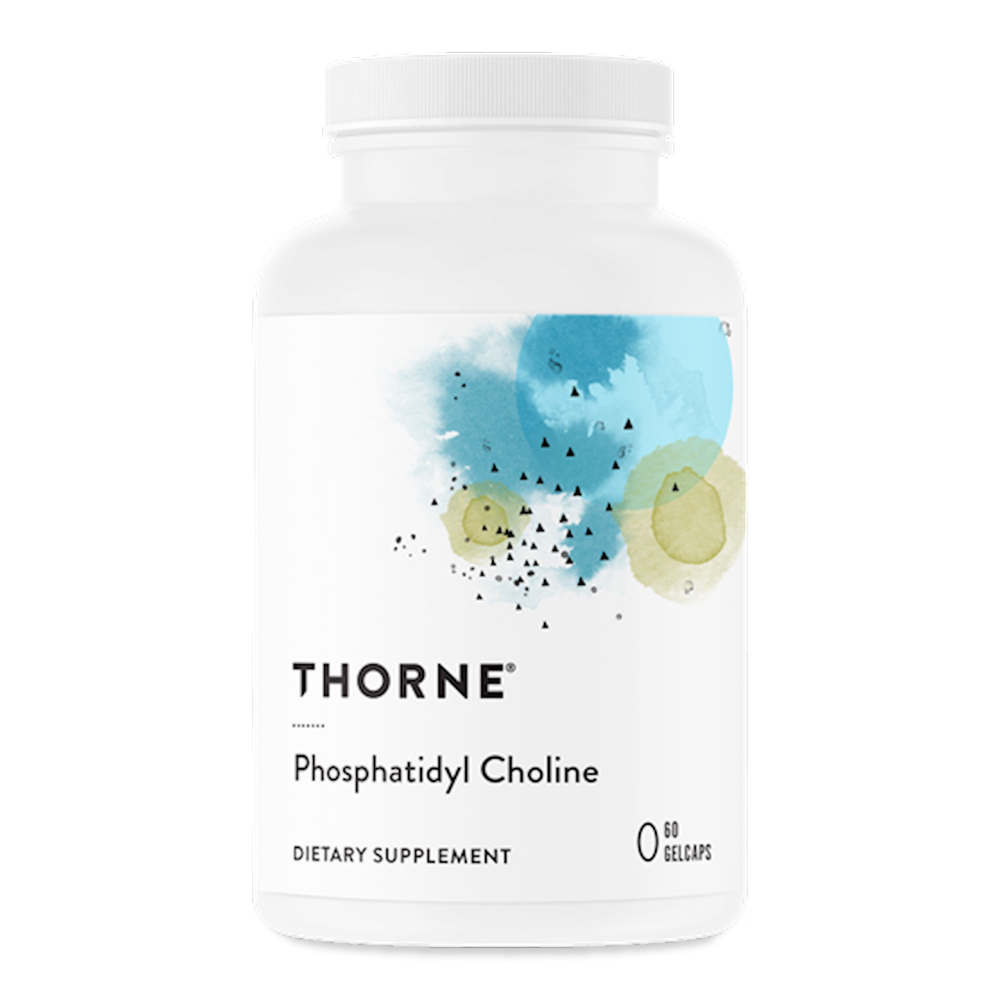
Phosphatidyl Choline 420 mg by Thorne
60 gelcaps · 60-day supply
Supports Cognitive Function and Cellular Health with Essential Phospholipids$34.00
Purchase options
Practitioner-grade brand3rd-party testedFree shipping $50+
Gluten Free·Dairy Free·Milk Free
Thorne Phosphatidyl Choline overview
If you’re looking for a phosphatidylcholine supplement because your liver enzymes (ALT, AST, GGT) run high or your diet is light on choline-rich foods like eggs and liver, this is a sensible starting dose. It also fits people with fatty liver patterns and elevated triglycerides who want to nudge bile flow and fat handling while they work on diet. Vegans and light meat eaters often run low on choline; checking Homocysteine and a dietary choline estimate can help decide if you need more than food alone.
Phosphatidylcholine is the main building block of cell membranes and a key ingredient in bile, the fluid that helps you digest and absorb fats. Your liver also needs it to assemble VLDL particles (the carriers that move triglycerides out of the liver), which is one reason ALT and AST sometimes improve within 4 to 12 weeks. Because it supplies choline, it also feeds acetylcholine (a nerve signal involved in memory and attention), though for cognition many clinicians prefer citicoline (CDP‑choline) or alpha‑GPC at lower doses.
Thorne suggests one gelcap two to three times daily. Take with meals for better absorption and to minimize burps. This totals 840–1,260 mg per day, which is a maintenance‑level intake; clinical repletion for liver health often uses gram‑level dosing under supervision. Recheck ALT, AST, and GGT after 8 to 12 weeks to judge response. If you primarily want cognitive effects, compare with citicoline or alpha‑GPC, which reach the brain at lower choline doses.
Skip this if you have a soy allergy; this phosphatidylcholine is soy‑derived. If you’ve had trimethylaminuria (fish‑odor syndrome) or notice a fishy smell at higher choline intakes, use a lower dose and discuss alternatives. Pregnancy and breastfeeding raise choline needs, but dosing should be individualized with your clinician. If your triglycerides or liver enzymes stay high despite consistent use, you likely need a higher dose or a different approach.
Does it lower liver enzymes? In many patients with fatty liver patterns, ALT and AST ease within 4 to 12 weeks when paired with diet changes. Is soy lecithin the same? Lecithin is a mixture; this is a standardized phosphatidylcholine fraction. Can it affect cholesterol? By improving bile flow and fat export, it sometimes helps triglycerides; LDL and HDL shifts are modest and variable.
Frequently asked questions
What does phosphatidylcholine do for the liver?
It supplies building blocks for liver cell membranes, bile, and VLDL particles (which carry triglycerides out of the liver). In practice, some people see ALT, AST, and GGT improve within 4–12 weeks when paired with diet changes.
How much phosphatidylcholine should I take daily?
The suggested use here totals 840–1,260 mg per day with meals. That’s a maintenance dose. Clinicians often use higher gram‑level doses for established fatty liver or deficiency, usually short‑term and with lab follow‑up.
Is phosphatidylcholine the same as choline or alpha-GPC?
They’re related but not the same. Phosphatidylcholine is a membrane lipid that carries choline. Alpha‑GPC and citicoline deliver choline efficiently to the brain and are often chosen for cognitive goals at lower doses.
How long before I notice effects from phosphatidylcholine?
For liver metrics, plan on 4–12 weeks, then recheck ALT, AST, and GGT. Digestive comfort with fatty meals can improve sooner. Cognitive changes, if any, are usually subtle with phosphatidylcholine compared with alpha‑GPC or citicoline.
Can phosphatidylcholine cause side effects?
It’s generally well tolerated. Possible issues include mild GI upset or a fishy body odor at higher choline intakes due to TMA production in the gut. Taking with meals and moderating dose usually solves it.
Is phosphatidylcholine safe during pregnancy?
Choline needs rise in pregnancy, but dosing should be individualized. Phosphatidylcholine is a common source, yet you should confirm the dose and product with your obstetric clinician before starting.
Does phosphatidylcholine interact with medications?
Meaningful drug interactions are uncommon. If you use anticholinergic drugs (for overactive bladder, some allergies), discuss timing with your clinician. As always, bring new supplements to your medication review.
Should I take phosphatidylcholine with food or on an empty stomach?
Take it with meals. Dietary fat enhances absorption of phospholipids and reduces the chance of burps or GI upset.
How to take it & ingredients
Suggested use: Take 1 gelcap two to three times daily or as recommended by your health professional.
Active ingredients
1 gelcap per serving · 60 servings
Phosphatidylcholine
Soy Phosphatide Complex
Soy Phosphatide Complex
420 mg
Other ingredients: Gelatin (Bovine), Purified Water, Glycerin (Vegetable Source)
Certifications
Benefits
Warnings