
 Instalab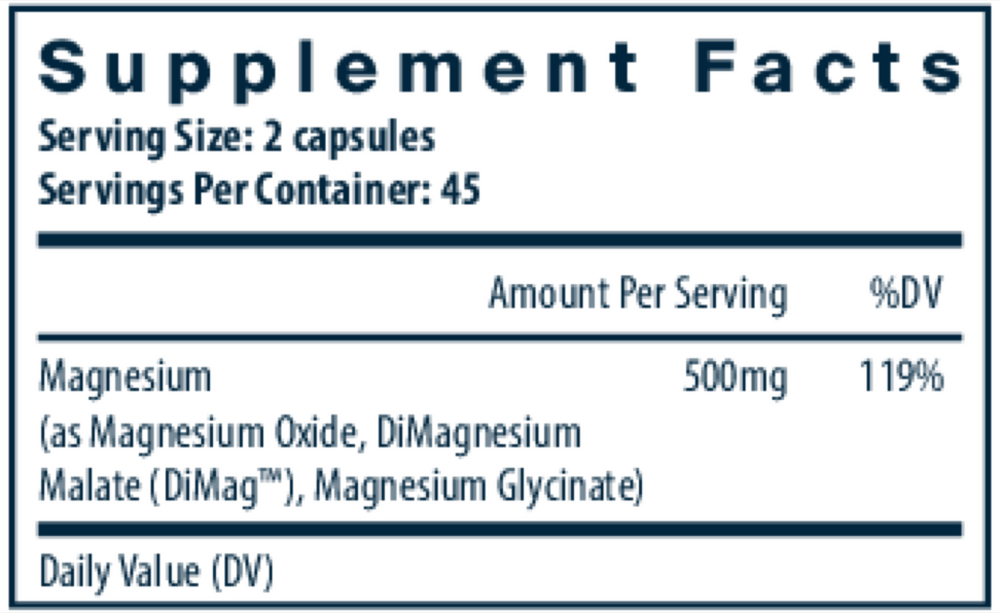


Vital Nutrients
Triple Magnesium Complex 500 mg by Vital Nutrients
90 capsules · 45-day supply
Comprehensive Magnesium Support for Muscle, Nerve, and Bone Health$26.99
Purchase options
Practitioner-grade brand3rd-party testedFree shipping $50+
Vegan·Vegetarian·Dairy Free·Egg Free·Tree Nut Free·Fish Free·
Vital Nutrients Triple Magnesium Complex overview
If workouts leave you cramp‑prone or you have trouble winding down at night, a magnesium glycinate blend is a practical first step. It’s useful when your Magnesium, RBC (magnesium inside red blood cells, a better view of tissue stores than serum) is low or low‑normal, if you rarely eat leafy greens or legumes, use proton‑pump inhibitors, drink heavily, or train hard. The 500 mg total here leans repletion rather than simple maintenance; split dosing helps tolerability.
Magnesium runs nerve signaling, muscle contraction–relaxation, heart rhythm, and carbohydrate metabolism. Glycinate is magnesium bound to glycine (an amino acid that’s calming), which tends to be well absorbed and gentle on the gut. Malate pairs magnesium with malic acid from the Krebs cycle (the cell’s energy pathway), often preferred for daytime use. Oxide carries a high elemental load and draws water into the colon, helping regularity in those who get constipated on other forms.
Suggested use is 2 capsules daily. Most adults do best splitting the dose with food, one in the late afternoon and one 30–60 minutes before bed for relaxation. Sensitive stomach or loose stools? Start with half the dose for 3–5 days, then increase. Track changes in Magnesium, RBC after 4–8 weeks; sleep quality and muscle tension usually improve within 1–2 weeks, and bowel regularity often within 24–48 hours.
Magnesium binds many medicines and blocks absorption. Separate by at least 2–4 hours from levothyroxine, tetracycline and fluoroquinolone antibiotics, and oral bisphosphonates. Loop and thiazide diuretics can change magnesium losses, so dose needs vary. If you have significant kidney disease or are on dialysis, avoid unsupervised magnesium. For those with low Vitamin D, 25-Hydroxy, correcting vitamin D alongside magnesium often works better than either alone.
Frequently asked questions
Is magnesium glycinate better than other forms?
For most people it’s better tolerated and absorbed than oxide or citrate, with fewer loose stools. Glycinate is a good choice for relaxation and sleep, while malate is popular for daytime energy. Oxide is useful if you also want help with regularity.
How long does magnesium take to work?
Bowel regularity often changes within 24–48 hours. Sleep quality, muscle tension, and headaches usually improve within 1–2 weeks. Measurable changes in Magnesium, RBC typically show up after 4–8 weeks of steady dosing.
Can I take magnesium with other medications?
Yes, but separate it. Take magnesium 2–4 hours apart from levothyroxine, tetracycline or fluoroquinolone antibiotics, and oral bisphosphonates so it doesn’t block absorption. If you’re on multiple daily meds, ask your clinician to help you map out timing.
Will this magnesium cause diarrhea?
It can, especially from the oxide component. Splitting the dose and taking with food reduces this. If stools stay loose, lower the dose or take more of it in the evening. Persistent diarrhea means the dose or form isn’t a fit.
Is 500 mg of magnesium too much?
For many adults it’s a reasonable repletion dose, especially if intake is low or losses are high. If you’re small, have loose stools, or already get ample magnesium from food, start lower. Recheck Magnesium, RBC in 4–8 weeks and adjust.
Can I take magnesium at night for sleep?
Yes. Glycinate is commonly used 30–60 minutes before bed for relaxation. Many people split the total, taking part late afternoon and part at bedtime to smooth effects and improve tolerability.
Who should avoid magnesium supplements?
People with significant kidney disease, on dialysis, or with a history of hypermagnesemia should avoid unsupervised magnesium. If you have a heart conduction problem or take medications that affect the kidneys, get clinician guidance first.
Which lab test should I use to track status?
Use Magnesium, RBC rather than serum magnesium. Serum is tightly regulated and can look normal even when tissues are low. Recheck after 4–8 weeks of a steady dose.
How to take it & ingredients
Suggested use: Take 2 capsules daily or as directed by your healthcare professional.
Active ingredients
2 capsules per serving · 45 servings
Magnesium
Magnesium Oxide, Dimagnesium Malate, Magnesium Glycinate
Magnesium Oxide, Dimagnesium Malate, Magnesium Glycinate
500 mg
Other ingredients: Vegetarian capsule (cellulose), Leucine, Silica
Certifications
Benefits
Warnings
Customers also considered

CereMag
Ortho Molecular Products
99 grams
$77.76$70.05 with Subscribe & Save

Dr. Formulated Magnesium Raspberry
Garden of Life
197.4 grams
$24.99$19.99 with Subscribe & Save

Dual-Mag Complex
Natura Health Products
90 capsules
$22.99$17.99 with Subscribe & Save

Mag Threonate
Ortho Molecular Products
60 capsules
$78.64$70.85 with Subscribe & Save