 Instalab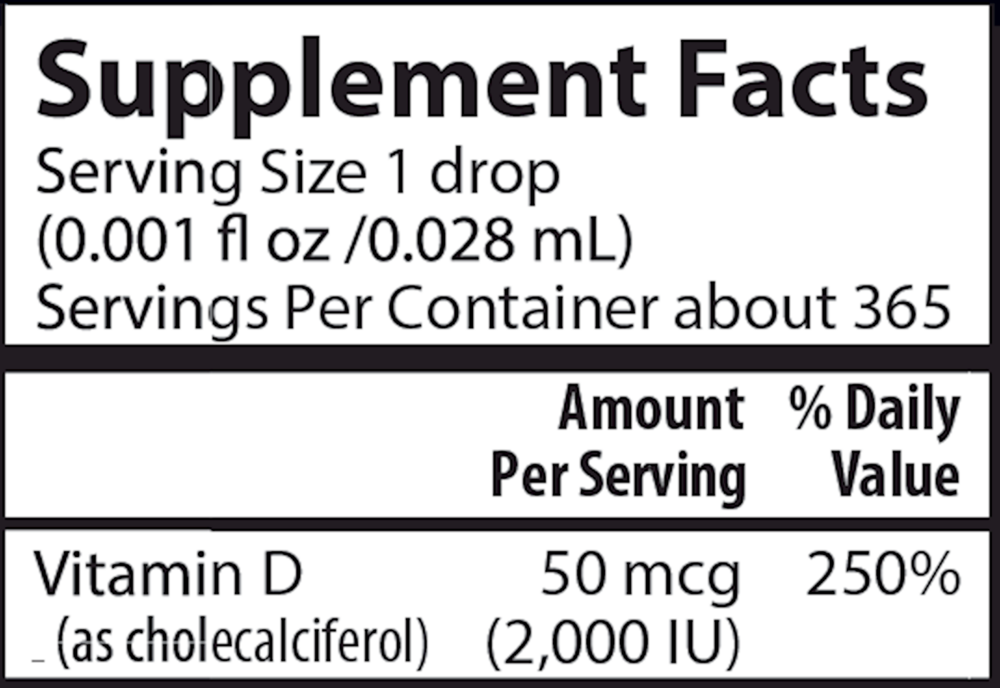

Carlson
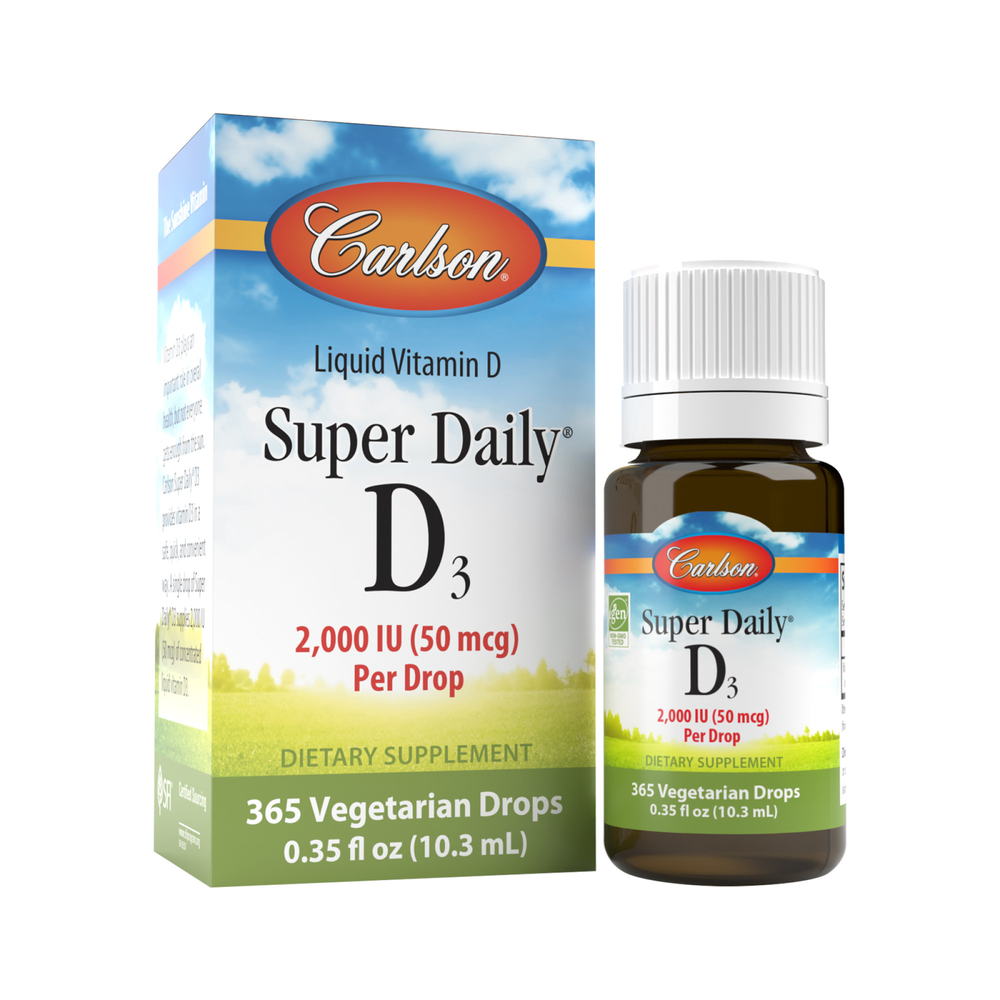
Super Daily D3 2000 IU by Carlson
10.3 milliliters
Essential Vitamin D for Bone, Immune, and Mood Support$XX.XX$21.99retail
This item is currently out of stockGet notified when this item is back in stock
18% below MSRP3rd-party tested for purity & potencyFree shipping $50+
Gluten Free·Wheat Free·Corn Free·Sugar Free·Preservative Free
Carlson Super Daily D3 2000 IU overview
If you're looking for a steady maintenance dose, vitamin D3 2000 IU drops fit adults whose Vitamin D, 25-Hydroxy is in the lower part of the normal range. They’re a practical pick if you get little midday sun, have darker skin, consistently use sunscreen, or live at northern latitudes. People with higher body weight often need more to maintain the same blood level. If your Vitamin D, 25-Hydroxy is meaningfully low, 2000 IU is usually not enough for repletion and you’ll likely need a higher short-term dose under clinician guidance, then step down.
Cholecalciferol (vitamin D3) is the form your skin makes from sunlight, and it raises blood levels more reliably than D2. Your liver and kidneys convert it to the active hormone that increases calcium absorption from the gut and helps keep parathyroid hormone (the signal that pulls calcium from bone) in check. That’s why the strongest evidence for vitamin D3 is bone: maintaining levels reduces secondary hyperparathyroidism and helps preserve bone density. Hopes for large immune or mood effects are mixed; benefits are most consistent when a deficiency is corrected.
One drop daily is the manufacturer’s guidance, taken on the tongue or mixed into food or a drink. Vitamin D3 is fat-soluble, so absorption is better with a meal containing fat. Recheck Vitamin D, 25-Hydroxy after 8 to 12 weeks to confirm you’re on target, then adjust. This is a maintenance-level dose; if you need faster repletion, a higher daily or weekly regimen is more practical but should be set by a clinician. Consistency matters more than time of day.
Avoid unsupervised use if you’ve had high calcium, recurrent kidney stones, sarcoidosis or other granulomatous disease (conditions that can overproduce active vitamin D), or primary hyperparathyroidism. If you take a thiazide diuretic (water pills that raise calcium), ask your clinician before adding vitamin D. Some drugs lower vitamin D levels over time, including steroids and certain anti-seizure medicines, which makes lab follow-up more important.
Frequently asked questions
Is 2000 IU of vitamin D3 safe to take daily?
Yes for most adults, 2000 IU daily is considered a safe maintenance dose. The key is monitoring. Check Vitamin D, 25-Hydroxy after 8–12 weeks and at least yearly. If you have high calcium, a history of kidney stones, or granulomatous disease, use only with medical guidance.
How long does vitamin D3 2000 IU take to raise levels?
Expect a gradual rise over 8 to 12 weeks with daily use. The increase depends on baseline level, body weight, and absorption. If your level is very low or you have malabsorption, you’ll usually need a higher short-term dose set by a clinician, then drop to maintenance.
Should I take vitamin D3 with food or on an empty stomach?
Take it with a meal that contains fat for better absorption. Liquid drops can go directly on the tongue or into food or a drink. Consistency and taking it with food matter more than the time of day.
Do I need vitamin K2 with vitamin D3?
Not necessarily. Vitamin K status matters for bone, but high-quality evidence doesn’t require pairing K2 with every vitamin D dose. If your diet is low in leafy greens or you’re on long-term D, discuss K and bone labs with your clinician rather than assuming a combo.
Which medications interact with vitamin D3?
Thiazide diuretics can raise calcium and, with vitamin D, increase the risk of high calcium. Steroids and some anti-seizure drugs lower vitamin D over time. Bile acid resins and orlistat reduce absorption. If you use these, monitor Vitamin D, 25-Hydroxy and calcium.
Can I take vitamin D3 during pregnancy or breastfeeding?
Often yes, but dosing should be individualized. Many obstetric clinicians use 1000–2000 IU daily for maintenance, adjusted to Vitamin D, 25-Hydroxy. Because needs vary, check your level and confirm the dose with your prenatal provider.
What are signs of too much vitamin D?
Too much can raise calcium, leading to nausea, constipation, increased thirst, frequent urination, or confusion. This is uncommon at 2000 IU but possible with higher dosing or in certain conditions. If you have symptoms or high calcium, stop and get labs checked.
How to take it & ingredients
Suggested use: Adults: take one drop daily or as directed by your healthcare professional. May be put in food or a drink, or directly on the tongue.
Active ingredients
1 drop per serving
Vitamin D
Cholecalciferol (D3)
Cholecalciferol (D3)
2000 IU, 50 mcg
Other ingredients: Medium Chain Triglyceride Oil (coconut and palm source)
Certifications
Benefits
Warnings