
 Instalab

Innate Response
Magnesium 300 by Innate Response
120 capsules · 60-day supply
Three-Form Magnesium Blend for Muscle and Nerve Support$34.99
Purchase options
Practitioner-grade brand3rd-party testedFree shipping $50+
Vegetarian·Gluten Free·Soy Free·Dairy Free
Innate Response Magnesium 300 overview
If your Magnesium or RBC Magnesium has tested low or low-normal, or your diet is light on nuts, legumes, whole grains and greens, a 300 mg serving is a practical daily amount. People who often run short include heavy sweaters, regular drinkers, and long-term users of acid-suppressing medicines or diuretics. If your level is already solid and your diet is good, you may not need a full serving every day.
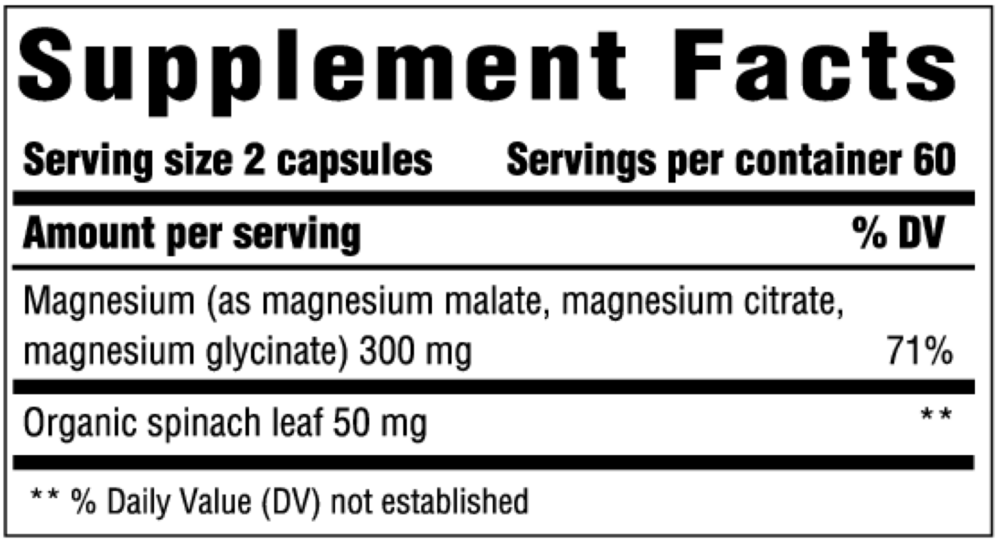
This formula supplies magnesium in three forms: malate, citrate and glycinate. All three absorb better than magnesium oxide. Citrate is the one most likely to loosen stools and glycinate is the gentlest; the label does not say how much each contributes. Magnesium is a cofactor for hundreds of enzymes, including those that make cellular energy, and it helps muscles relax after they contract and nerves signal normally. Each serving also includes 50 mg of organic spinach leaf.
One serving is 2 capsules, which provides 300 mg of magnesium, and a bottle of 120 capsules holds 60 servings. The label directs adults to take 2 capsules daily with food and a beverage, and says they may be taken at any time of day. Evening suits people who take magnesium for muscle relaxation. Once the bottle is open, the label says to use it within three months.
Take magnesium at least 2 hours apart from levothyroxine, tetracycline or quinolone antibiotics and bisphosphonates, because it binds them in the gut and lowers how much you absorb. The kidneys clear magnesium, so anyone with kidney disease should use it only under a clinician's supervision. If you are pregnant, nursing or on prescription medicines, check with your clinician first.
Blood levels generally respond within 4–8 weeks, so retest Magnesium or RBC Magnesium after about two months. Muscle tightness, when low magnesium is part of the cause, often eases sooner. Loose stools mean you have taken more than your gut can absorb; taking the capsules at separate meals usually settles it. A glycinate-only product is the gentler choice for a sensitive gut, and a citrate-only product is better if you also want help with regularity. This blend sits between the two.
Frequently asked questions
What forms of magnesium are in Magnesium 300?
The label lists magnesium malate, magnesium citrate and magnesium glycinate, together providing 300 mg of magnesium per 2-capsule serving. It does not say how much comes from each form. Each serving also contains 50 mg of organic spinach leaf.
How much magnesium is in each serving?
A serving is 2 capsules and provides 300 mg of magnesium. A bottle of 120 capsules holds 60 servings. That is below the 350 mg a day upper limit set for magnesium from supplements in adults, so do not add other magnesium products on top without advice.
When is the best time to take magnesium?
The label says to take 2 capsules daily with food and a beverage, and that they may be taken at any time of day. Many people choose dinner or the evening because magnesium supports muscle relaxation. Consistency matters more than the clock.
Will this magnesium cause diarrhea?
It can if you take more than your gut absorbs, and the citrate in this blend is the form most likely to loosen stools. Taking the capsules with food, or at separate meals, usually settles it. Diarrhea that persists is a reason to stop and ask your clinician.
Can I take magnesium with thyroid medication or antibiotics?
Separate them. Magnesium binds levothyroxine and tetracycline or quinolone antibiotics in the gut and lowers their absorption. Leave at least 2 hours between magnesium and these medicines, and confirm the exact timing with your pharmacist.
How long does it take to raise a low magnesium level?
Expect 4–8 weeks of steady daily use before Magnesium or RBC Magnesium reflects the change, and retest after about two months. Symptoms tied to low intake, such as muscle tightness, can ease sooner.
Is magnesium safe with kidney disease?
Only under a clinician's supervision. Healthy kidneys clear extra magnesium, but impaired kidneys do not, and levels can build up. If you have chronic kidney disease, get your clinician's approval and lab monitoring before taking any magnesium supplement.
Is Magnesium 300 vegetarian and gluten free?
Yes, according to the label. It carries vegetarian and gluten free seals and says the product is made without dairy and soy and with no magnesium stearate. The capsule is hypromellose, and the other ingredients are ascorbyl palmitate and rice hull concentrate.
How to take it & ingredients
Suggested use: Adults take 2 capsules daily with food and a beverage. May be taken any time of day.
Active ingredients
2 capsules per serving · 60 servings
Magnesium
Magnesium Malate, Magnesium Citrate, Magnesium Glycinate
Magnesium Malate, Magnesium Citrate, Magnesium Glycinate
300 mg
Spinach (Leaf) (Organic)
Organic spinach leaf
Organic spinach leaf
50 mg
Other ingredients: Hypromellose, Ascorbyl palmitate, Rice hull concentrate
Certifications
Benefits
Warnings
Customers also considered

CereMag
Ortho Molecular Products
99 grams
$77.76$70.05 with Subscribe & Save

Dr. Formulated Magnesium Raspberry
Garden of Life
197.4 grams
$24.99$19.99 with Subscribe & Save

Dual-Mag Complex
Natura Health Products
90 capsules
$22.99$17.99 with Subscribe & Save

Mag Threonate
Ortho Molecular Products
60 capsules
$78.64$70.85 with Subscribe & Save