 Instalab

Metagenics
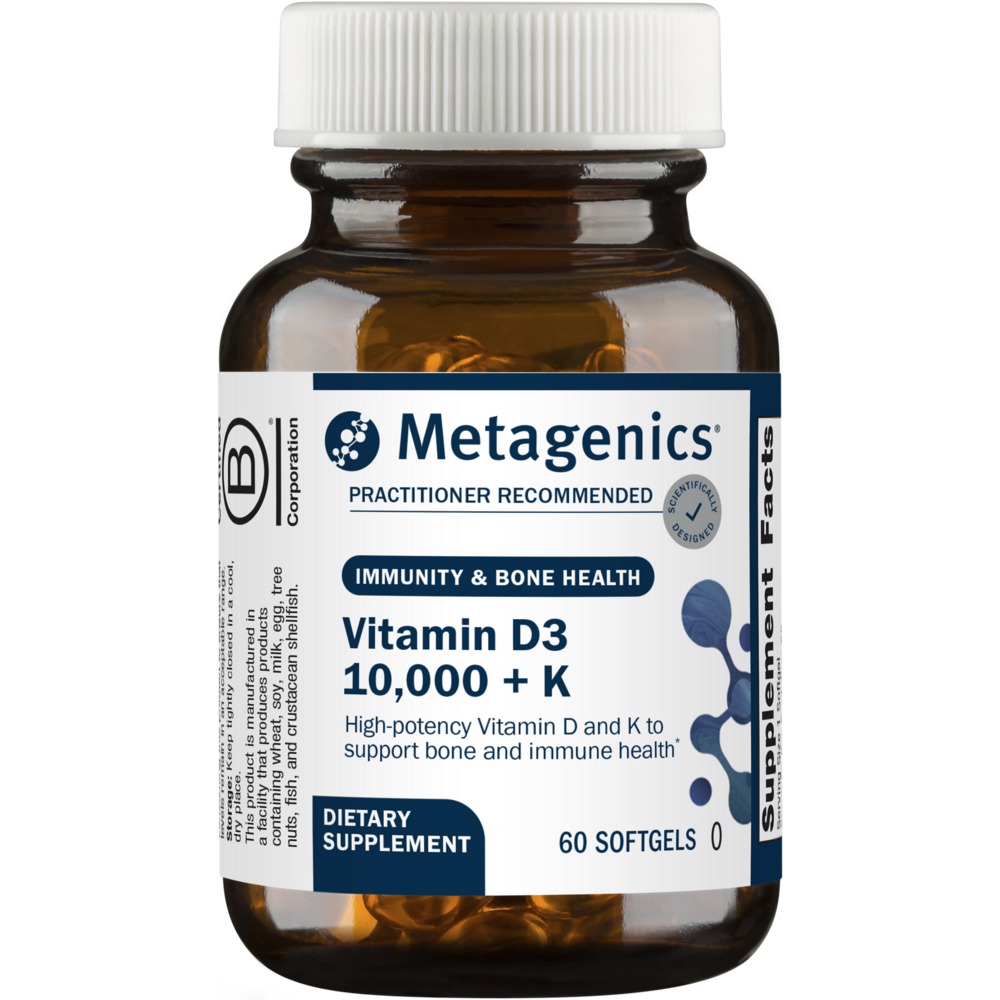
Vitamin D3 10,000 + K by Metagenics
60 softgels · 60-day supply
Essential Vitamins for Bone, Heart, and Immune Health$31.99
This item is currently out of stockGet notified when this item is back in stock
Practitioner-grade brand3rd-party testedFree shipping $50+
Gluten Free
Metagenics Vitamin D3 10,000 + K overview
This dose fits adults working to correct low Vitamin D, 25-Hydroxy on labs, not casual maintenance. It’s practical for darker‑skinned adults at northern latitudes, people with higher body weight, and those with low sun exposure. It’s also used under clinician guidance after bariatric surgery or with malabsorption (celiac or inflammatory bowel disease). If your level is already adequate, this is more than you need; use a lower-dose vitamin D3 for upkeep.
Cholecalciferol (vitamin D3) is the form your skin makes from sunlight. Your liver and kidneys turn it into a hormone that increases calcium absorption from the gut and reins in parathyroid hormone (the signal that pulls calcium out of bone). Pairing vitamin D3 with vitamin K2 (MK‑7) activates osteocalcin and matrix Gla protein, the proteins that help load calcium into bone and keep it out of artery walls. K1 primarily supports normal clotting; MK‑7 stays in the blood longer than MK‑4, so lower microgram doses are effective.
Take one softgel daily with a meal that includes fat for better absorption. This is a short-term repletion strategy: re-check Vitamin D, 25-Hydroxy after 8–12 weeks, then step down to a maintenance vitamin D3 dose (often 1,000–5,000 IU) based on labs. Magnesium adequacy makes vitamin D activation more efficient, so correct low Magnesium, RBC if present. Avoid stacking with separate high-dose calcium unless advised.
Skip this if you take warfarin (vitamin K changes its effect). Use clinician supervision if you’ve had high calcium, recurrent kidney stones, granulomatous conditions like sarcoidosis or some lymphomas, or hyperparathyroidism, because vitamin D3 can drive calcium higher. Pregnancy and breastfeeding: avoid high-dose vitamin D3 unless prescribed. Orlistat and bile acid binders reduce absorption—separate dosing or address with your clinician.
Frequently asked questions
Is 10,000 IU of vitamin D3 safe to take every day?
It can be safe short term for repletion with lab monitoring. It’s not a forever dose for most adults. Re-test Vitamin D, 25-Hydroxy after 8–12 weeks and step down once your level is no longer low.
How long does vitamin D3 take to raise my levels?
Most people see meaningful changes in Vitamin D, 25-Hydroxy within 4–12 weeks. The timeline depends on baseline level, body weight, sun exposure, and absorption. Re-test to confirm the response rather than guessing.
Do I need to take vitamin D3 with food?
Yes. Vitamin D3 is fat-soluble, so take it with a meal that contains fat to improve absorption. Taking it on an empty stomach can reduce uptake and blunt the rise on follow-up labs.
What’s the difference between vitamin K2 MK-7 and MK-4?
MK-7 stays in the bloodstream longer than MK-4, allowing lower microgram doses to activate bone-related proteins steadily. MK-4 requires higher, more frequent dosing. Both are forms of vitamin K2; MK-7 is common in once-daily formulas.
Can I take vitamin D3 and K2 with warfarin?
No. Vitamin K alters warfarin’s anticoagulant effect. If you’re on warfarin, avoid vitamin K supplements and discuss any vitamin D3 plan with your prescribing clinician.
What are signs I’m getting too much vitamin D?
Symptoms of excess include nausea, constipation, thirst, frequent urination, and fatigue, often from high calcium. Stop the supplement and get labs (calcium and Vitamin D, 25-Hydroxy) if these occur.
Does vitamin D3 prevent colds or flu?
Evidence suggests modest benefit mainly in people who start out low; it’s not a guarantee against infections. It’s reasonable to aim for a healthy Vitamin D, 25-Hydroxy, but don’t rely on D3 as your only strategy.
Is this vitamin D3 with K2 vegan?
The active vitamins can be vegan-sourced, but softgels often use bovine or porcine gelatin. Check the label for gelatin source if strict vegan status matters to you.
How to take it & ingredients
Suggested use: Take one softgel daily or as directed by your healthcare practitioner. Do not exceed recommended dosage unless directed by your healthcare practitioner.
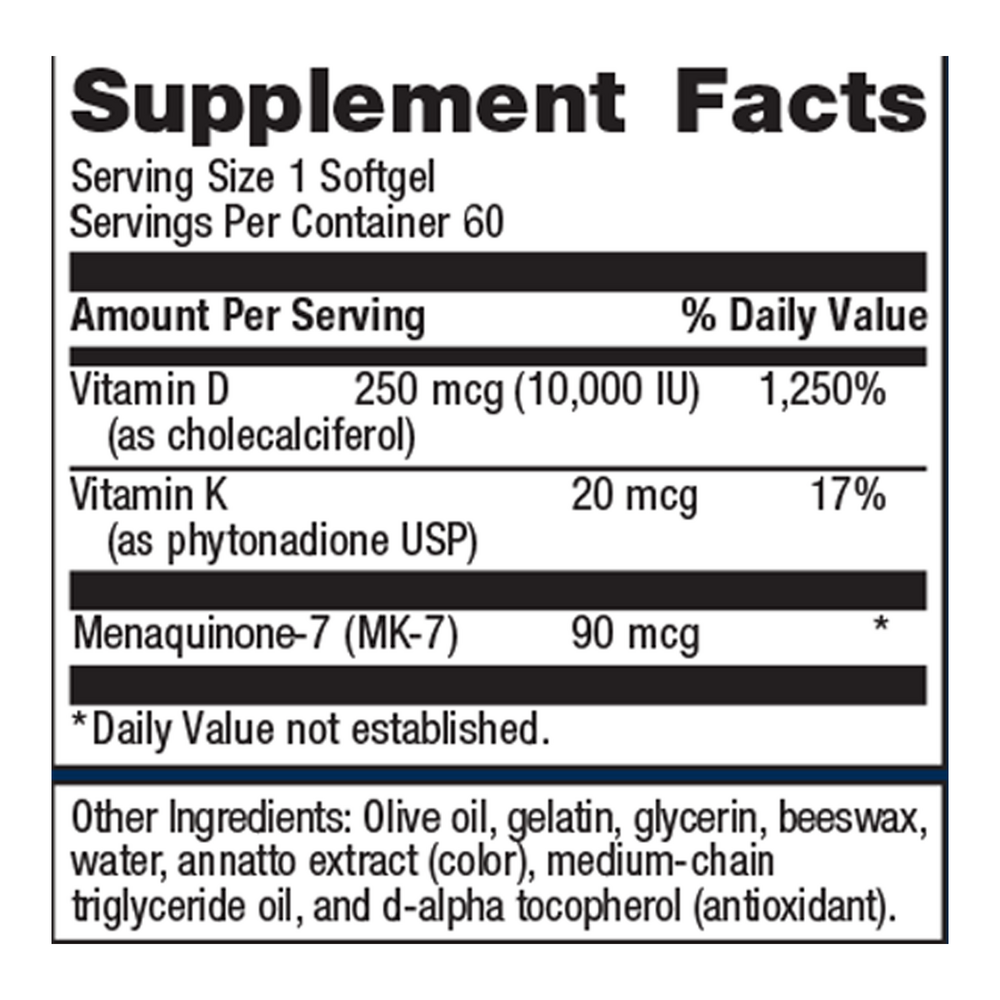
Active ingredients
1 softgel per serving · 60 servings
Vitamin D
Cholecalciferol (D3)
250 mcg, 10000 IU
Vitamin K
Phytonadione (K1)
20 mcg
Vitamin K2
Menaquinone-7 (MK-7)
90 mcg
Other ingredients: Olive oil, Gelatin, Glycerin, Beeswax, Water, Annatto extract (color), Medium chain triglyceride oil, d-alpha tocopherol (antioxidant)
Certifications
Benefits
Warnings
Customers also considered
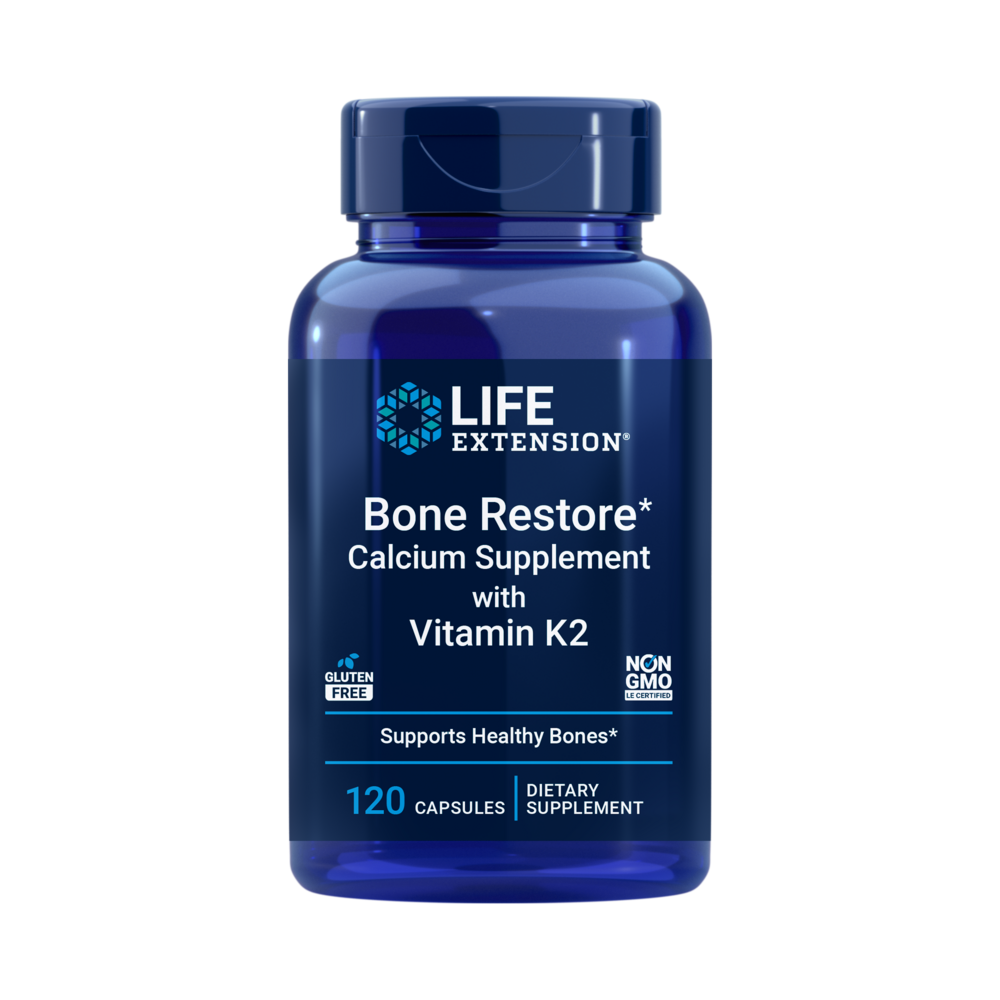
Bone Restore Calcium Supplement with Vitamin K2
Life Extension
120 capsules
$24.99$19.99 with Subscribe & Save
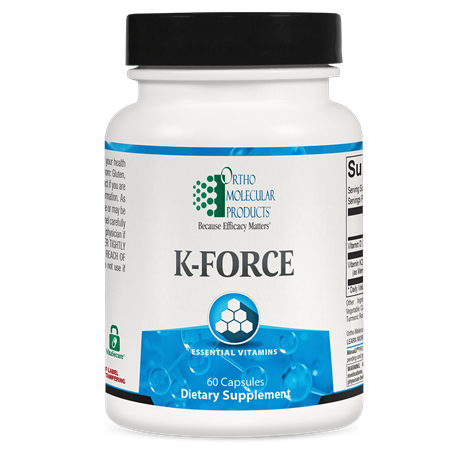
K-FORCE
Ortho Molecular Products
60 capsules
$60.33$54.35 with Subscribe & Save
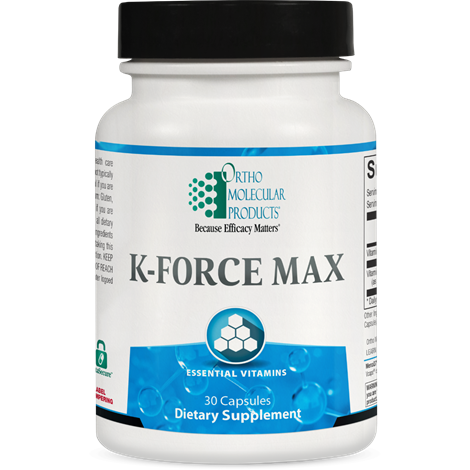
K-FORCE MAX
Ortho Molecular Products
30 capsules
$44.79$40.35 with Subscribe & Save
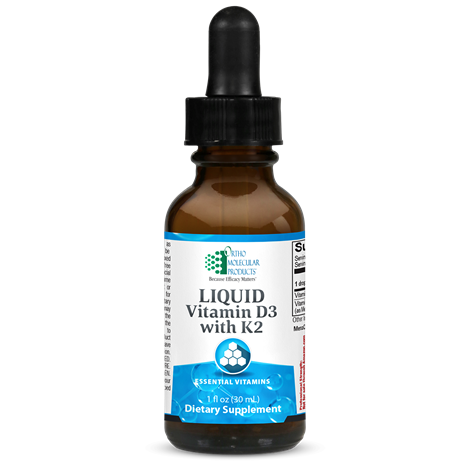
Liquid Vitamin D3 with K2
Ortho Molecular Products
30 milliliters
$52.00$46.85 with Subscribe & Save