 Instalab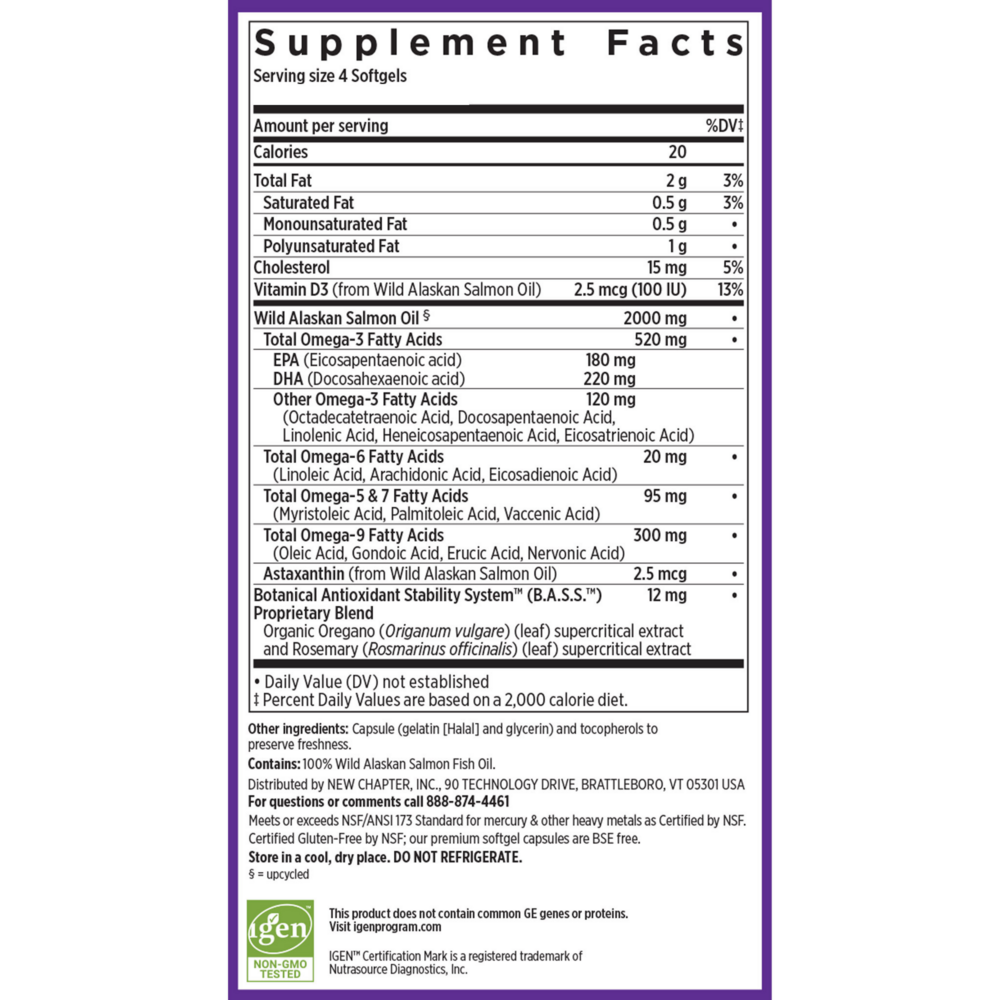


New Chapter
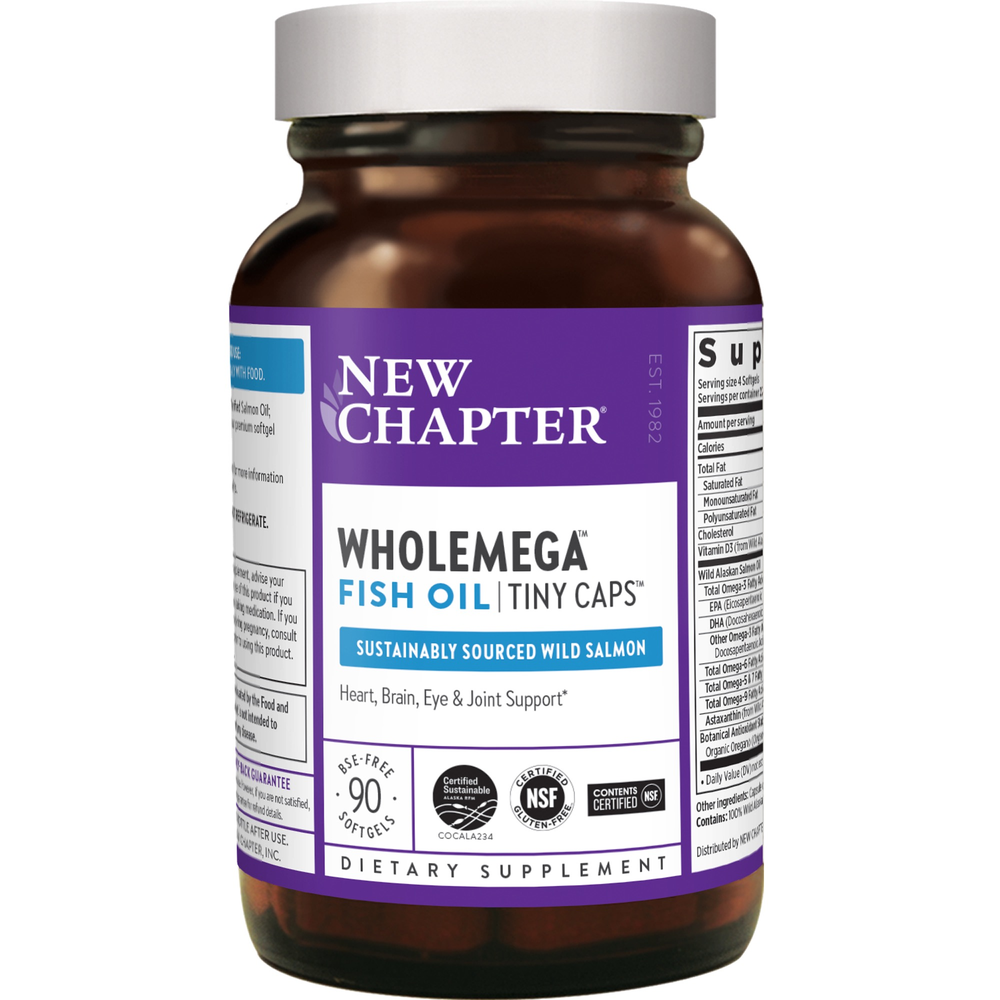
Wholemega Tiny Caps 500mg by New Chapter
90 softgels · 22-day supply
Comprehensive Omega Fatty Acids for Heart, Brain, and Joint Health$36.99
Purchase options
Practitioner-grade brand3rd-party testedFree shipping $50+
Halal Certified·Gluten Free
New Chapter Wholemega Tiny Caps 500mg overview
If you want fish oil for everyday upkeep, not high-dose therapy, these tiny salmon-oil softgels fit. They suit people who eat little seafood, have an Omega-3 Index on the low side, and prefer a minimally processed, whole-food oil that includes astaxanthin and small amounts of vitamin D3. The small size helps if large capsules upset your stomach. If your triglycerides are elevated, this maintenance-level dose is usually too low to move them meaningfully; look to higher-dose omega-3 concentrates instead.
EPA and DHA in fish oil lower how much fat your liver ships out in VLDL particles (the form your liver packages fat into for transport), and they nudge cells to burn fat for energy more readily. That is why higher doses drop triglycerides within 4 to 12 weeks. This product uses wild Alaskan salmon oil, so you also get omega-5, -7, and -9, plus astaxanthin, a carotenoid antioxidant that helps protect the oil. The included vitamin D3 here is small and not a repletion dose.
Take four softgels daily with food, as New Chapter suggests. Food improves absorption and reduces aftertaste. If you’re tracking your Omega-3 Index, recheck after 8 to 12 weeks to see the effect of this dose. For targeted triglyceride reduction, most people need grams of EPA+DHA per day; a concentrated fish oil or prescription icosapent ethyl is more practical for that goal.
Fish oil can slightly reduce platelet stickiness, so use caution if you’re on blood thinners like warfarin, clopidogrel, apixaban, or rivaroxaban, or if you bruise or bleed easily. Skip if you have a fish allergy. If you’re pregnant, fish oil is often used, but confirm purity standards and run the plan by your clinician. For very low Vitamin D, this D3 amount is too small; address that separately.
Frequently asked questions
Is salmon oil as good as regular fish oil?
Salmon oil is a type of fish oil. It’s less processed and includes other fats and astaxanthin, but it delivers lower EPA+DHA per capsule than concentrates. For maintenance or a whole-food approach, it’s great; for high triglycerides, a higher-dose EPA+DHA product is better.
How long does fish oil take to work?
For most goals, expect changes within 4 to 12 weeks. Triglycerides respond fastest at higher doses. The Omega-3 Index, which reflects red blood cell levels, typically shifts over 8 to 12 weeks. Stay consistent and re-test to confirm your response.
Does fish oil thin your blood?
It has a mild anti-platelet effect, which can slightly increase bleeding time at higher intakes. Most healthy adults tolerate typical doses well, but if you’re on anticoagulants or antiplatelet drugs, talk with your clinician before starting.
Will this fish oil lower my triglycerides?
At this dose, probably not much. Triglyceride reduction generally needs 2–4 grams of EPA+DHA daily. This whole-food salmon oil is better viewed as maintenance. If your triglycerides are elevated, consider a concentrated fish oil or prescription options.
When should I take fish oil to avoid fishy burps?
Take it with a meal, ideally your largest meal, and keep capsules cold until use. Splitting the dose and choosing small softgels, like these, also helps reduce aftertaste.
Is the vitamin D in this enough to fix low levels?
No. The D3 here is a small add-on and not a repletion dose. If your Vitamin D, 25-Hydroxy is low, you’ll likely need a higher standalone D3 dose for several weeks, then retest and adjust.
Can I take fish oil if I have a fish allergy?
No. Avoid fish oil if you have a fish allergy. Discuss plant-based algal oil with your clinician as an alternative source of EPA and DHA.
What labs should I track with fish oil?
The Omega-3 Index shows tissue levels over time, and a standard lipid panel covers Triglycerides. Some people also watch hs-CRP (an inflammation marker) though effects at maintenance doses are modest.
How to take it & ingredients
Suggested use: Take four easy-to-swallow softgels daily with food, or as recommended by your healthcare professional.
Active ingredients
4 softgels per serving · 23 servings
▼
Total Omega-3 Fatty Acids
520 mg
Eicosapentaenoic Acid (EPA)
180 mg
Docosahexaenoic Acid (DHA)
220 mg
Other Omega-3 Fatty Acids
Octadecatetraenoic Acid, Docosapentaenoic Acid, Linolenic Acid, Heneicosapentaenoic Acid, Eicosatrienoic Acid
Octadecatetraenoic Acid, Docosapentaenoic Acid, Linolenic Acid, Heneicosapentaenoic Acid, Eicosatrienoic Acid
120 mg
Total Omega-6 Fatty Acids
Linoleic Acid, Arachidonic Acid, Eicosadienoic Acid
Linoleic Acid, Arachidonic Acid, Eicosadienoic Acid
20 mg
Total Omega-5 & 7 Fatty Acids
Myristoleic Acid, Palmitoleic Acid, Vaccenic Acid
Myristoleic Acid, Palmitoleic Acid, Vaccenic Acid
95 mg
Total Omega-9 Fatty Acids
Oleic Acid, Gondoic Acid, Erucic Acid, Nervonic Acid
Oleic Acid, Gondoic Acid, Erucic Acid, Nervonic Acid
300 mg
Vitamin D3
From Wild Alaskan Salmon Oil
From Wild Alaskan Salmon Oil
2.5 mcg
Astaxanthin
From Wild Alaskan Salmon Oil
From Wild Alaskan Salmon Oil
2.5 mg
Botanical Antioxidant Stability System™ (B.A.S.S.™) Proprietary Blend
Organic Oregano (leaf) and Rosemary (leaf) supercritical extracts
Organic Oregano (leaf) and Rosemary (leaf) supercritical extracts
12 mg
Other ingredients: Capsule (Gelatin [Halal] and Glycerin), Tocopherols (to preserve freshness)
Certifications
Benefits
Warnings
Customers also considered
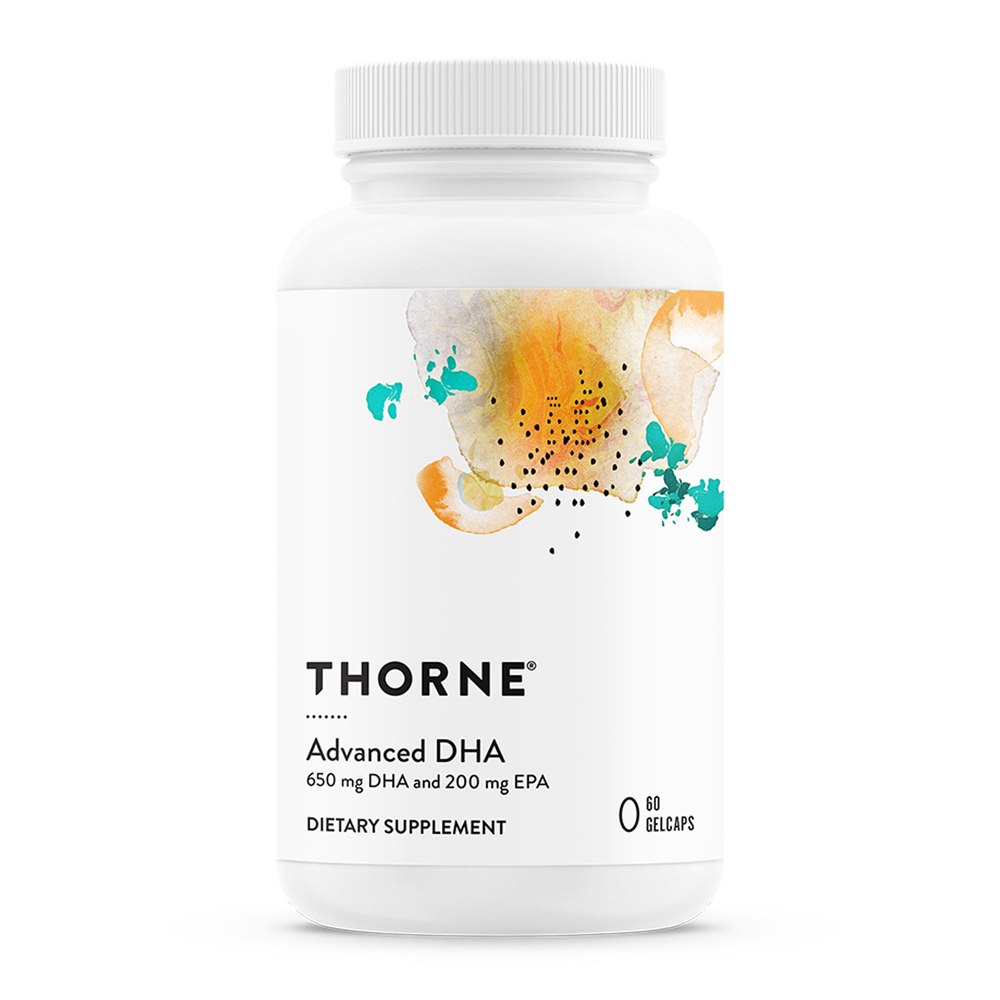
Advanced DHA
Thorne
60 gelcaps
$30.00$27.00 with Subscribe & Save
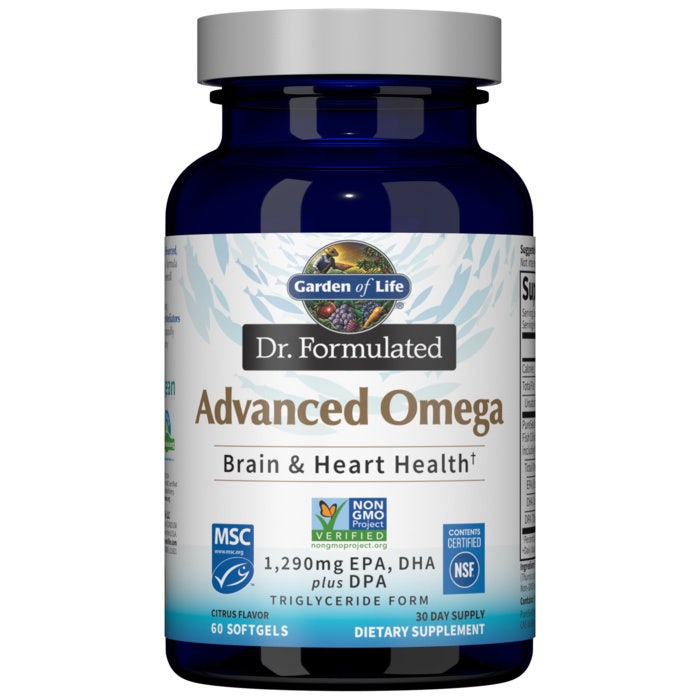
Dr. Formulated Advanced Omega
Garden of Life
60 softgels
$31.99$25.99 with Subscribe & Save
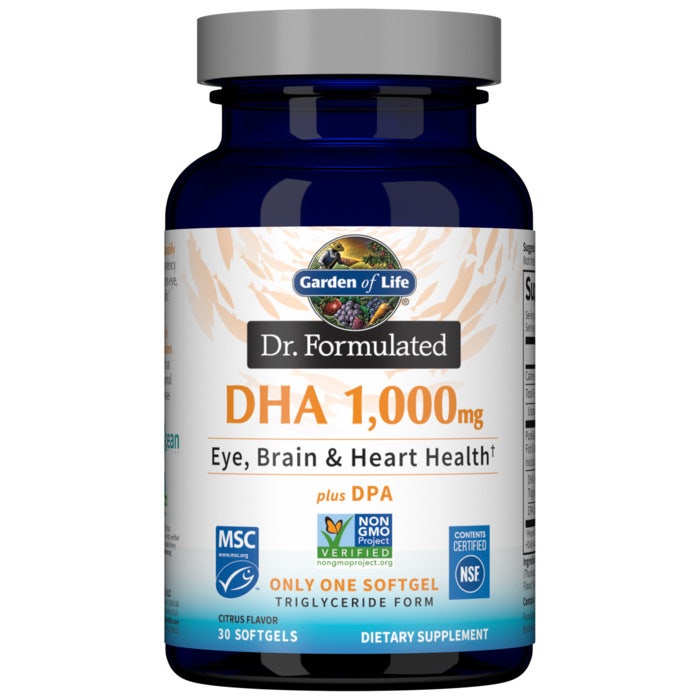
Dr. Formulated DHA 1g
Garden of Life
30 softgels
$31.99$25.99 with Subscribe & Save
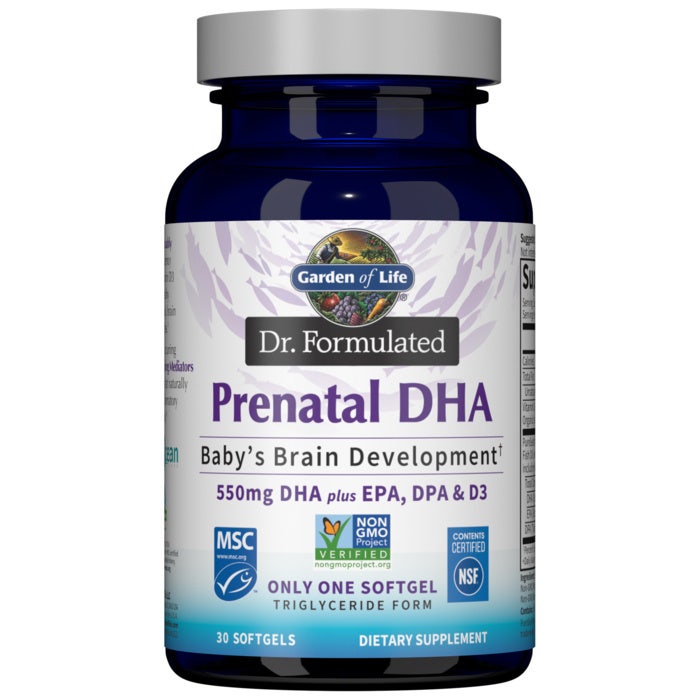
Dr. Formulated Prenatal DHA
Garden of Life
30 softgels
$29.99$23.99 with Subscribe & Save