 Instalab


Nordic Naturals
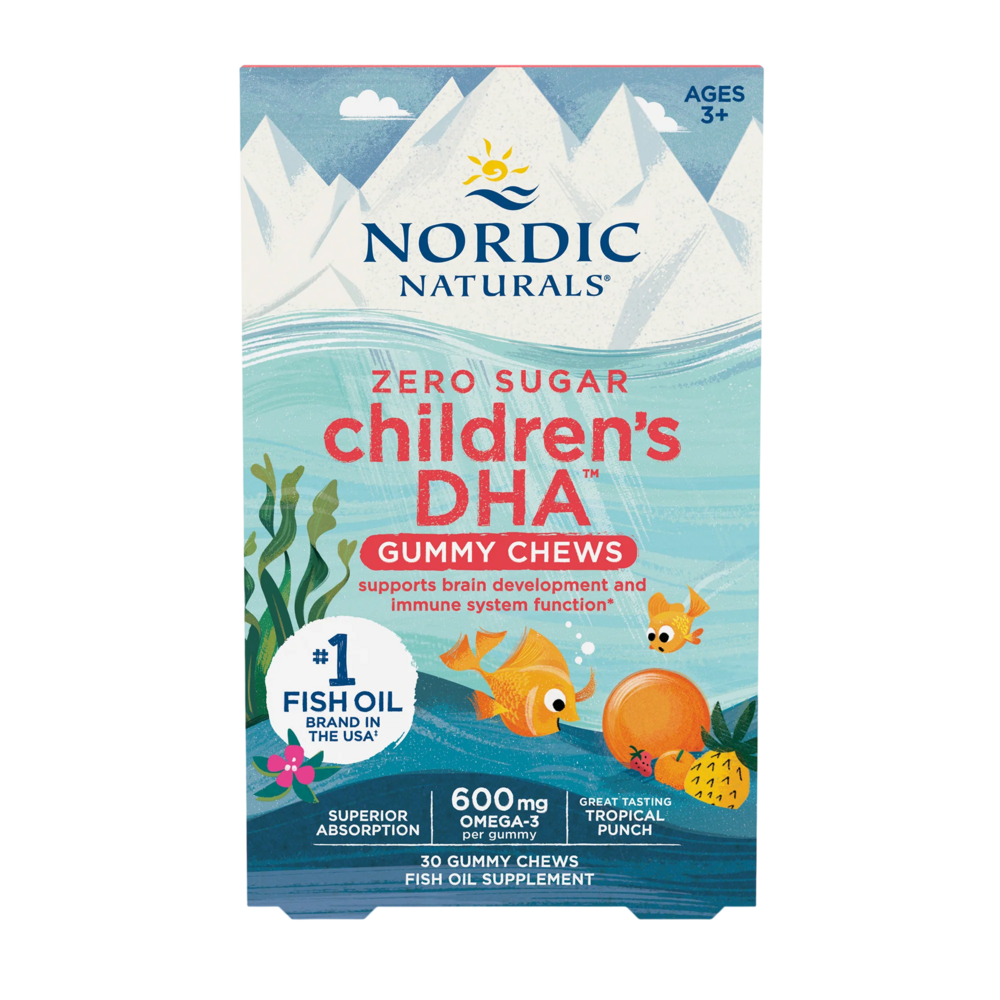
Children's DHA™ Gummies 600 mg by Nordic Naturals
30 gummies · 30-day supply
Zero-Sugar Omega-3 Gummy Chews With DHA for Children 3 and Up$21.99
Purchase options
Practitioner-grade brand3rd-party testedFree shipping $50+
Gluten Free·Milk Free·Sugar Free·Artificial Color Free·Artificial Flavor Free
Nordic Naturals Children's DHA™ Gummies overview
These gummy chews are for children aged 3 and up, the age on the front of the box, who eat little or no oily fish and will not take a liquid or swallow a softgel. Fish such as salmon and sardines are the main food source of the omega-3s DHA and EPA, and many children eat very little of them. If your child already eats fish regularly, a supplement adds less. Check with your child's pediatrician before starting.
Each chew holds purified fish oil from anchovies and sardines set in a gelatin gummy. DHA is a structural fat in the brain and the retina, and EPA is its partner omega-3; together they support normal brain development and take part in normal immune function. The chew is sweetened with xylitol, sorbitol and stevia extract instead of sugar, flavored tropical punch with natural flavors, and colored with paprika extract.
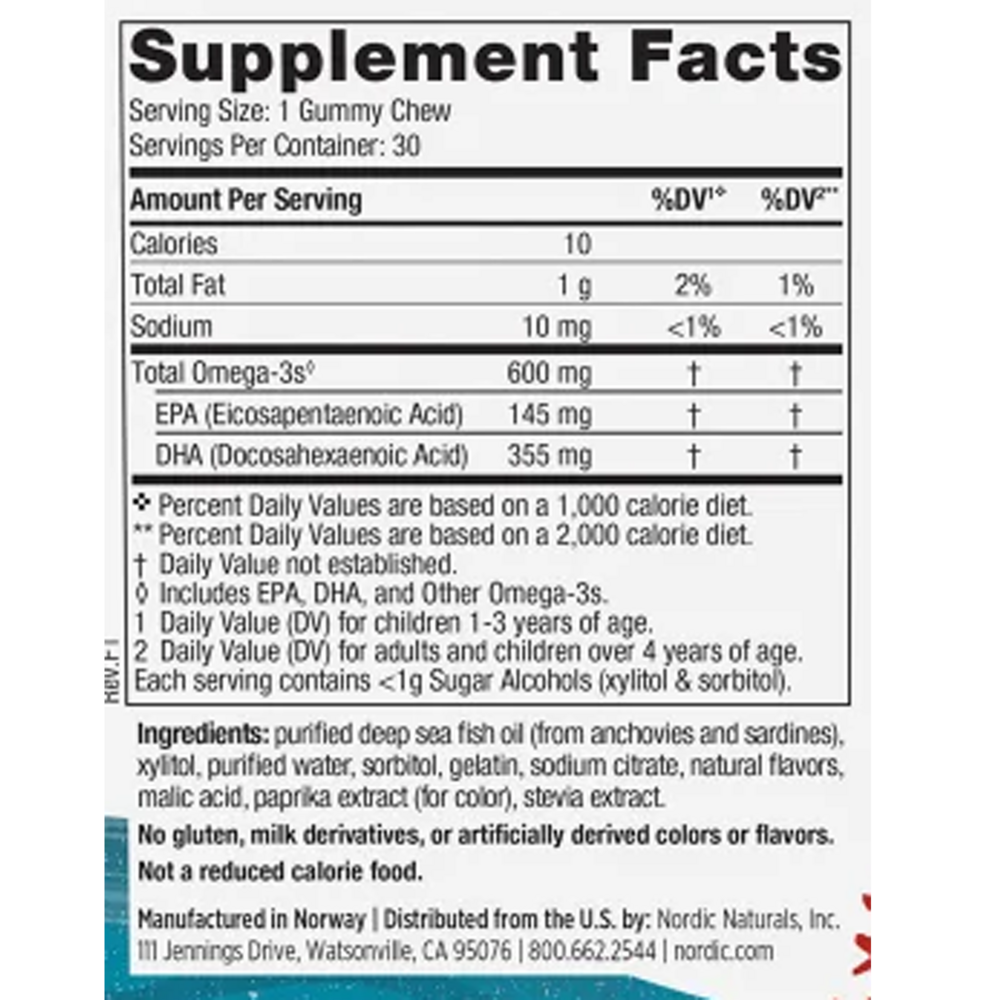
One gummy chew provides 600 mg of total omega-3s, including 355 mg DHA and 145 mg EPA. The box's suggested use is one gummy daily for ages 3+ years, or as directed by your health care professional, and the box holds 30 chews. Giving it with a meal can reduce any aftertaste, and make sure your child chews it fully before swallowing. Store it in a cool, dry place away from sunlight and out of reach: the chews taste like candy, and a child should not help themselves to more.
Do not give it to children under 3, and do not give more than one gummy a day without the pediatrician's advice. It is made from fish, so it is not suitable for a child with a fish allergy, and the gelatin makes it unsuitable for vegetarians. Sugar alcohols such as xylitol and sorbitol can cause gas or loose stools in some children. The box says to consult your physician first if your child has a known medical condition, takes medications (including blood thinners) or is allergic to iodine; ask before planned surgery too. The box is marked not for pets: xylitol is toxic to dogs.
Do not expect a quick or visible change. Omega-3s build up in the body's tissues over weeks to months of regular intake, and studies of fish oil for attention, behavior or learning in children show mixed results, so think of it as covering a dietary gap. Compared with liquids and softgels, a chew is easier to give, at the cost of sweeteners and gelatin. Regular meals of low-mercury oily fish remain the food-first alternative.
Frequently asked questions
How much DHA is in one Children's DHA gummy?
One gummy chew provides 600 mg of total omega-3s, including 355 mg DHA and 145 mg EPA, from purified fish oil made from anchovies and sardines. The box contains 30 chews.
What age are Children's DHA gummies for?
The suggested use on the box is for ages 3+ years. Do not give them to younger children: a chewy gummy can be a choking risk for a toddler. Ask your pediatrician about a liquid omega-3 if your child is under 3.
How many DHA gummies should my child take a day?
The box says one gummy daily for ages 3+ years, or as directed by your health care professional. One gummy is one serving, and the box holds 30. Do not give extra because they taste good.
Do Children's DHA gummies contain sugar?
No. The front says zero sugar. They are sweetened with xylitol, sorbitol and stevia extract, and the label says each serving contains less than 1 g of sugar alcohols. In some children sugar alcohols cause gas or loose stools.
Do Children's DHA gummies taste fishy?
They are flavored tropical punch with natural flavors, and the box says no fishy aftertaste. If your child does notice a fishy taste or burp, giving the chew with a meal usually helps.
Are the gummies safe for children with allergies?
They contain fish oil from anchovies and sardines, so they are not suitable for a child with a fish allergy. The label states no gluten or milk derivatives, and it says to consult a physician first if your child is allergic to iodine. They contain gelatin, so they are not vegetarian.
Can my child take DHA gummies with other supplements or medicines?
Check first. The box says to consult a physician if your child takes medications, including blood thinners. Mention any other omega-3 product your child takes as well, and bring the boxes so the amounts can be added up.
Why should xylitol gummies be kept away from dogs?
The box is marked not for pets because the chews contain xylitol, which is toxic to dogs even in small amounts. Store the box where pets and children cannot reach it, and call a vet at once if a dog eats any.
How to take it & ingredients
Suggested use: For ages 3+ years, one gummy daily, or as directed by your health care professional.
Active ingredients
1 gummy chew per serving · 30 servings
▼
Total Omega-3 Fatty Acids
Includes EPA, DHA, and other omega-3s
Includes EPA, DHA, and other omega-3s
600 mg
EPA
Eicosapentaenoic Acid
Eicosapentaenoic Acid
145 mg
DHA
Docosahexaenoic Acid
Docosahexaenoic Acid
355 mg
Other ingredients: Purified deep sea fish oil (from anchovies and sardines), Xylitol, Purified water, Sorbitol, Gelatin, Sodium citrate, Natural flavors, Malic acid, Paprika extract (for color), Stevia extract
Certifications
Benefits
Warnings