 Instalab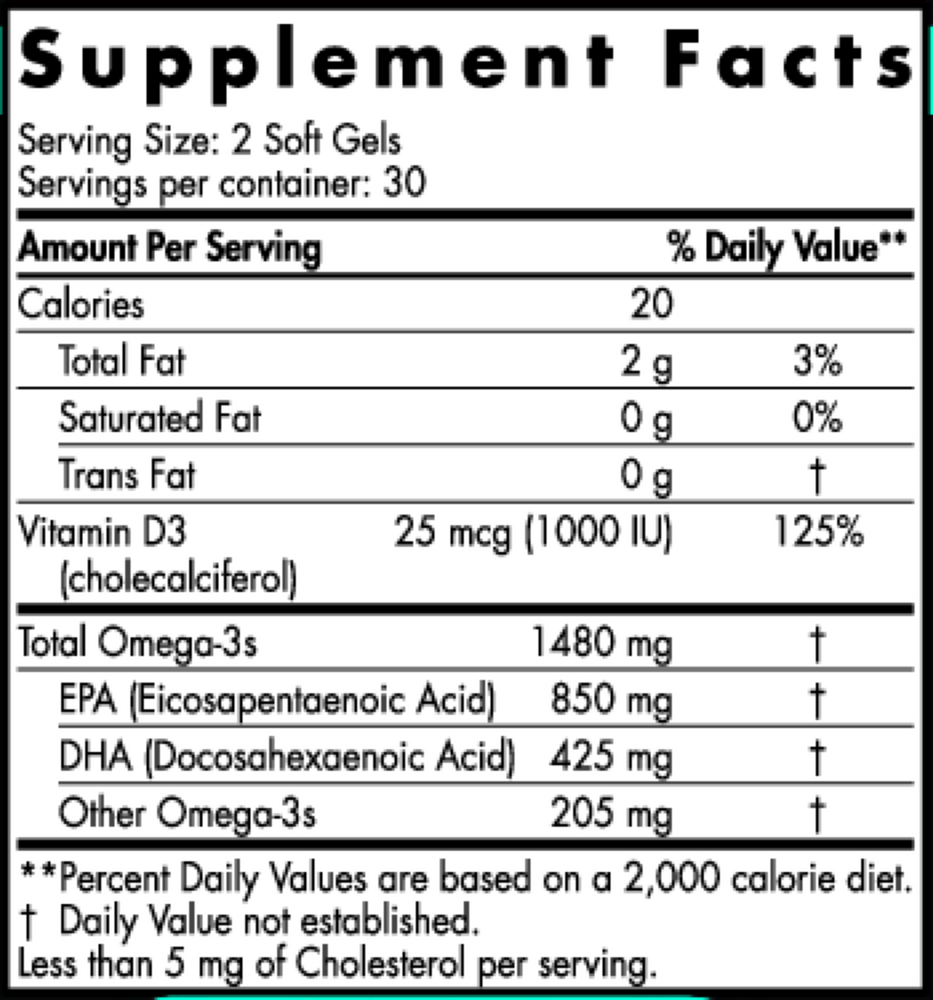


Nordic Naturals
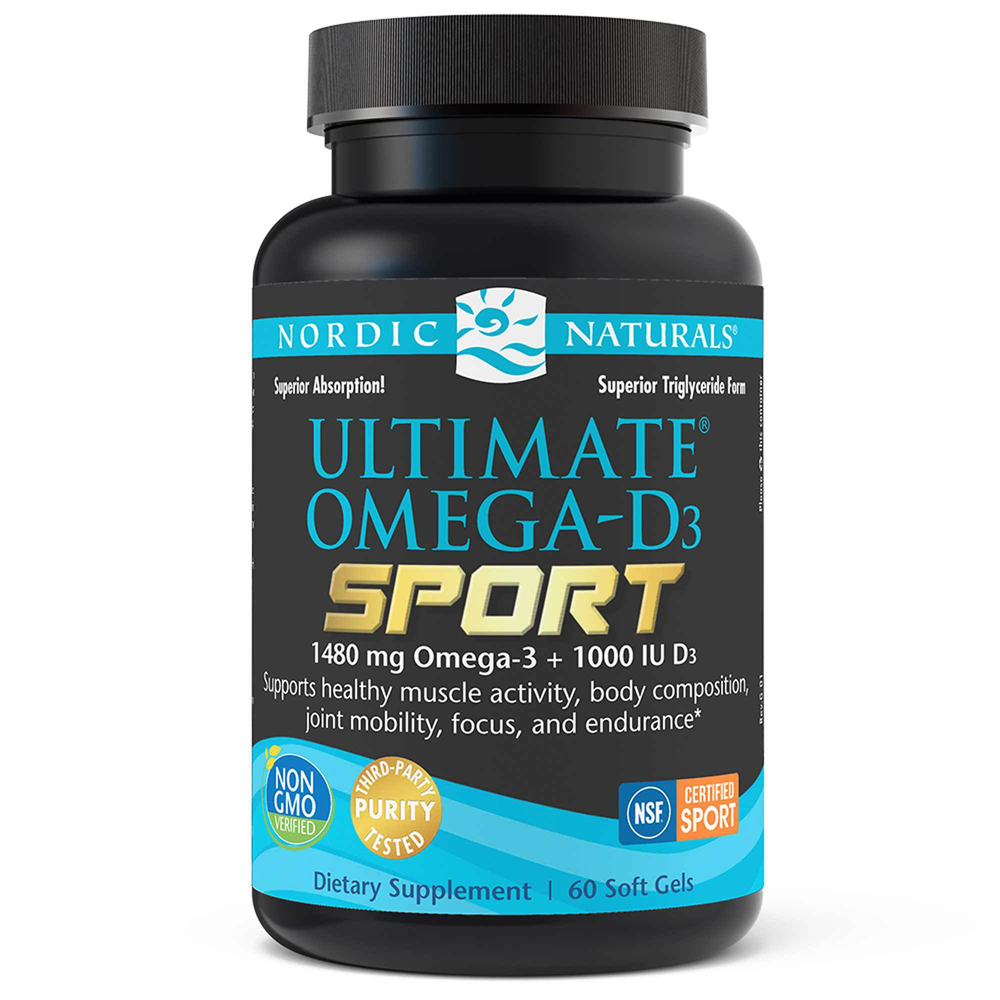
Ultimate Omega-D3 Sport by Nordic Naturals
60 softgels · 30-day supply
Premium Omega-3s and Vitamin D3 for Active Lifestyles$32.99
Purchase options
Practitioner-grade brand3rd-party testedFree shipping $50+
Gluten Free·Artificial Color Free·Artificial Flavor Free·Milk Free
Nordic Naturals Ultimate Omega-D3 Sport overview
If you’re training hard and want an NSF Certified for Sport fish oil, this fits. The 1,480 mg omega-3s per serving is a clinical dose for people with elevated triglycerides who want a 20–30% drop within 4 to 12 weeks. It’s also right if your Omega-3 Index is low or your Vitamin D, 25-Hydroxy sits in the lower normal range, common in darker-skinned adults, indoor workers, northern latitudes, or during winter.
EPA and DHA in fish oil reduce how much fat your liver exports in VLDL particles (the carriers that show up as triglycerides), and they nudge cells to burn fatty acids for energy faster. That’s why triglycerides fall first. These fats also shift membrane signaling toward fewer inflammatory eicosanoids, which can modestly lower hs-CRP (a blood marker of inflammation) in responders. The triglyceride-form oil absorbs better than ethyl-esters. The 1,000 IU vitamin D3 is a maintenance dose that steadies calcium regulation and brings low-normal D toward mid-range.
Take two softgels with a meal that contains fat, once daily. Food improves omega-3 absorption and cuts fishy burps; chilling the softgels helps if you’re sensitive. Recheck your Omega-3 Index and triglycerides after 8 to 12 weeks. If your Vitamin D, 25-Hydroxy is meaningfully low, this maintenance-level D3 is usually not enough for repletion; use a higher D3 dose short term under clinician guidance, then step down.
Fish oil has a mild anti-platelet effect, so use caution if you’re on blood thinners like warfarin, apixaban, or high-dose aspirin, or if you bruise or nosebleed easily. Skip if you have a fish or shellfish allergy. For vitamin D3, avoid unsupervised use if you’ve had high calcium, recurrent calcium kidney stones, or granulomatous diseases like sarcoidosis, since D can raise calcium further. Pregnant athletes can use fish oil, but discuss the D3 dose with your clinician.
Frequently asked questions
How long does fish oil take to lower triglycerides?
Most responders see triglycerides fall within 4 to 12 weeks at about 1–2 grams of EPA+DHA daily. Recheck a fasting lipid panel after that window. If there’s no change, higher EPA+DHA or other therapies may be needed.
Does fish oil thin your blood?
It has a mild anti-platelet effect, which can slightly increase bleeding time. It’s generally safe, but use caution with warfarin, apixaban, rivaroxaban, clopidogrel, or high-dose aspirin, and stop before elective surgery if advised.
What’s the best time to take fish oil?
Take it with a meal that has fat, once daily or split. Food improves absorption and reduces burps. Consistency matters more than timing for lipid effects, so pick a meal you rarely miss.
Is the triglyceride form of fish oil better?
Triglyceride-form fish oil is generally absorbed better than ethyl-ester oils, especially when taken with food. That can help raise your Omega-3 Index more efficiently per milligram consumed.
Can I take fish oil with a statin?
Yes. They’re commonly combined. Statins target LDL cholesterol, while fish oil lowers triglycerides and raises the Omega-3 Index. Your clinician may monitor ALT, triglycerides, and LDL to fine-tune therapy.
Is 1,000 IU vitamin D3 enough?
It’s a maintenance dose for people whose Vitamin D, 25-Hydroxy is low-normal. If your level is truly low, repletion typically needs higher short-term dosing under medical guidance, then you can step down.
What labs should I check on fish oil?
Track your Omega-3 Index and fasting triglycerides after 8–12 weeks. If you’re using it for inflammation, hs-CRP can be informative. With D3 on board, also follow Vitamin D, 25-Hydroxy periodically.
What side effects should I expect from fish oil?
Most are mild: fishy aftertaste, reflux, or loose stools. Taking with meals, splitting the dose, or refrigerating the softgels usually solves it. Stop and seek care if you have hives or swelling suggestive of allergy.
How to take it & ingredients
Suggested use: Take two soft gels daily with food, or as directed by your health care professional or pharmacist.
Active ingredients
2 softgels per serving · 30 servings
▼
Total Omega-3 Fatty Acids
1480 mg
Eicosapentaenoic Acid (EPA)
850 mg
Docosahexaenoic Acid (DHA)
425 mg
Other Omega-3s
205 mg
Vitamin D3
Cholecalciferol
Cholecalciferol
1000 IU, 25 mcg
Other ingredients: Purified deep sea fish oil (from anchovies and sardines), Gelatin, Glycerin, Water, Natural lemon flavor, d-alpha tocopherol, Vitamin D3 (cholecalciferol in olive oil), Rosemary extract (natural preservative)
Certifications
Benefits
Warnings
Customers also considered
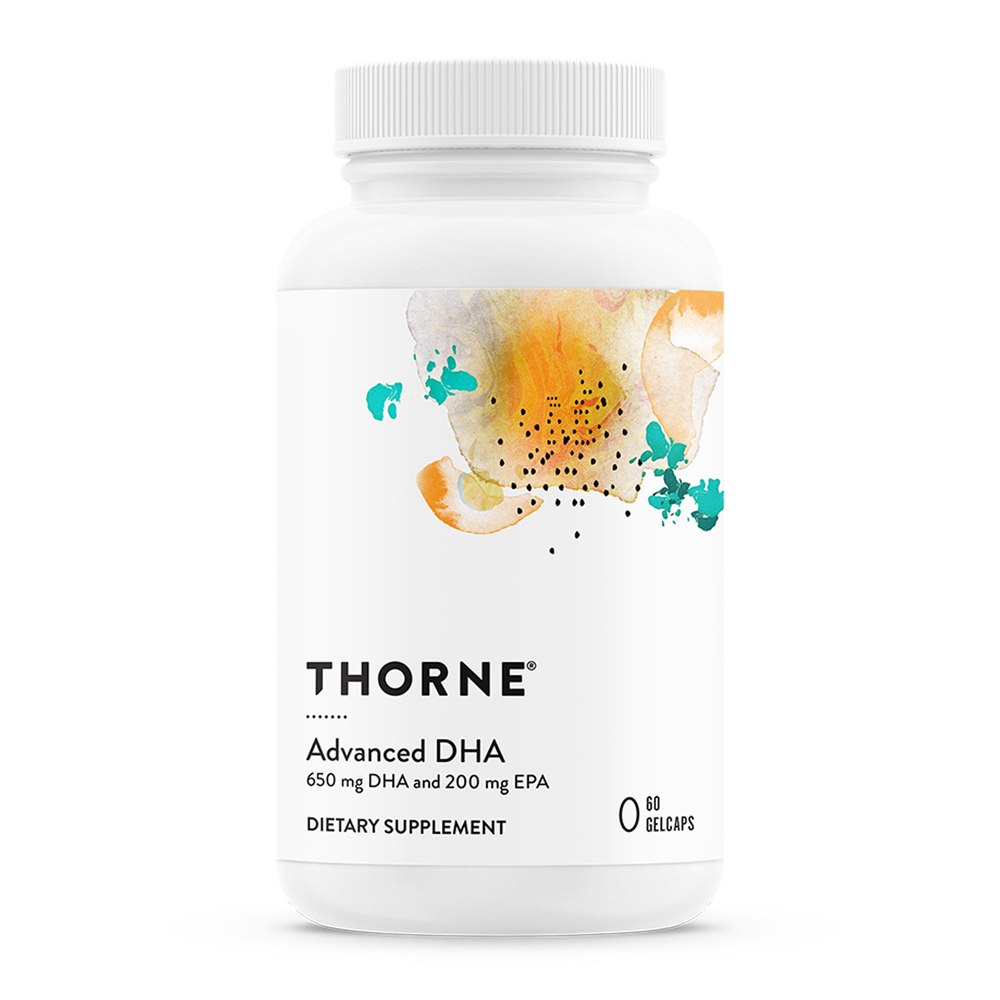
Advanced DHA
Thorne
60 gelcaps
$30.00$27.00 with Subscribe & Save
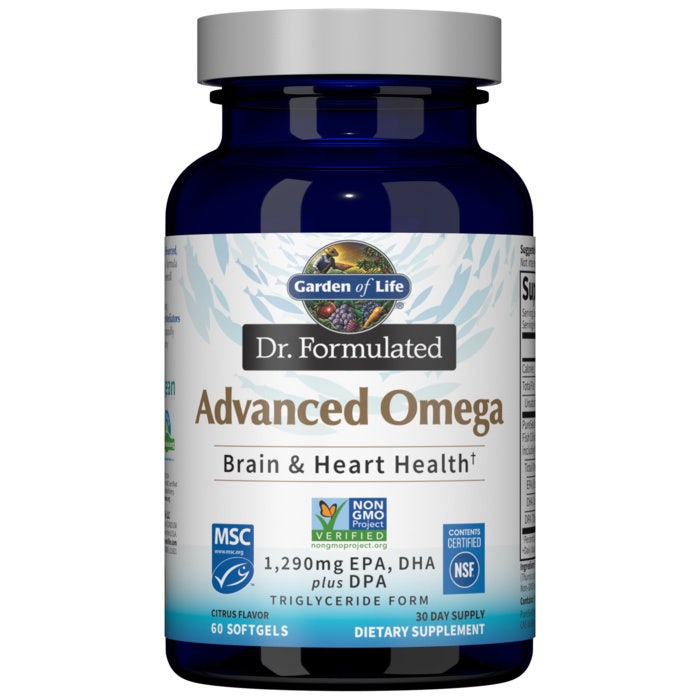
Dr. Formulated Advanced Omega
Garden of Life
60 softgels
$31.99$25.99 with Subscribe & Save
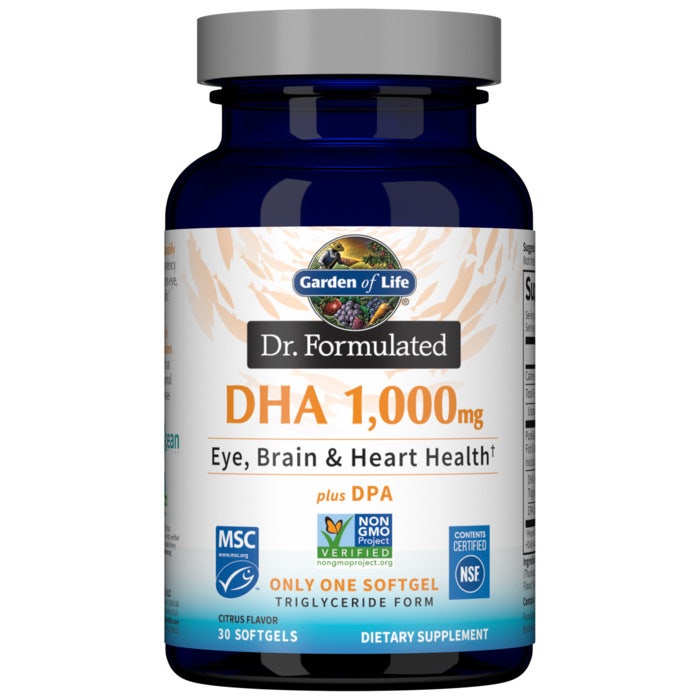
Dr. Formulated DHA 1g
Garden of Life
30 softgels
$31.99$25.99 with Subscribe & Save

Dr. Formulated Prenatal DHA
Garden of Life
30 softgels
$29.99$23.99 with Subscribe & Save