 Instalab

Nutra BioGenesis
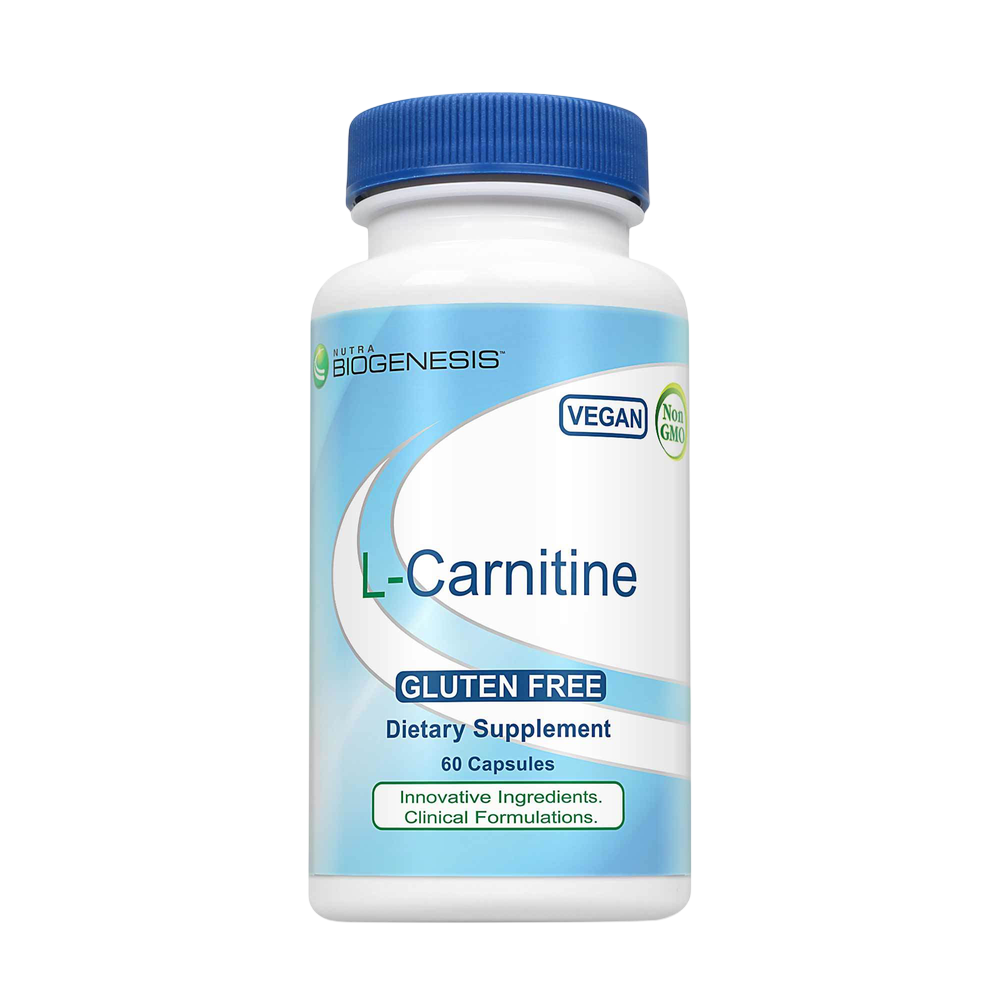
L-Carnitine 500 mg by Nutra BioGenesis
60 capsules · 60-day supply
L-Carnitine Tartrate for Energy Metabolism and Exercise Recovery$45.99
Purchase options
Practitioner-grade brand3rd-party testedFree shipping $50+
Vegan·Gluten Free
Nutra BioGenesis L-Carnitine overview
L-carnitine is worth considering in a few specific situations: vegans and vegetarians, since carnitine comes mainly from red meat and dairy; people training hard who want support for recovery; and older adults, whose muscle carnitine may decline with age. If you want a number first, Total Carnitine and Free Carnitine show your blood level, though most healthy people who eat meat make and take in enough. Low levels that come with kidney disease, dialysis or valproate therapy are a matter for your physician, not self-supplementation.
Carnitine is a compound the body makes from the amino acids lysine and methionine. Its job is transport: it carries long-chain fatty acids into the mitochondria, where they are burned for energy, and carries waste products back out. This product supplies L-carnitine from L-carnitine L-tartrate, the salt form used in most exercise-recovery research. The capsule is vegetable cellulose, and the bottle is marked vegan, gluten free and non-GMO.
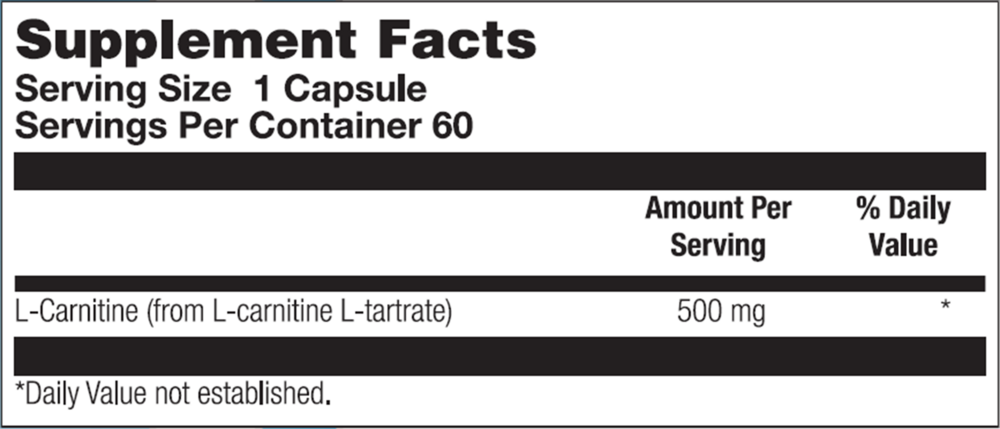
Each capsule provides 500 mg of L-carnitine, and the bottle holds 60 servings. The label directs 1 capsule up to twice daily between meals, or as your healthcare practitioner directs. Starting with 1 capsule a day is reasonable. If it upsets your stomach between meals, ask your practitioner whether to take it with food. Larger amounts taken at once are absorbed less efficiently and are more likely to upset the stomach or cause a fishy body odor.
L-carnitine can strengthen the effect of warfarin and acenocoumarol, so if you take one of these, ask your prescriber first and expect closer INR checks. It may interfere with thyroid hormone action, which matters if you take levothyroxine. It has been reported to make seizures more likely in people with a seizure disorder. Gut bacteria convert carnitine to TMAO, a compound linked with cardiovascular risk in observational studies; what that means for supplement users is unresolved, but it is a reason not to take more than you need. The label asks you to keep your healthcare practitioner informed while using it, especially if you are pregnant or nursing; with kidney disease, use it only on your clinician's advice.
Results are gradual and modest. Muscle carnitine rises slowly, so recovery studies generally run for several weeks before reporting less soreness after hard sessions. Evidence for fat loss is weak, and it will not noticeably lift energy in someone who is not low. Acetyl-L-carnitine is the form usually chosen for brain-related goals, while L-carnitine tartrate is the usual choice around exercise. If you eat meat regularly, you may not need a supplement at all.
Frequently asked questions
What is L-carnitine L-tartrate?
It is L-carnitine bound to tartaric acid, a stable salt form that is widely used in exercise research. This product provides 500 mg of L-carnitine from L-carnitine L-tartrate in each capsule.
How much L-carnitine should I take a day?
The serving is 1 capsule, which provides 500 mg. The label directs 1 capsule up to twice daily between meals, or as your healthcare practitioner directs. Larger single doses are absorbed less efficiently and are more likely to cause nausea or a fishy body odor.
When is the best time to take L-carnitine?
The label says between meals, up to twice daily. If that upsets your stomach, ask your practitioner about taking it with food. Timing around a workout matters less than taking it consistently every day.
Does L-carnitine help with weight loss?
Not much. Although carnitine is involved in burning fat, studies show at most a small effect on body weight, and none without diet and exercise. It is better thought of as support for recovery or for a low dietary intake.
What are the side effects of L-carnitine?
At 500 mg most people notice nothing. Higher intakes can cause nausea, cramps, loose stools and a fishy body odor. If you have a seizure disorder, talk to your clinician before taking it, since carnitine has been linked with more seizures.
Does L-carnitine interact with medications?
It can strengthen warfarin and acenocoumarol, so INR needs closer monitoring. It may blunt thyroid hormone action in people taking levothyroxine. Check with your prescriber or pharmacist if you take either, or any anti-seizure medicine.
Is Nutra BioGenesis L-Carnitine vegan?
Yes, by its label: the bottle is marked vegan, gluten free and non-GMO, and the capsule is vegetable cellulose. Carnitine in food comes mainly from meat and dairy, so intake is low on a plant-based diet, though the body also makes its own.
What is the difference between L-carnitine and acetyl-L-carnitine?
Both supply carnitine. Acetyl-L-carnitine crosses into the brain more readily and is the form usually studied for cognition and nerve health. L-carnitine tartrate, the form here, is the one mostly used for exercise recovery.
How to take it & ingredients
Suggested use: Use only as directed. Take 1 capsule up to twice daily between meals or as directed by your healthcare practitioner.
Active ingredients
1 capsule per serving · 60 servings
L-Carnitine
From L-carnitine L-tartrate
From L-carnitine L-tartrate
500 mg
Other ingredients: Vegetable cellulose capsule, Organic rice extract blend, Silica
Certifications
Benefits
Warnings