
 Instalab

Nutra BioGenesis
Tri-Magnesium 100 mg by Nutra BioGenesis
120 capsules · 120-day supply
Three-Form Magnesium for Muscle, Nerve and Energy Support$28.99
Purchase options
Practitioner-grade brand3rd-party testedFree shipping $50+
Vegan·Gluten Free
Nutra BioGenesis Tri-Magnesium overview
Tri-Magnesium is a modest, flexible magnesium for adults whose intake runs short or whose Magnesium or RBC Magnesium has come back low or low-normal. People who often run low include those on diuretics or long-term acid-suppressing medicines, heavy sweaters, regular drinkers, and anyone eating few greens, nuts, beans and whole grains. If your bowels loosen easily, a glycinate-only product is the gentler choice.
Each capsule supplies 100 mg of magnesium from three forms: magnesium oxide, magnesium malate and magnesium citrate. Oxide packs the most magnesium into a small space but is the least absorbed and the most likely to loosen stools; citrate and malate dissolve and absorb more readily. The label does not say how much each form contributes. Once absorbed, magnesium serves as a cofactor for hundreds of enzymes, including those that make ATP, and it steadies nerve and muscle cells by balancing calcium.
The label directs 1 capsule up to four times daily, or as directed by your healthcare practitioner. That is 100 mg per capsule and up to 400 mg a day. Start with one capsule and add another every few days. Spreading capsules across meals improves absorption and is easier on the bowel than taking them together; people using magnesium for muscle relaxation or sleep often take the last one in the evening.
Take magnesium at least 2 hours apart from levothyroxine, tetracycline or quinolone antibiotics, and bisphosphonates, because it binds them in the gut and lowers their absorption. The kidneys clear magnesium, so anyone with reduced kidney function should use it only under a clinician's supervision. The label asks you to keep your practitioner informed, especially if you are pregnant or nursing.
Loose stools are the usual limit and the signal to drop back a capsule. Cramps and restless sleep, when low magnesium is part of the cause, tend to ease within 1–2 weeks; blood levels take 4–8 weeks, so retest Magnesium or RBC Magnesium after about two months. A mixed-form capsule like this one is a middle path between low-cost oxide and gentler, bulkier glycinate.
Frequently asked questions
What forms of magnesium are in Tri-Magnesium?
Magnesium oxide, magnesium malate and magnesium citrate, together providing 100 mg of magnesium per capsule. The label does not say how much each form contributes. Glycine is listed among the other ingredients, not as a magnesium form.
How many Tri-Magnesium capsules should I take a day?
The label says 1 capsule up to four times daily, or as your healthcare practitioner directs. That is 100–400 mg of magnesium a day. Start with one capsule and add one every few days until you reach your target or your stools loosen.
Will this magnesium cause diarrhea?
It can. Oxide and citrate both draw water into the bowel, more so at higher amounts. Spreading capsules through the day and taking them with meals helps. If loose stools persist, drop a capsule or ask about switching to magnesium glycinate.
When is the best time to take magnesium?
Whenever you will remember, ideally with meals and spread through the day if you take more than one capsule. People using it for muscle relaxation or sleep often take the last capsule with dinner or before bed.
Can I take magnesium with thyroid medication or antibiotics?
Separate them. Magnesium binds levothyroxine, tetracycline and quinolone antibiotics, and bisphosphonates in the gut. Keep at least 2 hours between magnesium and these medicines, and confirm the timing with your pharmacist.
How long does it take to raise magnesium levels?
Allow 4–8 weeks of steady use before Magnesium or RBC Magnesium reflects the change. Symptoms tied to low magnesium, such as cramps, may ease sooner. Retest after about two months and adjust the number of capsules.
Is Tri-Magnesium vegan and gluten free?
The bottle is marked vegan, gluten free and non-GMO. The capsule is vegetable cellulose, and the other ingredients listed are glycine, rice bran extract, cellulose and silica.
Is magnesium safe if I have kidney disease?
Only with your clinician's supervision. Healthy kidneys clear extra magnesium, but reduced kidney function lets it build up in the blood. Have your kidney function and magnesium level checked before you supplement.
How to take it & ingredients
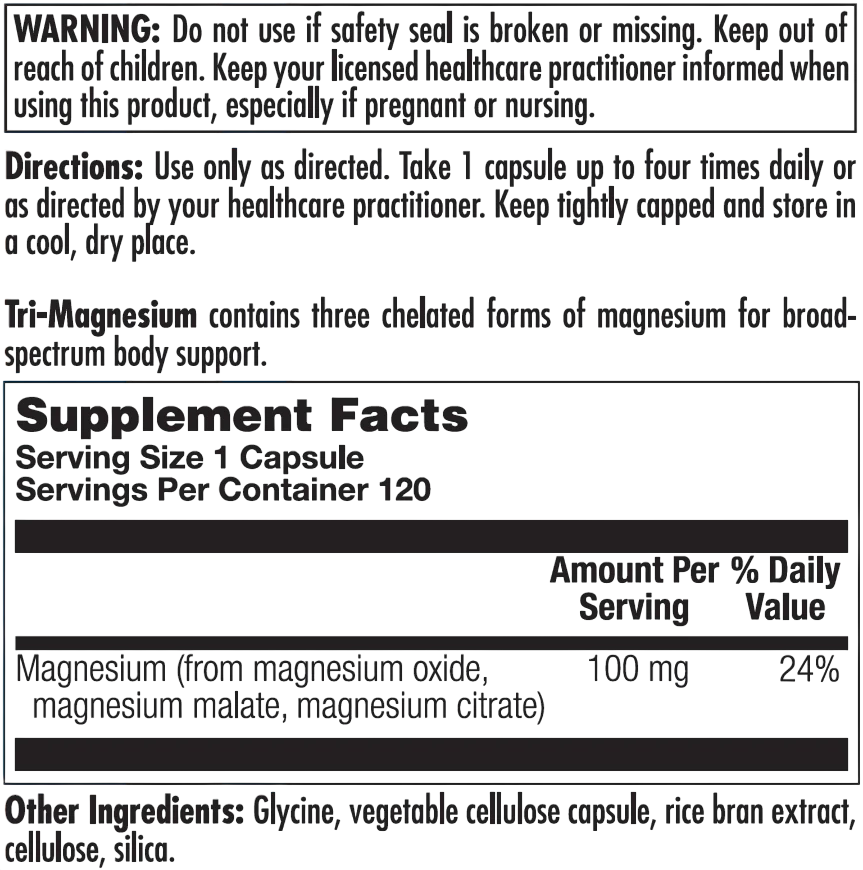
Suggested use: Use only as directed. Take 1 capsule up to four times daily or as directed by your healthcare practitioner. Keep tightly capped and store in a cool, dry place.
Active ingredients
1 capsule per serving · 120 servings
Magnesium
Magnesium Oxide, Magnesium Malate, Magnesium Citrate
Magnesium Oxide, Magnesium Malate, Magnesium Citrate
100 mg
Other ingredients: Glycine, Vegetable cellulose capsule, Rice bran extract, Cellulose, Silica
Certifications
Benefits
Warnings
Customers also considered

CereMag
Ortho Molecular Products
99 grams
$77.76$70.05 with Subscribe & Save

Dr. Formulated Magnesium Raspberry
Garden of Life
197.4 grams
$24.99$19.99 with Subscribe & Save

Dual-Mag Complex
Natura Health Products
90 capsules
$22.99$17.99 with Subscribe & Save

Mag Threonate
Ortho Molecular Products
60 capsules
$78.64$70.85 with Subscribe & Save