 Instalab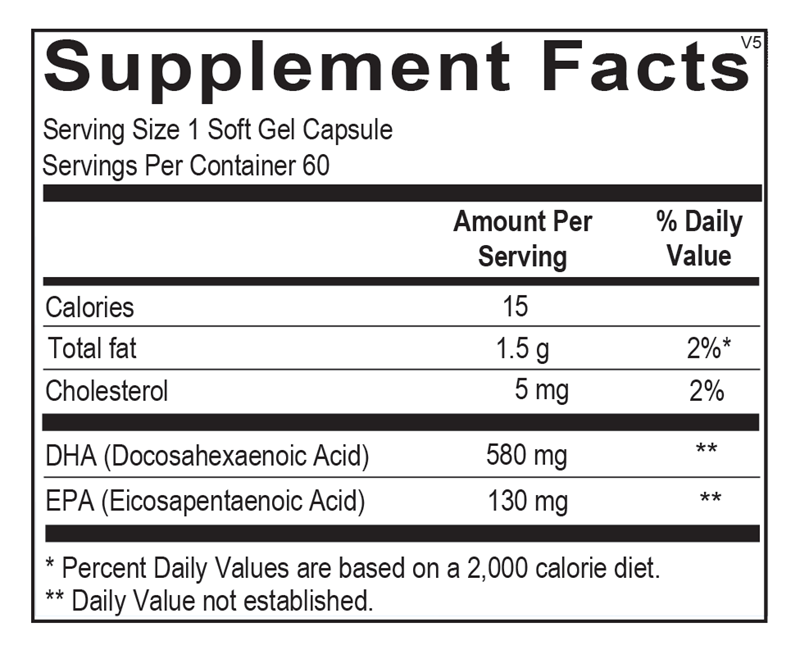

Ortho Molecular Products
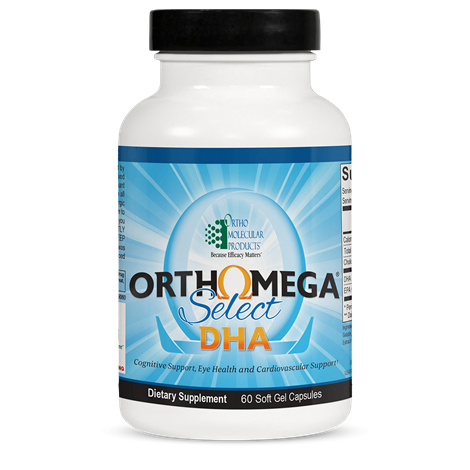
Orthomega® Select DHA by Ortho Molecular Products
60 capsules · 60-day supply
Premium DHA for Heart, Brain, and Eye Health Support$68.43
Purchase options
Practitioner-grade brand3rd-party testedFree shipping $50+
Gluten Free·Corn Free·Yeast Free·Artificial Color Free·Artificial Flavor Free
Ortho Molecular Products Orthomega® Select DHA overview
If you eat little to no seafood and want targeted brain and eye nutrition, a DHA supplement like this is a smart pick. It’s geared to people aiming to raise their Omega-3 Index (a red-blood-cell test that reflects your tissue omega-3 status) without a big EPA load. It also fits pregnancy planning or breastfeeding when seafood intake is low. If your triglycerides are elevated, this DHA‑heavy fish oil is not the go-to for lowering them.
DHA is the structural omega-3 that builds neuronal and retinal membranes, influencing how nerve cells signal and how photoreceptors process light. Compared with EPA, it’s more about membrane architecture than short-lived signaling. This formula delivers 580 mg DHA in the natural triglyceride form (the same form found in whole fish), which tends to absorb better than ethyl esters when taken with food. Expect the Omega-3 Index to rise over 8 to 12 weeks of steady intake.
Take one softgel daily with a meal that contains fat to improve absorption and reduce fishy burps. Consistency beats timing; morning or evening is fine. If your Omega-3 Index is low, recheck after 8 to 12 weeks to confirm you’ve moved into a healthier range. For those seeking triglyceride reduction, consider a higher EPA fish oil or a combined EPA+DHA dose guided by your lipid panel.
Skip fish oil if you have a fish or shellfish allergy. Use caution and talk to your clinician if you have a bleeding disorder, are on blood thinners like warfarin or high-dose aspirin, or have surgery scheduled soon. Vegans can reach the same target with algal DHA. If dry-eye or mood is your goal, evidence is mixed; give it 6 to 12 weeks and track symptoms alongside your Omega-3 Index and hs-CRP (an inflammation marker).
Frequently asked questions
Is DHA or EPA better for brain health?
For brain structure, DHA dominates because it’s built into neuronal membranes. EPA is more involved in short-term signaling and inflammation. Many people use DHA-heavy fish oil for brain and eye focus, and EPA-heavy fish oil for triglycerides and inflammatory symptoms.
How long does DHA take to work?
Blood levels rise steadily over 8–12 weeks. That’s when you’ll see a meaningful change in the Omega-3 Index. Symptom timelines vary: dry-eye and cognitive measures, when they improve, often do so within 6–12 weeks of consistent dosing with meals.
Does fish oil thin your blood?
At typical doses, fish oil has a mild anti-platelet effect (platelets help blood clot) but routine bleeding risk is low. If you’re on warfarin, direct oral anticoagulants, or high-dose aspirin, discuss dosing with your clinician and pause before procedures as advised.
Can I take DHA in pregnancy?
Yes, DHA is commonly used before and during pregnancy, and while breastfeeding, especially when seafood intake is low. Use a reputable, purified fish or algal oil and stay within your clinician’s recommended dose. Recheck the Omega-3 Index to confirm adequacy.
Will this lower my triglycerides?
Probably not much at this EPA level. Triglyceride reduction typically needs higher EPA or a higher total EPA+DHA dose. If your triglycerides are elevated, consider an EPA-focused fish oil and retest your lipid panel after 8–12 weeks.
How do I avoid fishy burps with DHA?
Take it with a fat-containing meal and store the bottle cool. If you’re sensitive, try taking it at night or briefly refrigerating the softgel. Consistent meals improve absorption and reduce aftertaste.
Is algal DHA as good as fish oil?
For raising blood DHA, high-quality algal oil works similarly and is a good choice for vegetarians and vegans. It usually has little to no EPA, so it’s best for brain and eye targets rather than triglyceride lowering.
How to take it & ingredients
Suggested use: 1 soft gel capsule per day or as recommended by your health care professional.
Active ingredients
1 capsule per serving · 60 servings
DHA (Docosahexaenoic Acid)
Natural triglyceride form
Natural triglyceride form
580 mg
EPA (Eicosapentaenoic Acid)
130 mg
Other ingredients: Gelatin, Glycerin, Water (Purified), Natural Flavors, Natural Tocopherols, Rosemary Extract (Leaf), Ascorbyl Palmitate
Certifications
Benefits
Warnings
Customers also considered
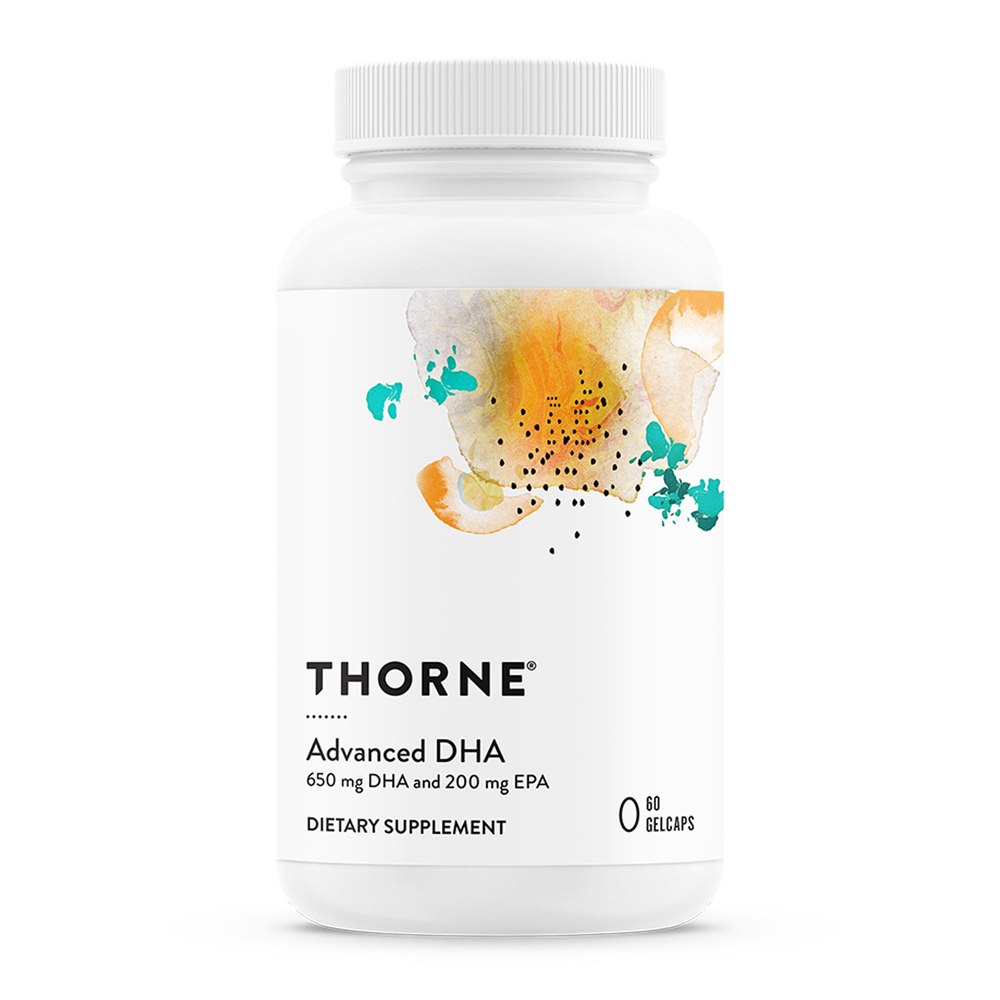
Advanced DHA
Thorne
60 gelcaps
$30.00$27.00 with Subscribe & Save
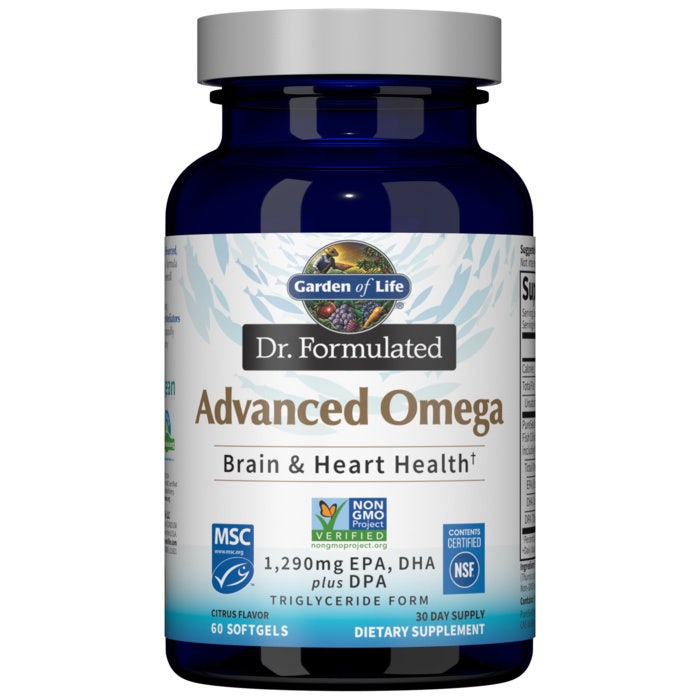
Dr. Formulated Advanced Omega
Garden of Life
60 softgels
$31.99$25.99 with Subscribe & Save
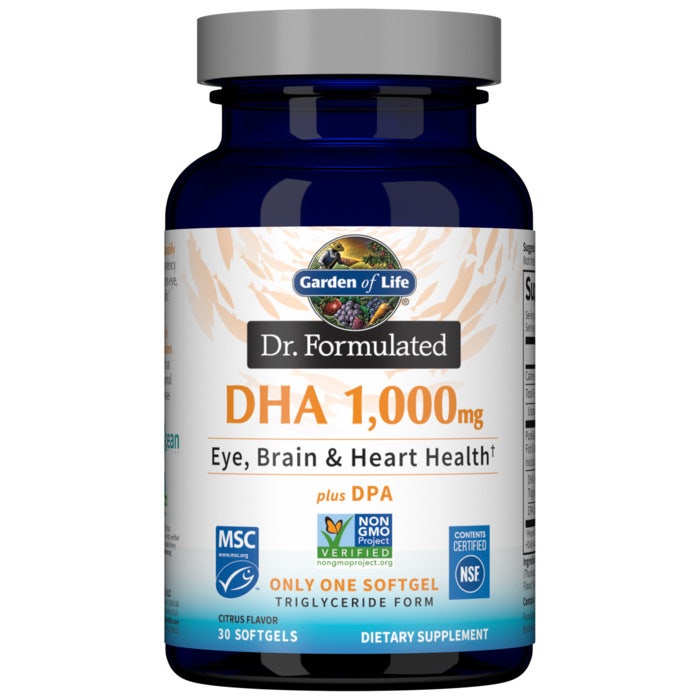
Dr. Formulated DHA 1g
Garden of Life
30 softgels
$31.99$25.99 with Subscribe & Save

Dr. Formulated Prenatal DHA
Garden of Life
30 softgels
$29.99$23.99 with Subscribe & Save