 Instalab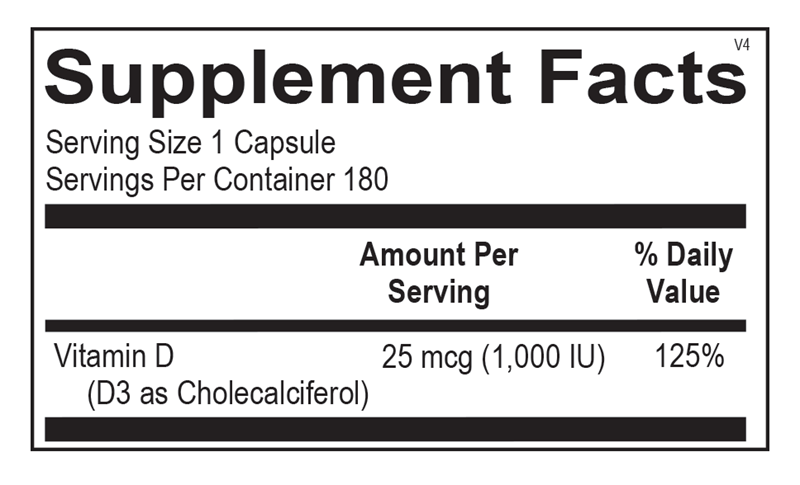

Ortho Molecular Products
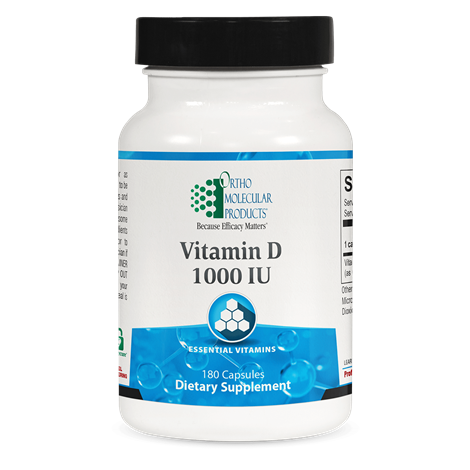
Vitamin D 1,000 IU by Ortho Molecular Products
180 capsules · 180-day supply
Essential Vitamin D for Bone, Immune, and Mood Support$37.91
Purchase options
Practitioner-grade brand3rd-party testedFree shipping $50+
Gluten Free·Yeast Free·Artificial Color Free·Artificial Flavor Free
Ortho Molecular Products Vitamin D 1,000 IU overview
If your Vitamin D, 25-Hydroxy is in the lower part of the normal range and you want a steady maintenance dose, vitamin D3 1,000 IU fits. It’s practical if you get little sun, have darker skin, use sunscreen consistently, or live at northern latitudes. People with higher body weight often need more than 1,000 IU. If your level is meaningfully low, this is usually too small for repletion and you’ll likely need a higher dose under clinician guidance, then step down.
Cholecalciferol (vitamin D3) is the form your skin makes from sunlight, and it’s better at raising blood levels than D2 (ergocalciferol). Your liver and kidneys turn D3 into the active hormone that increases calcium absorption from the gut and keeps parathyroid hormone (the signal that pulls calcium from bone) in check. That’s why adequate D3 supports bone density. The splashy infection claims from early COVID didn’t hold up in randomized trials, so don’t take it for that purpose.
Take one capsule daily with a meal that contains fat, which improves absorption. Morning or evening both work. Expect Vitamin D, 25-Hydroxy to rise within 4 to 12 weeks, so re-test after about 8 to 12 weeks and adjust. This is a maintenance-level dose; for those with established deficiency, clinicians typically use higher short-term dosing and then transition to 1,000–2,000 IU for upkeep.
Skip unsupervised vitamin D3 if you’ve had high calcium levels, recurrent kidney stones, sarcoidosis or other granulomatous disease (conditions that can overproduce active D). Thiazide diuretics (blood pressure meds that reduce calcium loss) increase risk of high calcium when combined. Orlistat and bile acid binders reduce absorption; separate dosing by several hours. If you take high-dose calcium, monitor calcium and Vitamin D, 25-Hydroxy with your clinician.
Frequently asked questions
Is 1,000 IU of vitamin D3 enough?
It’s a common maintenance dose if your Vitamin D, 25-Hydroxy isn’t low. If your level is low or you have risk factors (little sun, higher body weight), you’ll likely need more for a few months, then step down based on follow-up labs.
How long does vitamin D3 take to raise my levels?
Most people see a measurable rise in Vitamin D, 25-Hydroxy within 4–12 weeks. Re-test after about 8–12 weeks to see if the dose is working and adjust with your clinician.
Should I take vitamin D3 with food?
Yes. Vitamin D3 is fat-soluble, so take it with a meal that includes fat to improve absorption. Taking it on an empty stomach lowers uptake.
What’s the difference between D2 and D3?
D3 (cholecalciferol) raises and maintains blood vitamin D levels more effectively than D2 (ergocalciferol). For ongoing supplementation, D3 is generally preferred unless your clinician specifies D2.
Does vitamin D3 help prevent colds or COVID?
No reliable benefit. Randomized trials haven’t shown meaningful prevention or treatment effects for respiratory infections. Use vitamin D3 for bone and deficiency correction, not as an immune shield.
Can I take vitamin D3 with calcium or magnesium?
Yes, they’re often used together. If you take high-dose calcium, monitor blood calcium and Vitamin D, 25-Hydroxy to avoid overshooting. Magnesium can help the enzymes that activate vitamin D, but take as tolerated.
Is vitamin D3 vegan?
Most D3 is sourced from lanolin (sheep’s wool), not vegan. Some brands use lichen-derived D3; check the label. This formula typically uses lanolin-derived cholecalciferol.
Who should avoid vitamin D3 without medical guidance?
People with a history of high calcium, recurrent kidney stones, sarcoidosis, or those on thiazide diuretics should get clinician guidance and lab monitoring before taking vitamin D3.
How to take it & ingredients
Suggested use: Take 1 capsule per day or as recommended by your health care professional.
Active ingredients
1 capsule per serving · 180 servings
Vitamin D
D3 as Cholecalciferol
D3 as Cholecalciferol
25 mcg, 1000 IU
Other ingredients: Microcrystalline Cellulose, Hypromellose (Natural Vegetable Capsule), Magnesium Stearate, Silicon Dioxide, Stearic Acid
Certifications
Benefits
Warnings