 Instalab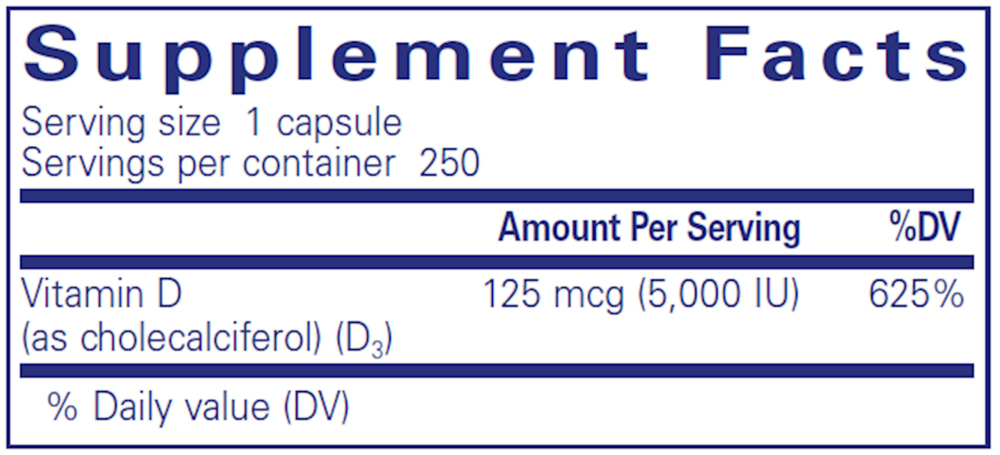

Pure Encapsulations
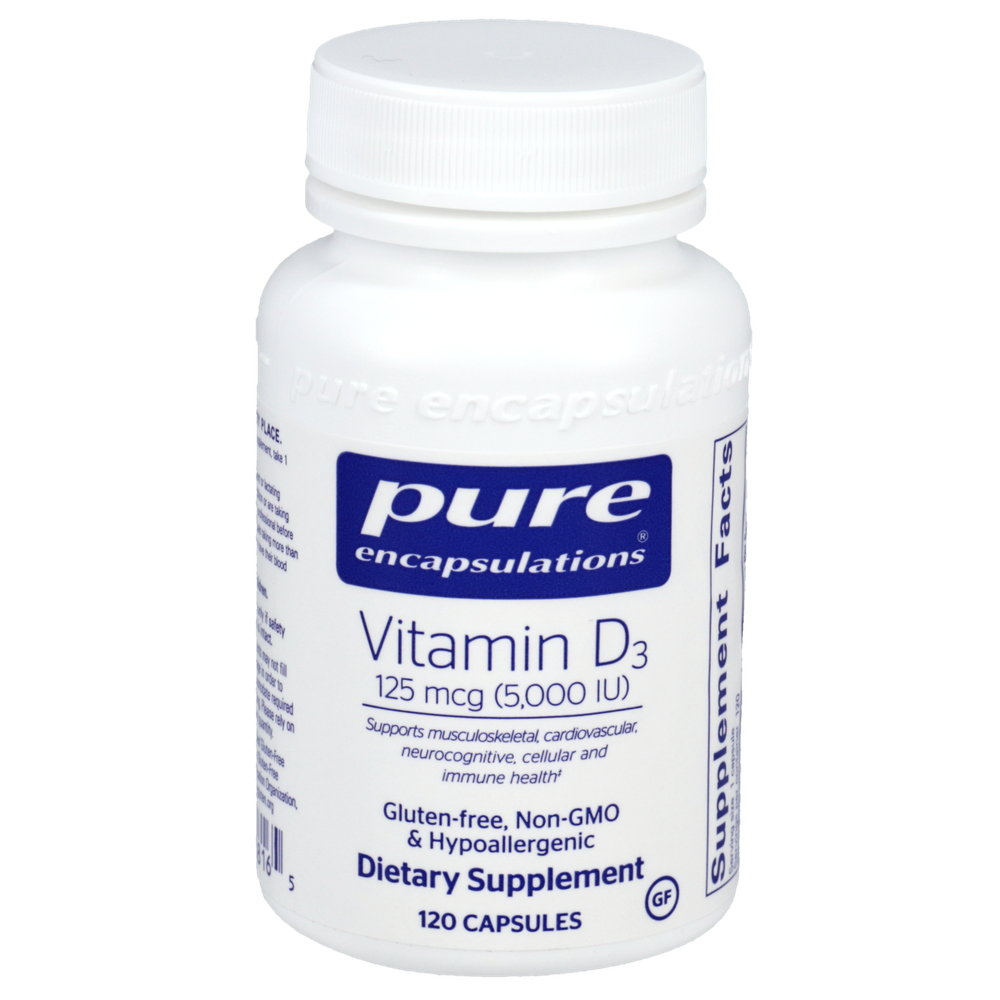
Vitamin D3 125mcg (5000 IU) by Pure Encapsulations
120 capsules · 120-day supply
Essential Vitamin D for Bone, Immune, and Mood Support$36.00
Purchase options
Practitioner-grade brand3rd-party testedFree shipping $50+
Vegetarian·Gluten Free
Pure Encapsulations Vitamin D3 125mcg (5000 IU) overview
This dose fits adults whose Vitamin D, 25-Hydroxy is low or in the lower part of the normal range and who want a time-limited repletion plan. It’s practical if you get little sun, have darker skin, live at northern latitudes, or carry more body weight, where smaller doses often underperform. It’s also useful after winter, for night-shift workers, or if absorption is reduced by restrictive diets, bariatric surgery, celiac disease, or inflammatory bowel disease. For long-term maintenance, many people step down to 1,000–2,000 IU once levels are stable.
Cholecalciferol (vitamin D3) is the form your skin makes from sunlight and it raises blood levels more reliably than D2 (ergocalciferol). Your liver and kidneys convert it to the active hormone that increases calcium absorption from the gut and helps regulate bone turnover. Adequate D3 keeps parathyroid hormone (the signal that pulls calcium from bone) in check, which is one reason fracture risk falls when vitamin D is paired with calcium in deficient adults. The hype around vitamin D preventing infections is mixed; large randomized trials show little to no benefit for most people.
Take one capsule daily with a meal that includes fat for better absorption. Recheck Vitamin D, 25-Hydroxy after 8–12 weeks to confirm the dose is doing what you expect, then taper to a maintenance dose once your level is where you want it. If you miss days frequently, a clinician may suggest less frequent higher dosing, but daily is simpler for most. Magnesium adequacy helps vitamin D work; calcium is individualized.
Skip or use only with medical guidance if you have a history of high blood calcium, recurrent kidney stones, granulomatous diseases like sarcoidosis, or primary hyperparathyroidism. Use caution if you take thiazide diuretics (blood pressure drugs that raise calcium), as the combination can push calcium too high. Orlistat (a fat-blocker) and bile acid resins reduce absorption, so timing and monitoring matter. Pregnancy and chronic kidney disease need clinician-set targets and dosing.
Frequently asked questions
How long does vitamin D3 5000 IU take to raise my levels?
Most people see a meaningful rise in Vitamin D, 25-Hydroxy within 4–12 weeks. Recheck at that point, then adjust to a lower maintenance dose once stable.
Should I take vitamin D3 with food or on an empty stomach?
Take it with a meal that contains fat. Vitamin D is fat-soluble, and absorption is significantly better when taken with dietary fat than on an empty stomach.
Is 5000 IU of vitamin D3 safe to take daily?
For adults correcting a low level, clinicians commonly use 5,000 IU short term with lab follow-up. Long-term use should be guided by Vitamin D, 25-Hydroxy and calcium monitoring.
What are signs I’m taking too much vitamin D?
Symptoms of high calcium include nausea, constipation, thirst, frequent urination, and fatigue. If these occur, stop and check calcium and Vitamin D, 25-Hydroxy promptly.
Does vitamin D3 help with immunity or colds?
Correcting a low level is reasonable, but large trials show little to no benefit for preventing infections in generally healthy adults with adequate vitamin D.
Is vitamin D3 better than D2?
Yes. D3 (cholecalciferol) raises and maintains Vitamin D, 25-Hydroxy more effectively than D2 (ergocalciferol) in head-to-head studies, so it’s the preferred form.
Can I take vitamin D3 with my other medications?
Separate from orlistat and bile acid resins to reduce absorption loss. Use caution with thiazide diuretics due to high-calcium risk. When in doubt, ask your clinician.
Do I need vitamin K2 with vitamin D3?
K2 is not required for vitamin D to work. Some choose it for bone health, but evidence that K2 meaningfully changes outcomes with D in healthy adults is limited.
How to take it & ingredients
Suggested use: Take 1 capsule per day with a meal.
Active ingredients
1 capsule per serving · 120 servings
Vitamin D
Cholecalciferol (D3)
Cholecalciferol (D3)
125 mcg, 5000 IU
Other ingredients: Hypoallergenic plant fiber (cellulose), Vegetarian capsule (cellulose, water)
Certifications
Benefits
Warnings