 Instalab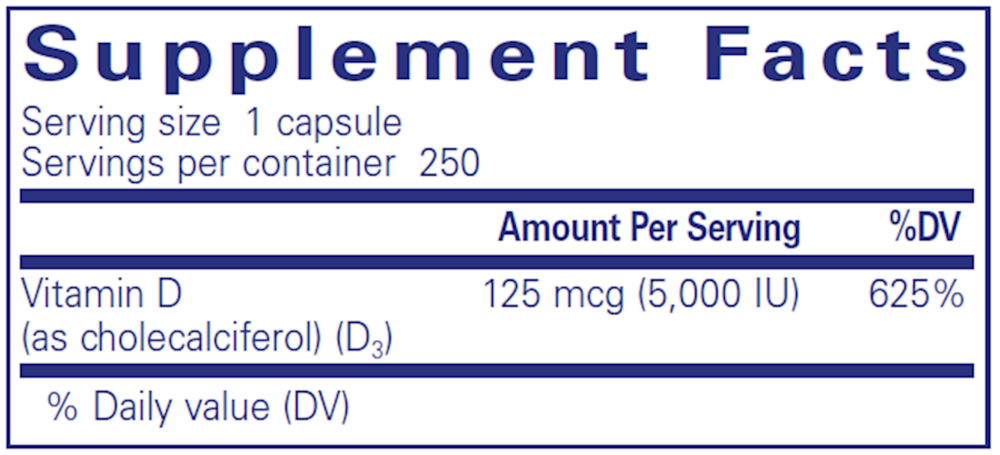

Pure Encapsulations
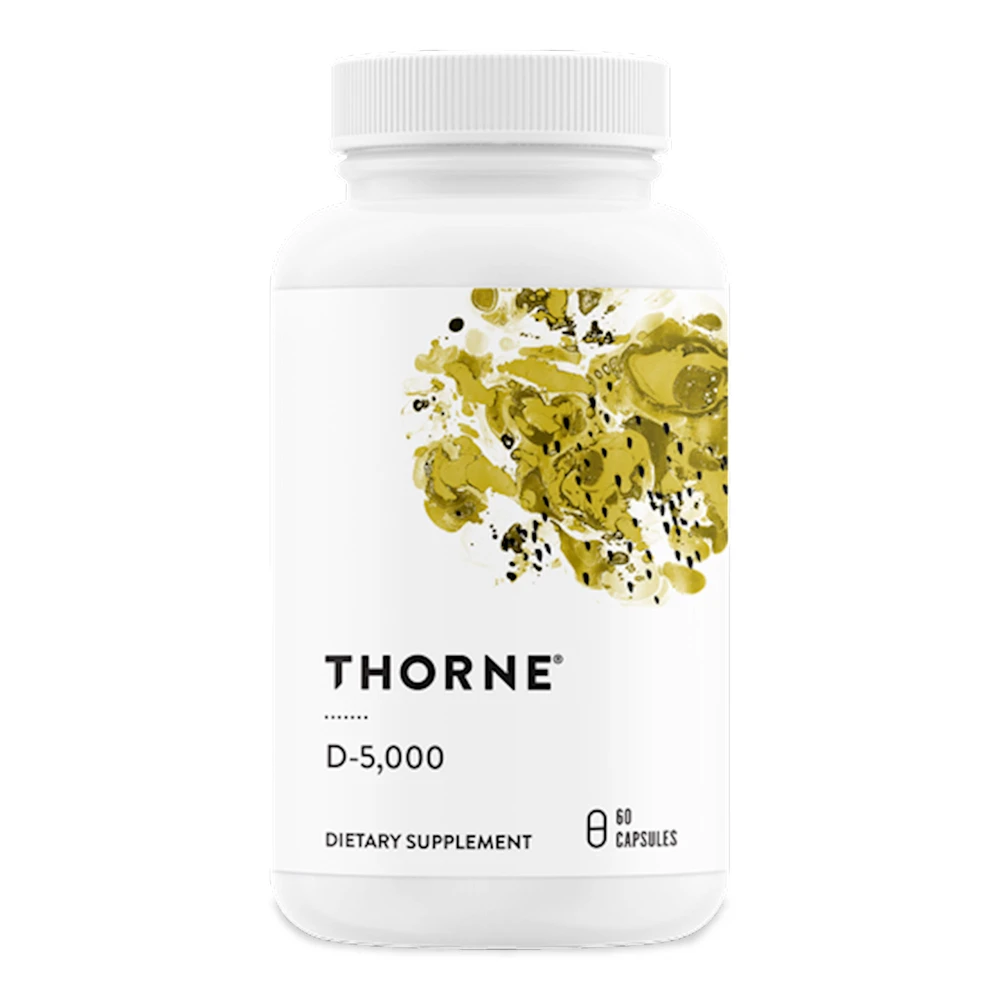
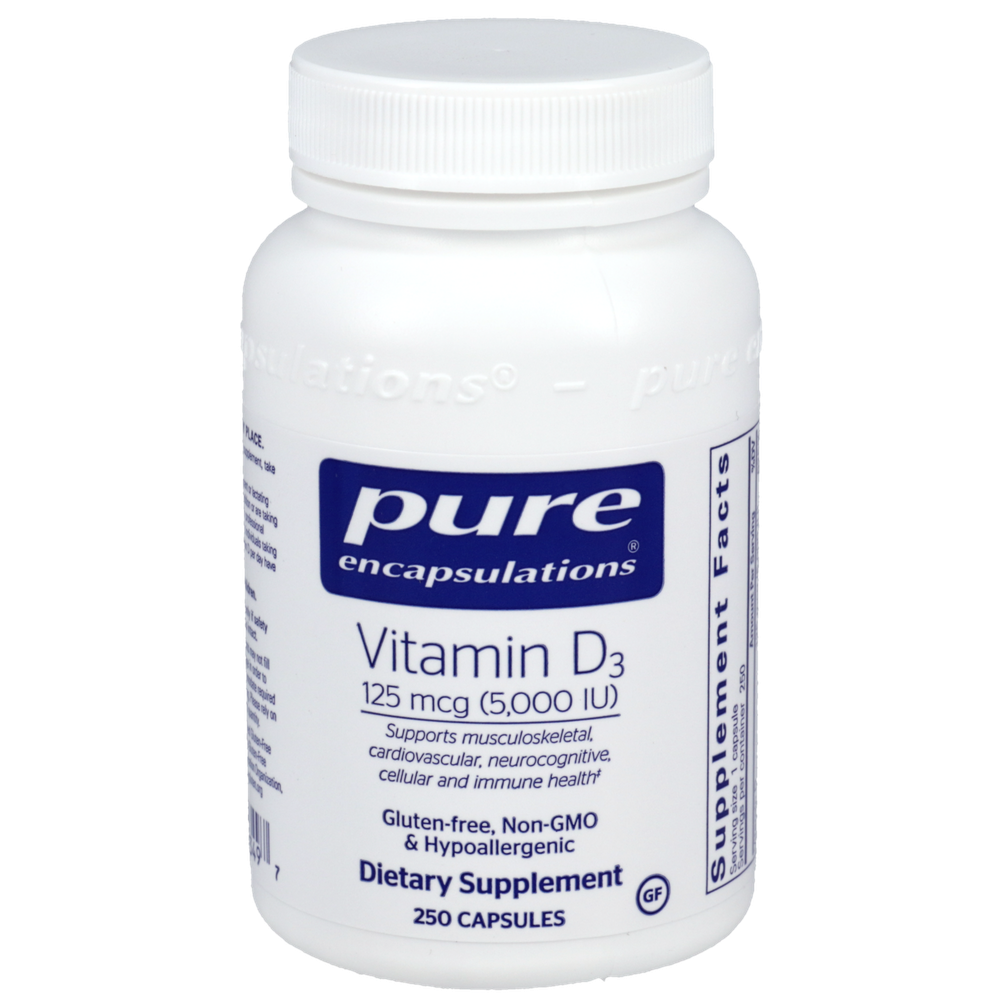
Vitamin D3 125mcg (5000 IU) by Pure Encapsulations
250 capsules · 250-day supply
Essential Vitamin D for Bone, Immune, and Mood Support$66.00
Purchase options
Practitioner-grade brand3rd-party testedFree shipping $50+
Vegetarian·Gluten Free
Pure Encapsulations Vitamin D3 125mcg (5000 IU) overview
This dose fits adults whose Vitamin D, 25-Hydroxy is low or in the lower end of normal and who want a time-limited repletion plan. It’s a practical pick if you get little sun, have darker skin, use sunscreen consistently, live at northern latitudes, have higher body weight, or have malabsorption (celiac, bariatric surgery, inflammatory bowel disease). If your level is very low, you may need a clinician-directed loading phase first, then step down. For long-term maintenance once replete, many do better with lower daily vitamin D3.
Cholecalciferol (vitamin D3) is the form your skin makes from sunlight and is generally more effective than D2. Your liver and kidneys convert it into the active hormone that increases calcium absorption from the gut and helps regulate bone turnover. Adequate D3 keeps parathyroid hormone (the signal that pulls calcium from bone) in check, which preserves bone density over time. Interest in D3 for immunity and mood is high, but effects are modest and clearest in people who were deficient to begin with.
Take one capsule daily with a meal that contains fat; absorption is better with dietary fat. Recheck Vitamin D, 25-Hydroxy in 8 to 12 weeks and adjust. If you overshoot and your Calcium runs high on labs or you develop symptoms (thirst, frequent urination), stop and contact your clinician. Once your level is in a comfortable range, shift to a maintenance dose, often 1,000–2,000 IU daily depending on sun exposure and body weight.
Thiazide diuretics (water pills for blood pressure) plus vitamin D3 can raise Calcium too high; monitor if used together. Orlistat and bile acid sequestrants like cholestyramine reduce absorption—separate dosing by several hours. Long-term steroids and some anti-seizure drugs lower vitamin D status, which can justify this dose with lab follow-up. Combine with high-dose calcium only if your labs and diet suggest you need it, to avoid high calcium.
Avoid unsupervised vitamin D3 if you have a history of high calcium, recurrent kidney stones, primary hyperparathyroidism, or granulomatous diseases like sarcoidosis or tuberculosis (these can overproduce active vitamin D). Pregnancy and breastfeeding are generally fine with vitamin D, but dosing should follow your clinician’s plan with periodic Vitamin D, 25-Hydroxy checks.
Frequently asked questions
How long does vitamin D3 5000 IU take to raise my levels?
Most people see meaningful changes in Vitamin D, 25-Hydroxy within 8 to 12 weeks. Re-test then and adjust. The lower your starting level and the higher your body weight, the longer it can take.
Should I take vitamin D3 with food or at night?
Take it with a meal that contains fat; absorption is better. Morning or evening is personal preference. Consistency matters more than time of day.
Do I need vitamin K2 with vitamin D3?
Vitamin K2 helps direct calcium into bone, but it isn’t required to take vitamin D3 safely. If you add K2, avoid it with warfarin and discuss with your clinician.
Can vitamin D3 cause kidney stones?
High calcium on labs, especially when combined with high-dose calcium supplements, can raise stone risk. Use vitamin D3 based on labs, monitor Calcium, and avoid unnecessary calcium co-supplementation.
Is vitamin D3 safe if I’m on blood pressure meds?
If you take a thiazide diuretic (hydrochlorothiazide, chlorthalidone), monitor Calcium and Vitamin D, 25-Hydroxy with your clinician. Other blood pressure meds are not a typical issue.
Does vitamin D3 prevent colds or COVID?
It hasn’t panned out as a general infection blocker. People who are deficient may see small benefits, but vitamin D3 shouldn’t replace vaccines or standard care.
Can I take vitamin D3 every other day or weekly?
Daily dosing with meals gives steady absorption, but the total weekly amount is what matters most. If you prefer non-daily schedules, confirm the plan with your clinician and follow-up labs.
What symptoms suggest I’m getting too much vitamin D3?
Warning signs of high calcium include nausea, constipation, thirst, and frequent urination. Stop the supplement and get Calcium and Vitamin D, 25-Hydroxy checked if these occur.
How to take it & ingredients
Suggested use: Take 1 capsule per day with a meal.
Active ingredients
1 capsule per serving · 250 servings
Vitamin D
Cholecalciferol (D3)
Cholecalciferol (D3)
125 mcg, 5000 IU
Other ingredients: Hypoallergenic plant fiber (cellulose), Vegetarian capsule (cellulose, water)
Certifications
Benefits
Warnings