 Instalab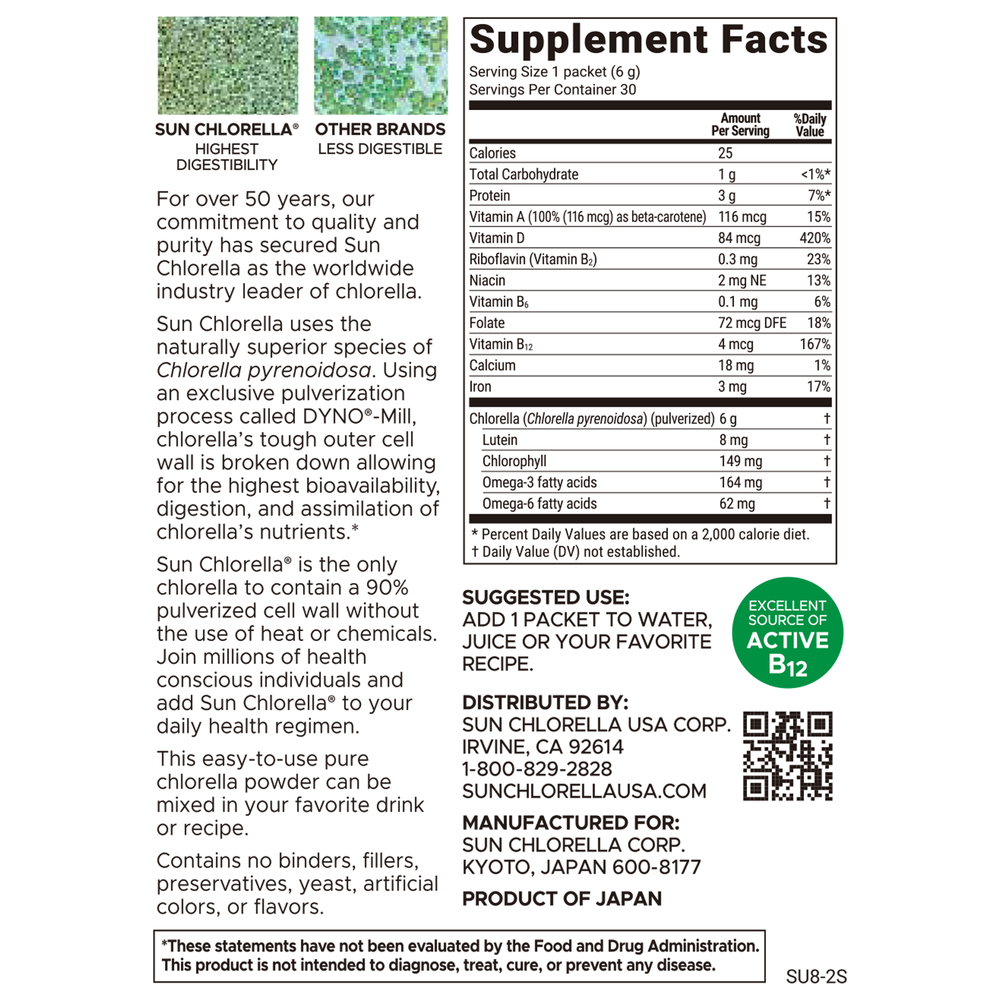

Sun Chlorella
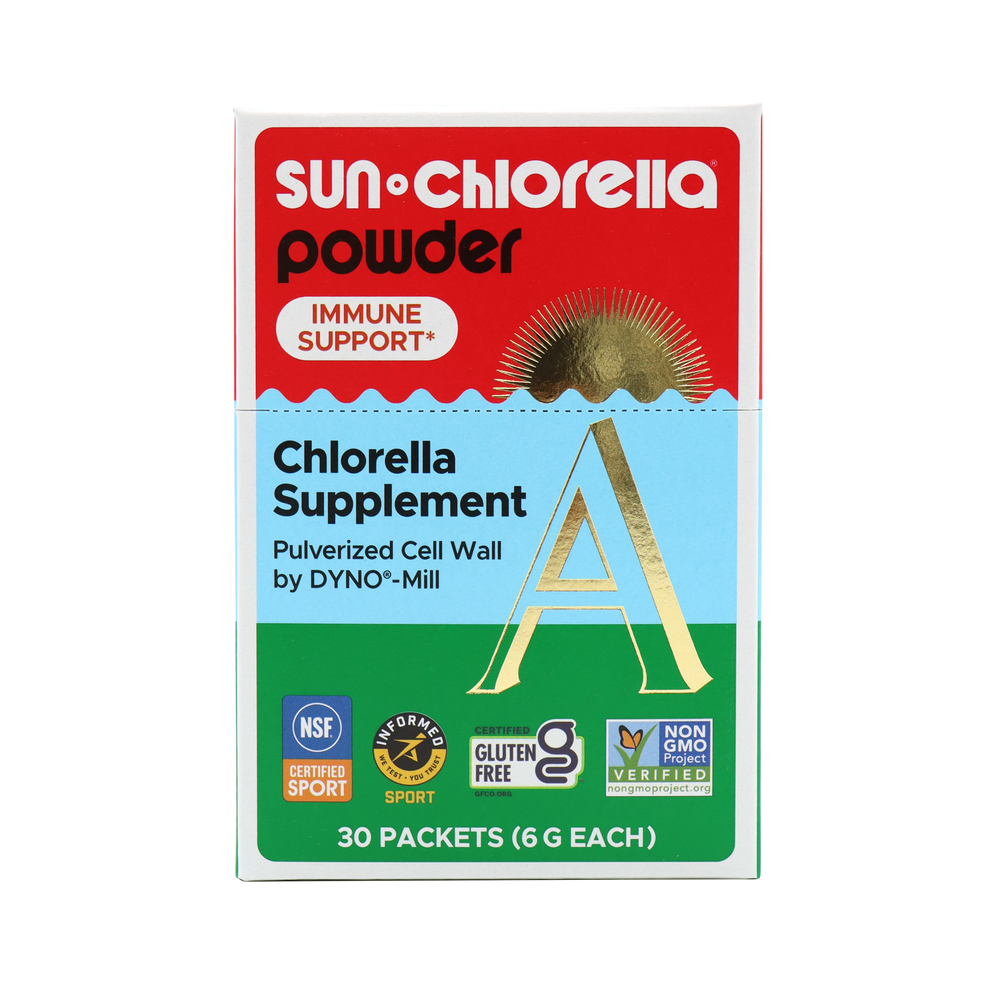
Sun Chlorella A Powder by Sun Chlorella
30 packets · 30-day supply
Nutrient-Dense Superfood for Daily Vitality and Wellness$123.99
Purchase options
Practitioner-grade brand3rd-party testedFree shipping $50+
Vegan·Vegetarian·Gluten Free·Soy Free·Yeast Free·Preservative Free·
Sun Chlorella Sun Chlorella A Powder overview
If you’re searching “chlorella powder benefits,” this fits plant-forward eaters who want a real-food source of chlorophyll and B vitamins, with a meaningful dose of vitamin D. It’s a practical add-in if your Vitamin D, 25-Hydroxy runs low and you prefer food-based formats over pills. Vegans and vegetarians with borderline Vitamin B12 or Folate may find it useful for daily maintenance, though you shouldn’t rely on chlorella as your only B12 source. If iron runs low, the 3 mg here helps a bit but won’t replace an iron repletion plan guided by Ferritin and Iron studies.
This chlorella is Chlorella pyrenoidosa with a pulverized cell wall, which improves access to its nutrients compared with intact-wall powders. The algae delivers chlorophyll (the green pigment that carries antioxidants), carotenoids like beta carotene (a vitamin A precursor), and a listed vitamin D dose. These compounds feed into normal antioxidant defenses and, in practice, can nudge labs like Vitamin D, 25-Hydroxy upward within 4 to 12 weeks. Claims about “detox” mostly come from lab studies where chlorella binds metals; real-world human data are limited, so treat detox promises cautiously.
Use one packet daily in water, juice, or a smoothie, ideally with a meal that contains some fat to improve absorption of vitamin D and carotenoids. New to algae? Start with half a packet for a week to reduce the chance of mild gas or a green stool surprise. Re-check Vitamin D, 25-Hydroxy after 8 to 12 weeks. If your level is still low, this daily amount may be maintenance only, and you’ll likely need a higher-dose vitamin D plan from your clinician.
Chlorella is naturally high in vitamin K, so avoid or clear it with your prescriber if you’re on warfarin (vitamin K antagonizes the drug’s effect). The listed vitamin D per packet is substantial; use caution if you have a history of high calcium, recurrent kidney stones, or granulomatous disease like sarcoidosis. Iron overload disorders are another reason to reconsider. For B12, remember algae sources are inconsistent; verify with Vitamin B12 and Methylmalonic Acid rather than assuming coverage.
Frequently asked questions
Is chlorella a reliable source of vitamin B12?
No, don’t rely on chlorella as your only B12 source. Some algae contain B12-like compounds that don’t function well in humans. If you’re vegan or borderline, use a B12 supplement and confirm with Vitamin B12 and Methylmalonic Acid testing.
How long does chlorella powder take to work?
For vitamin D content and general nutrient repletion, expect 4 to 12 weeks before you see changes on labs like Vitamin D, 25-Hydroxy. Subjective effects like digestion or energy vary and often show up within a few weeks, if at all.
Does chlorella help with detox or heavy metals?
Evidence in humans is limited. Chlorella can bind metals in lab settings and animal studies, but clinical data are mixed. If detox is your goal, work with a clinician and monitor appropriate labs rather than assuming chlorella will handle it.
Can I take chlorella with warfarin?
Usually no. Chlorella is high in vitamin K, which counteracts warfarin. If you’re on warfarin and want to use chlorella, involve your anticoagulation clinic for possible dose adjustments and closer INR monitoring.
Should I take chlorella with food or on an empty stomach?
With food is better. Dietary fat improves absorption of fat-soluble nutrients in chlorella, including vitamin D and carotenoids like beta carotene. Taking it with meals also tends to reduce minor digestive side effects.
What side effects should I watch for with chlorella?
Most are mild: gas, green stools, or a transient upset stomach. Rarely, people notice skin sensitivity or allergy-like symptoms. If you have a history of high calcium or kidney stones, be cautious due to the vitamin D content.
Is chlorella safe in pregnancy or breastfeeding?
Data are limited. Some clinicians use it for nutrient density, but safety hasn’t been firmly established. If you’re pregnant or breastfeeding, discuss with your obstetric provider and monitor labs like Ferritin and Vitamin B12 rather than self-experimenting.
How to take it & ingredients
Suggested use: Add one packet to water, juice, or a favorite recipe daily.
Active ingredients
1 packet per serving · 30 servings
▼
Chlorella pyrenoidosa
Pulverized cell wall
Pulverized cell wall
6 g
Lutein
8 mg
Chlorophyll
149 mg
Omega 3 fatty acids
164 mg
Omega 6 fatty acids
62 mg
Vitamin A
Beta carotene
Beta carotene
116 mcg
Vitamin D
84 mcg
Riboflavin
0.3 mg
Niacin
2 mg
Vitamin B6
0.1 mg
Folate
72 mcg
Vitamin B12
4 mcg
Calcium
18 mg
Iron
3 mg
Certifications
Benefits
Warnings
Customers also considered
Daily Greens Plus
Thorne
204 grams
$72.00$64.80 with Subscribe & Save
Fermented Chlorella with Chlorophyll
Dr. Mercola
450 tablets
$22.99$17.99 with Subscribe & Save
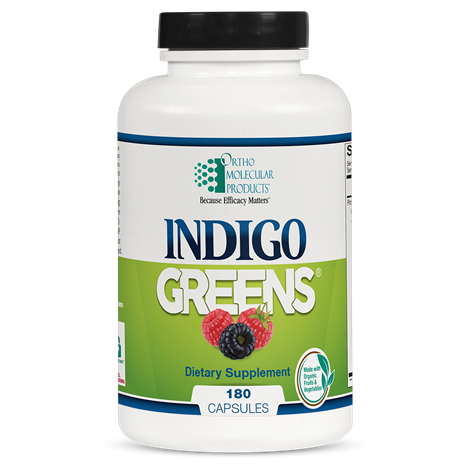
Indigo Greens Capsules
Ortho Molecular Products
180 capsules
$94.85$85.45 with Subscribe & Save
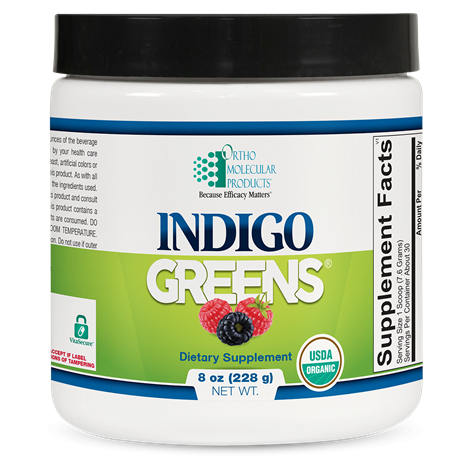
Indigo Greens Powder
Ortho Molecular Products
228 grams
$83.42$75.15 with Subscribe & Save