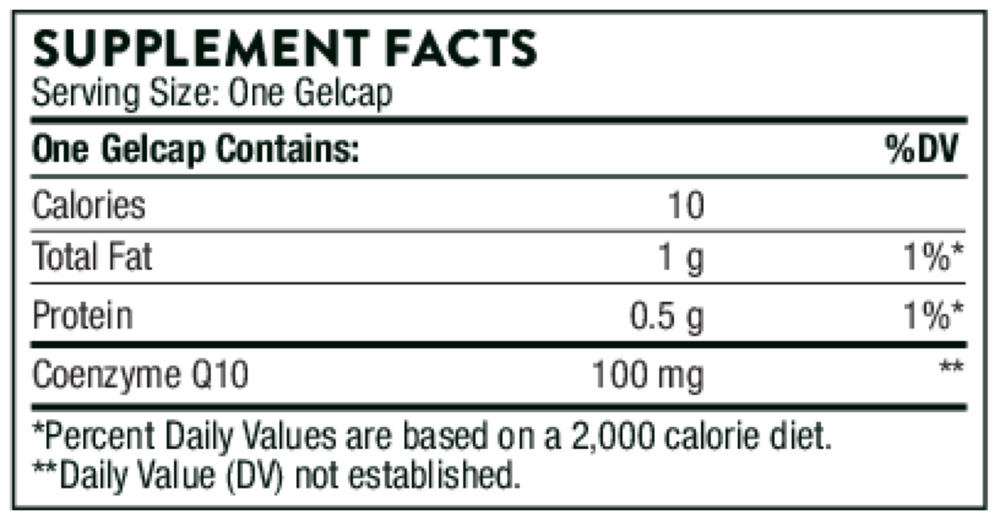
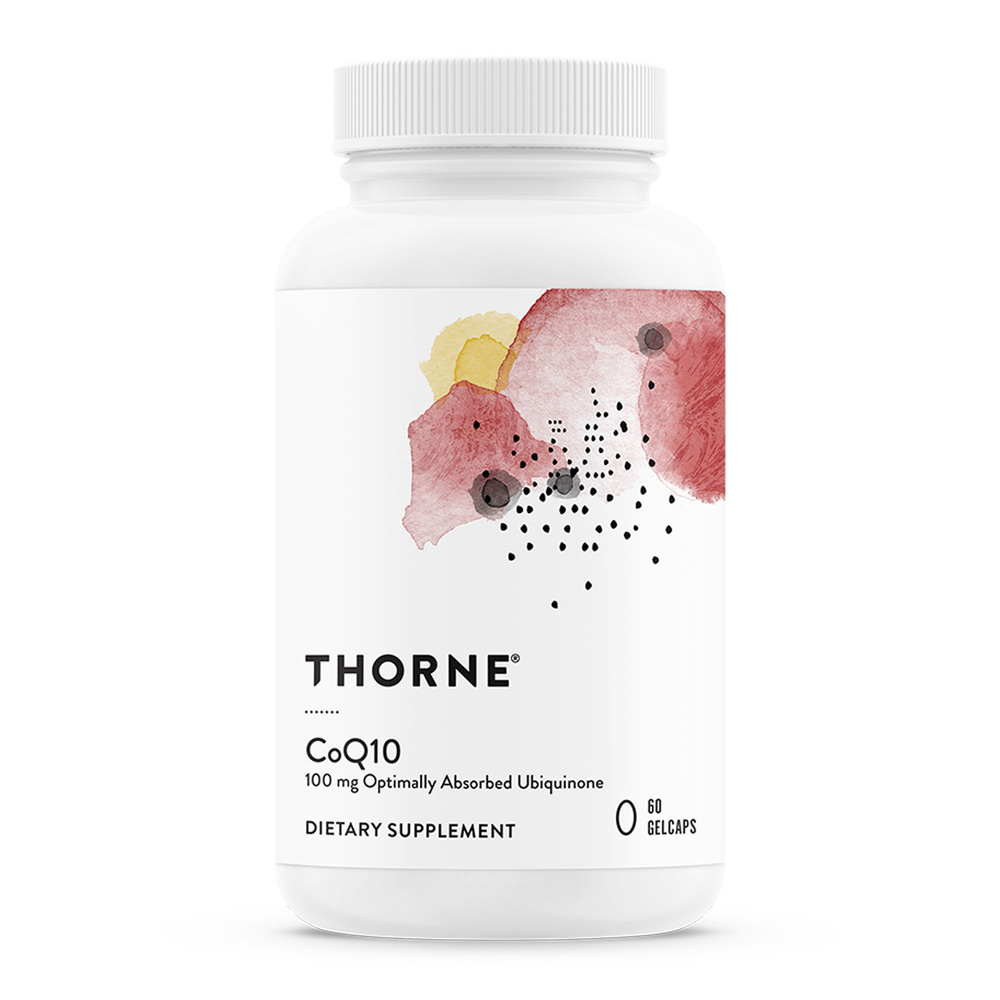
If you are looking for a daily CoQ10 supplement, this 100 mg gelcap is a practical maintenance dose. It fits adults who want to support cellular energy production and exercise stamina, those whose endogenous CoQ10 production declines with age, and people taking medications that the manufacturer notes can deplete CoQ10 over time. For higher targeted goals, dosing is sometimes split across the day to keep blood levels steady.
Coenzyme Q10 sits in mitochondria, where it shuttles electrons in the chain that converts food into ATP, the cell's energy currency. The manufacturer describes CoQ10 as an essential nutrient for cellular energy production and an important factor in protecting against oxidative stress through enhancement of glutathione activity, the body's master antioxidant. Thorne's lipid-based, non-crystalline form is presented as nearly three times better absorbed than ubiquinol and better absorbed than dry powder, oil, nanoparticle, or liposomal preparations.
Take 1 gelcap one to two times daily with a meal that contains some fat, as Thorne directs. Food meaningfully improves absorption of CoQ10 because it is fat-soluble. If you go above 100 mg per day, splitting doses (morning and midday) keeps blood levels steadier. CoQ10 can feel mildly energizing for a small share of users, so an earlier-in-the-day pattern works best if it disturbs your sleep.
If you take warfarin, are pregnant or breastfeeding, or are on cancer therapy, talk to your clinician before starting and review the warnings below.
Energy and exercise tolerance shifts often emerge within 2 to 4 weeks. Other goals tend to take 8 to 12 weeks of steady daily use before you can judge.
Yes. CoQ10 is fat-soluble, and a meal that contains fat meaningfully improves absorption. Breakfast or lunch works for most.
For maintenance, yes. If your goals are higher, 200 to 300 mg per day is sometimes used short-term, then stepped back down. Talk to your clinician about what fits your situation.
They are two forms of CoQ10. The manufacturer's lipid-based ubiquinone gelcap here is described as nearly three times better absorbed than ubiquinol when taken with food.
It can lower INR and reduce warfarin's effect. If you take warfarin, do not start without clinician oversight. CoQ10 does not meaningfully change levels of newer direct oral anticoagulants in the same way.
Generally well tolerated. Mild stomach upset, nausea, or trouble sleeping if taken late are the most common; food and earlier dosing usually fix this.