 Instalab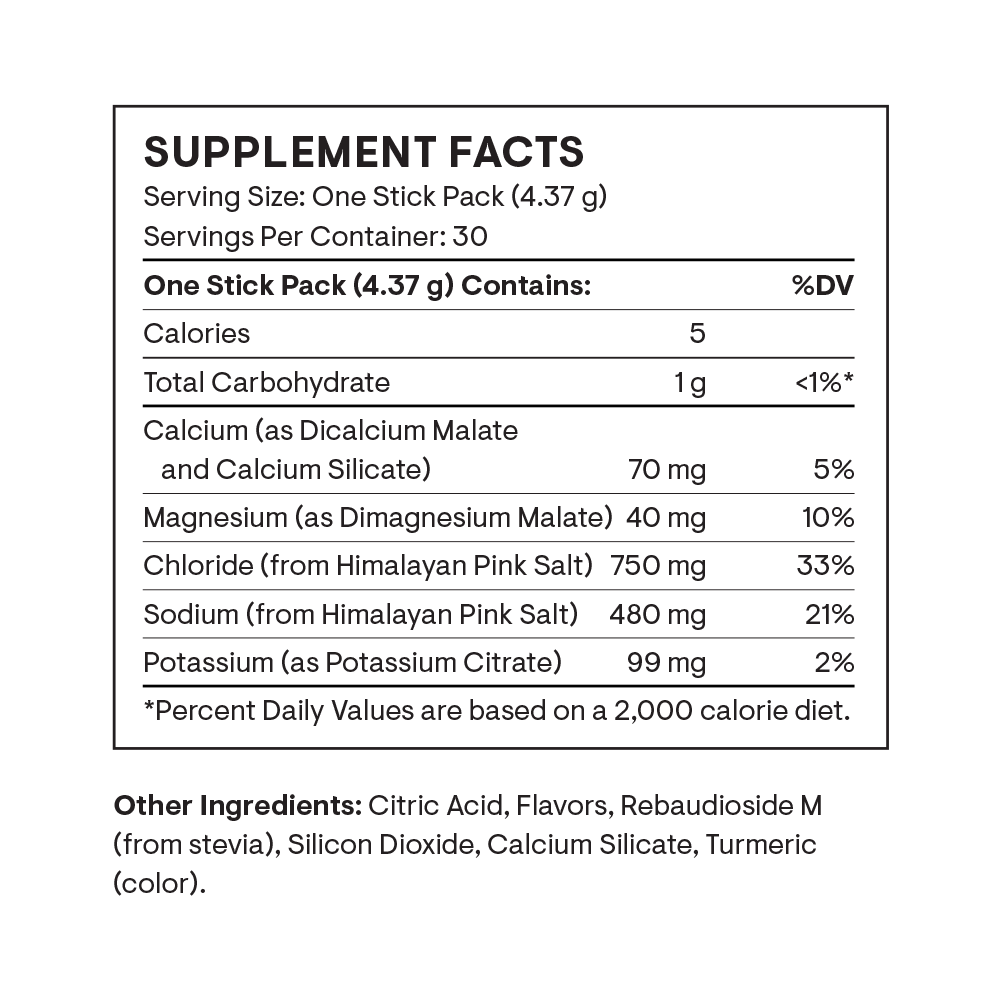


Thorne
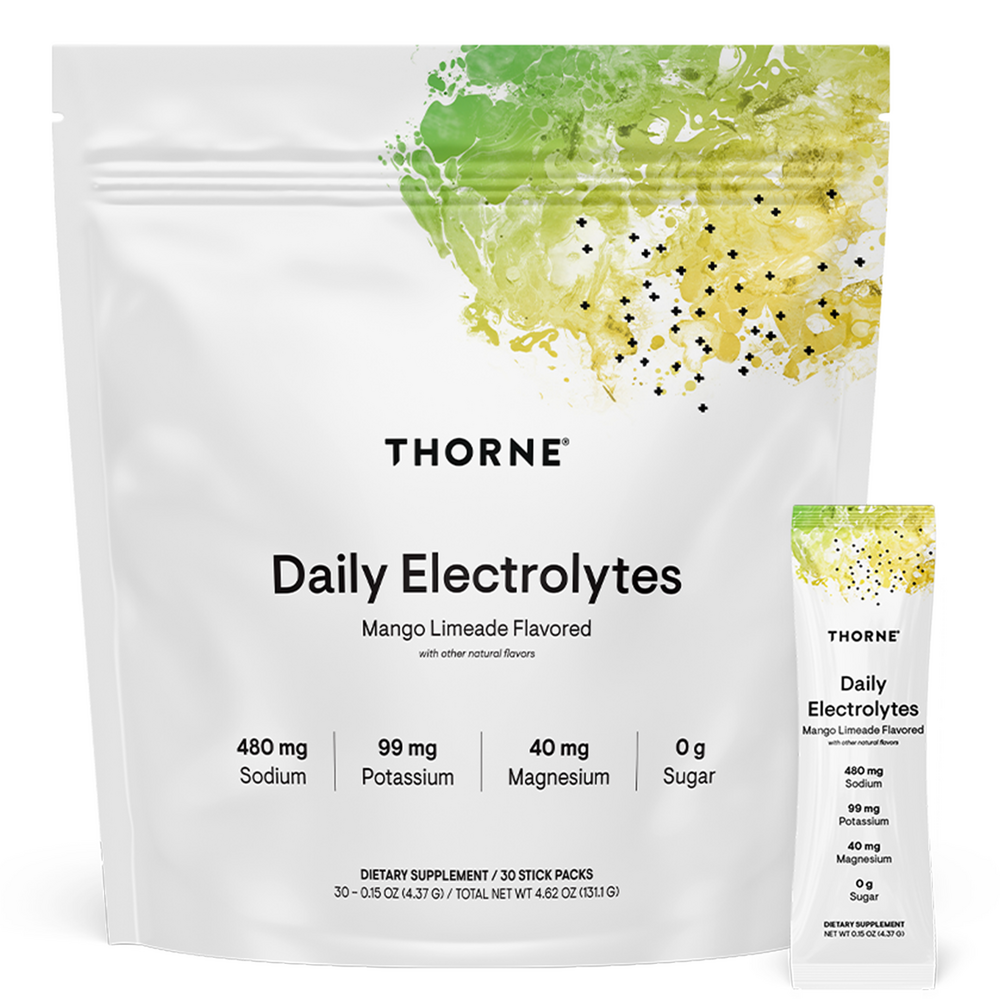
Daily Electrolytes Mango Limeade by Thorne
30 packets · 30-day supply
Hydration Support with Essential Electrolytes for Optimal Performance$40.00
Purchase options
Practitioner-grade brand3rd-party testedFree shipping $50+
Gluten Free·Soy Free·Dairy Free
Thorne Daily Electrolytes Mango Limeade overview
Hot-weather training, long sauna sessions, and low-carb or keto diets all raise salt needs, so an electrolyte powder is practical if you feel heavy-sweat fatigue, cramping, or lightheadedness on standing. This mix suits athletes, heavy sweaters, and people who avoid sugary sports drinks. If your Basic Metabolic Panel shows lower-normal Sodium or you’re prone to muscle cramps, a sodium-forward formula like this can help stabilize hydration during workouts or travel.
Sodium and chloride pull water into the bloodstream from the gut, improving fluid retention versus plain water. Potassium (from potassium citrate) balances electrical activity in nerves and muscles, helping reduce exercise-associated cramps. A small amount of calcium supports muscle contraction signals. Compared to sugar-based sports drinks, this zero-sugar blend replaces the minerals you lose in sweat without a glucose hit. For endurance over about 90 minutes, pair it with a carbohydrate source to maintain energy and enhance sodium-glucose water uptake.
Mix one stick with at least 12 ounces of water, then adjust to sweat rate and climate. Before or during training, many athletes use one stick per 16–24 ounces every 45–90 minutes; lighter sessions or cooler days often need less. If you’re salt-sensitive, start with half a stick. For long efforts, add carbs from food or a separate drink. You can track response with body weight change across sessions and urine color.
If you have high blood pressure, heart failure, kidney disease, or you’re on diuretics, ACE inhibitors, ARBs, or spironolactone, ask your clinician before using a sodium- and potassium-containing powder. The same goes if you’re on a fluid restriction or have a history of kidney stones requiring strict citrate or calcium guidance. Pregnancy with hypertension needs individualized advice. Check Sodium and Potassium on a Basic Metabolic Panel if you’re unsure about your baseline.
Frequently asked questions
Is electrolyte powder better than water for hydration?
For heavy sweating or long workouts, yes. Sodium and chloride help your gut pull in and retain more water than plain water alone. For everyday light activity, water is usually fine.
How many electrolyte packets can I take in a day?
Most active adults use 1–3 sticks spread through training or hot days. Match intake to sweat rate and thirst. If you’re salt-sensitive or have hypertension, start lower and discuss limits with your clinician.
Does this electrolyte mix have sugar or artificial sweeteners?
It’s zero sugar. If you’re training longer than about 90 minutes, add a carbohydrate source separately for energy and to support sustained performance.
Will electrolytes help with muscle cramps?
They often help if cramps are sweat and salt related. Sodium, potassium, and calcium support normal muscle firing. If cramps persist at rest, get evaluated for other causes and check Magnesium and Potassium.
Is it safe to use electrolytes with high blood pressure?
Use caution. This formula contains 480 mg sodium per stick. If you have hypertension or are salt-sensitive, talk to your clinician and consider smaller servings.
Can I use this on keto or during fasting?
Yes. Low-carb diets increase sodium loss, so electrolytes can prevent fatigue and dizziness. It’s zero calorie, so it won’t break a fast in the metabolic sense.
Which labs can guide electrolyte use?
Basic Metabolic Panel (Sodium, Potassium, Chloride) is the starting point. Urine Specific Gravity reflects hydration status. In heat-acclimated athletes, periodic checks help personalize intake.
How fast will I feel a difference?
Most people notice better thirst relief and energy within 30–60 minutes, especially in heat or during workouts. For recurring issues, assess over several sessions and adjust dose.
How to take it & ingredients
Suggested use: Mix 1 stick pack with at least 12 ounces of water daily or as recommended by your health-care practitioner.
Active ingredients
1 packet = 4.37 grams per serving · 30 servings
Calcium
Dicalcium Malate, Calcium Silicate
Dicalcium Malate, Calcium Silicate
70 mg
Chloride
Himalayan Pink Salt
Himalayan Pink Salt
750 mg
Sodium
Himalayan Pink Salt
Himalayan Pink Salt
480 mg
Potassium
Potassium Citrate
Potassium Citrate
99 mg
Other ingredients: Citric Acid, Flavors, Rebaudioside M (from stevia), Silicon Dioxide, Calcium Silicate, Turmeric (color)
Certifications
Benefits
Warnings
Customers also considered
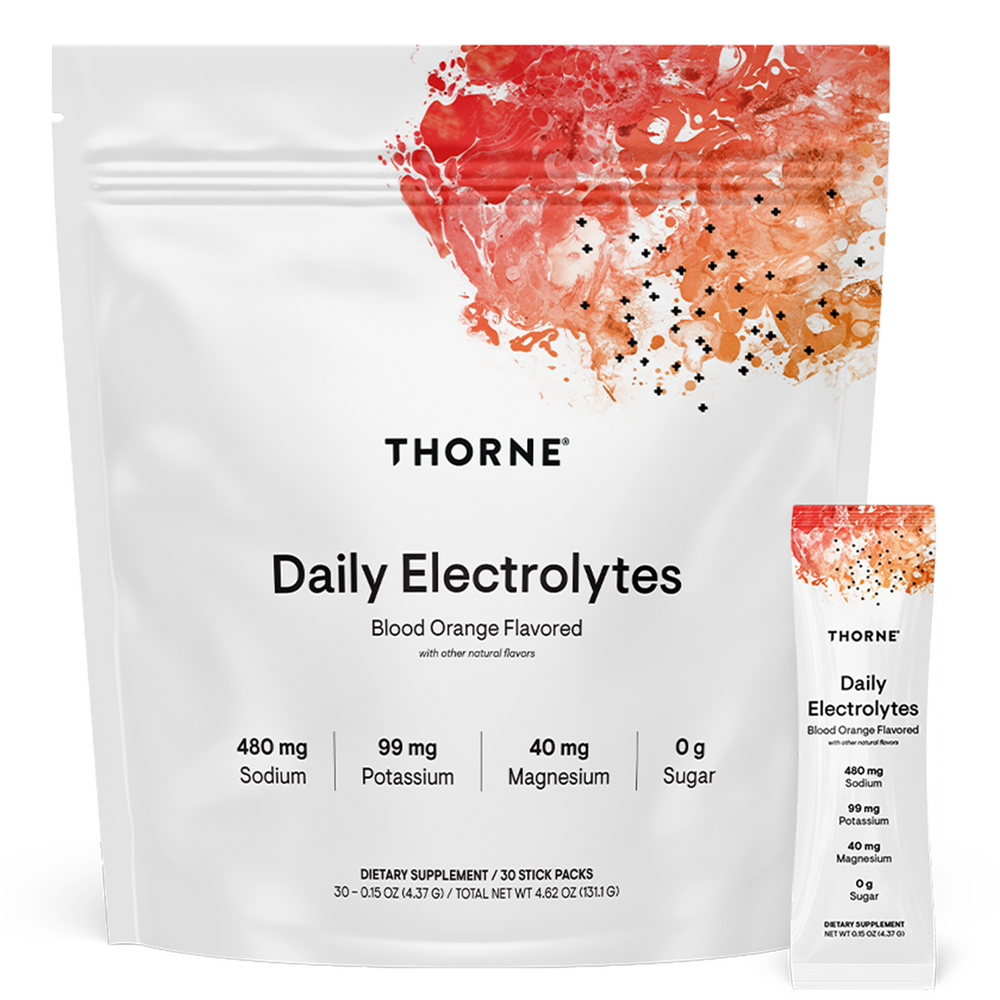
Daily Electrolytes Blood Orange
Thorne
30 packets
$40.00$36.00 with Subscribe & Save
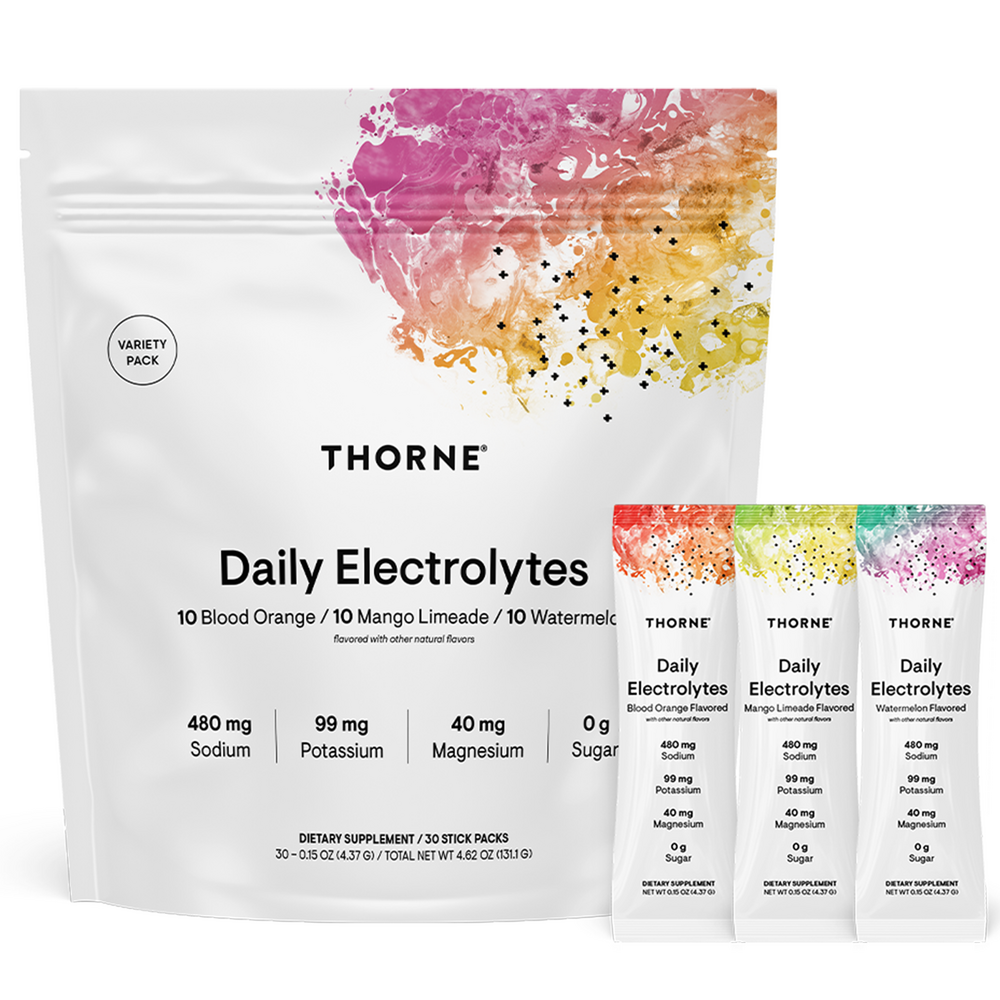
Daily Electrolytes Variety Pack
Thorne
30 packets
$40.00$36.00 with Subscribe & Save
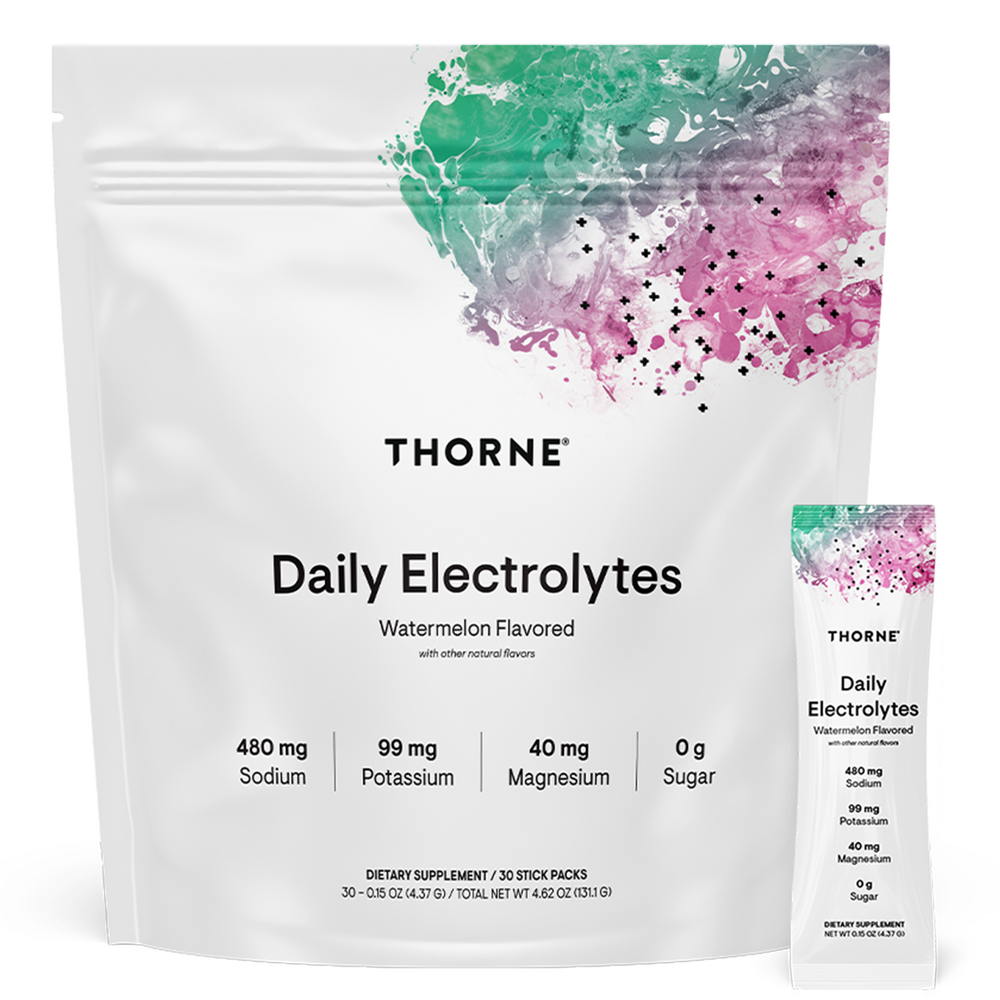
Daily Electrolytes Watermelon
Thorne
30 packets
$40.00$36.00 with Subscribe & Save
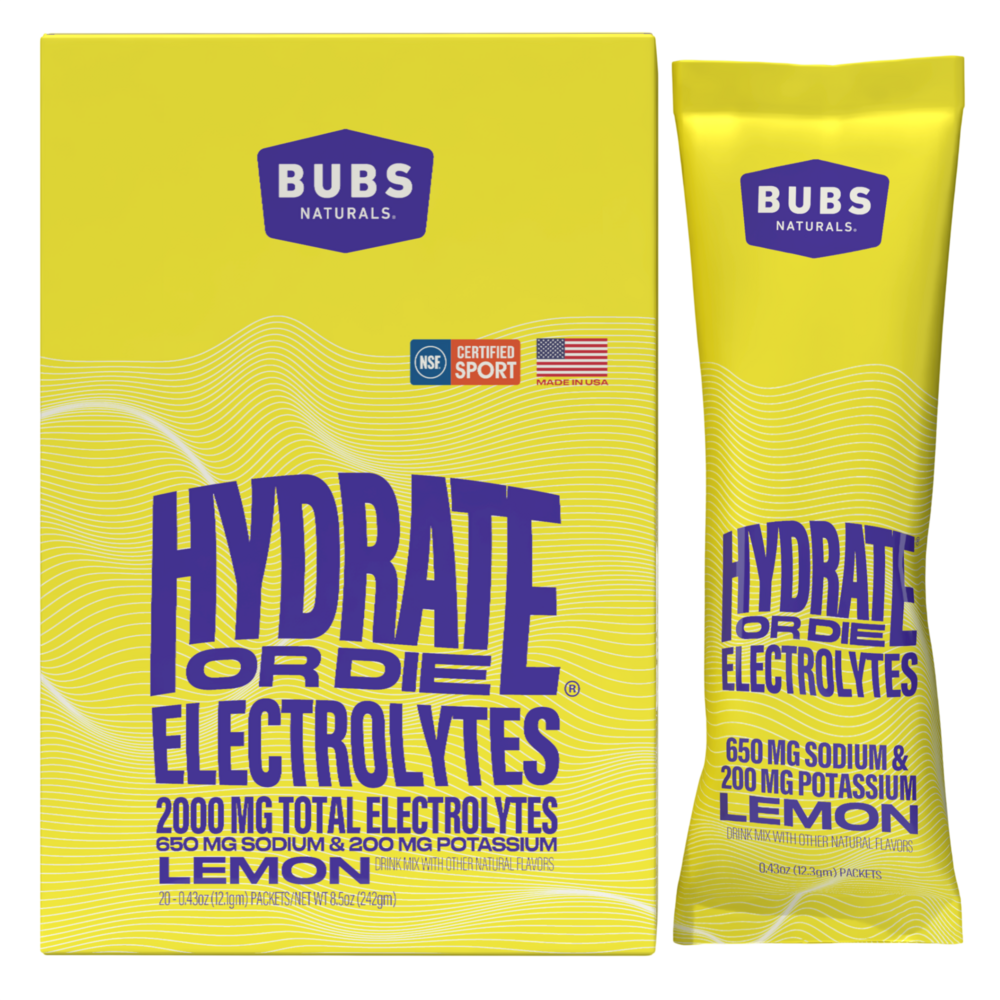
Hydrate or Die Electrolytes Lemon
Bubs Naturals
20 packets
$37.99$29.99 with Subscribe & Save