 Instalab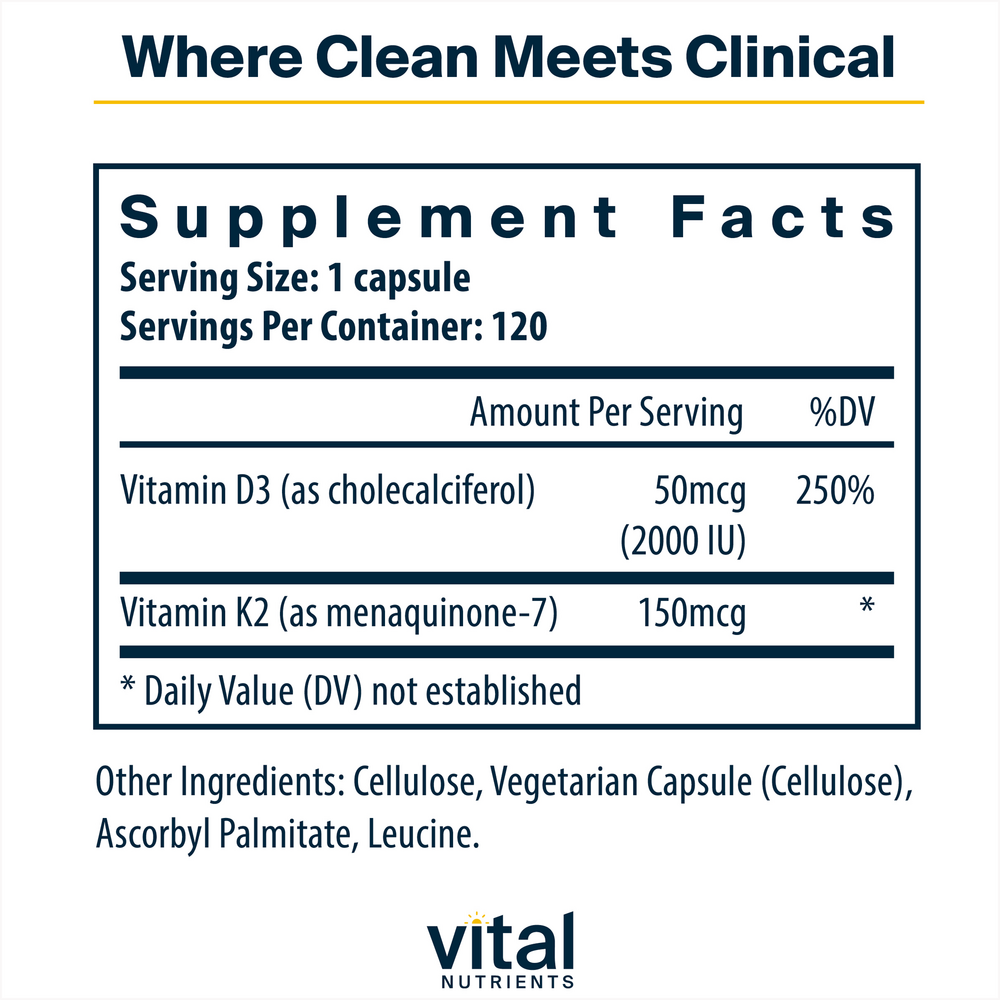

Vital Nutrients
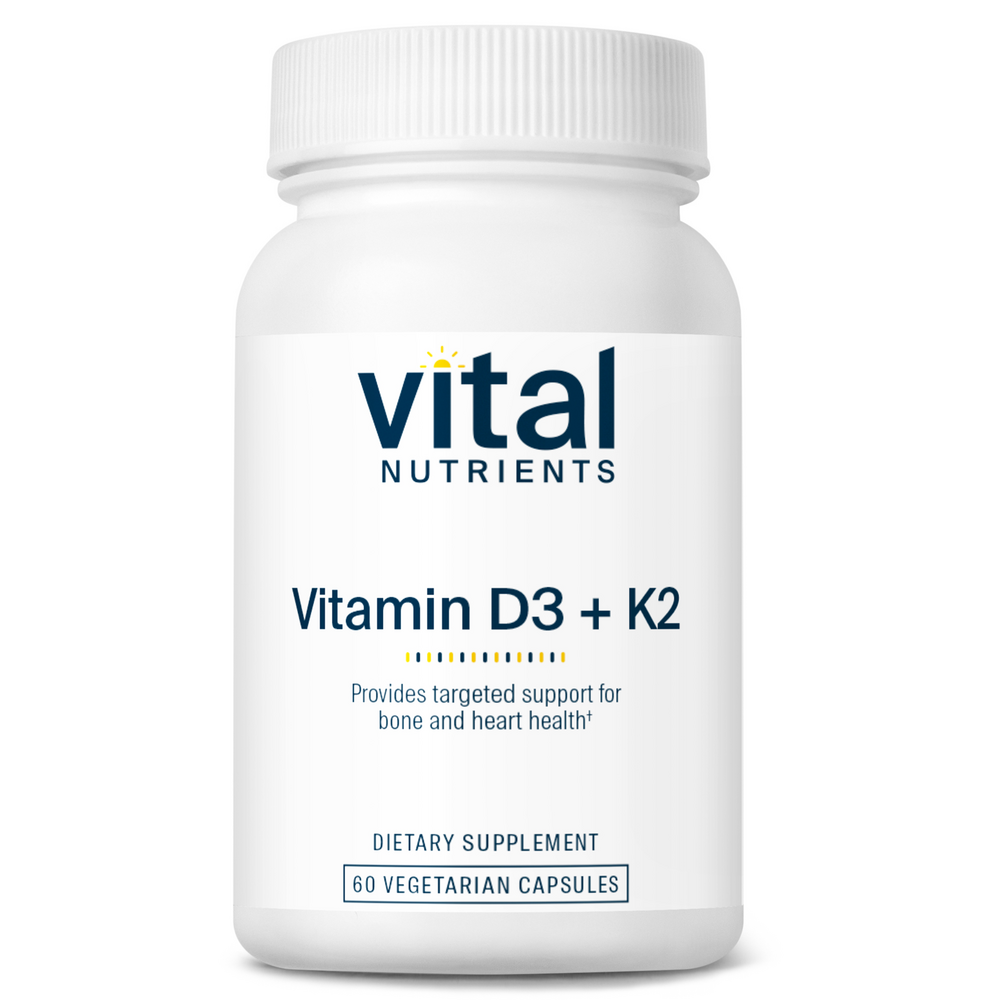
Vitamin D3 + K2 by Vital Nutrients
60 capsules · 60-day supply
Essential Vitamins for Bone Health and Cardiovascular Support$33.99
Purchase options
Practitioner-grade brand3rd-party testedFree shipping $50+
Vegan·Vegetarian·Gluten Free·Soy Free·Dairy Free·Egg Free·
Vital Nutrients Vitamin D3 + K2 overview
If you’re searching for vitamin D3 and K2 because your Vitamin D, 25-Hydroxy is in the lower end of the normal range, this pairing fits. It’s practical for adults with little sun, darker skin, consistent sunscreen use, northern latitudes, or low dairy intake. The 2,000 IU D3 here is a maintenance-level dose; if your level is meaningfully low, repletion usually takes higher dosing, then a step-down. K2 matters if you rarely eat fermented foods (like natto) or aged cheeses, where most K2 comes from.
Vitamin D3 (cholecalciferol) raises calcium absorption and helps keep parathyroid hormone (the signal that pulls calcium from bone) in check, which favors bone maintenance. Vitamin K2 as MK‑7 activates osteocalcin (the protein that locks calcium into bone) and matrix Gla protein, or MGP (a protein in vessel walls that helps keep calcium out of arteries), through a vitamin‑K–dependent activation step. MK‑7 has a longer half‑life than K1 or MK‑4, so once‑daily dosing keeps levels steadier. Evidence for arterial calcification change is modest and slow, so anchor decisions to your labs and diet, not headlines.
Take one capsule with a meal that includes fat for better absorption. Morning or evening is fine, but be consistent. If you are repleting low Vitamin D, 25‑Hydroxy under clinician guidance, this strength is usually the follow‑on for maintenance. Recheck Vitamin D, 25‑Hydroxy in 8–12 weeks, and consider Calcium and PTH if you have a history of high calcium or bone disease. If you use weekly prescription D2, don’t double up—coordinate a transition plan.
Skip K2 if you take warfarin or other vitamin‑K antagonists unless your prescriber adjusts your dose and monitors INR closely. Thiazide diuretics (water pills like hydrochlorothiazide) with higher vitamin D intake can raise blood calcium, so monitor. Orlistat and bile‑acid binders (like cholestyramine) impair absorption—separate by several hours and take this with food. If you’ve had high calcium, sarcoidosis, or recurrent calcium‑based kidney stones, use only with lab monitoring and clinician input.
D3 vs D2: D3 is better at raising and maintaining Vitamin D, 25‑Hydroxy. MK‑7 vs MK‑4: MK‑7 lasts longer in the blood, so once daily works. Timelines: vitamin D levels usually move within 4–12 weeks; bone effects take longer. Magnesium status can influence how you activate vitamin D enzymes, so a low Magnesium, RBC can explain slow response.
Frequently asked questions
Is 2,000 IU of vitamin D3 with K2 enough?
For many adults it’s a maintenance dose. If your Vitamin D, 25‑Hydroxy is low, clinicians often use higher short‑term dosing, then step down to 2,000 IU. Recheck labs after 8–12 weeks to see if this keeps you in range.
Do I have to take vitamin D3 and K2 with food?
Yes, take it with a meal that contains fat to improve absorption. Absorption is lower on an empty stomach, and very low if taken with fat‑blocking drugs like orlistat or bile‑acid binders.
How long does vitamin D3 + K2 take to work?
Vitamin D, 25‑Hydroxy usually rises within 4–12 weeks. Markers tied to K2 action, like undercarboxylated osteocalcin (inactive bone protein), also shift over weeks to months, while bone density changes take much longer.
Can I take vitamin D3 + K2 with blood thinners?
Avoid K2 with warfarin or similar vitamin‑K antagonists unless your prescriber adjusts dosing and monitors INR. Non–vitamin‑K anticoagulants (like apixaban) don’t interact the same way, but confirm with your clinician.
What’s the difference between K2 MK-7 and K1 or MK-4?
MK‑7 stays in the blood longer than K1 or MK‑4, so once‑daily dosing maintains steadier activation of vitamin‑K–dependent proteins like osteocalcin and MGP. MK‑4 typically needs multiple daily doses to match exposure.
Can vitamin D3 cause high calcium or kidney stones?
It can if taken in high doses, especially with conditions like sarcoidosis or with thiazide diuretics. If you’ve had high calcium or calcium‑based stones, involve your clinician and monitor Calcium and PTH.
Is vitamin D3 + K2 safe in pregnancy?
Vitamin D is commonly used in prenatal care, but vitamin K2 use varies by clinician preference. If you’re pregnant or trying to conceive, use a prenatal plan and confirm K2 with your obstetric provider.
How to take it & ingredients
Suggested use: Take 1 capsule daily, ideally with food to increase absorption, or as directed by a healthcare practitioner.
Active ingredients
1 capsule per serving · 60 servings
Vitamin D
Vitamin D3 (Cholecalciferol)
Vitamin D3 (Cholecalciferol)
2000 IU, 50 mcg
Vitamin K
Vitamin K2 (Menaquinone-7)
Vitamin K2 (Menaquinone-7)
150 mcg
Other ingredients: Cellulose, Vegetarian Capsule (Cellulose), Ascorbyl Palmitate, Leucine
Certifications
Benefits
Warnings
Customers also considered
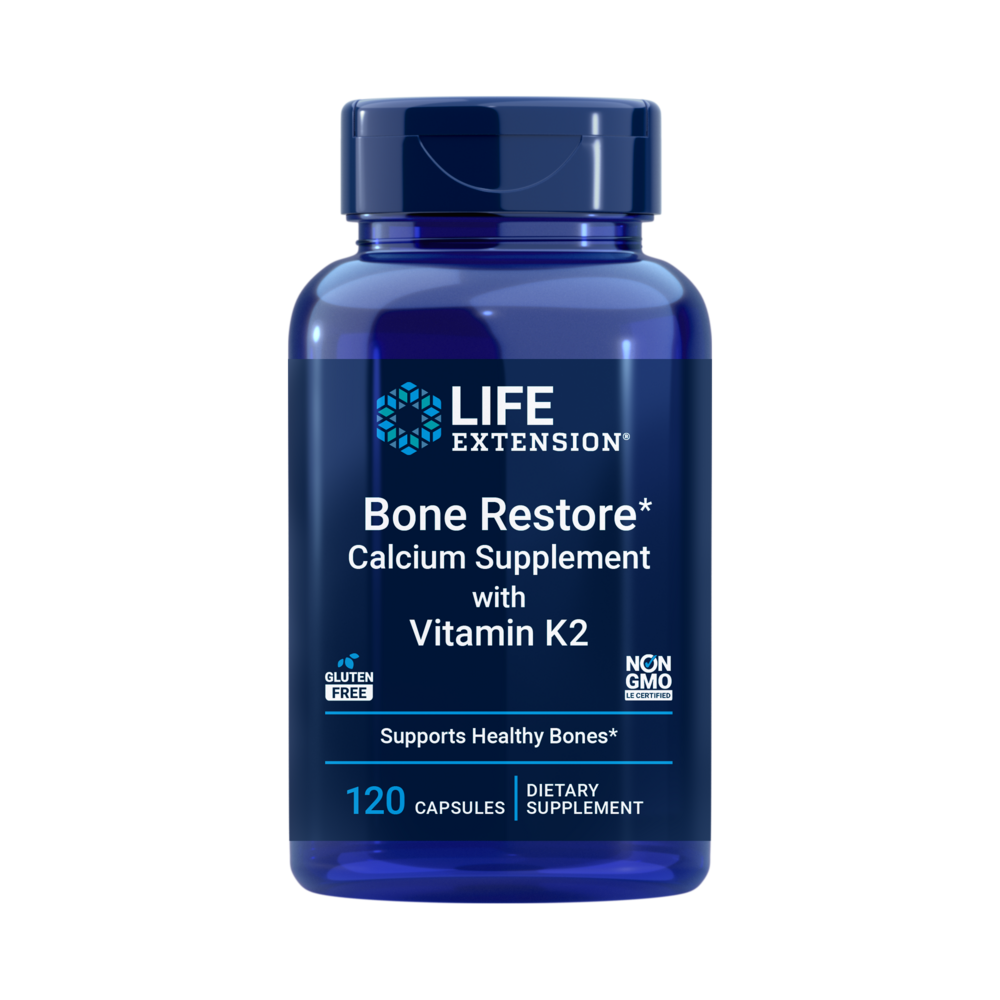
Bone Restore Calcium Supplement with Vitamin K2
Life Extension
120 capsules
$24.99Save 20% with Subscribe & Save
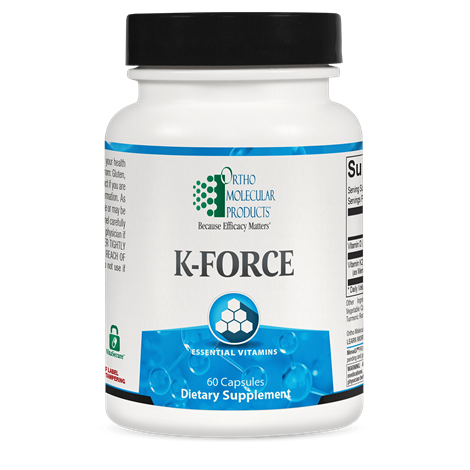
K-FORCE
Ortho Molecular Products
60 capsules
$60.33Save 10% with Subscribe & Save
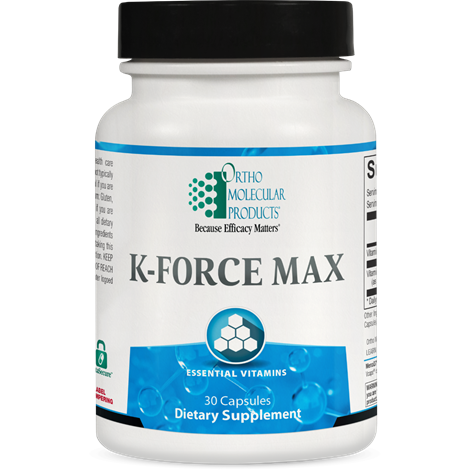
K-FORCE MAX
Ortho Molecular Products
30 capsules
$44.79Save 10% with Subscribe & Save
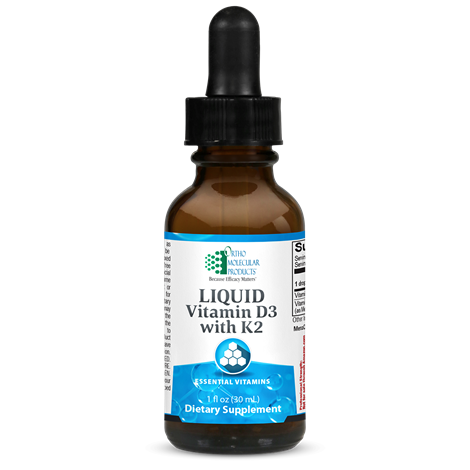
Liquid Vitamin D3 with K2
Ortho Molecular Products
30 milliliters
$52.00Save 10% with Subscribe & Save