 Instalab
Vital Nutrients
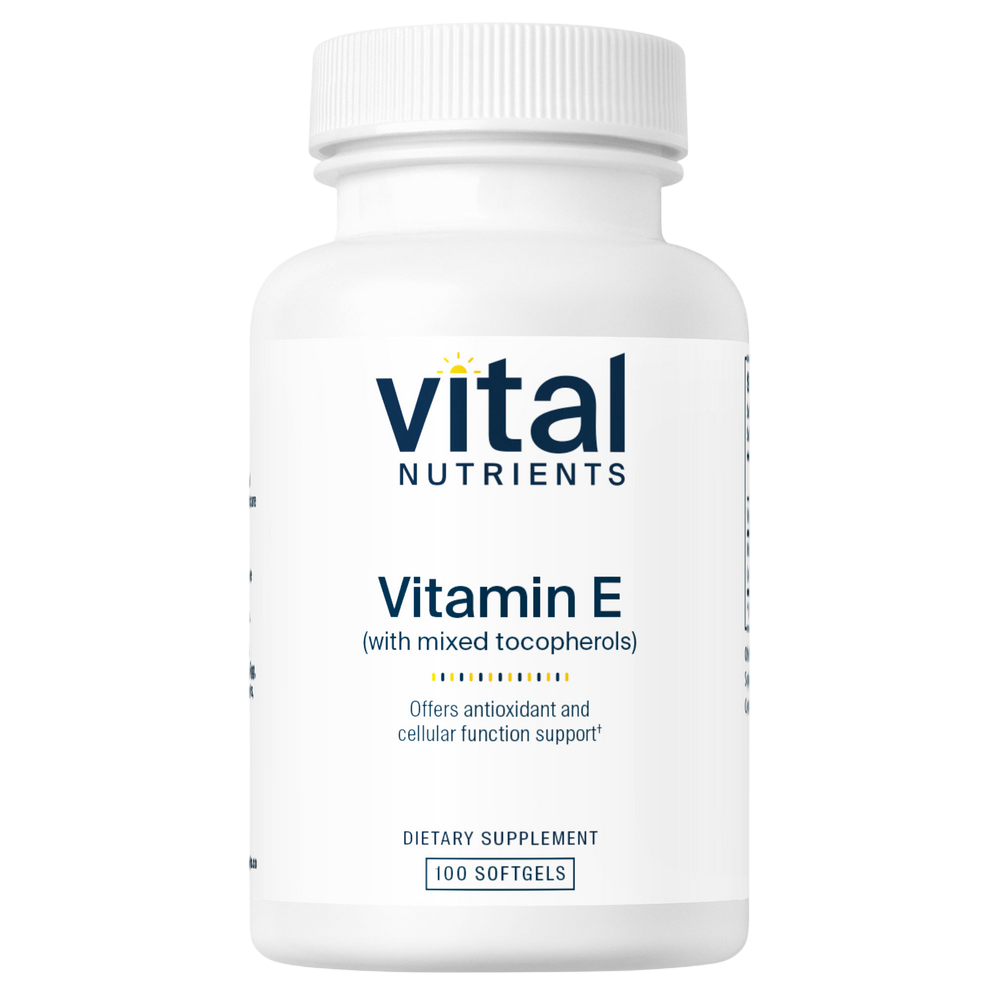
Vitamin E by Vital Nutrients
100 softgels · 100-day supply
Natural Vitamin E With Mixed Tocopherols for Antioxidant Support$31.99
Purchase options
Practitioner-grade brand3rd-party testedFree shipping $50+
Gluten Free·Dairy Free·Tree Nut Free·Fish Free·Crustacean Shellfish Free·Egg Free·
Vital Nutrients Vitamin E overview
This is a high-dose vitamin E, best suited to people with a specific reason to take it: a low Vitamin E (Alpha-Tocopherol) level, a condition that impairs fat absorption, such as after bariatric surgery or with chronic liver, pancreatic or bowel disease, or a clinician's recommendation. It is not a general wellness supplement for most adults. Nuts, seeds and vegetable oils cover the daily need, and long trials of high-dose vitamin E in healthy people have not shown the benefits once hoped for.
Vitamin E is the body's main fat-soluble antioxidant. It sits in cell membranes and protects their fats from oxidation, and it supports normal immune function. This product uses d-alpha tocopherol, the natural form that the body retains better than synthetic dl-alpha tocopherol. It also includes d-gamma, d-delta and d-beta tocopherols. Alpha-tocopherol taken alone at high doses lowers blood levels of gamma-tocopherol, the main form in food, and the added mixed tocopherols are there to offset that.
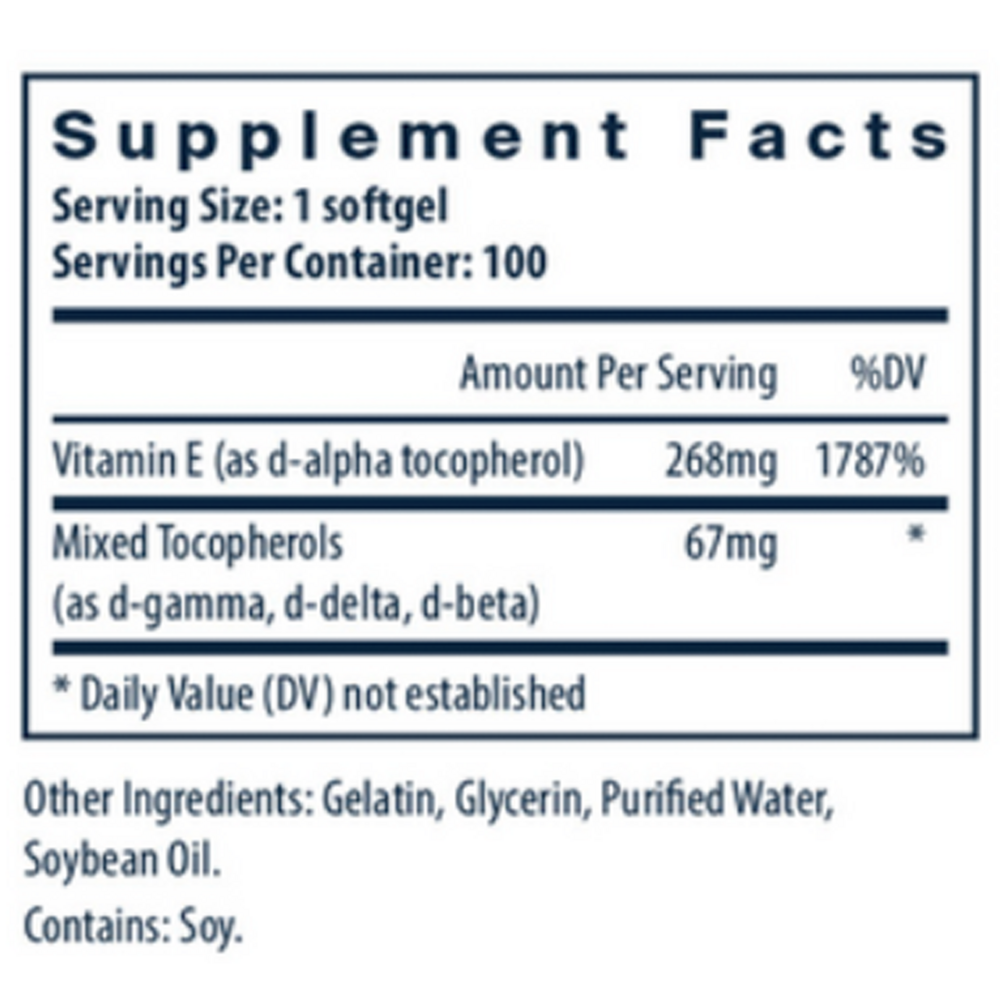
Each softgel provides 268 mg of vitamin E as d-alpha tocopherol plus 67 mg of mixed tocopherols. The label directs 1 softgel daily. Take it with a meal that contains fat, which vitamin E needs for absorption. Do not take more than 1 unless your clinician has set a higher dose, and count the vitamin E in your multivitamin toward your total. The softgel is gelatin and the product contains soy.
The main risk is bleeding. High-dose vitamin E reduces platelet stickiness and works against vitamin K, so it can add to warfarin, aspirin, clopidogrel and other blood thinners; ask your prescriber first, and stop it 2 weeks before planned surgery. Pooled trial data link long-term high-dose vitamin E to a small rise in bleeding strokes, and one large trial in men found slightly more prostate cancer at a similar dose. If you are pregnant, nursing or having chemotherapy or radiation, check with your clinician before use.
If your level was low, Vitamin E (Alpha-Tocopherol) rises within a few weeks; retest after 2 to 3 months and step down once you are in range. You should not expect to feel a difference. For people without a deficiency, the amount of vitamin E in a multivitamin or in food is the more cautious choice, and large trials have not found that high doses lower the risk of heart disease or cancer.
Frequently asked questions
How much vitamin E is in each softgel?
The label lists 268 mg of vitamin E as d-alpha tocopherol and, separately, 67 mg of mixed tocopherols (d-gamma, d-delta and d-beta). Only the alpha-tocopherol counts toward the Daily Value, which is why the mixed tocopherols are listed on their own line.
Is 268 mg of vitamin E a day too much?
It is below the adult upper limit of 1,000 mg a day but far above the daily requirement of 15 mg. Long-term high-dose vitamin E has not shown benefits in healthy adults and carries some bleeding risk, so use it for a specific reason and review it with your clinician.
Can I take vitamin E with blood thinners?
Only with your prescriber's agreement. At this dose vitamin E reduces platelet stickiness and counteracts vitamin K, which can increase bleeding with warfarin, aspirin, clopidogrel and similar medicines. Report unusual bruising or bleeding promptly.
What are mixed tocopherols?
Vitamin E is a family of related compounds. Alpha-tocopherol is the one the body keeps and the one that counts as vitamin E on a label. Gamma, delta and beta tocopherols are the other forms found in food, and this product includes 67 mg of them.
Should I take vitamin E with food?
Yes. Vitamin E is fat-soluble and is absorbed poorly without dietary fat. Take the softgel with a meal that includes some fat, such as eggs, avocado, nuts or olive oil. The time of day does not matter.
Does this vitamin E contain soy or gelatin?
Yes to both. The other ingredients are gelatin, glycerin, purified water and soybean oil, and the label states that it contains soy. It is not suitable for people with a soy allergy or for vegetarians and vegans.
Should I stop vitamin E before surgery?
Yes, in most cases. Because high-dose vitamin E can increase bleeding, the usual advice is to stop it about 2 weeks before planned surgery or dental extractions. Tell your surgeon and anesthetist about every supplement you take.
How do I know if I need a vitamin E supplement?
A Vitamin E (Alpha-Tocopherol) blood test is the direct way. Deficiency is uncommon and mostly affects people who absorb fat poorly, for example after bariatric surgery or with chronic liver, pancreatic or bowel disease. Most others meet their need from food.
How to take it & ingredients
Suggested use: Take 1 softgel daily, or as directed by your healthcare professional.
Active ingredients
1 softgel per serving · 100 servings
Vitamin E
D-Alpha Tocopherol
D-Alpha Tocopherol
268 mg
Mixed Tocopherols
D-Gamma, d-Delta, d-Beta
D-Gamma, d-Delta, d-Beta
67 mg
Other ingredients: Gelatin, Glycerin, Purified Water, Soybean Oil
Certifications
Benefits
Warnings