 Instalab

Integrative Therapeutics
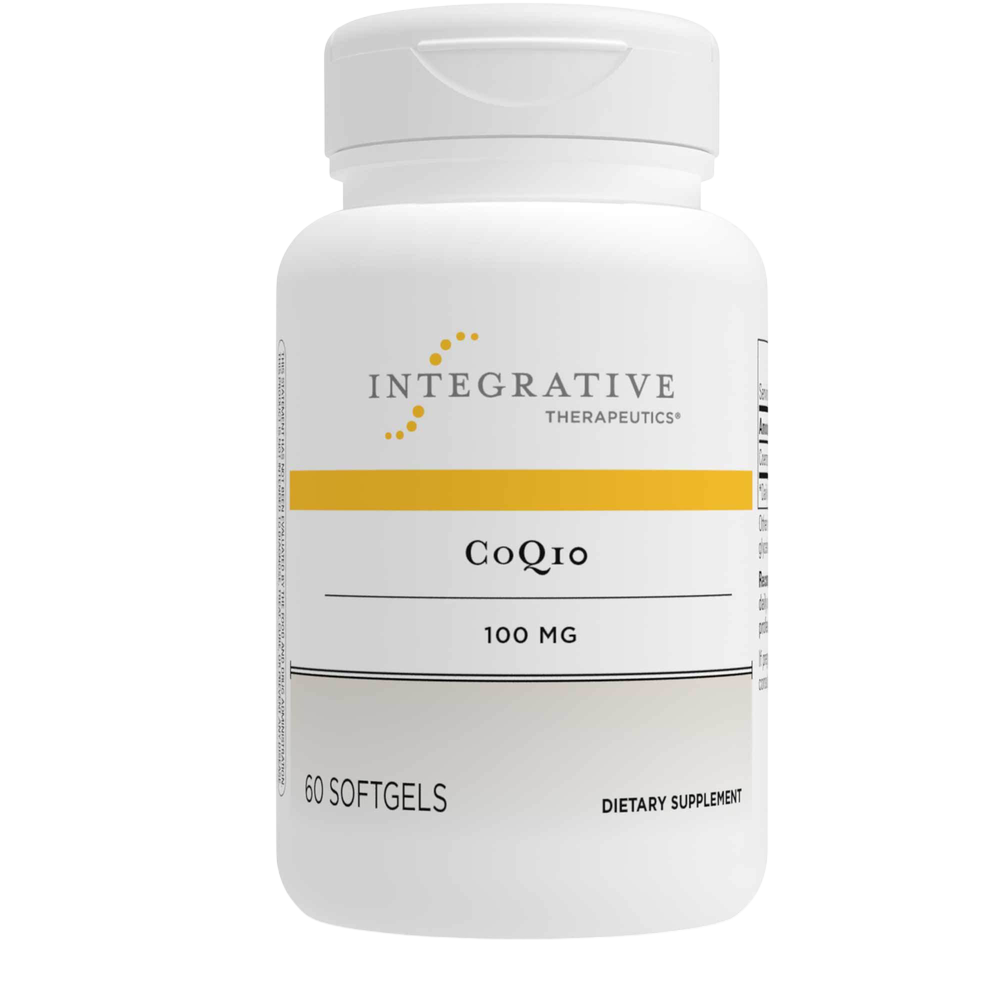
CoQ10 100mg by Integrative Therapeutics
60 softgels · 60-day supply
Ubiquinone CoQ10 for Heart and Cellular Energy Support$43.99
Purchase options
Practitioner-grade brand3rd-party testedFree shipping $50+
Salt Free·Wheat Free·Corn Free·Dairy Free·Artificial Color Free
Integrative Therapeutics CoQ10 100mg overview
CoQ10 is most often taken by adults on statins, which lower the body's own CoQ10 production, and by people in midlife and beyond who want to support heart and muscle energy. If you want a baseline, Instalab's CoQ10 test measures the level in your blood. Evidence that CoQ10 eases statin-related muscle aches is mixed, so think of it as a trial: take it for a set period and judge whether you notice a difference.
Coenzyme Q10 is a fat-soluble compound made in every cell. It sits in the mitochondria, where it carries electrons in the chain of reactions that produces ATP, the cell's energy currency, and it acts as an antioxidant in cell membranes. The heart, liver and muscles hold the most. This product supplies ubiquinone, the form used in most CoQ10 research. The body converts it to ubiquinol, the other form, and back again as needed.
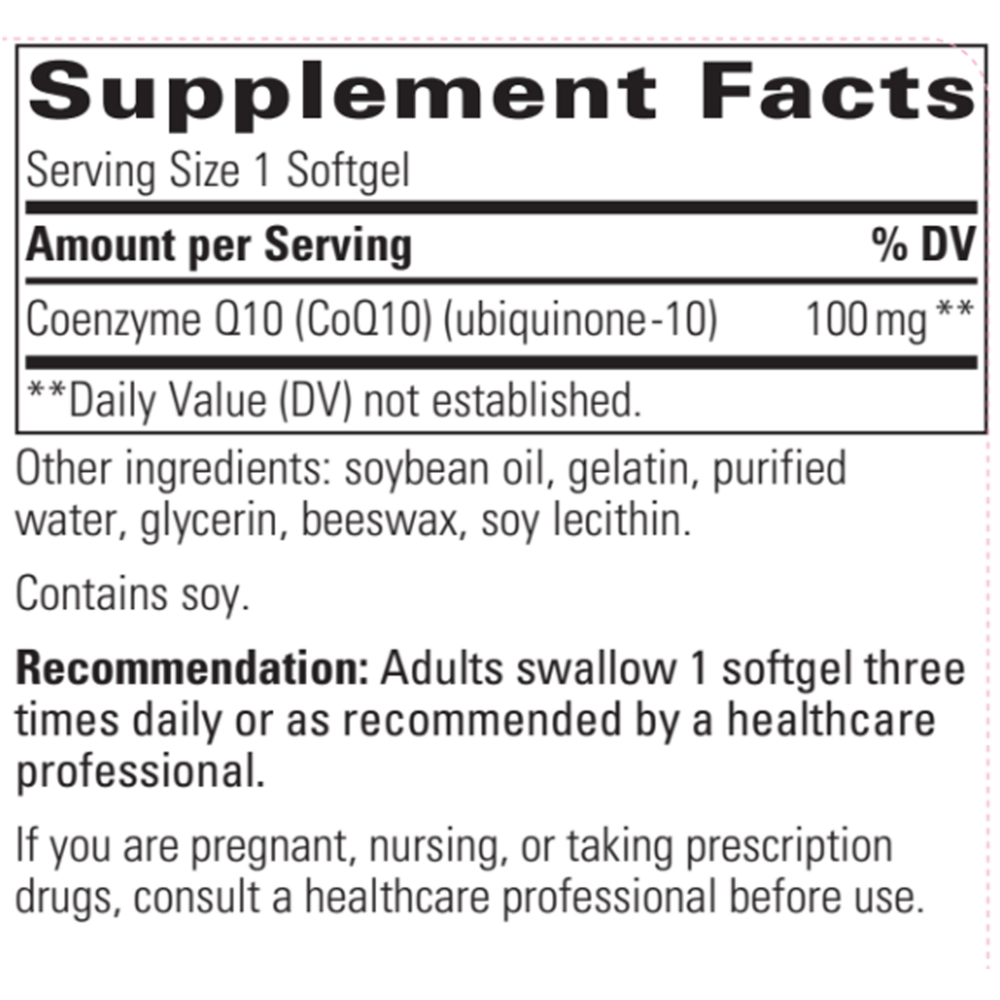
Each softgel provides 100 mg of coenzyme Q10 as ubiquinone, in a soybean oil base. The label directs adults to swallow 1 softgel three times daily or as recommended by a healthcare professional. Many people take fewer softgels a day on their clinician's advice. CoQ10 is absorbed best with a meal that contains fat, and spreading the softgels across meals works better than taking them together.
CoQ10 can reduce the effect of warfarin, so anyone on warfarin should talk to their prescriber and have INR checked after starting or stopping it. It may lower blood pressure slightly, which matters if you take blood pressure medicines. The softgel contains soy and is made with gelatin and beeswax, so it is not suitable for vegetarians, vegans or people with a soy allergy. If you are pregnant, nursing or taking prescription drugs, consult a healthcare professional first.
Blood levels rise over the first few weeks, and any change in how you feel usually takes 4–12 weeks. Side effects are uncommon and mild: stomach upset, and trouble sleeping in some people when it is taken late in the day. Ubiquinol is sold as the better-absorbed form, but the evidence for a meaningful advantage is mixed, and ubiquinone taken with food raises blood levels reliably.
Frequently asked questions
What is CoQ10 used for?
CoQ10 supports energy production in the mitochondria and acts as an antioxidant. People most often take it for heart health, during statin use, and as their own levels fall with age. Each softgel here provides 100 mg as ubiquinone.
What is the difference between ubiquinone and ubiquinol?
They are two forms of the same molecule, and the body converts one to the other. Ubiquinone, the form in this softgel, is the one used in most research. Ubiquinol is marketed as better absorbed, but the evidence for a meaningful advantage is mixed.
How much CoQ10 should I take per day?
The label directs adults to swallow 1 softgel, which provides 100 mg, three times daily or as recommended by a healthcare professional. Many people take fewer softgels a day on their clinician's advice, so ask what suits you.
Should I take CoQ10 with food?
Yes. CoQ10 is fat soluble and is absorbed much better with a meal that contains some fat. If you take more than one softgel a day, spread them across meals, since smaller amounts are absorbed more completely than one large dose.
Should I take CoQ10 if I am on a statin?
Statins lower CoQ10 in the blood, and a supplement brings it back up. Trials on whether that eases statin-related muscle aches have gone both ways. It is reasonable to try it for 2–3 months and stop if you notice no difference. Do not stop your statin without your prescriber.
Does CoQ10 interact with blood thinners?
It can reduce the effect of warfarin. If you take warfarin, speak to your prescriber before starting or stopping CoQ10 and have your INR checked afterwards. Mention it to your clinician if you take blood pressure medicines too.
How long does CoQ10 take to work?
Blood levels rise over the first few weeks of daily use. Changes you can feel, when they come, usually take 4–12 weeks. If you want to confirm the supplement is being absorbed, a CoQ10 blood test before and after shows the change.
Is this CoQ10 vegetarian or soy free?
No. The softgel is made with gelatin and beeswax, and the CoQ10 is carried in soybean oil with soy lecithin, so the label states that it contains soy. The label does say it contains no salt, wheat, corn, dairy or artificial colors.
How to take it & ingredients
Suggested use: Adults swallow 1 softgel three times daily or as recommended by a healthcare professional.
Active ingredients
1 softgel per serving · 60 servings
Coenzyme Q10
Ubiquinone-10
Ubiquinone-10
100 mg
Other ingredients: Soybean oil, Gelatin, Purified water, Glycerin, Beeswax, Soy lecithin
Certifications
Benefits
Warnings