 Instalab

Integrative Therapeutics
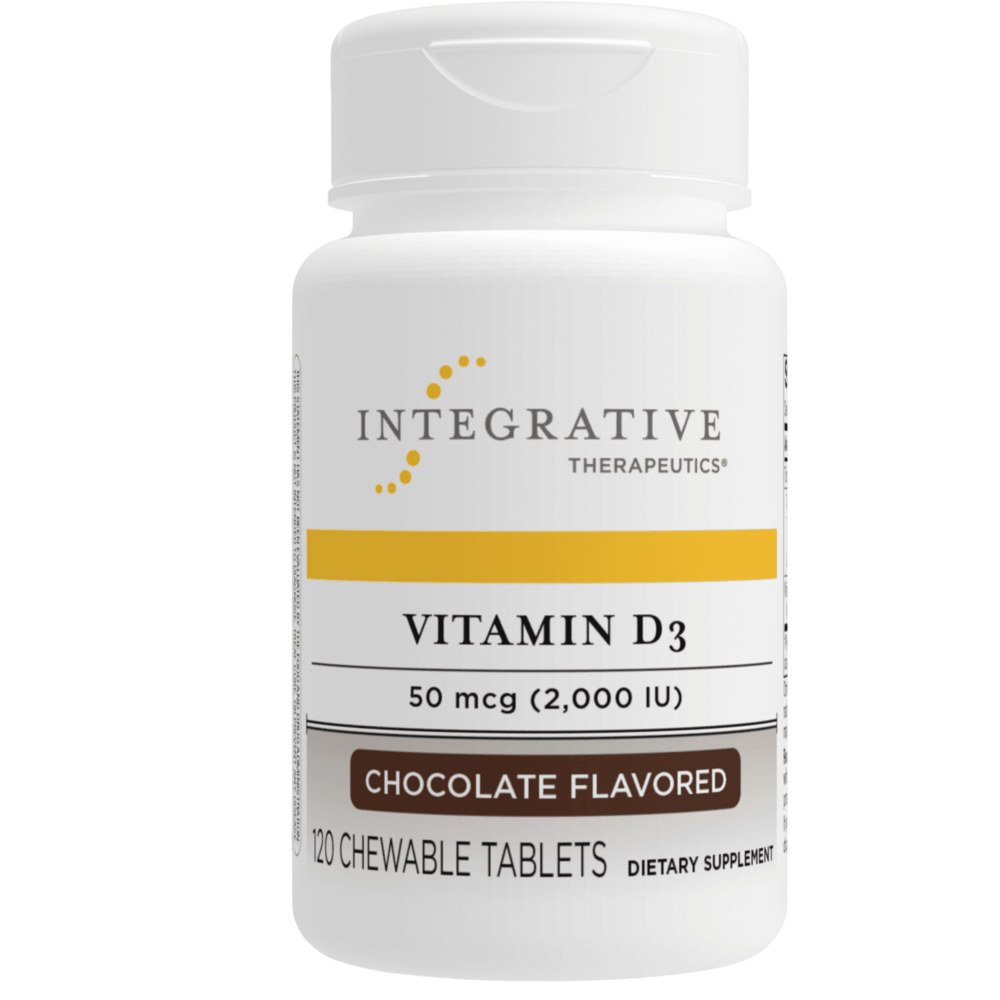
Vitamin D3 2000IU Chewable/Chocolate by Integrative Therapeutics
120 chewables · 120-day supply
Chewable Vitamin D3 for Bone, Muscle and Immune Support$16.99
Purchase options
Practitioner-grade brand3rd-party testedFree shipping $50+
Vegetarian·Gluten Free·Soy Free·Sugar Free·Wheat Free·Dairy Free·
Integrative Therapeutics Vitamin D3 2000IU Chewable/Chocolate overview
A 2,000 IU chewable suits adults who want a steady daily dose of vitamin D and would rather not swallow a pill. It fits people whose Vitamin D (25-hydroxy) level runs low or low-normal: those who get little midday sun, people with darker skin living at northern latitudes, older adults, and anyone who covers up or wears sunscreen consistently. If your level is very low, your clinician may start you on a larger repletion dose and step down to an amount like this for maintenance.
Each tablet provides vitamin D as cholecalciferol (D3), the form skin makes in sunlight and the one that raises blood levels more reliably than D2. The liver converts it to 25-hydroxyvitamin D, the storage form a blood test measures, and the kidneys then make the active hormone. That hormone raises calcium absorption from the gut and helps keep parathyroid hormone in check, which is how vitamin D supports bone and muscle. It also takes part in normal immune function.
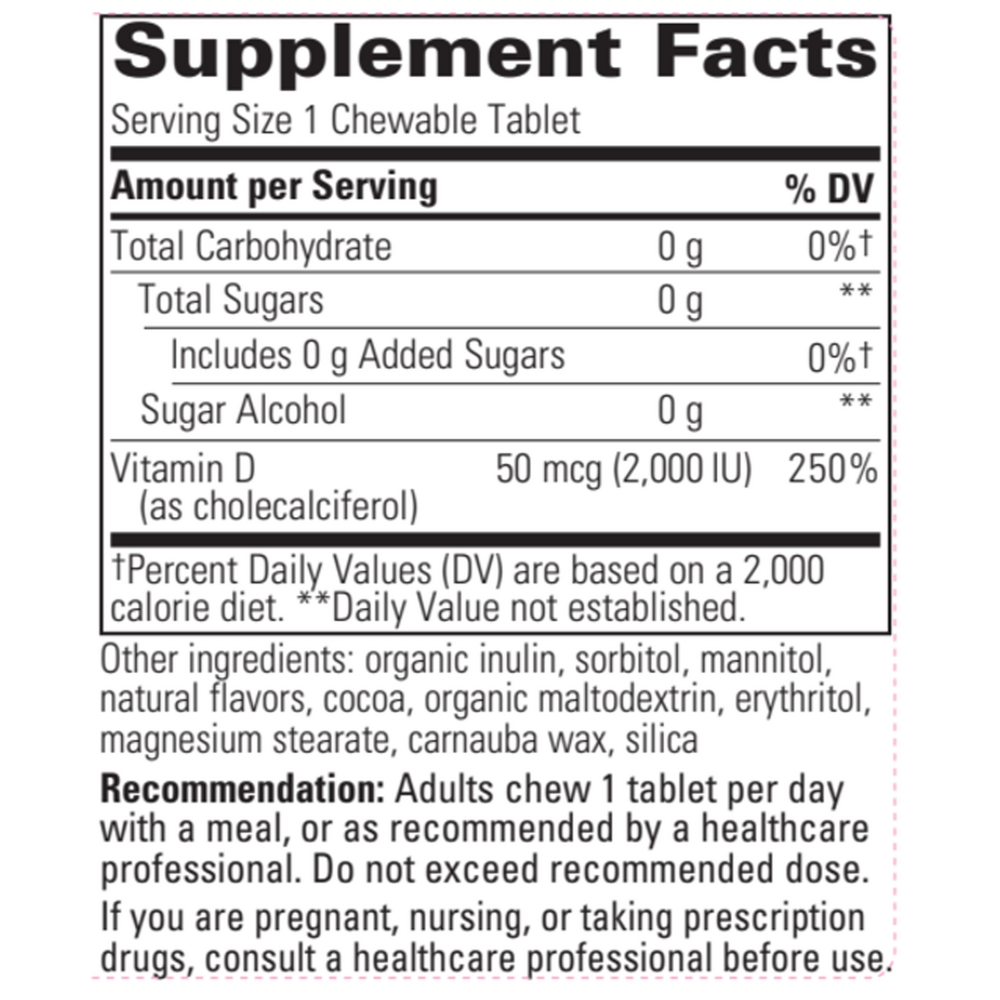
The label directs adults to chew 1 tablet per day with a meal and not to exceed the recommended dose. One tablet provides 50 mcg (2,000 IU). A meal with some fat in it improves absorption. The tablet is chocolate flavored and sweetened with sorbitol, mannitol and erythritol; the label says it contains no sugar. It also says to keep it out of reach of children, and the bottle has a child-resistant cap, which matters for a tablet that tastes like a sweet. The directions are for adults only.
Do not take vitamin D without your clinician's guidance if you have had high blood calcium, kidney stones, primary hyperparathyroidism, sarcoidosis or another granulomatous condition, or significant kidney disease. Thiazide diuretics reduce calcium loss in urine, so combining them with vitamin D raises the chance of high calcium. Orlistat and bile acid sequestrants such as cholestyramine lower absorption. If you are pregnant, nursing or taking prescription drugs, consult a healthcare professional before use.
Vitamin D levels change slowly. Retest Vitamin D (25-hydroxy) after 8–12 weeks of daily use and adjust from there; checking Calcium alongside is sensible if you take more than one product containing vitamin D. You are unlikely to feel anything day to day, and that is normal. Compared with softgels or drops, a chewable is a matter of preference: the vitamin is the same, and the right format is the one you will take consistently.
Frequently asked questions
Is 2,000 IU of vitamin D a day safe?
For most adults, yes. It is under the adult upper limit of 4,000 IU a day and is a common maintenance dose. The label says 1 tablet per day and not to exceed that. People with high calcium, kidney stones or sarcoidosis should ask their clinician first.
How many mcg is 2,000 IU of vitamin D?
2,000 IU equals 50 mcg. Labels now list vitamin D in micrograms with IU in brackets, and this one shows both: 50 mcg (2,000 IU) per chewable tablet, as cholecalciferol.
Should I take vitamin D with food?
Yes. The label says to chew 1 tablet with a meal. Vitamin D is fat-soluble, so a meal with some fat in it improves absorption. The time of day does not matter; pick the meal you are least likely to skip.
Can children take this chewable vitamin D?
The label gives directions for adults only and says to keep it out of reach of children. A chocolate chewable can look like candy. For a child, ask the pediatrician which product and dose to use instead of giving this one.
Does this chewable vitamin D contain sugar?
The label says it contains no sugar, and the panel lists 0 g total sugars and 0 g added sugars. Sweetness comes from sorbitol, mannitol and erythritol, with cocoa and natural flavors. Sugar alcohols can cause gas in sensitive people; the panel lists 0 g per tablet.
How long does it take to raise a vitamin D level?
Vitamin D (25-hydroxy) rises over 8–12 weeks of daily use and then levels off, so retest at that point. How far it rises depends on your starting level, your body weight and how consistently you take it with food.
Do I need vitamin K2 with vitamin D3?
You do not need K2 to absorb vitamin D. Some people pair them for bone health, but evidence that K2 adds benefit at a maintenance dose like this is mixed. If you take warfarin, do not add vitamin K without your prescriber's agreement.
What are the signs of too much vitamin D?
Problems come from high blood calcium: thirst, frequent urination, nausea, constipation or confusion. This is rare at one tablet a day but possible if you combine several vitamin D products. If it happens, stop and ask your clinician to check Calcium and Vitamin D (25-hydroxy).
How to take it & ingredients
Suggested use: Adults chew 1 tablet per day with a meal, or as recommended by a healthcare professional. Do not exceed recommended dose.
Active ingredients
1 chewable tablet per serving · 120 servings
Vitamin D
Cholecalciferol
Cholecalciferol
50 mcg, 2000 IU
Other ingredients: Organic inulin, Sorbitol, Mannitol, Natural flavors, Cocoa, Organic maltodextrin, Erythritol, Magnesium stearate, Carnauba wax, Silica
Certifications
Benefits
Warnings