 Instalab

Nordic Naturals
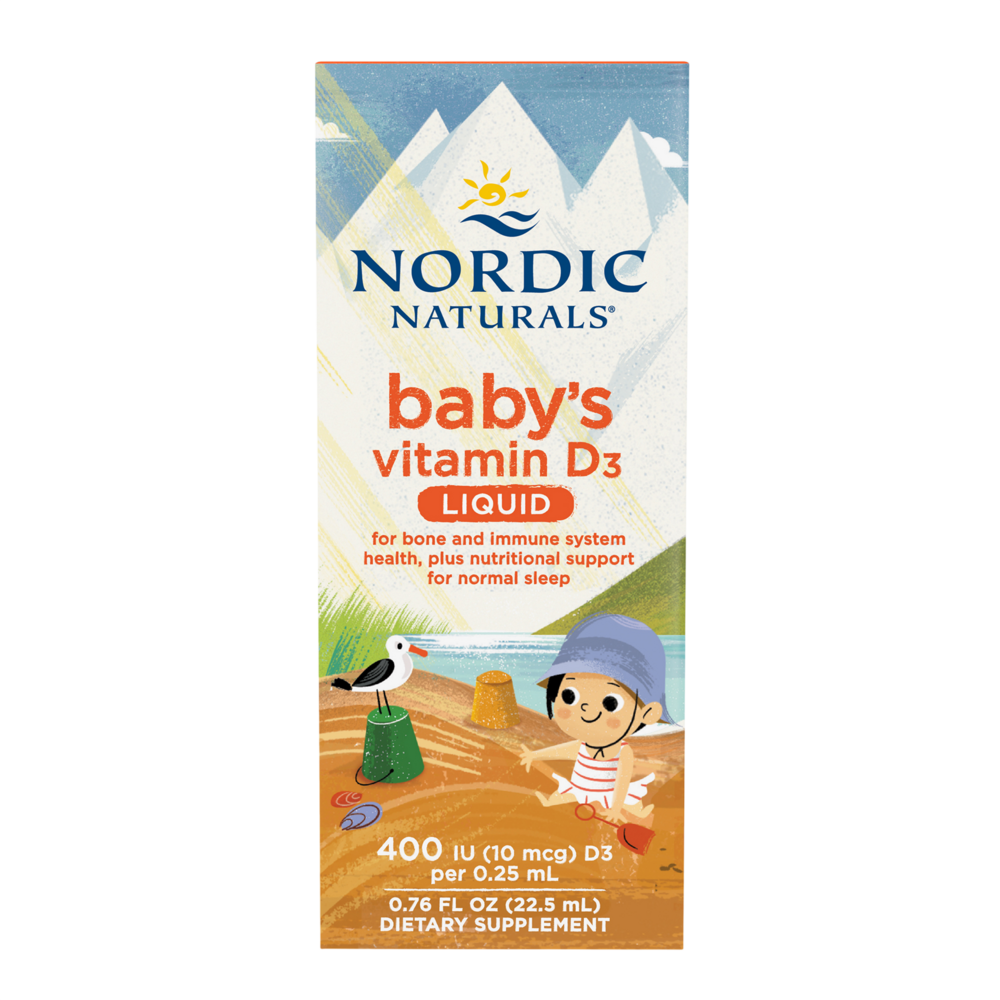
Baby's Vitamin D3 Liquid 10 mcg (400 IU) by Nordic Naturals
22.5 milliliters · 90-day supply
Daily Vitamin D3 Drops for Infant Bone and Immune Support$12.99
Purchase options
Practitioner-grade brand3rd-party testedFree shipping $50+
Gluten Free·Milk Free·Artificial Color Free
Nordic Naturals Baby's Vitamin D3 Liquid overview
These drops are for babies in their first year who need a daily vitamin D supplement. Breast milk is low in vitamin D, and the American Academy of Pediatrics recommendation, quoted on the box, is 400 IU (10 mcg) of supplemental vitamin D a day for breastfed and partly breastfed infants. Babies fed only formula usually get enough from the formula once they are drinking enough of it each day. Your pediatrician can tell you which case applies to your baby and when to stop.
The vitamin D here is D3 (cholecalciferol), the form skin makes from sunlight, carried in organic extra virgin olive oil. Those are the only two ingredients listed. The body converts vitamin D into a hormone that lets the gut absorb calcium and phosphorus, which a baby needs to mineralize fast-growing bones, and it also contributes to normal immune function. The label states no gluten, milk derivatives, or artificial colors or flavors.
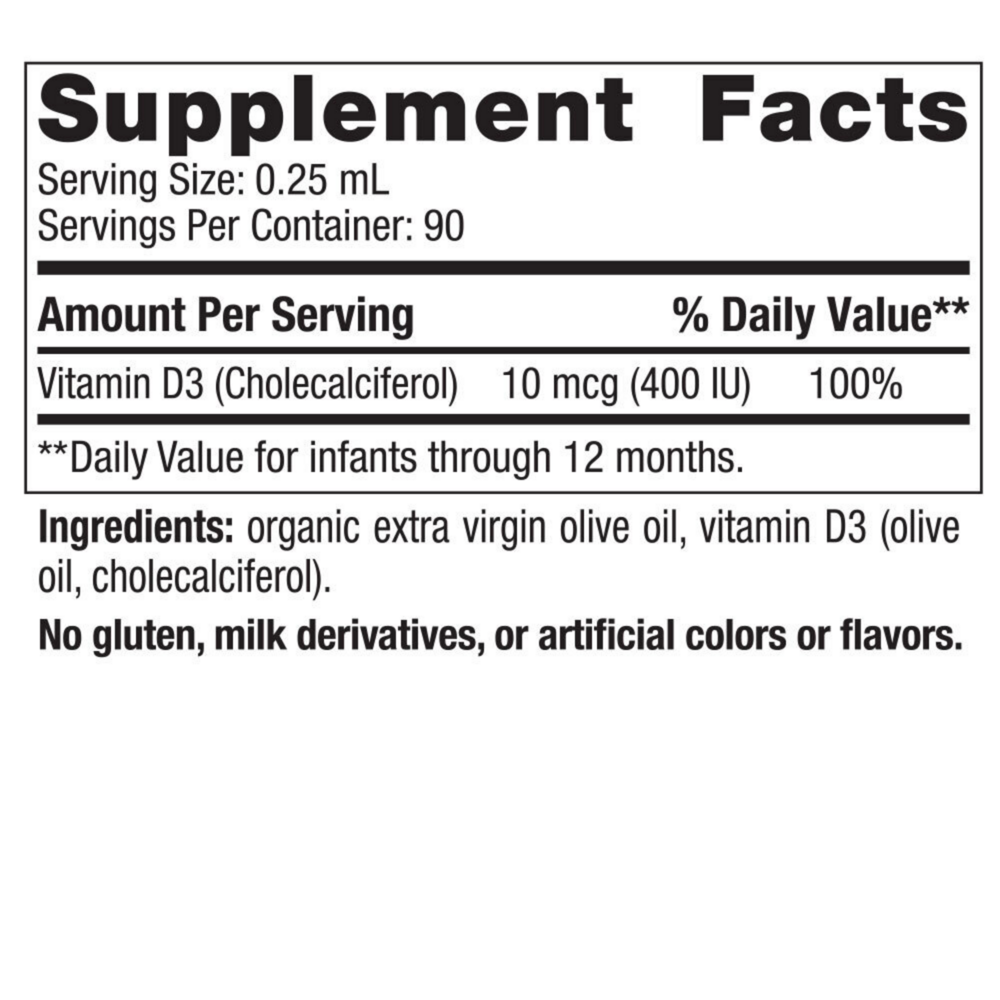
The box's suggested use is for infants 0–12 months: 0.25 mL daily with food. That one serving provides 400 IU (10 mcg) of vitamin D3, which the label gives as the full Daily Value for infants through 12 months, and the bottle holds 90 servings. Measure 0.25 mL with the dropper and add it to food, breast milk or infant formula once daily, or as your pediatrician directs. The box asks you to consult your pediatrician before giving your baby vitamin D and to clean the dropper thoroughly between uses. Measure carefully: the volume is small, and with vitamin D for an infant more is not better.
The box says not to exceed the recommended dose without consulting your pediatrician first. Use only one vitamin D product unless the pediatrician says otherwise, and count other sources, since formula and some multivitamin drops already contain it. Too much vitamin D over time raises blood calcium, which in an infant can show up as poor feeding, vomiting, constipation or unusual sleepiness. Call the pediatrician if you see these signs or if a larger amount was given by mistake. The box also says to consult your physician first if your baby has a known medical condition or takes medications; ask too if your baby was born prematurely.
You will not see an effect day to day. The aim is to keep vitamin D adequate through a year of rapid bone growth, which supports normal bone development. Some infant products deliver the dose in a single drop; this one uses a measured 0.25 mL serving. The label gives no dose for children past 12 months, so ask your pediatrician what to use after the first birthday.
Frequently asked questions
How much vitamin D3 is in one serving of Baby's Vitamin D3?
One 0.25 mL serving provides 400 IU (10 mcg) of vitamin D3 as cholecalciferol. The label lists that as the full Daily Value for infants through 12 months. The bottle contains 90 servings.
Do breastfed babies need vitamin D drops?
Usually, yes. Breast milk is low in vitamin D, and the American Academy of Pediatrics recommendation, quoted on the box, is 400 IU (10 mcg) of supplemental vitamin D a day for breastfed and partly breastfed infants. Confirm with your pediatrician before you start.
Do formula-fed babies need vitamin D drops?
Often not. Infant formula is fortified with vitamin D, and a baby drinking enough of it each day may already get what is needed. Ask your pediatrician before adding drops so your baby does not get vitamin D from two sources.
How do I give vitamin D drops to my baby?
The box says to measure 0.25 mL with the dropper and add it to food, breast milk or infant formula once daily, or as your pediatrician directs. Clean the dropper thoroughly between uses, especially if it touched your baby's mouth.
Can a baby get too much vitamin D?
Yes. Too much over time raises blood calcium, which can cause poor feeding, vomiting, constipation or unusual sleepiness. Give only the measured serving, use one vitamin D product at a time, and call your pediatrician after any dosing mistake.
What ages is Baby's Vitamin D3 Liquid for?
The suggested use on the box is for infants 0–12 months, at 0.25 mL daily with food. It gives no dose for older children. After the first birthday, ask your pediatrician which vitamin D product and amount to use.
What are the ingredients in Baby's Vitamin D3 Liquid?
Organic extra virgin olive oil and vitamin D3 (cholecalciferol in olive oil). Nothing else is listed. The label states no gluten, milk derivatives, or artificial colors or flavors.
How long does one bottle of Baby's Vitamin D3 last?
The label lists 90 servings per container, at 0.25 mL per serving from a 22.5 mL bottle. At one serving a day, that is 90 days of use. Check the box for how long to keep it after opening.
How to take it & ingredients
Suggested use: For infants 0-12 months, take 0.25 mL daily with food. 1. Consult with your pediatrician or healthcare professional before giving your baby vitamin D. 2. Using dropper measure 0.25 mL. 3. Add to food, breast milk, or infant formula once daily, or as directed by your pediatrician. 4. Clean dropper thoroughly between each use, especially if dropper contacts baby's mouth.
Active ingredients
0.25 milliliters per serving · 90 servings
Vitamin D
Cholecalciferol (D3)
Cholecalciferol (D3)
10 mcg, 400 IU
Other ingredients: Organic extra virgin olive oil, Vitamin D3 (olive oil, cholecalciferol)
Certifications
Benefits
Warnings